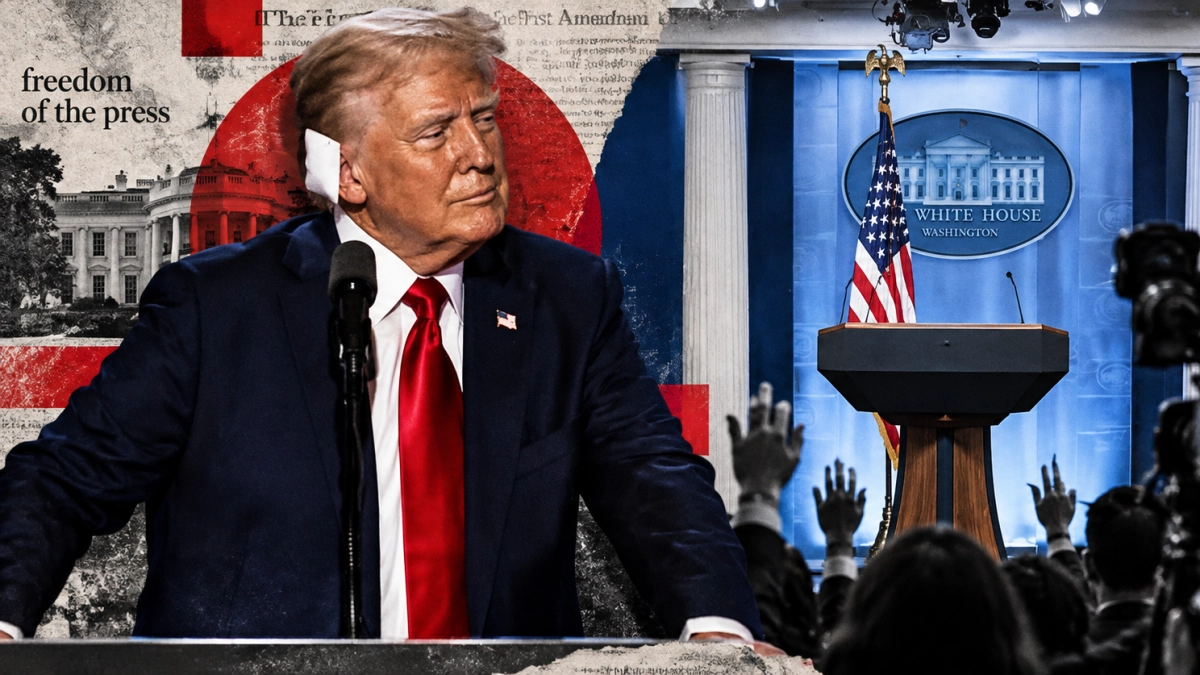
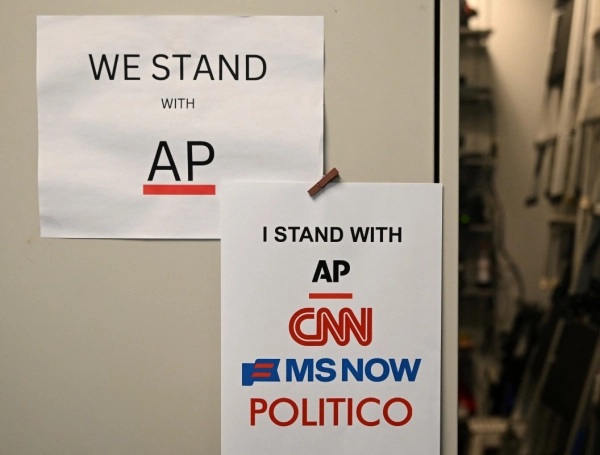
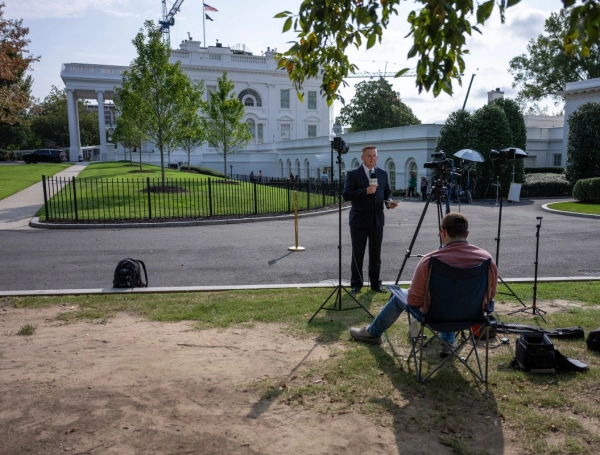
Washington D.C. — In a dramatic escalation of tensions that threatens to redefine the boundaries of executive power and press freedom in the United States, the administration of President Donald Trump has barred prominent news outlets CNN, MS NOW, and Político from entering the White House grounds.
This sweeping exclusion has triggered an extraordinary and unified response across the American media landscape. In an unprecedented show of solidarity, the nation’s premier television networks temporarily suspended their participation in the joint White House pool coverage system, while the blacklisted organizations launched an immediate and aggressive legal challenge.
As the case moves swiftly through federal court, the fundamental question at the heart of this dispute is clear: How far can a sitting president go to dictate who is allowed to cover the administration, and to what lengths will the press go to defend its constitutional rights?
1. Main Facts: The Anatomy of the White House Ban
The immediate catalyst for this crisis occurred when the Trump administration officially revoked the hard credentials and daily access of reporters and camera crews representing CNN, MS NOW, and Político. Administration officials defended the decision by accusing the outlets of persistent, biased reporting and publishing what they categorized as "fake news." Vice President JD Vance publicly supported the measure, arguing that access to the complex is a revocable privilege rather than an absolute right, and noting that the barred organizations could still report on the administration from outside the gates.
However, the strategy backfired in terms of traditional industry cooperation. Rather than dividing the press corps, the ban united it. The five major networks that comprise the television pool—ABC, CBS, CNN, Fox News, and NBC—took the collective decision to pull out of their rotating duties to accompany and film the president.
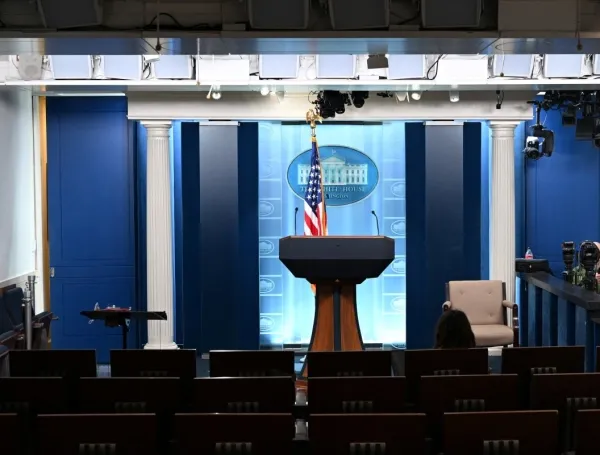
The immediate visual impact of this boycott was stark. When President Trump departed for New York City to address the United Nations General Assembly, he first inaugurated a new White House helipad. Normally, this event would be captured by a rotating pool camera crew and distributed nationwide. Instead, the only footage available came from official White House feeds or minor outlets, with the roar of the Marine One helicopter frequently drowning out the president’s voice.
Though Trump quickly regained media saturation upon landing in New York—where independent local and international cameras awaited him—the temporary blackout of the presidential residence underscored the high stakes of this high-stakes standoff.
2. Chronology of the Crisis
To fully understand how this unprecedented confrontation materialized, it is necessary to trace the sequence of events leading up to the current legal and media stalemate:
Pre-Existing Tensions: Throughout his first term and into his second, Donald Trump maintained a contentious relationship with mainstream media outlets, frequently using the term "fake news" and clashing with reporters during press briefings. Rule modifications during his second term—including disputes with the Associated Press over geographical nomenclature—signaled a tightening of administrative control over press spaces.
The Exclusion Decree: The Trump administration formally bars CNN, MS NOW, and Político from entering the White House press facilities, citing what it describes as repeated dissemination of false information.
The Pool Boycott Begins: Following the barring of CNN from its scheduled pool rotation, major television networks—including Fox News, which generally maintains a warmer relationship with the administration—unanimously agree to suspend their participation in the rotating White House television pool.
The Helipad Incident: President Trump presides over the inauguration of a new White House helipad ahead of his trip to the UN General Assembly. Due to the boycott, no major network cameras are present, leaving the administration to rely on self-produced video and minor outlets.
The Lawsuit is Filed: CNN, MS NOW, and Político file a joint lawsuit in a Washington federal court, arguing that their exclusion violates both the First and Fifth Amendments of the U.S. Constitution.
The Judicial Assignment: The case is assigned to U.S. District Judge Timothy Kelly—a Trump appointee during the president’s first term who notably ruled in 2018 that the White House must temporarily restore press credentials to then-CNN reporter Jim Acosta.
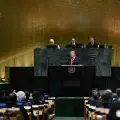
The UN Address and "Trump TV": As the legal battle unfolds, Trump addresses the UN General Assembly, an event covered by international feeds, while the administration continues to promote its direct-to-consumer digital platform, dubbed "Trump TV," designed to bypass traditional media intermediaries entirely.
The Upcoming Hearings: Judge Kelly schedules a critical emergency hearing to rule on the plaintiffs’ request for a preliminary injunction that would immediately restore their access while the broader litigation moves forward.
3. Supporting Data and Technological Context
This clash does not occur in a historical vacuum; it is heavily influenced by shifts in media consumption, the proliferation of digital platforms, and the evolving psychology of political communication.
The Role of Publicity as "Oxygen"
Political analysts emphasize that visibility is central to Donald Trump’s political identity. Having spent 14 seasons anchoring the reality television phenomenon The Apprentice, Trump mastered the art of leveraging television exposure to shape public opinion.
"Being the center of attention is the oxygen of Trump," notes Mark McKinnon, a veteran media advisor who worked for former President George W. Bush and the late Senator John McCain. Even though temporary blackouts or boycotts can deny mainstream networks certain exclusive visuals, Trump’s capacity to command alternative attention remains formidable.
The Digital Bypass: "Trump TV" and Social Media
In the modern media ecosystem, a traditional White House press room lockout carries a very different weight than it would have decades ago. With ubiquitous smartphone cameras, real-time social media broadcasting, and direct institutional feeds (such as those provided by the United Nations), absolute isolation is practically impossible.
Capitalizing on this environment, the administration has doubled down on digital alternatives, including the rollout of "Trump TV"—a dedicated online streaming initiative meant to broadcast executive branch activities directly to supporters without editorial filtering or mainstream media commentary.
4. Official Responses and Institutional Positions
The chasm between the administration’s rationale and the press corps’ defense highlights a profound disagreement over constitutional rights and executive authority.
The White House Perspective
The Trump administration insists that the revocation of credentials is not an assault on free speech, but rather a necessary consequence of what it terms journalistic malpractice. President Trump mocked the industry’s pushback during remarks to reporters, stating: "They said they were going to boycott me, but they never boycott me."
Adding legal weight to the administration’s stance, Vice President JD Vance defended the decision by framing workspace access as a privilege managed by the executive branch. The administration argues that excluded outlets remain entirely free to publish their viewpoints, report from public sidewalks outside the gates, and consume material provided through official channels.
The Media Coalition’s Perspective
In a rare and unified joint statement, the five major networks—ABC, CBS, CNN, Fox News, and NBC—pushed back forcefully against the administration’s justification:
"The public has a vital interest in receiving accurate and independent information about their Government. No administration should restrict a news organization from doing its job based on its coverage."
The inclusion of Fox News in this joint declaration is viewed by media experts as a watershed moment, demonstrating that even outlets typically aligned with conservative perspectives recognize the slippery slope of executive retaliation against specific newsrooms.
5. Implications: Constitutional Questions and the Judiciary
As the legal battle heads into the courtroom of U.S. District Judge Timothy Kelly, the ramifications extend far beyond the immediate parties involved.
The Legal Arguments
In their federal lawsuit, CNN, MS NOW, and Político argue that singling them out for exclusion directly violates:
The First Amendment: By infringing upon freedom of speech and freedom of the press, penalizing organizations based on the content or critical nature of their reporting.
The Fifth Amendment: By denying them procedural due process before stripping them of long-held press credentials necessary to perform their professional duties.
The Precedent of Acosta v. Trump (2018)
The assignment of Judge Timothy Kelly to the case carries deep symbolic and legal weight. In 2018, Judge Kelly ruled in favor of CNN reporter Jim Acosta after the first Trump administration revoked his hard pass following a tense exchange during a press conference. Kelly ordered the temporary restoration of Acosta’s credentials, establishing an important precedent that while the executive branch holds wide latitude over security protocols, it cannot arbitrarily revoke press access based on viewpoint discrimination without violating constitutional due process.
A Defining Test of Executive Power
Legal scholars note that while the White House possesses legitimate authority to manage physical space, security, and administrative logistics within the presidential complex, it cannot treat the executive mansion as private property. The fundamental principle at stake is whether the White House belongs to the American people—represented by a diverse and independent press corps—or whether a sitting president can selectively curate who is permitted to ask questions on behalf of the public.
Whether this clash resolves as a brief, intense storm or evolves into a landmark constitutional war over the limits of presidential power, the outcome will permanently shape the operational framework of American journalism for decades to come.
WASHINGTON — In a clear manifestation of shifting geopolitical priorities under the administration of U.S. President Donald Trump, the Department of State has formally notified Congress of its intent to reprogram $52 million in foreign…
By Global News Desk Updated: September 17, 2026 Main Facts The diplomatic relationship between the United States and Colombia has entered a markedly different phase, characterized by heightened cooperation, renewed security measures, and robust financial…
By International Desk Reporting Published: September 15, 2026 Main Facts In what can only be described as a harrowing ordeal for everyone on board, passengers aboard a domestic flight in Iran experienced moments of sheer…