By Editorial Staff
Updated: September 9, 2026
For years, the debate surrounding the delegation of public school management to non-state operators in Colombia has been characterized by sharp ideological polarization. Critics often view these partnerships with suspicion, fearing privatization, while proponents champion efficiency. However, a landmark evaluation released in Bogotá this week shifts the conversation from abstract theory to hard, irrefutable data. By analyzing the trajectories of over 300,000 students, researchers have provided the most comprehensive look yet at the "Colegios en Administración del Servicio Educativo" (CASE)—and the results suggest that the model is fundamentally changing lives.
The CASE Model: Defining the Framework
To understand the significance of these findings, one must first demystify what a CASE school actually is. Contrary to popular misconceptions, these are not private schools, nor are they "charter schools" in the American sense, which often operate with high levels of autonomy.
CASE schools are fully public institutions. The infrastructure and equipment are provided by the Bogotá District. Enrollment is managed entirely by the Secretariat of Education; operators cannot select their students, nor can they reject or expel them. These operators are non-profit entities with accredited experience, chosen through rigorous public bidding processes, and are strictly bound to the official national curriculum. The state retains total control over funding, regulation, and supervision, delegating only the day-to-day management of pedagogical services. Currently, 35 such schools serve 38,726 students—roughly 5.7 percent of the capital’s official enrollment—drawn primarily from the city’s most vulnerable socioeconomic strata.
A Massive Undertaking: The Methodology
The evaluation, conducted by the Unión Temporal Servicio Educativo (comprising the National Consulting Center and Ingeplan.Co), represents one of the most ambitious educational studies in Colombian history. The researchers tracked the academic journeys of over 300,000 students from 2010 to 2024.
To ensure precision, they employed a "matched-pair" methodology: each of the 35 CASE schools was compared against an official public school with nearly identical characteristics in terms of size, age, location, and the poverty index of its surroundings. The scale of the data collection was staggering:
- 6,722 standardized tests in language and mathematics.
- 6,171 assessments of socio-emotional skills.
- 701 diagnostic tests for kindergarten students.
- 719 in-depth surveys of teachers, principals, and administrative staff.
By using rigorous impact evaluation methods, the study successfully isolated the "school effect" from external variables such as family background, neighborhood safety, and prior academic history.
Chronology of Success: How Students Excel
The study’s most striking finding involves student retention and progression—areas where the Colombian educational system historically struggles. In the public system, repeating grades and school switching are common, both of which are high-risk indicators for total dropout.
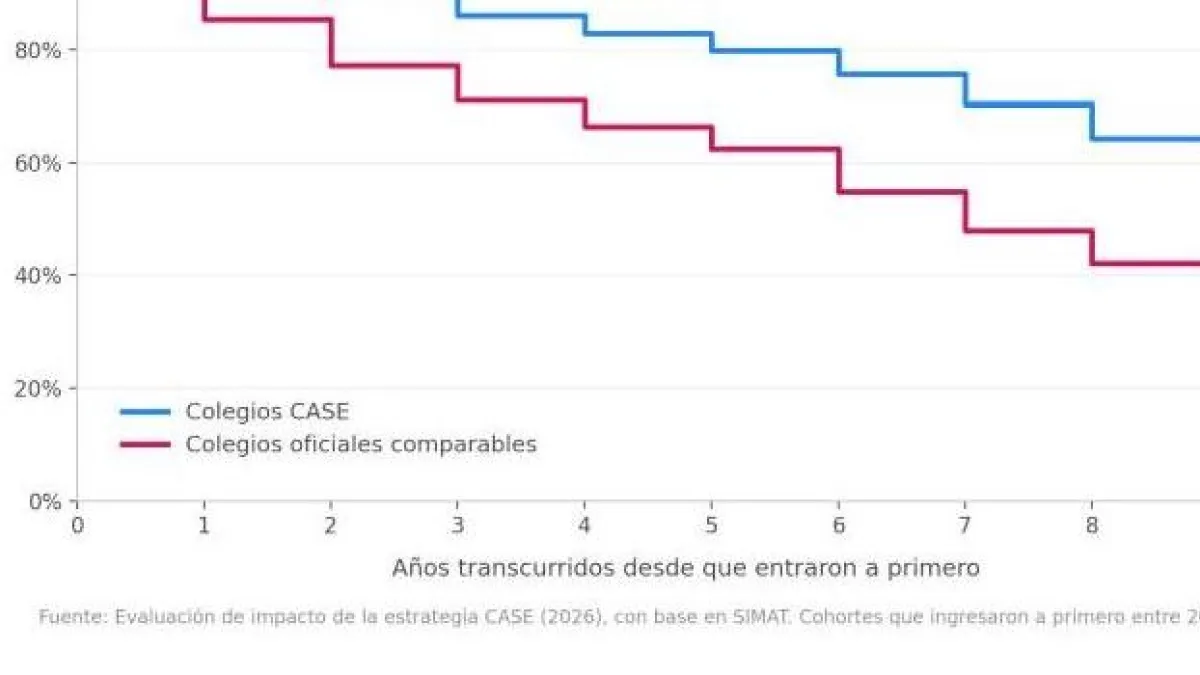
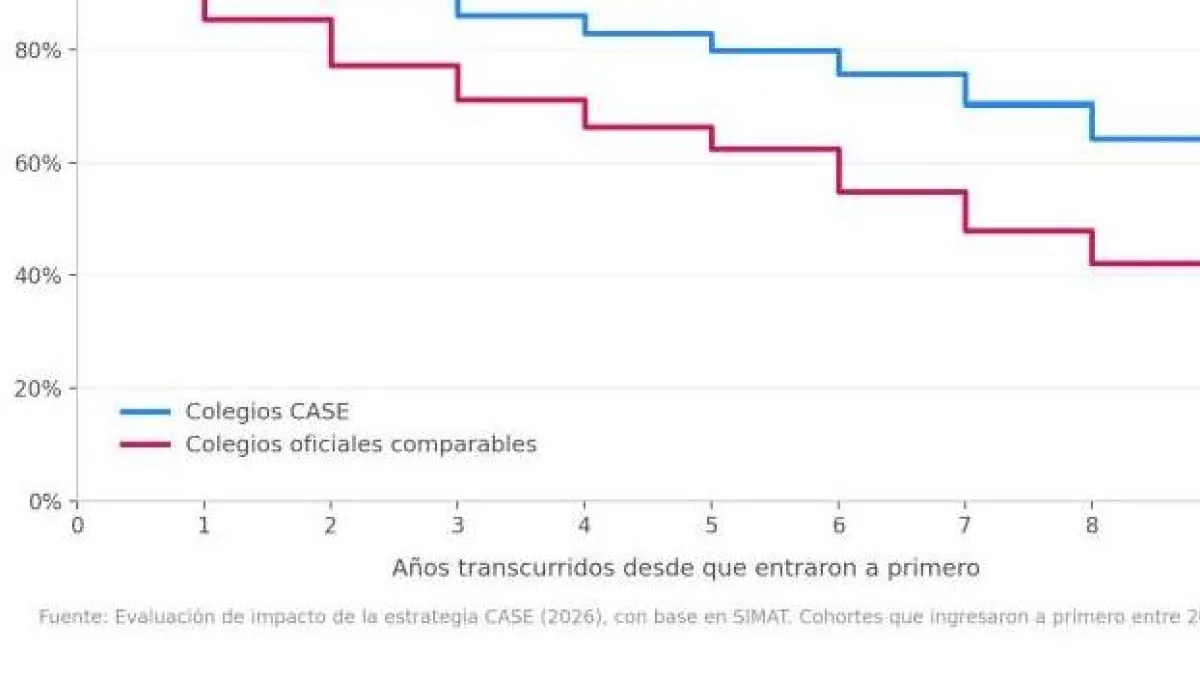
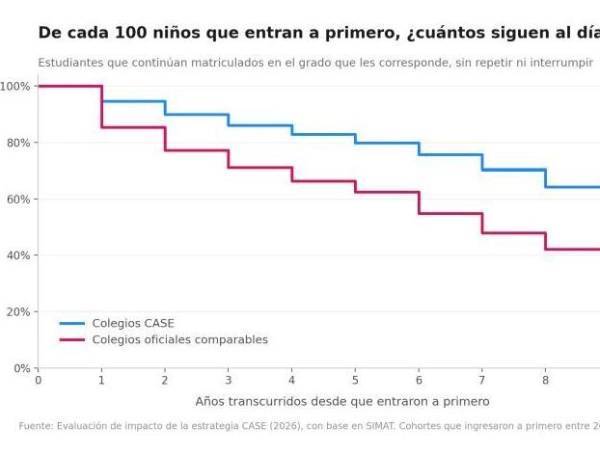
The data reveals a clear divergence. Nine years after entering the system, 60 percent of students in CASE schools remain in their original institutions, compared to only 40 percent in the comparison group.
Statistical modeling confirms that attending a CASE school increases the probability of reaching 11th grade by 11.8 percentage points. When factoring in "on-time" graduation—meaning no repeated grades—the impact jumps to 14.9 percentage points, a 34 percent improvement over the control group. Furthermore, the "institutional continuity" (the probability of staying in the same school) is 24 percentage points higher by the final year of high school.
The "Saber 11" Benchmark: A Gateway to Opportunity
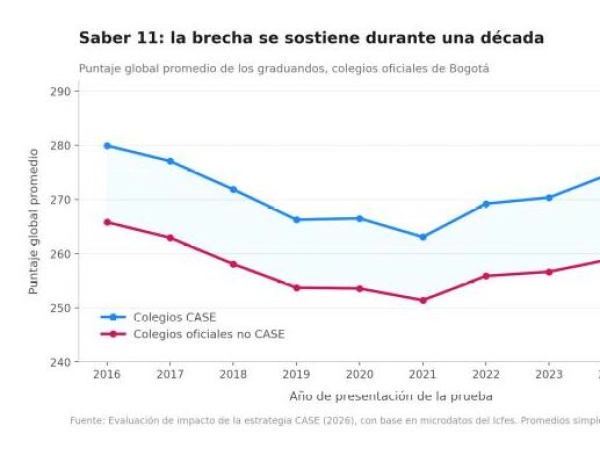
In Colombia, the Saber 11 exam is the ultimate gatekeeper. It determines access to public universities, eligibility for scholarships, and long-term career prospects. For a student from a low-income neighborhood in Bogotá, a three-point difference can mean the difference between admission to a prestigious public university or no post-secondary education at all.
The study found that the achievement gap in these schools is not a temporary fluke. It has persisted across ten cohorts, survived the disruption of the COVID-19 pandemic, and held steady during the post-pandemic recovery. Students in CASE schools scored, on average, 10.6 points higher on the global index, with specific gains of 1.8 in critical reading and 3.3 in mathematics.

Notably, the model is most effective for the most disadvantaged students. Among the lowest-performing decile of incoming first-graders, the probability of reaching 11th grade and scoring in the top tier is 17.9 percentage points higher in CASE schools compared to traditional public schools. This confirms that the model is not merely "polishing" the brightest students; it is effectively rescuing those whom the system typically leaves behind.
Why Does It Work? The Power of Routine
Perhaps the most profound insight of the report is that the success of the CASE model does not stem from a magical contract, but from the institutionalization of specific pedagogical routines.
The numbers highlight a stark difference in day-to-day management:

- Teacher Development: 90 percent of CASE teachers report receiving regular class observation with feedback, compared to only 21 percent in the comparison schools.
- Mentorship: 62 percent of CASE teachers receive pedagogical mentoring, compared to 16 percent in the control group.
- Management Efficiency: Principals in CASE schools significantly outperformed their peers in six dimensions of management, specifically in human resources, pedagogical follow-up, and evidence-based decision-making.
A recurring theme is the proactive identification of "at-risk" students. As one principal noted, at the midpoint of every term, the school triggers a leveling plan for students showing signs of falling behind. This is not a legislative requirement; it is an organizational habit that transforms academic failure into a manageable challenge rather than an inevitable outcome.
Cost-Effectiveness and Long-Term Impact
Critics often focus on the financial costs of private operators, but the study suggests that the CASE model is remarkably efficient. The "present value" of the educational investment per student is approximately 28.4 percent lower in CASE schools than in the comparison public schools.
When factoring in the long-term economic outlook, the results are compelling: graduates from CASE schools are expected to see a 13.9 percent increase in lifetime earnings. The benefit-to-cost ratio for CASE schools is 10.52, compared to 6.63 for the traditional counterparts. In terms of public policy, it is rare to find an initiative that simultaneously improves social outcomes and saves taxpayer money, but this model manages to do both.

Implications for Public Policy
The evidence provided by the Bogotá evaluation offers a roadmap for future educational reform. It demonstrates that the key to success is not the "private vs. public" debate, but rather the creation of a system built on:
- Strict Supervision: Constant monitoring by the district.
- Equity in Enrollment: Eliminating the ability of schools to "cherry-pick" students.
- Pedagogical Continuity: Ensuring that teachers have the support and time to implement proven routines.
The researchers conclude with a note of caution: these results describe the success of the model as it exists today, and they should not be viewed as a guarantee of success if scaled blindly. However, after twenty years of operation, the data is clear. Bogotá has successfully built a mechanism that fosters better learning, higher retention rates, and greater social mobility.
As Colombia continues to debate the future of its education system, the Bogotá CASE experience stands as a testament to the fact that when ideology is stripped away, the focus on pedagogical rigor, consistent evaluation, and institutional accountability remains the most powerful tool for ensuring the next generation reaches its full potential. The question for policymakers is no longer who should manage the schools, but what specific rules and routines produce the best outcomes for students. Bogotá has spent two decades finding the answer. It is time for the rest of the country to pay attention.