AGENCIA DE NOTICIAS
Published: November 8, 2026, 16:40
Updated: November 8, 2026, 16:40
Main Facts
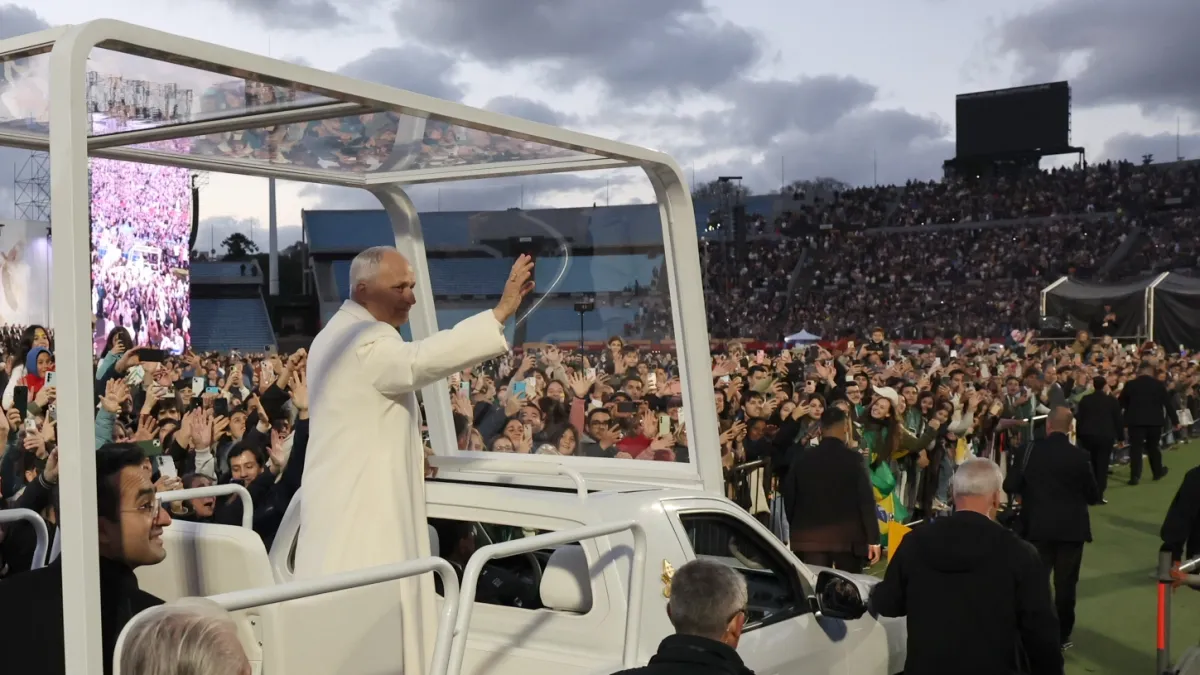
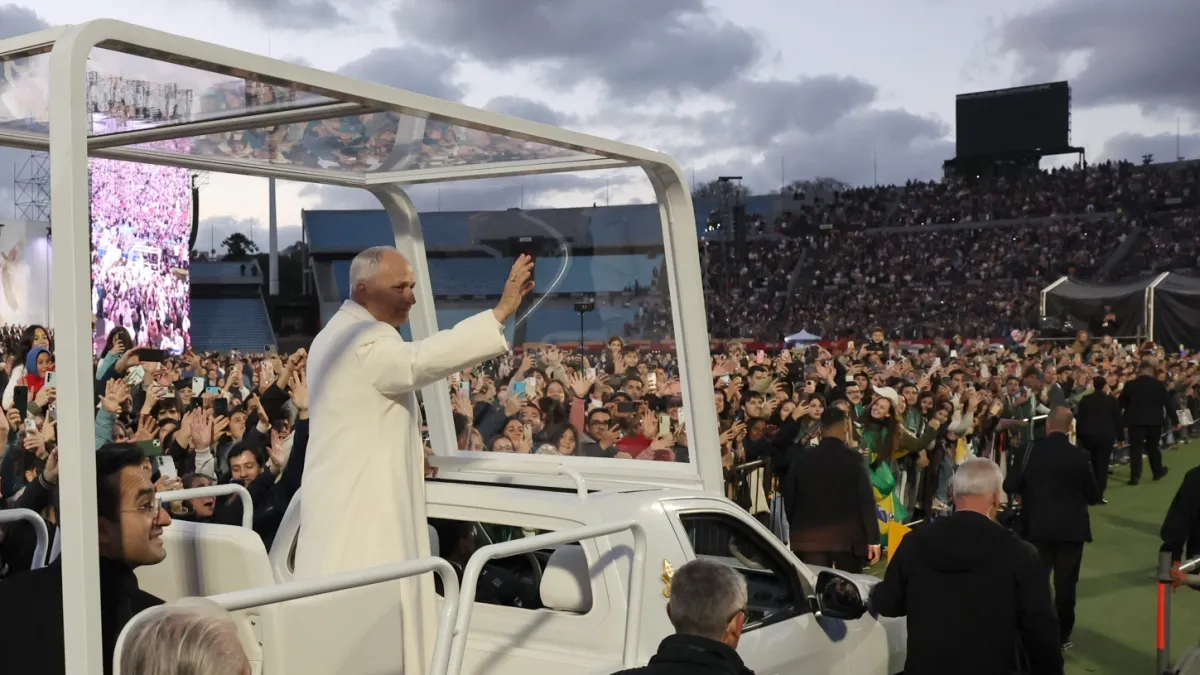
In an emotional conclusion to his apostolic journey, Pope León XIV addressed a gathering of approximately 50,000 faithful on Sunday, November 8, 2026. Presiding over a solemn Mass at the Sanctuary of Our Lady of the Thirty-Three (Nuestra Señora de los Treinta Tres) in the Uruguayan department of Florida, the pontiff expressed profound gratitude for the warm hospitality extended by the Uruguayan people.
Marking the final hours of his pastoral visit to the South American nation, the Holy Father praised the cultural and spiritual depth of Uruguay. Despite its modest geographical size, León XIV emphasized that the nation possesses a "generous heart" and a capacity for "very great things."
The open-air Mass served as the culminating event of a tightly orchestrated itinerary that drew nationwide participation. Throughout the ceremony, the pontiff underscored the transformative power of faith, encouraging citizens to continue fostering dialogue, community solidarity, and spiritual growth. As he prepared to depart for neighboring Argentina—marking a historic return of a pope to that country after nearly four decades—León XIV officially entrusted the future of Uruguay to the protection of the Virgin Mary, offering a final blessing for the nation to be guided along paths of enduring unity and peace.

Chronology of the Papal Visit to Uruguay
The journey of Pope León XIV through Uruguay was characterized by meticulously planned events, intense public engagement, and deep spiritual communion. While the official farewell took place on Sunday afternoon, the chronology of the visit highlights the rigorous schedule undertaken by the pontiff and local organizers:
- Arrival and Initial Welcome: Upon landing in the country, the Holy Father was greeted by high-ranking civil and religious authorities. The initial moments of the trip set a tone of mutual respect and pastoral outreach, with the pontiff acknowledging the secular yet deeply respectful cultural fabric of Uruguayan society.
- Encounters with Communities and Families: Over the course of the visit, León XIV engaged directly with local families, community leaders, and volunteer groups. These sessions underscored the collaborative effort required to stage events of this magnitude safely and efficiently.
- The Lead-Up to the Florida Gathering: In the days preceding the final Mass, anticipation built across the country. Pilgrims traveled from remote departments to converge on Florida, transforming the vicinity of the Sanctuary into a vibrant center of prayer and cultural exchange.
- Sunday Morning Liturgy: The climax of the journey occurred at the Sanctuary of Our Lady of the Thirty-Three, where roughly 50,000 attendees gathered. The liturgy was marked by traditional hymns, fervent participation, and a palpable sense of communal joy.
- The Farewell Address: Immediately following the Eucharistic celebration, the pontiff delivered his closing remarks, formally thanking the logistical teams, media professionals, and security personnel who ensured the seamless execution of the visit before boarding transport toward his next international destination.
Supporting Data and Demographics of the Event
The visit of Pope León XIV to Uruguay brought forth significant logistical figures and participation metrics, reflecting the profound organizational scope required for a modern papal tour:
- Attendance: Approximately 50,000 people converged on the Sanctuary of Our Lady of the Thirty-Three in Florida to participate in the Sunday morning Mass.
- Logistical Footprint: The event relied heavily on a vast network of volunteers, local civil authorities, and religious communities who coordinated transport, medical assistance, and crowd control.
- Media Outreach: Millions of viewers across Uruguay and the broader Latin American region followed the events via television, radio, and digital media platforms. The extensive broadcast coverage ensured that those unable to travel to Florida could participate virtually.
- Regional Context: The visit to Uruguay immediately precedes a highly anticipated apostolic journey to Argentina—the first papal visit to that neighboring nation in nearly forty years—placing the final days of the Uruguayan tour under intense regional and international media scrutiny. Concurrently, broader Latin American preparations, such as emergency declarations in Peru due to seasonal weather patterns ahead of expected papal milestones, framed the geopolitical backdrop of the Holy See’s regional tour.
Official Responses and Acknowledgments
During his concluding address, Pope León XIV took deliberate care to acknowledge the diverse groups whose collaboration made the pastoral visit possible. His words served as both a formal expression of gratitude and a validation of the cooperative spirit displayed by Uruguayan society.
"I had been told that, although Uruguay is relatively small, its people have a generous heart and are capable of very great things, and this has become evident these past days," the pontiff stated.

He extended explicit thanks to:
- Civil and Religious Authorities: Recognized for their institutional cooperation, ensuring that logistical frameworks operated without major disruption.
- Families and Communities: Praised for opening their homes, neighborhoods, and parishes to visiting pilgrims.
- Volunteers and Planning Teams: Commended for preparing every meeting space with meticulous attention to detail. "You have prepared everything very well. Thank you from the heart," he affirmed.
- The Media: Acknowledged for their role in broadcasting the events to citizens across the country and the wider international community, allowing the message of the visit to transcend physical attendance barriers.
Local religious leaders and civic representatives noted that the tone of the visit was exceptionally collaborative, bridging institutional lines to focus on shared humanitarian and spiritual values.

Implications of the Visit
The conclusion of Pope León XIV’s visit to Uruguay carries profound religious, social, and cultural implications for the nation:
1. Spiritual Renewal and the "Mathematics of Faith"
In his homily and farewell remarks, the pontiff introduced a conceptual framework that resonated deeply with the faithful. Describing what he termed "the mathematics of faith," León XIV explained that spiritual gifts received and shared freely through divine grace tend to multiply rather than diminish. By urging Uruguayans to "continue multiplying faith, hope, and charity," the pope sought to catalyze long-term grassroots engagement within local parishes, encouraging a more active public expression of Christian values in a traditionally secularized state.

2. Reinforcement of Social Cohesion
Uruguay is widely recognized as one of the most secular nations in Latin America. However, the sheer scale of the turnout—50,000 people gathered in Florida—demonstrates that religious sentiment remains a powerful cultural current. The papal visit provided a neutral, highly unifying platform that brought together diverse social strata. By repeatedly emphasizing themes of "unity and peace," the pontiff provided a timely civic vocabulary for a society navigating modern socio-political complexities.
3. Regional Ecclesiastical Momentum
The transition from Uruguay to the much larger geopolitical stage of Argentina marks a pivotal phase in León XIV’s Latin American agenda. Observers note that the success of the Uruguayan leg serves as a vital stress-test for security, media management, and pastoral diplomacy. The goodwill generated in Florida is expected to echo outward, reinforcing the Holy See’s broader diplomatic and spiritual outreach across the Southern Cone.

As the pontiff concluded his final remarks by entrusting the nation to the Virgin Mary, the lasting legacy of the visit will likely be measured by how local communities integrate his call for solidarity into their daily civic and spiritual lives in the years to come.