By Global Education & Economics Desk Published: November 7, 2026
Main Facts
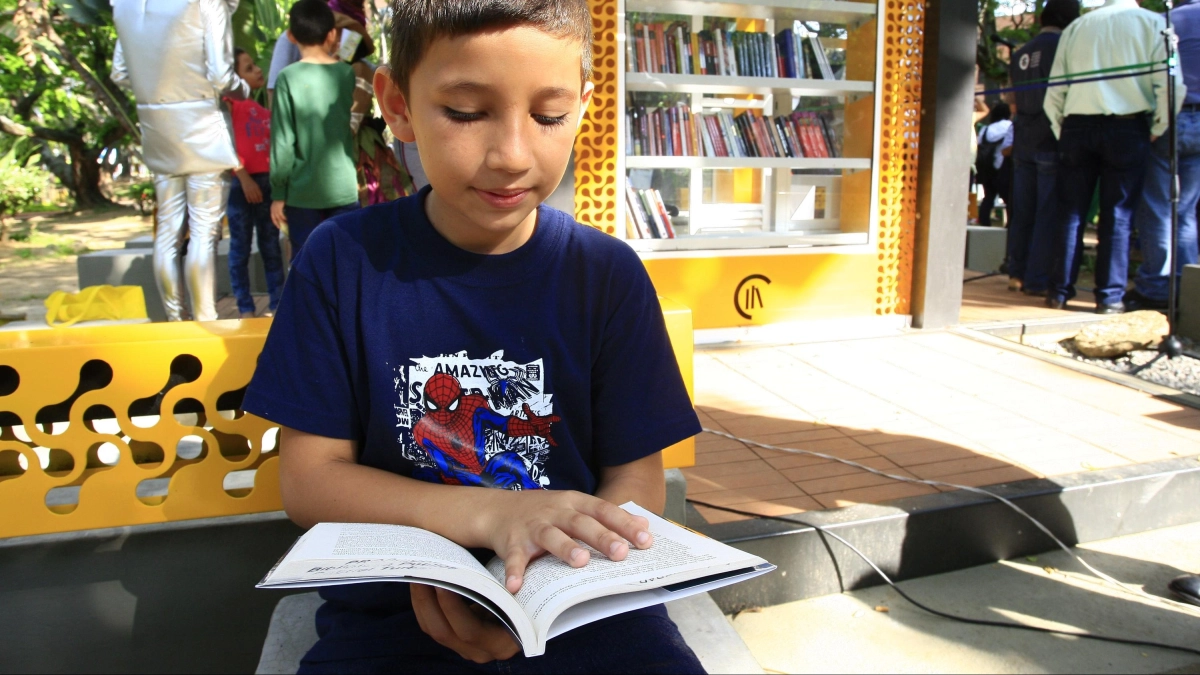
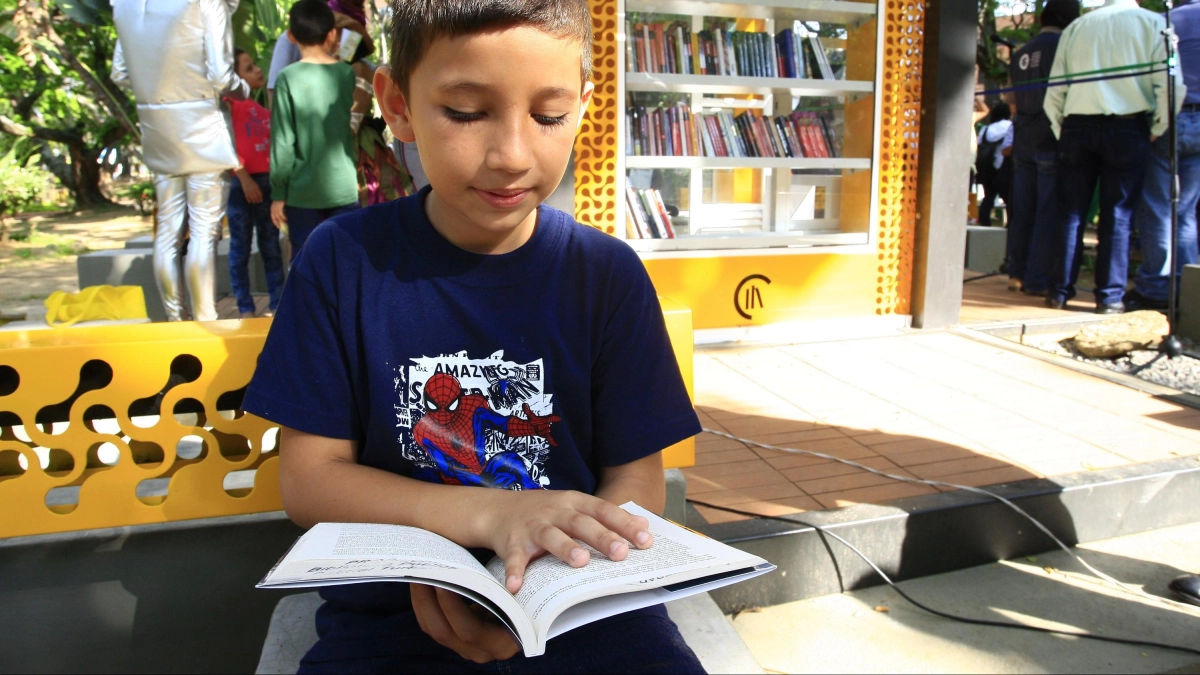
More than half of all Colombian children reach the age of ten without the basic ability to read and comprehend a simple text. Current statistics show that a mere 48.6 percent of the country’s youth achieve this minimal foundational standard by that age.
However, a landmark study titled “Alfabetizar a tiempo, transformar el desarrollo” (Literacy on Time, Transforming Development), published by the Institute of Educational Evidence (IEE) and utilizing models from the What Works Hub for Global Education (WWHGE), reveals that this educational deficit carries an enormous, quantifiable economic price tag.
According to the research, if Colombia could successfully ensure that nine out of ten children achieve basic literacy by age ten, the nation’s GDP per capita by 2050 would be 33.2 percent higher than it would under current educational trajectories.
For Colombia, reaching this ambitious 90 percent literacy target would generate an estimated $1.99 trillion in additional GDP between 2031 and 2050, alongside $349.7 billion in extra tax revenues—all without implementing a single tax hike. To put these figures into perspective, this equates to roughly $100 billion per year in constant US dollars over a two-decade period.
Chronology and Context: The Evolution of the Learning Crisis
The Baseline (Pre-Pandemic to 2022)
The data underpinning the IEE study originates largely from the World Bank and UNESCO Institute for Statistics learning poverty baseline compiled in 2022. Because these metrics aggregate evaluations conducted across multiple years—many of which preceded or immediately followed the disruptions of the COVID-19 pandemic—experts emphasize that the findings should be read as orders of magnitude rather than precise chronological forecasts.
The Present Landscape (2026)
Colombia currently ranks 8th out of 21 Latin American and Caribbean countries in initial reading levels for 10-year-old students, sitting at 48.6 percent. While this marginally edges out the regional average of 46.7 percent, Colombia trails far behind regional leaders such as Trinidad and Tobago (79.4 percent), Chile (72.8 percent), and Costa Rica (66 percent), as well as neighbors like Uruguay, Peru, Brazil, and Mexico.
The Horizon (2031–2050)
The economic and social projections of the IEE study are mapped across a 20-year window running from 2031 to 2050. During this period, achieving universal foundational literacy is modeled to cascade through the economy, reshaping demographics, the labor market, and public health outcomes across consecutive generations of students.
Supporting Data: Regional Comparisons and Economic Projections
To fully grasp the macroeconomic implications of the IEE model, analysts must parse the distinction between absolute volume and relative percentage growth.
Absolute Gains
In absolute terms, Colombia would secure the fourth-largest economic windfall in Latin America and the Caribbean, trailing only the regional heavyweights:
Brazil: $8.34 trillion in additional GDP
Mexico: $8.09 trillion in additional GDP
Argentina: $3.63 trillion in additional GDP
Colombia: $1.99 trillion in additional GDP
Notably, Colombia would concentrate 6.3 percent of the region’s additional output, but 8 percent of its additional tax collection. This discrepancy arises because the economic model applies country-specific fiscal elasticities; for every dollar of additional economic product generated, the Colombian state would capture roughly 18 cents in tax revenue, compared to an average of 14 cents across the broader region.
Percentage Growth
When viewed through the lens of relative growth, Colombia’s potential upside is even more striking. The country’s per capita GDP in 2050 would expand by 33.2 percent—surpassing the relative gains projected for Mexico (29.9 percent), Brazil (29.3 percent), Peru (27.2 percent), and Chile (16.7 percent).
Official Responses and Expert Analysis
Educational experts and institutional leaders agree that the study exposes a fundamental flaw in how policymakers have historically measured educational success.
"Colombia would be the fourth country in the region in terms of additional output, tax collection, and young people with persistent employment. This consistency in the data shows that learning in the early years can be associated with benefits across multiple dimensions simultaneously…"
— Fiorella Santini, Data Analyst at IEE and co-author of the study.
Santini points to secondary sociological benefits calculated by the model, including more than 313,000 additional young adults with persistent employment and over 6,500 avoided infant deaths between 2031 and 2050.
This dramatic reduction in infant mortality is tied directly to maternal literacy. The model incorporates evidence showing that maternal literacy correlates with a 30 percent reduction in mortality among children under five. By ensuring that today’s schoolgirls learn to read on time, the policy prevents an estimated 6,513 infant deaths in Colombia alone, while also averting roughly 20,171 cases of child marriage by keeping young girls enrolled in secondary education.
The Challenge of Implementation
While the economic models outline a utopian trajectory, local education advocates stress the immense policy challenge of turning simulations into reality.
"The study makes clear what the region loses by failing to teach children to read on time. The question that follows is how to achieve it, and there we still have gaps. At Colombia Evidencia Potencial en Educación (Cepe), we are mapping what we know and what we do not know… A scenario like a 90 percent literacy rate requires evidence-based decisions."
— Olga Lucía Romero, Director of Cepe.
Romero notes that effective interventions already exist, citing structured pedagogy, teaching pitched to a student’s actual learning level, and computer-assisted learning. She highlights the state of Ceará in Brazil as a prime regional benchmark, where a successful early-literacy initiative combined technical municipal support, teacher training, periodic evaluations, and results-based incentives.
Broader Implications: Beyond the Gross Domestic Product
While trillions of dollars in GDP and billions in tax revenues make for compelling fiscal arguments, education specialists emphasize that the true value of literacy transcends balance sheets.
"I would like to add two reasons to the urgent call to prioritize reading, ranging from public policy down to families. The first is that reading and critical comprehension—in times of accelerated production, attention crises, AI-summarized texts, and fake news—are increasingly necessary and increasingly threatened. The second is that you can summarize a text, but you cannot summarize the experience of reading it, and therein lies its value: in that slow time we discover, enjoy, and learn, among other things, how to sustain attention and how to doubt. Reading is useful, but it also transforms."
— Juliana Ruiz Patiño, Director of the Observatory of Educational Realities at Icesi University.
Summary of Projected Impacts (Colombia, 2031–2050)
Public Health & Welfare: 6,513 infant deaths avoided; 20,171 child marriages prevented
Methodological Caveats
Authors of the IEE report urge caution, noting that the simulation assumes an instantaneous, sustained leap to 90 percent literacy—a feat no educational system achieves overnight. Furthermore, because the underlying data relies heavily on pre-pandemic and early-pandemic baselines, the figures must be interpreted as broad orders of magnitude rather than guaranteed forecasts.
Ultimately, the research frames early literacy not merely as an academic milestone, but as the foundational bedrock upon which Colombia’s fiscal solvency, public health, and democratic resilience will stand or fall over the next quarter-century.
By Diana Vanessa Arévalo Correa Redacción Últimas Notícias Enriched and Translated for Global Audiences Main Facts More than 500,000 students across Colombia who sat for the Saber 11 Calendario A examinations on July 26, 2026,…
The relationship between humans and their animal companions is far from universal. While the emotional bond is a constant across borders, the manifestation of this connection—how pets live, move, and interact within the domestic sphere—varies…
By Angie Rodríguez / Travel and Trends Journalist Updated September 2026 1. Main Facts: A New Era for Colombian Aviation Colombia is experiencing an unprecedented golden age in international air connectivity. Driven by strategic initiatives…