By Editorial Staff, Environment and Science Desk
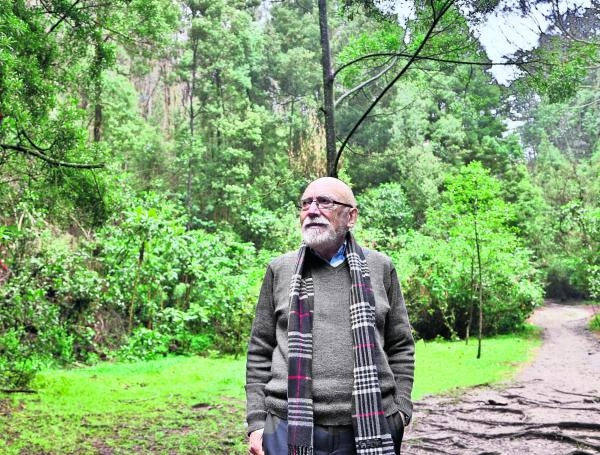
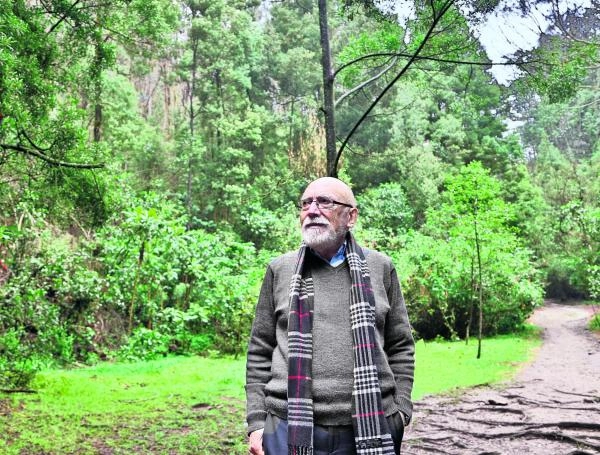
The Colombian environmental movement is in mourning. On Thursday, November 5, 2026, the country lost one of its most profound thinkers and foundational architects of its environmental institutional framework: Julio Carrizosa Umaña. Passing away at the age of 91, Carrizosa leaves behind not only a legacy of administrative milestones but a dense, challenging body of thought that urges Colombia to look beyond the simplistic dichotomies of traditional politics to understand its own complex soul.
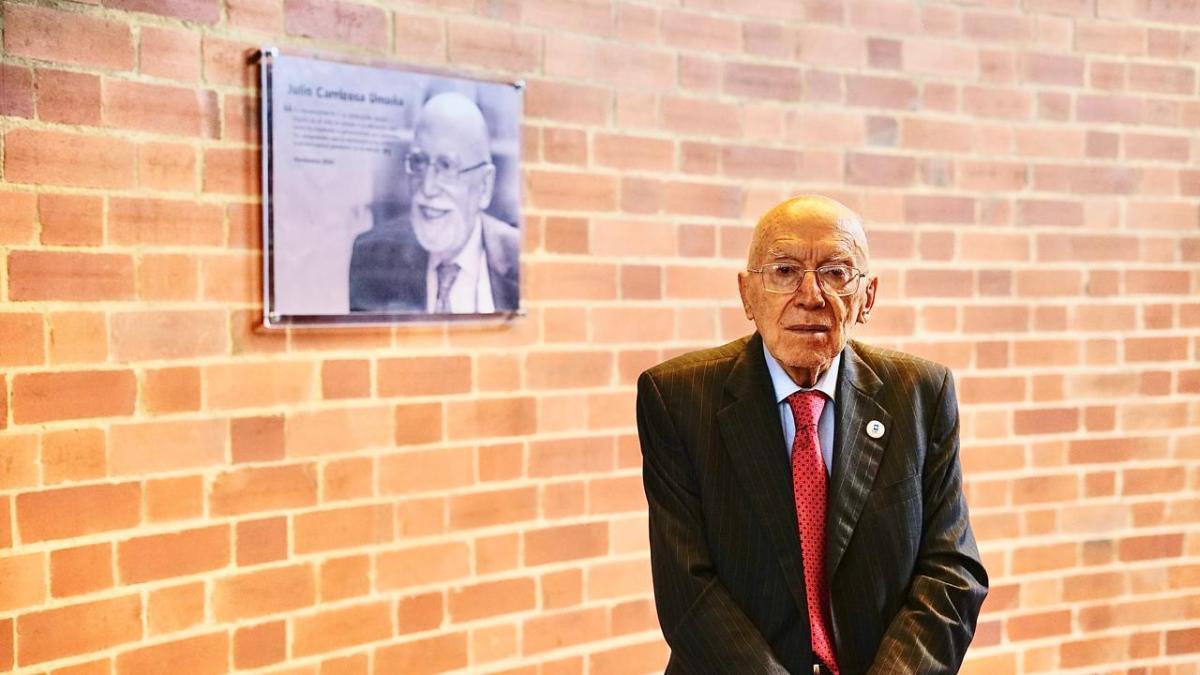
In the weeks preceding his death, Carrizosa sent an essay to EL TIEMPO titled "The Colombian Reality." It serves as a final, urgent message—a synthesis of seven decades of observation, critical analysis, and deep affection for a territory he spent his life trying to comprehend.
The Man and His Legacy: A Brief Chronology
Julio Carrizosa Umaña was more than an environmentalist; he was a polymath whose work bridged the gap between engineering, sociology, and ecology. His career was characterized by a restless pursuit of institutionalizing environmental protection in a country often distracted by short-term political gains.

- 1935: Birth of Julio Carrizosa Umaña, a figure who would become central to the nation’s environmental conscience.
- 1960s-1970s: Deep involvement in the technical and territorial planning of Colombia, often working within the IGAC (Instituto Geográfico Agustín Codazzi).
- 1980s-1990s: Instrumental in shaping the environmental legal framework that preceded and informed the 1991 Constitution, which elevated environmental rights to a fundamental status.
- 2000s-2026: A prolific period of writing and teaching, where he focused on the "complexity" of the Colombian landscape—arguing that geography, genetics, and history dictate the nation’s path far more than transient economic models.
- November 5, 2026: Passing of Julio Carrizosa at 91, leaving a final, unpublished essay that calls for a radical rethinking of the Colombian "development" model.
The Core Argument: Beyond "Homo Economicus" and "Homo Politicus"
In his final treatise, Carrizosa challenged the intellectual dominance of both the political left and the right in Colombia. He argued that these two ideologies, imported largely from European and North American contexts, suffer from "simplifying visions."
For Carrizosa, the Colombian crisis—characterized by persistent violence, corruption, and inequality—cannot be solved through standard economic metrics (like GDP growth) or narrow political maneuvering. Instead, he proposed that Colombia is a nation defined by its extreme bio-physical complexity.
"We are a country divided into five regions by three mountain ranges," he wrote, noting that the geological fragility of the Andes, combined with the unique interplay of winds and oceanic influence, creates a landscape that resists the cookie-cutter development models applied to flatter, more homogenous nations.
The Genetic and Cultural Mosaic
Carrizosa did not limit his analysis to geography. He delved into the genetic history of the Colombian people, tracing the lineage of indigenous populations to the high-altitude adaptations of Tibetan-like ancestors who crossed the Bering Strait. He synthesized these historical threads with the arrival of African and European populations, arguing that the nation is a "Homo ludens"—a nation of players, artists, and adventurers who prioritize the aesthetic and the experiential over the cold, calculated pursuit of capital or power.
Implications for a Nation in Flux
Carrizosa’s reflections carry profound implications for the current Colombian government and future administrations. His critique suggests that the country has been operating on "linear equations" that fail to account for the human spirit and the natural constraints of the territory.
1. The Failure of Traditional Economic Models
Carrizosa pointed out that after 70 years of development, Colombia remains heavily dependent on coffee and oil. The promise of industrialization has largely failed to create enough high-quality jobs to mitigate the "despair, corruption, and violence" that plague the country. He criticized the obsession with becoming a global commodity competitor, noting that our geography makes such a model inherently expensive and unstable.
2. A New Urban Paradigm
One of his most concrete proposals was the creation of "new productive cities." Carrizosa suggested that instead of allowing the population to continue overcrowding the fragile mountain ecosystems of cities like Bogotá, the country should develop strategic coastal and lowland regions into sustainable, export-oriented, and integrated urban centers. This, he argued, would provide the infrastructure needed for the projected 70 million inhabitants expected by 2050.
3. The "Other Games" Strategy
Carrizosa urged a shift in the national narrative regarding peace. He asked if it were possible to treat the violence not merely as an economic or political problem, but as a "game" that needs to be replaced. He suggested that by incentivizing "ethical, aesthetic, musical, and sporting games," the state could channel the energy of disenfranchised youth and former combatants toward roles where they can be "heroes" without resorting to violence or illegal drug economies.
Official Responses and Academic Tributes
The passing of Carrizosa has triggered a wave of reflections across the Colombian academic and political spectrum.
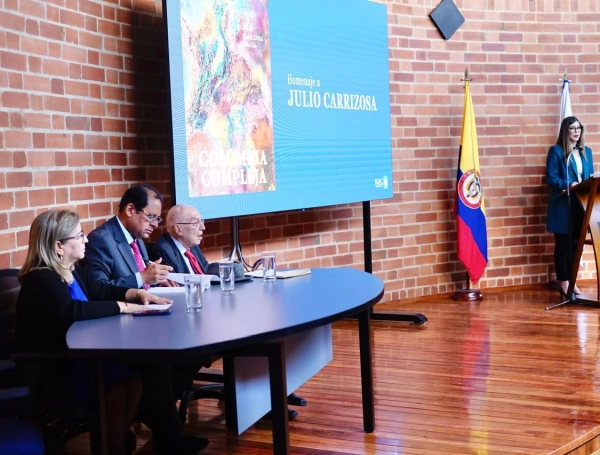
The IGAC (Instituto Geográfico Agustín Codazzi) remembered him as a pioneer who understood the map of Colombia not just as a set of borders, but as a living, breathing entity. Former colleagues described him as a "teacher of teachers," a man who refused to adopt the comfortable, binary language of contemporary polarization.

"Julio didn’t just read the land; he read the people who walked it," stated one former minister of the environment. "He taught us that to govern Colombia is not to impose a model, but to facilitate the expression of its inherent complexity."
Conclusion: The Path Forward
The final words of Julio Carrizosa Umaña are not a lament, but a call to action. He asks if we are doomed to repeat the failures of the past, or if we can finally look toward the "center" of the political spectrum—a place where pragmatism, ecology, and culture converge.

He championed "economies of protection"—industries based on conservation, restoration, and the contemplation of nature. He believed that the path to a stable, prosperous Colombia lies in recognizing that we are not a country of "infinite resources" to be exploited, but a complex, bio-diverse sanctuary that must be managed with scientific rigor and cultural sensitivity.
As we lay the master to rest, the challenge remains: Will the Colombian political class continue to seek solutions in the "simplifying equations" of the 20th century, or will they finally heed the wisdom of a man who spent his life looking at the mountains, the rivers, and the people, and seeing something that the textbooks completely missed?

Julio Carrizosa Umaña has left the room, but the map he drew for our future remains. It is now up to a new generation to decide if they are brave enough to follow it.
For those interested in reading the full, unedited manuscript of "La realidad colombiana" by Julio Carrizosa Umaña, please visit our digital archives at [EL TIEMPO Online].