By Edwin Caicedo, Environment and Health Correspondent
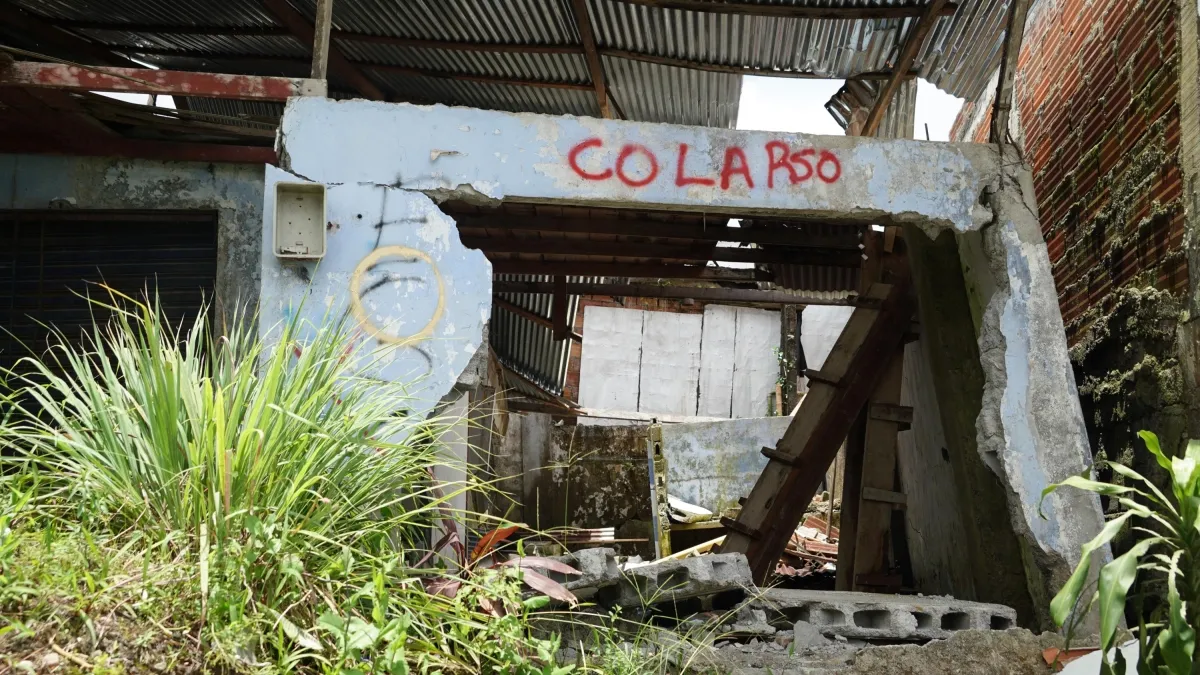
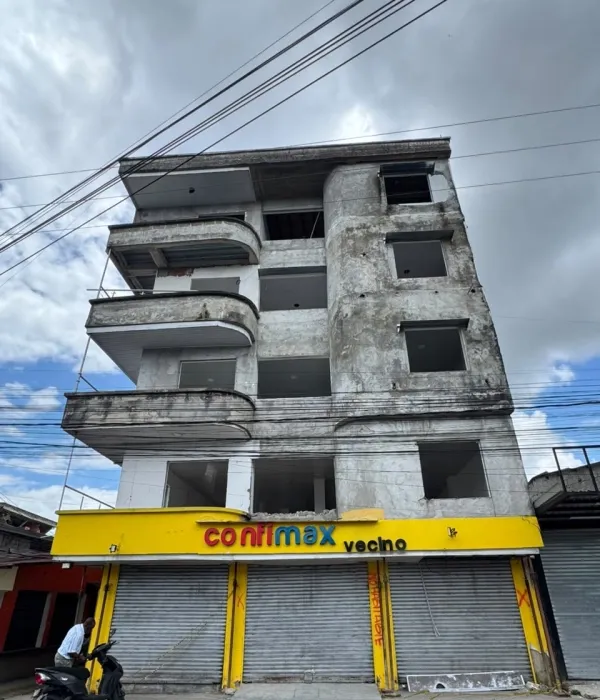
One month has passed since a 7.4 magnitude earthquake struck the heart of Colombia, leaving a trail of destruction that still defines the daily reality for thousands of families in Quibdó, the capital of the Chocó department. While the initial tremors have ceased, the psychological aftershocks and the physical menace of crumbling infrastructure remain a constant, looming threat. For residents in neighborhoods like El Jardín, the danger is not a memory; it is a towering, cracked concrete block that could collapse at any moment.

As the nation moves toward the daunting task of reconstruction, Quibdó finds itself in a state of suspended animation. Before a single new brick can be laid, the city must first dismantle the ghosts of its past.
The Geography of Fear: Life Under the Shadow of Collapse
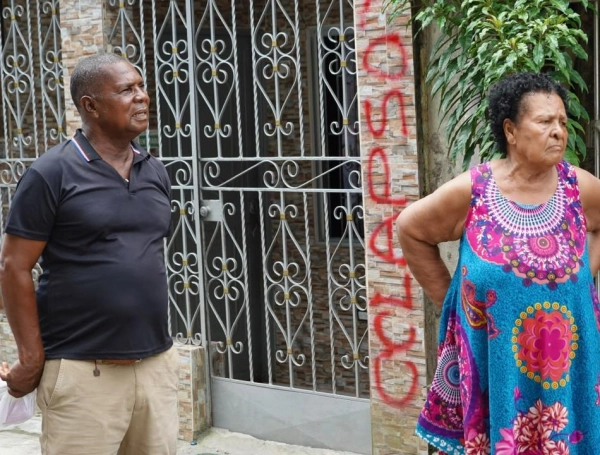
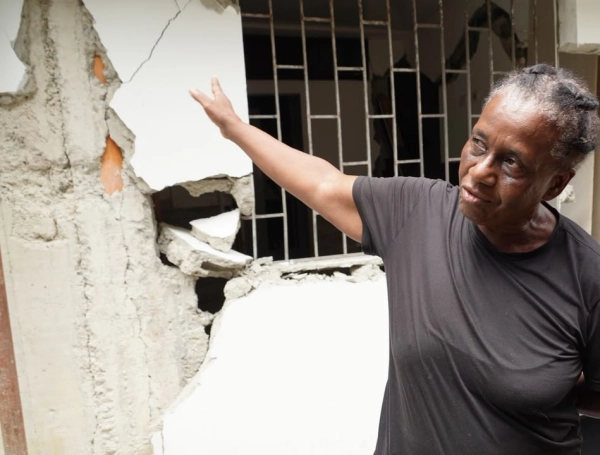
In the Las Dalias sector of the El Jardín neighborhood, Anuncia Rivas de Valencia stares at the high-rise structure looming over her home. Her daily routine has become a grueling paradox: her own home was spared significant damage, yet she cannot live in it. Every afternoon, she and her family vacate their house to sleep in temporary, borrowed quarters, fleeing the psychological and physical shadow of the building next door, which has been declared uninhabitable but remains standing.

"We are all nervous and anxious," Anuncia confesses, her voice low. "I barely sleep. Every time the wind blows or a heavy truck passes, we look up, wondering if this is the moment it will finally come down."
This sentiment is echoed by her neighbor, Ascensión Palacios Bermúdez. For him, the earthquake has stripped away the sanctity of his home. He navigates a grueling commute between his house—which remains structurally sound—and a refuge where he spends the nights with his wife and two children. "It’s a danger that doesn’t warn you," he explains. "We were told the local government would take measures, that they would secure these areas, but a month later, we are still waiting."
The frustration in El Jardín is palpable. Residents describe a neighborhood where the rhythm of life has been replaced by the rhythm of uncertainty. María Ulda Lloreda, who also lives adjacent to the condemned structure, points toward the upper floors of the damaged building. "We are in constant danger," she says. "It is hanging over us, waiting for gravity to finish what the earthquake started."
A Nation in Shambles: The Statistical Toll
The fear experienced by families like those in El Jardín is backed by sobering data from the Quibdó Mayor’s Office. Out of 3,839 formal housing inspections conducted in the city, 829 structures have been classified as either collapsed or in imminent danger of collapse. An additional 890 have been deemed "uninhabitable."
The scale of the disaster is national. According to the National Unit for Disaster Risk Management (UNGRD), the earthquake that struck on August 10, 2026, in San José del Palmar, affected 16 departments and 497 municipalities. The figures are staggering:
- Human Impact: 331 lives lost, 4,505 people injured, and 111 individuals still missing.
- Displacement: 778,281 people impacted, with nearly 300,000 families displaced or suffering significant property damage.
- Housing Crisis: 119,752 homes damaged, 104,038 declared uninhabitable, and 19,142 completely destroyed.
In Quibdó alone, the Registry of Victims (RUD) confirms that 34,608 people have been affected, with 498 individuals currently living in emergency shelters. The damage extends to the city’s essential services: 84 of 130 official schools were damaged, disrupting the education of nearly 30,000 students. Nineteen healthcare facilities suffered damage, with 14 remaining closed, creating a secondary health crisis in a region already struggling with access to care.
The Path to Reconstruction: Stabilization Before Construction
For Mayor Rafael Bolaños Pino, the path forward is clear, albeit slow. "We must stabilize the city," he asserts. "This means prioritizing the controlled demolition of structures that are in danger of collapse. We cannot talk about rebuilding while these death traps are still standing over our streets."
The mayor notes that the challenge is twofold. Beyond the demolition of buildings, there is a critical need to stabilize hillsides fractured by the seismic activity and to clear the beds of rivers and streams that have been blocked by earthquake debris. As the rainy season approaches, these blockages pose an extreme risk of flooding, which would further compound the humanitarian crisis.
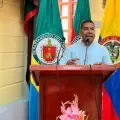
"Our priority is obtaining heavy machinery and construction materials," Bolaños explains. "We need to reactivate our economy, which has been decimated. 96.6% of our local businesses have reported some level of damage. We aren’t just trying to put things back to how they were; we are aiming to build a city that is more resilient and provides services we never had before."
The Humanitarian Response: A Medical Lifeline
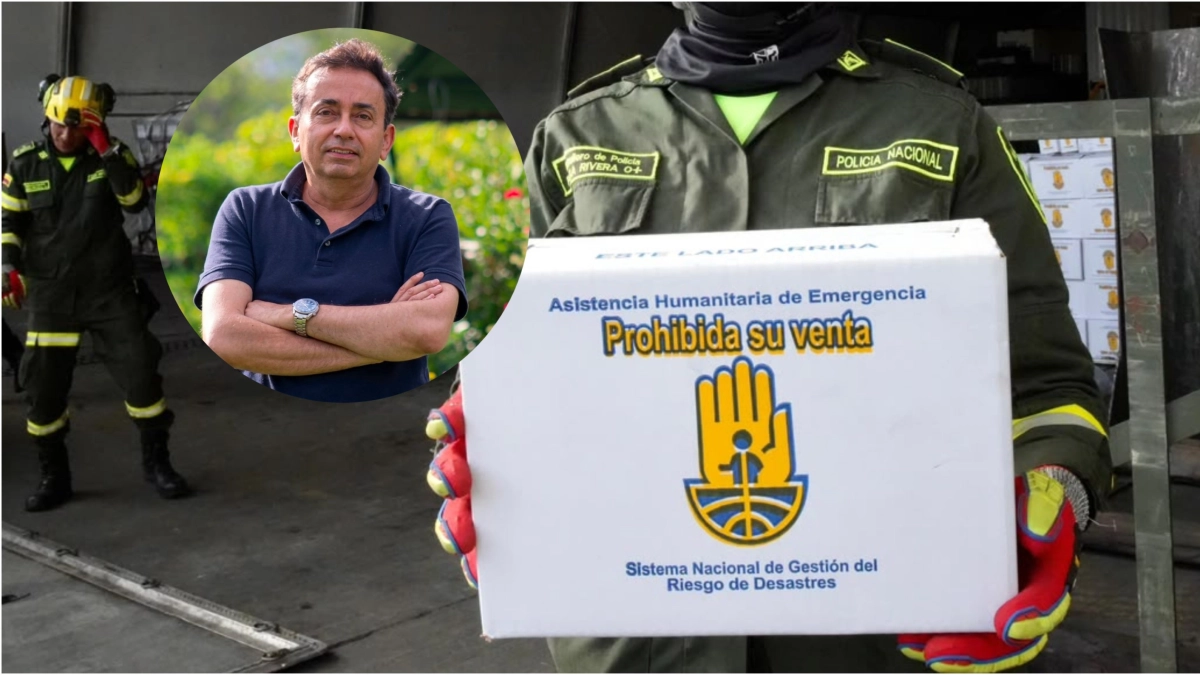
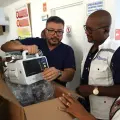
Amidst the ruins, a new spotlight has been cast on the systemic neglect of the Chocó region. Camilo Prieto, coordinator of the Colombian Environmental Movement Foundation, has been instrumental in the relief efforts. Since the earthquake, his organization has coordinated seven airplane missions, nine helicopter sorties, and two heavy-duty trucks to deliver over 60 tons of medical and humanitarian aid to the hardest-hit municipalities.
However, Prieto is quick to point out that the disaster only exposed a pre-existing vacuum. "The medical equipment we brought didn’t break during the earthquake; it was never there to begin with," he notes. The aid includes multiparameter monitors, oxygen concentrators, and defibrillators—vital tools that were absent in many local hospitals before the quake.
Prieto highlights a fundamental structural flaw: the energy crisis. At the Ismael Roldán Hospital, the lack of reliable electricity means that critical diagnostic tools, such as X-ray machines, become useless during the frequent power outages that plague the region. "If you don’t have energy, you don’t have health, you don’t have education, and you don’t have connectivity," he warns.
Chronology of the Crisis: 30 Days of Resilience
- August 10, 2026: A 7.4 magnitude earthquake strikes, with its epicenter in San José del Palmar. The shockwave cripples infrastructure across the Chocó department.
- August 11–15, 2026: Emergency response teams and volunteers begin the first wave of search and rescue. 364 people are pulled from the rubble across the nation during a 12-day, 288-hour operation.
- August 20, 2026: Initial assessments reveal the staggering scale of the damage, identifying thousands of homes as uninhabitable. The psychological toll on the population becomes a primary concern.
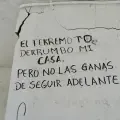
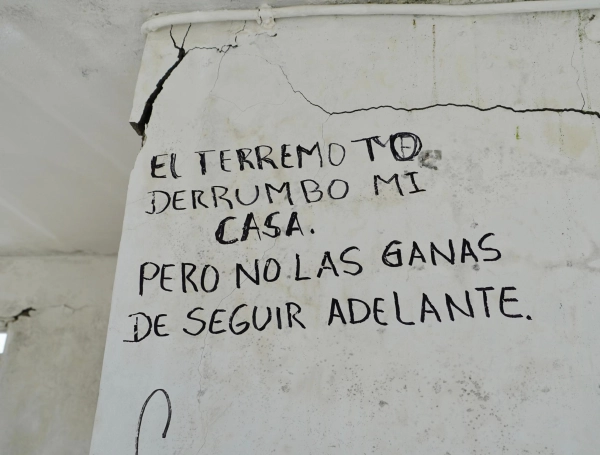
- September 1, 2026: Residents in neighborhoods like Las Terrazas begin leaving messages of hope on the walls of homes slated for demolition, signaling a collective effort to maintain morale.
- September 10, 2026: One month after the disaster, the Quibdó Mayor’s Office reports 829 buildings in critical condition, officially requesting urgent central government intervention in the form of heavy machinery and logistical support for demolition.
Resilience in the Face of Debris
In the neighborhood of Las Terrazas, the community has turned the wreckage into a canvas of hope. Where official demolition crews have yet to arrive, residents have painted messages on the cracked walls that delineate their former homes.
"The earthquake destroyed my house, but not my desire to move forward," reads one message. "Each fallen stone is the base of a new beginning," says another.
These words serve as a stark contrast to the silence of the heavy machinery that the city so desperately needs. While the national government has finally turned its gaze toward the Chocó, the residents of Quibdó are living in the interim—a space defined by the bravery of those who continue to support one another and the profound, lingering fear of the structures that refuse to fall.
As the region moves into the next phase of the crisis, the message from Quibdó is clear: they are ready to rebuild, but they cannot do it while they are still ducking from the falling debris of a broken past. The recovery of the Chocó will not be measured by the number of buildings razed, but by the speed with which the state provides the tools to ensure that the next generation of homes in Quibdó is built on solid, safe ground.