By Edwin Caicedo | Environmental and Health Correspondent
Updated October 6, 2026
In the immediate aftermath of the devastating earthquake that struck Colombia on August 10, 2026—with its epicenter in San José del Palmar, Chocó—the nation faced a landscape of fractured concrete, shattered lives, and profound uncertainty. While emergency services scrambled to provide medical aid, another critical battle was being fought in the streets and rural outposts: the urgent assessment of structural integrity.
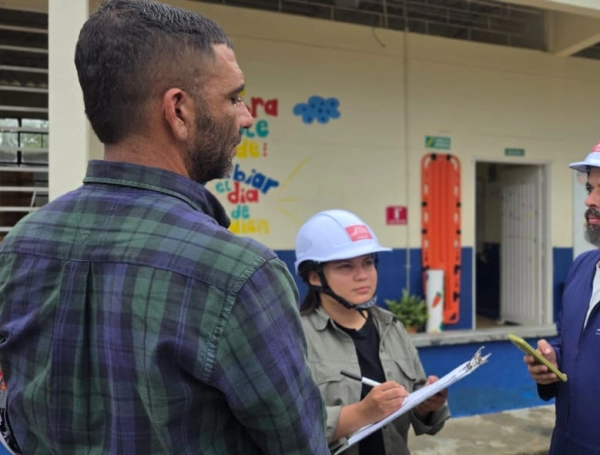
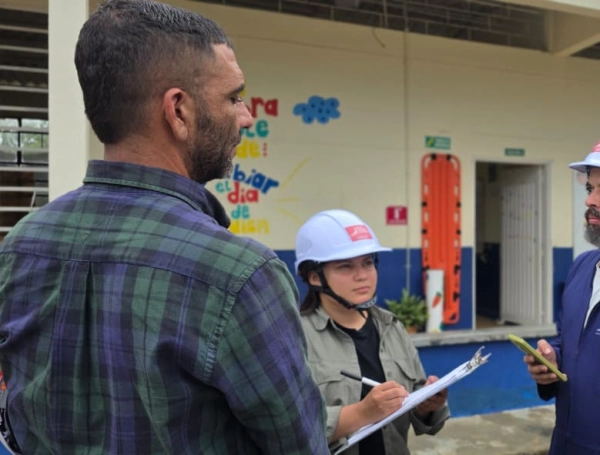
Responding to a desperate call for technical expertise, 78 professionals from the Escuela Colombiana de Ingeniería Julio Garavito mobilized across nine territories. Their mission was not merely to catalog damage, but to make life-altering decisions: determining which homes were safe to inhabit, which schools could continue to educate, and which structures had become death traps that required immediate demolition.
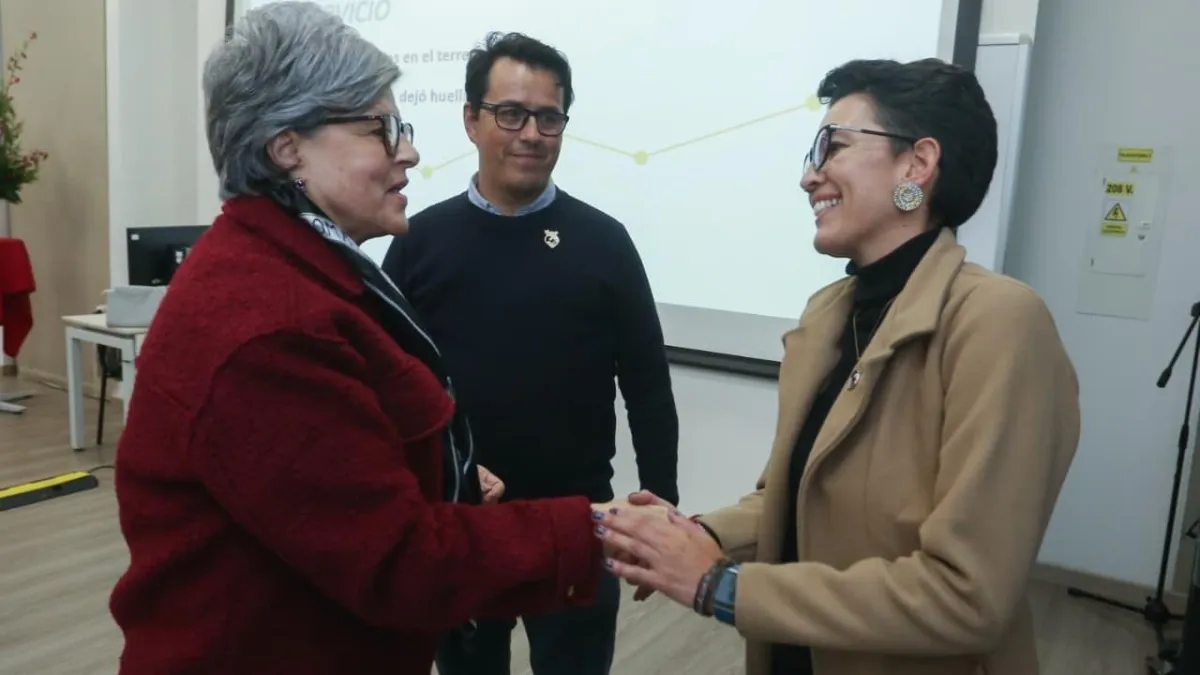
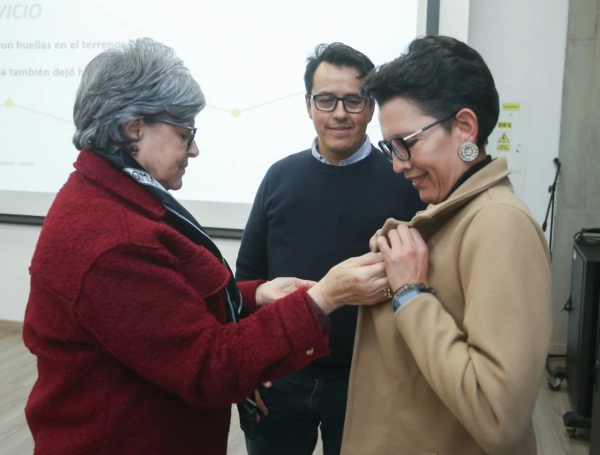
On October 6, the institution formally honored these volunteers, highlighting that their work was a blend of rigorous civil engineering and a profound, often heart-wrenching, human service.

A Chronology of Response: From Tremor to Technical Deployment
The mobilization began in the shadow of the disaster. As reports of widespread structural failure flooded in from Pereira, Armenia, Manizales, and northern Valle del Cauca, the Escuela Colombiana de Ingeniería identified a critical gap: local authorities were overwhelmed. Mayors and municipal engineers lacked the personnel to perform rapid, large-scale assessments of over 500 suspected structures.
"The need was immediate," explained Diego Sánchez Fonseca, the university’s administrative vice-rector. "We started coordinating with the Faculty of Civil Engineering and the Center for Structural and Material Studies the day after the main shock. We needed to know who was available, who could travel, and who was prepared to work in potentially hazardous, high-stress environments."
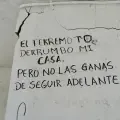
The response was overwhelming. Within 48 hours of the call for volunteers, the university’s Office of Graduates had received 170 applications. Professionals from various sectors set aside their careers, family obligations, and personal safety to join the effort. After a rigorous selection process, 91 were chosen, and 78 were deployed in successive waves.
The first mission departed just five days after the earthquake, heading for Pereira. This served as the pilot for a broader deployment strategy. From Bogotá, university leaders worked in real-time with local secretaries of infrastructure and risk management offices, ensuring that when the engineers arrived on the ground, they were integrated immediately into the official recovery protocols.
Supporting Data: The Scale of the Emergency
The magnitude of the task faced by these engineers is best understood through the lens of the official data released by the National Unit for Disaster Risk Management (UNGRD). As of October 2, 2026, the earthquake’s toll was staggering:
- Human Impact: 778,285 individuals registered as affected.
- Family Displacement: 364,664 families impacted.
- Structural Damage:
- 104,049 units declared uninhabitable.
- 19,148 dwellings completely destroyed.
- 119,748 homes sustaining significant damage.
- 84,857 structures verified as habitable.
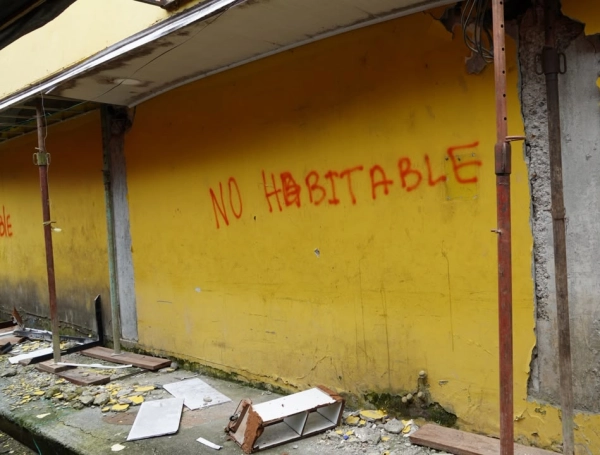
The 78 engineers from the Escuela acted as the front line in filtering these numbers. Every "Red Seal" they placed on a building represented a family displaced and a potential tragedy averted.

The Burden of the "Red Seal": Tales from the Field
For engineers like Viviana Marcela Bolaños Cancino, the work was a stark lesson in the intersection of physics and human fragility. During her mission in Roldanillo and later in Pereira, she encountered the visceral reality of the earthquake’s power.
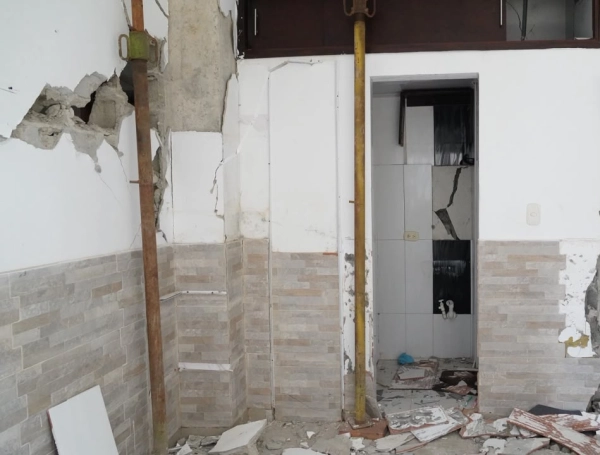
"In Roldanillo, we saw massive devastation," she recalled. "We found collapsed roofs, barro (clay) tiles that had fallen like projectiles, and culatas—the lateral walls of buildings—that had buckled and crashed onto neighboring houses. But it was in Pereira that the emotional toll truly hit home."
While inspecting seven rural schools in the vicinity of Pereira, Bolaños had to deliver the news to a teacher that one of the buildings was structurally compromised beyond repair.
"She had 12 children under her care," Bolaños said, recounting the moment the teacher broke down. "She wasn’t just thinking about the building; she was thinking about where those 12 children would go the next day. We were the ones holding the power to say ‘this building is closed,’ but we were also the ones who had to witness the immediate consequence of that decision on the community."
Similarly, Fernando González Merchán, an engineer with a master’s in structures, focused his efforts in the lower-income neighborhoods of Manizales. His team was tasked with validating the findings of initial assessments, focusing on buildings where the risk of total collapse was high.
"People looked at us with a desperate hope that we would tell them their house was fine," González explained. "They wanted to go home. As an engineer, you look at the columns, the shear walls, and the foundation, and you know the truth: the structure is compromised. Telling a family that their home is a total loss, and they have to leave, is a burden that university training doesn’t prepare you for. You are making a life-or-death decision in a matter of minutes."
Official Perspectives: Engineering as a Social Responsibility
During the recognition ceremony held at the university on October 6, the sentiment was clear: these professionals were not just performing a job; they were acting as an extension of the university’s mandate to serve society.
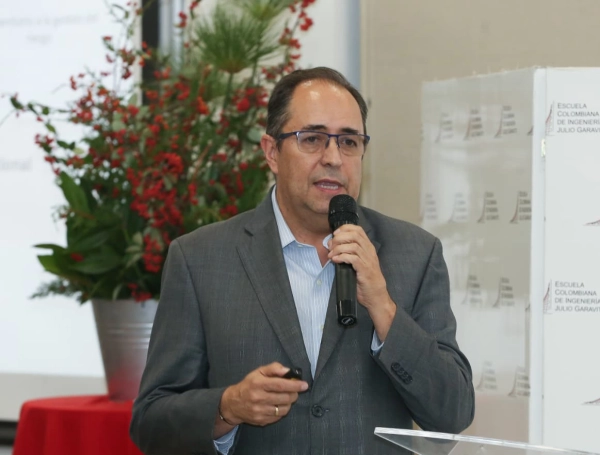
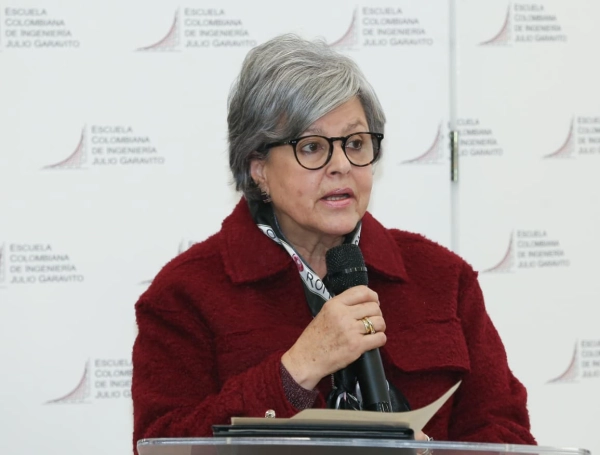
Myriam Angarita Gómez, the rector of the Escuela Colombiana de Ingeniería, praised the volunteers for their selflessness. "Each participation represented a personal decision: to offer time, to reorganize professional commitments, and to assume the burden of placing one’s own expertise at the service of others," she noted.

"Knowledge acquires a deep, profound sense only when it is converted into the care of life," Angarita added, summarizing the institutional philosophy that drove the initiative.
Diego Sánchez Fonseca, the vicerrector, was more direct in his address to the volunteers: "You are heroes. Making the decision to say, ‘I am going there, I don’t know exactly what I will find, I don’t know the conditions, but I must help’—that is an act of bravery."
Implications for the Future: A New Model for Disaster Response
The experience of the last two months has sparked a significant debate within the institution and the broader engineering community in Colombia. The primary question now is: How can universities be more effectively integrated into the permanent national disaster response infrastructure?
The university is currently working to formalize a permanent network of volunteers. The goal is to move from a reactive, emergency-based model to a proactive, prepared state. This includes specialized training in rapid post-earthquake structural assessment (ATC-20 protocols), crisis communication for engineers, and psychological preparedness for working in disaster zones.
"The emergency showed us that we have the technical capacity to respond, but we also identified the need for better coordination between academia and government at the local level," said one university official. "By institutionalizing this, we ensure that when the next event occurs, we are not just sending volunteers, but a highly organized, cohesive unit of experts."
As the country begins the long, arduous process of reconstruction, the role of these 78 engineers remains a cornerstone of the recovery. Their assessments serve as the baseline for municipal reconstruction plans, guiding where and how communities can safely rebuild.
The story of the Escuela Colombiana de Ingeniería in the aftermath of the August 10 earthquake is a testament to the fact that civil engineering is, at its core, a humanitarian profession. By bridging the gap between technical assessment and social welfare, these professionals proved that when disaster strikes, the most effective tool in the kit is a combination of rigorous science and deep, unwavering empathy.
As the university moves forward, the legacy of this mission remains clear: they have redefined what it means to "build a country," proving that true excellence is measured not just in materials and calculations, but in the lives protected and the hope restored to those who had lost everything.