By Edwin Caicedo Environment and Health Journalist Published: October 5, 2026
Main Facts
For generations, conventional marine biology held a straightforward view of sea turtle migration: these ancient mariners drifted passively along the vast oceanic conveyor belts, letting deep currents carry them across thousands of kilometers of open water. However, groundbreaking satellite telemetry data from the Colombian Caribbean is turning that long-held assumption on its head.
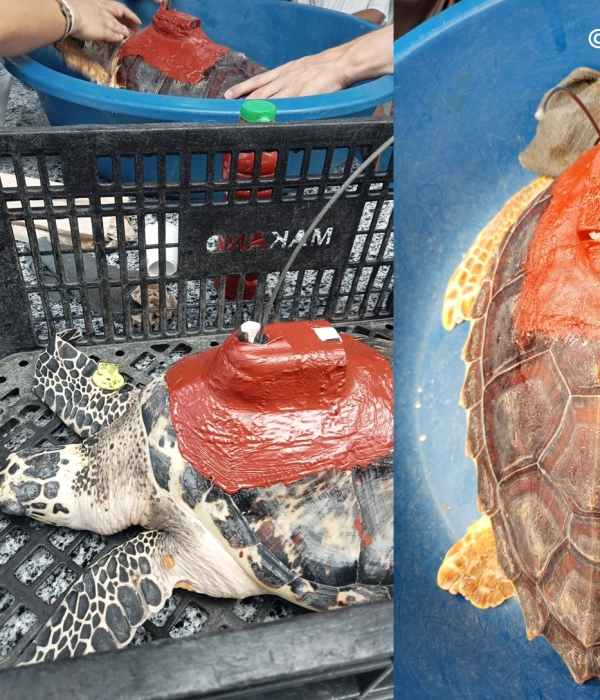
A new scientific investigation known as "Ancient Navigators: Satellite Tracking of Sea Turtles in the Colombian Caribbean" (Navegantes ancestrales) reveals that sea turtles do not merely yield to the ocean. Instead, tracking data from three individual specimens—named Kika, Corazón, and Canela—demonstrates that these reptiles actively navigate, journeying directly against ocean currents while moving in harmony with prevailing wind directions.
Developed by Julián David Morales Sánchez, a marine biology graduate from the Jorge Tadeo Lozano University in Bogotá, the study successfully resurrects a regional satellite telemetry research line that had languished without active local tracking records for twelve years. By cross-referencing high-resolution satellite data with environmental variables such as sea surface temperature, wind patterns, ocean currents, and primary productivity, the research project mapped out specific travel routes, pinpointed critical feeding and nesting ecosystems, and exposed the lethal human-induced threats lurking in coastal waters.
The findings establish that factors like local ecosystem health and potential food availability play a far more decisive role in shaping turtle migration paths than previously understood. Yet, the study also cast a stark light on the vulnerabilities these animals face, documenting a fatal interaction with local fishing gear that ultimately claimed the life of one of the monitored turtles. By bridging the gap between hard science and community engagement, the project offers a new blueprint for marine conservation in northern Colombia—one rooted not just in ecological protection, but in working hand-in-hand with local fishermen.
Chronology
The journey of "Ancient Navigators" unfolded across months of meticulous planning, high-stakes tracking, unexpected obstacles, and triumphant community outreach.
May 31, 2025: The First Release
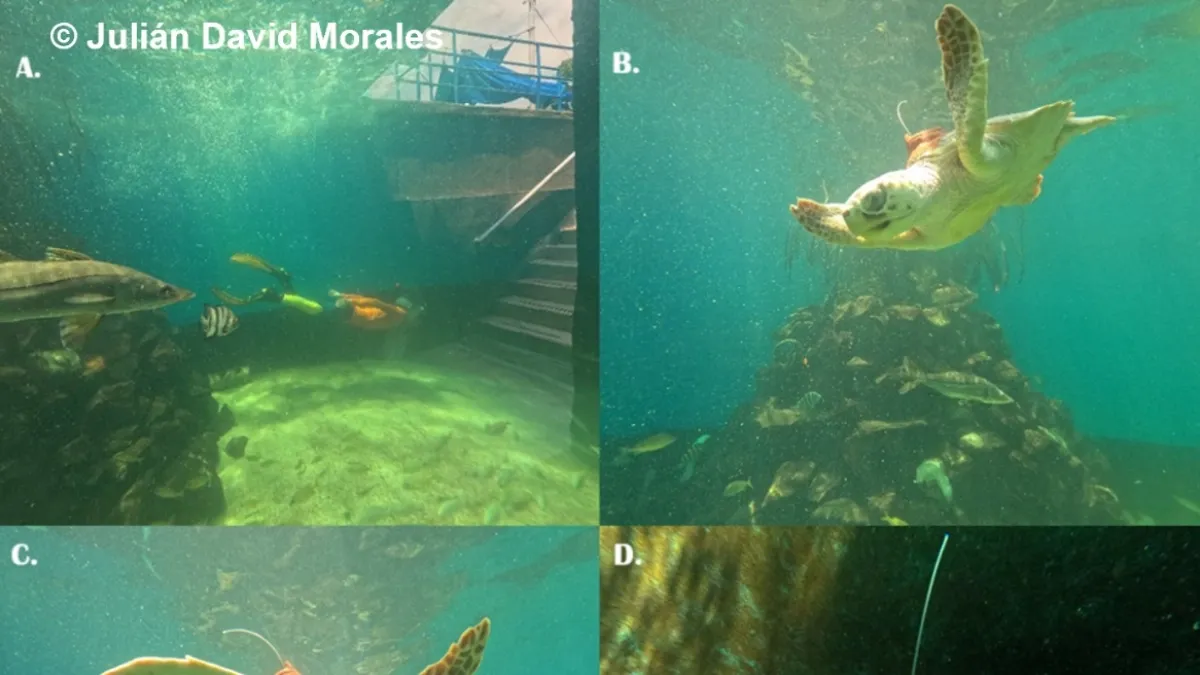
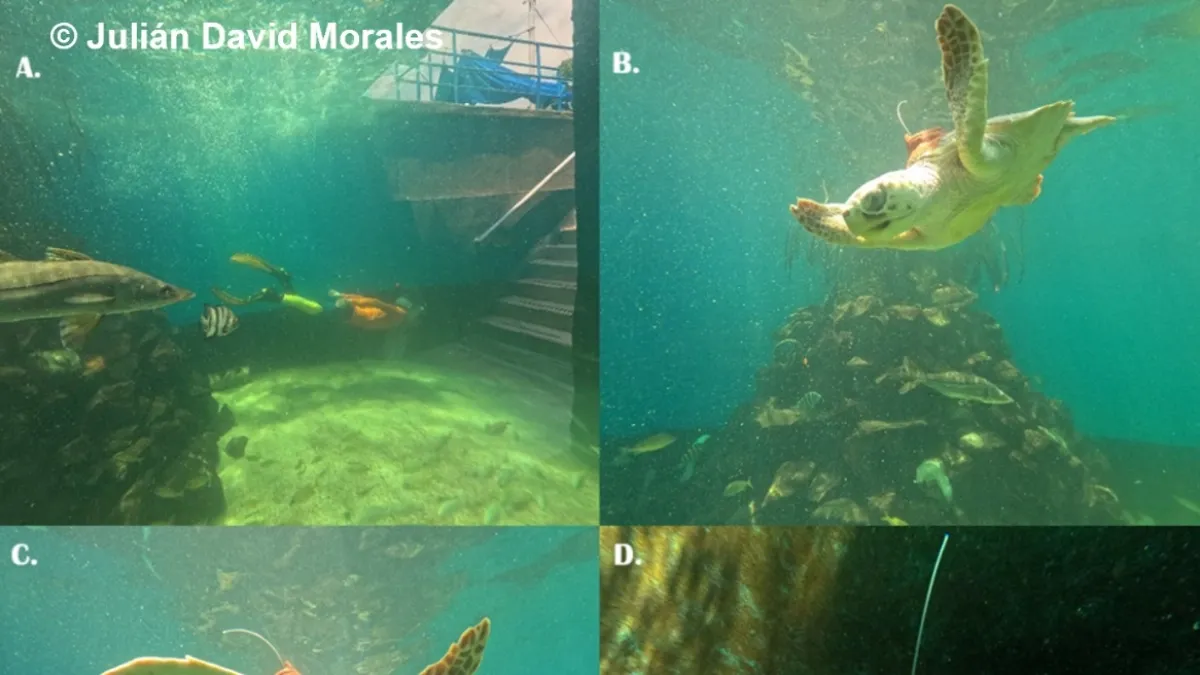
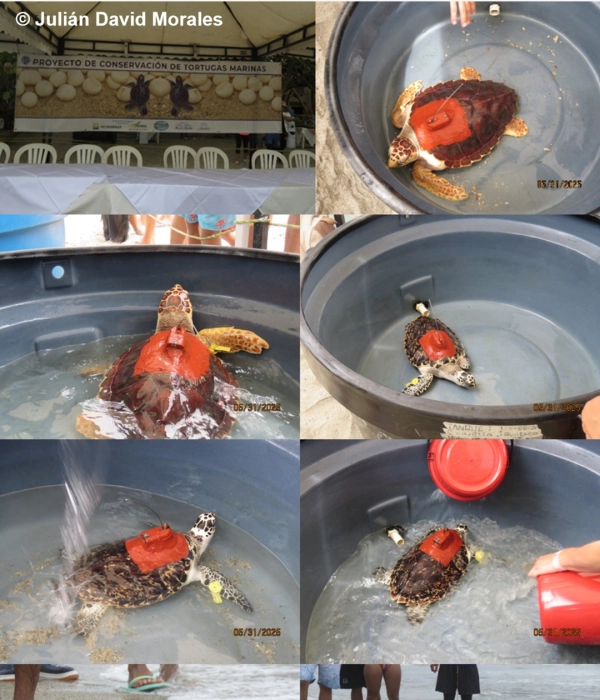
The active phase of the project commenced on May 31, 2025, with the simultaneous release of two female turtles—Kika and Corazón—from the shores of Mendihuaca Beach in Santa Marta. Kika, an adult loggerhead turtle (Caretta caretta), immediately struck out into the open sea, swimming approximately 42 kilometers offshore before looping back toward the coastal shelf and beginning a steady trek northward toward the arid department of La Guajira.
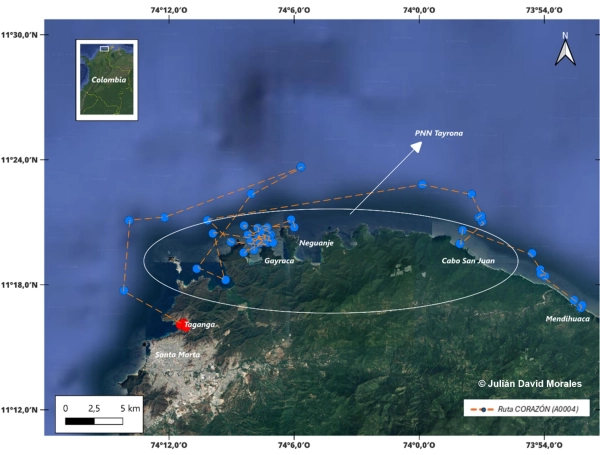
Meanwhile, Corazón, a critically endangered hawksbill turtle (Eretmochelys imbricata), took a distinctly different path. She navigated westward toward the protected waters of the Tayrona National Natural Park, settling into shallow bays rich in structural coral reefs.
June to July 2025: Divergent Routes and Ecosystem Dependencies
During the weeks following their release, satellite signals painted a vivid picture of their behavioral ecology. Kika spent nearly a month lingering within a highly productive coastal lagoon system in La Guajira, exploiting rich foraging grounds characterized by elevated primary productivity. Corazón, true to her species’ dietary preferences, remained anchored near the healthy coral reefs of the Tayrona region, where she could easily hunt for her primary food source: marine sponges.
Mid-2025: The Tragic Loss of Corazón
Tragedy struck the project just weeks after the launch. Corazón’s satellite transmission suddenly ceased moving, locking onto a static coordinate near the fishing village of Taganga. Recognizing the danger of a dropped signal, researchers and environmental authorities rushed to the location.
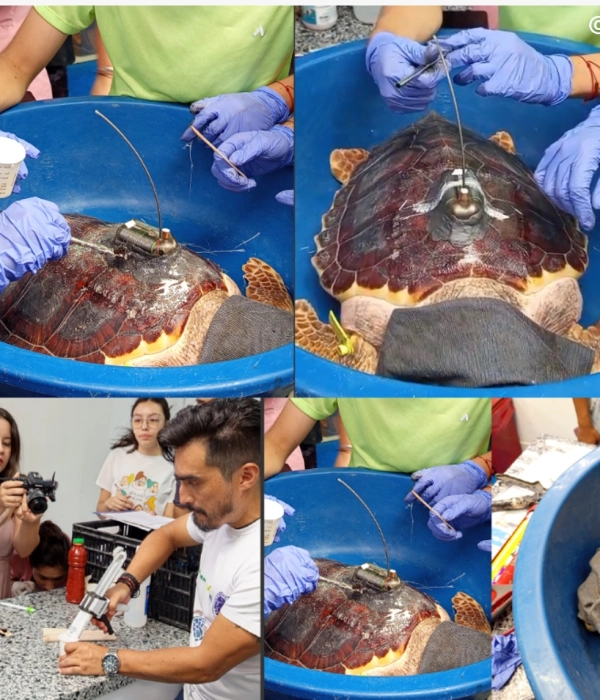
Upon investigation, local community members handed over the intact telemetry transmitter. Corazón had unfortunately encountered an unmanaged artisanal fishing gear deployment, becoming fatally entangled in nets. Though the turtle could not be saved, the recovery of the high-value transmitter preserved the core technological asset of the research team, allowing the project to pivot rather than stall.
Late 2025: Canela Takes the Baton
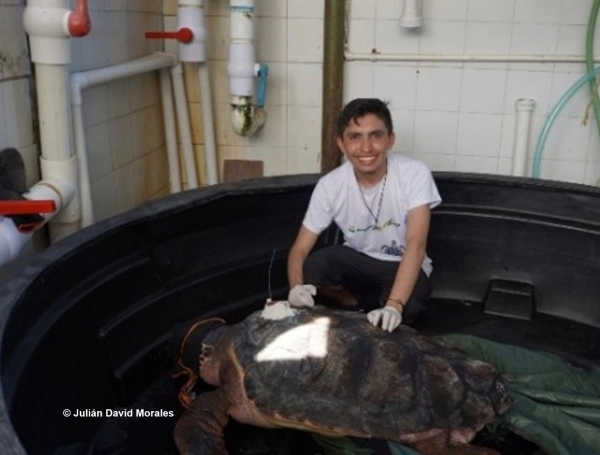
With the recovered transmitter safely in hand, researchers set their sights on a second candidate: Canela, a six-year-old, 90-kilogram loggerhead turtle. Canela had spent an extended period recovering under clinical observation at the Mundo Marino Aquarium due to previous health complications.
Once cleared by veterinary staff and greenlit by environmental authorities, Canela was prepared for release. On a designated morning, accompanied by units of the Colombian National Armada, Canela was transported roughly 10 kilometers out to sea. Drawing on the oceanographic data gathered during Kika and Corazón’s tracks, the release site was intentionally chosen to bypass immediate coastal hazards, placing her directly in an offshore-moving current that swept away from the bay of Santa Marta.
Canela successfully integrated into the wild, swimming into the protected marine boundaries of Tayrona National Park. Although her transmitter went silent 14 days later within a secure reef zone—preventing physical recovery of the device—her final days of recorded movement showed textbook wild behaviors and safe navigation through a protected marine corridor.
Supporting Data
The scientific rigor behind the "Ancient Navigators" project relies on an intricate synthesis of telemetry, oceanography, and ecological metrics.
12-Year Gap: Prior to this initiative, the Colombian Caribbean had gone 12 consecutive years without active, localized satellite telemetry studies tracking the movements of marine turtles.
Species Monitored: The study covered two primary species via three individuals:
Caretta caretta (Loggerhead): Represented by Kika and Canela.
Eretmochelys imbricata (Hawksbill): Represented by Corazón.
Environmental Matrix Analyzed: The researcher integrated satellite telemetry paths with four key oceanographic and biological variables:
Sea surface temperature (SST).
Local wind velocity and vector direction.
Meso-scale ocean currents.
Chlorophyll-a concentration as a proxy for primary productivity and food web richness.
Geographic Priorities Identified: The study isolated three distinct biological hotspots in the Colombian Caribbean requiring immediate conservation prioritization:
The High Guajira (Alta Guajira): Noted for high primary productivity and prolonged foraging stays.
Riohacha Coastal Waters: Identified as crucial transit and feeding corridors.
Tayrona National Natural Park: Highlighted as a vital reef-based sanctuary for sponge-foraging species.
Academic Dissemination: Julián David Morales Sánchez presented these findings at two major scientific gatherings: the XXI National Seminar on Marine Sciences and Technologies (SENALMAR XXI-2026) at the University of Medellín, and the 4th Colombian Congress of Herpetology at the University of Magdalena in Santa Marta.
Official Responses and Institutional Collaboration
The success and resilience of the "Ancient Navigators" project were made possible through a coordinated multi-institutional framework linking academia, private industry, public defense, and civil society.
Julián David Morales Sánchez, the lead biologist behind the study from the Jorge Tadeo Lozano University, emphasized that the telemetry data fundamentally changes how conservation areas must be justified to policymakers:
"It is not the same to say, ‘Let’s declare this area a protected zone because it is pretty,’ as it is to say, ‘This is a protected area because sea turtles feed right here.’"
Morales also highlighted the indispensable role of coastal communities, noting that traditional conservation frameworks frequently fail because they exclude the people who share the sea every single day.
"Many times I feel that science is based on conservation, but it does not take into account the communities, who are an important factor in the preservation and conservation of the species," Morales stated. Reflecting on the loss of Corazón and the subsequent educational outreach in Taganga, he added: "It is not just about protecting, but about protecting with awareness."
The financial and logistical backbone of the project was shared by several key organizations:
Universidad de Bogotá Jorge Tadeo Lozano: Provided the academic foundation, institutional backing, and methodological framework through its Marine Biology program.
Marine Turtle Conservation Project (Proyecto de Conservación de Tortugas Marinas): Offered field expertise and operational support during releases and strandings.
Mundo Marino Aquarium: Acted as the vital rehabilitation center for Canela, providing months of clinical care and veterinary clearance prior to her return to the wild.
Petrobras: Provided critical financial sponsorship that made the purchase of the expensive satellite telemetry transmitters possible.
Colombian National Armada (Armada Nacional): Assisted directly in the offshore release operations, ensuring safe transport and deployment of rehabilitated turtles away from high-traffic coastal zones.
Implications
The implications of the "Ancient Navigators" project extend far beyond academic journals, charting a new course for how Colombia approaches marine resource management, regional policy, and human-wildlife coexistence.
1. Paradigm Shift in Marine Protected Areas (MPAs)
For decades, marine reserves in the Caribbean have often been drawn using broad strokes based on aesthetic beauty, general biodiversity markers, or political convenience. By demonstrating precisely where individual turtles swim, forage, and linger—such as Kika’s reliance on La Guajira lagoons and Corazón’s affinity for Tayrona’s coral systems—telemetry provides empirical, data-driven ammunition for conservationists. Future expansions of MPAs can now be legally and ecologically justified by pointing to hard spatial data proving that an area is a critical biological lifeline for endangered migratory species.
2. Acknowledging and Mitigating Artisanal Fisheries Conflict
The tragic death of Corazón brought an uncomfortable truth to the forefront of the study: human activity remains the single greatest bottleneck to marine conservation. However, the response to the incident redefined how scientists handle conflict zones. Rather than sparking conflict with the fishing community of Taganga, the recovery of the transmitter served as a catalyst for environmental education. By conducting workshops with local fishermen, explaining the function of the telemetry gear, and establishing communication protocols for accidental entanglement, the project turned potential adversaries into active guardians of the study.
3. Expanding the Horizon of Colombian Telemetry
With the successful revival of this 12-year dormant research line, the scientific community now has a tested operational framework to scale up monitoring efforts. The Colombian Caribbean is home to five distinct sea turtle species, including the massive leatherback turtle (Dermochelys coriacea). Morales and his colleagues are calling for increased investment, a larger inventory of satellite transmitters, and a broader cohort of young scientists to tackle the remaining knowledge gaps.
Ultimately, "Ancient Navigators" proves that protecting marine life is an interdisciplinary endeavor. As Morales concluded when reflecting on the broader meaning of his work:
"Each turtle that returns to the sea is a message of hope; understanding their journey is the first step to ensuring there is a future where all of them can return."
By Edwin Caicedo Environment and Health Journalist September 10, 2026 Main Facts: A City Trapped in Limbo One month after a powerful earthquake struck the department of Chocó on August 10, severely impacting more than…
By Mateo Chacón Orduz Subeditor, Life & Education Updated: September 17, 2026 Main Facts: A Counterintuitive Collapse in Educational Equity At first glance, the latest data from the 2025 PISA (Programme for International Student Assessment)…
BOGOTÁ, COLOMBIA — In celebration of the upcoming World Animal Day on October 4, media outlets around the globe are preparing special programming, features, and tributes to highlight the vital role that animals play in…