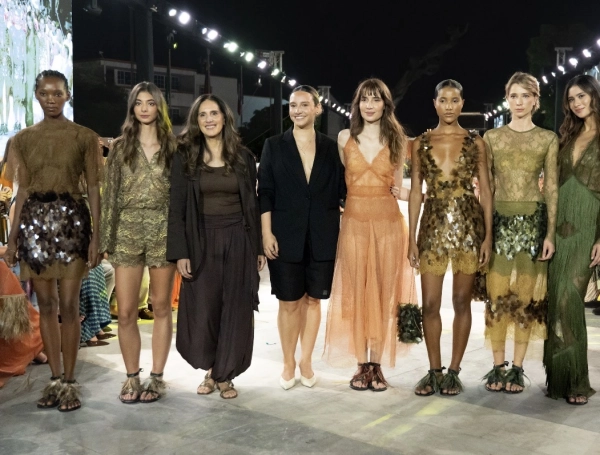
By Angie Rodríguez Translated and Enriched for Global Audiences
The vibrant Caribbean city of Barranquilla is set to become the epicenter of Latin American style, design, and industry innovation. The prestigious Latin American Ixel Moda Congress is celebrating its milestone 15th edition, bringing together top-tier representatives from academia, corporate manufacturing, government sectors, and avant-garde design. Scheduled from October 21 to 23 at the historic Faculty of Fine Arts of the Universidad del Atlántico, this year’s gathering arrives at a critical juncture. The global fashion landscape is shifting rapidly, steered by a conscious consumer base that prefers purposeful spending aligned deeply with personal values and lifestyle choices.
As the debates surrounding the Colombian and broader Latin American fashion systems intensify, Ixel Moda 20th-century legacy of connecting dots across industries takes center stage. The event is not merely a celebration of aesthetics; it is a high-level strategic forum designed to tackle the structural challenges of an increasingly demanding, technology-driven, and socially conscious marketplace.
Main Facts: What, Where, and When
Event: 15th Latin American Ixel Moda Congress (Congreso Latinoamericano Ixel Moda).
Dates: October 21 – October 23.
Location: Faculty of Fine Arts, Universidad del Atlántico, Barranquilla, Colombia.
Expected Attendance: Over 1,000 delegates, including international designers, industry executives, researchers, students, and institutional leaders.
Core Themes: Sustainable creation, agile multi-consumption, technological integration (AI, digitalization, and omnichannel strategies), ethics in production, and the intersection of fashion and cultural tourism.
Key Highlights: The academic Foro Moda, the Academic Convention of Fashion Institutions (CAIM), Business Panels, FuturoLab, Fashion Fest, artisanal showcases, and open-air runway shows along the iconic Gran Malecón del Río under the municipal banner "Barranquilla es moda".
Chronology and Evolution: Two Decades of Shaping the Industry
To understand the weight of the 15th edition of Ixel Moda, one must look back at its foundational mission. Established in 2006, Ixel Moda was conceived as a pioneering platform dedicated to elevating the Fashion System (Sistema Moda) across Latin America. Over the past two decades, the organization has systematically bridged gaps between higher education institutions, industrial manufacturers, public policymakers, and independent creative managers.
Milestones of the Congress:
2006–2010 (The Foundation): Ixel Moda starts as a localized effort in the Colombian Caribbean to structure a fragmented textile sector, bringing design awareness to regions historically detached from major manufacturing hubs like Medellín or Bogotá.
2011–2017 (Expansion and Academic Rigor): The integration of specialized forums like CAIM anchors the event in academic research, transforming it from a simple runway showcase into a serious intellectual hub. International speakers begin to frequent the event, exposing local talents to global standards.
2018–2024 (The Itinerant Era and Tourism Synergy): Recognizing the multicultural power of clothing, Ixel Moda pivots toward decentralization. Initiatives like Ixel Itinerant (taking activations to cities like Valledupar) prove that fashion can successfully drive regional tourism and honor local heritage crafts.
2025–2026 (The Tech and Sustainability Pivot): Entering its 15th edition, the congress directly confronts the digital revolution, artificial intelligence, and the urgent imperative of absolute circularity in garment lifecycles.
Supporting Data: Economic Vigor and Market Shifts
The health of the Latin American fashion ecosystem remains robust, underpinned by strong domestic consumer spending. According to recent data from Inexmoda, the Colombian fashion system alone aggregates more than 99,000 active enterprises, forming a colossal network of micro-entrepreneurs, textile mills, logistics companies, and retail giants.
Despite global economic headwinds, consumer behavior in the region continues to surprise economists. Household spending on fashion maintained a positive real variation heading into 2026, registering a notable real growth rate of approximately 4.9 percent during the early months of the year. This data points to a vibrant, socially active domestic market that is eager to spend—provided the value proposition matches their expectations.
However, competing globally presents distinct structural hurdles. Erika Rohenes, executive president of Ixel Moda, points out a persistent economic reality: Latin America generally struggles to compete internationally on raw production volume or low-cost pricing against Asian manufacturing powerhouses. Consequently, regional competitiveness must stem from unique cultural identities, storytelling, and ethical differentiation.
Official Responses and Expert Perspectives
The success and relevance of Ixel Moda rely heavily on the dialogue fostered between veteran industry leaders and emerging voices.
Erika Rohenes: Fashion as a Pluricultural Mediator
Reflecting on the evolution of the event and its expanding footprint, Erika Rohenes emphasizes the intrinsic connection between style and the economy of regions:
"For the past six years, we have worked across multiple cities; it is no longer just about Barranquilla. Every time our organization moves to a new city—whether hosting this major congress or executing initiatives like Ixel Itinerant in Valledupar—we unite fashion and tourism. Fashion is pluricultural; it convenes, it attracts, and it is profoundly media-driven."
Addressing the massive shifts in education and technology, Rohenes adds:
"Education is marching hand-in-hand with the immediacy we are experiencing, the technological shifts, and the sheer volume of innovation that has become part of the system’s evolution. When consumers finally realize that behind every product lies a true story connecting with their essence and origin, they identify with what they wear—and they are undoubtedly willing to pay a fair price for it."
Laura Ximena Poveda: Revaluing Heritage and Circularity
From the perspective of emerging design and sustainability, expert Laura Ximena Poveda highlights the ongoing revaluation of local identities and traditional craftsmanship:
"We must understand a garment as an object whose value resides just as much in how it is produced, who crafts it, and what ancestral knowledge is preserved. As an emerging designer, I consider this deep interest to be our strongest competitive advantage."
Poveda stresses that the ultimate hurdle lies in consumer education—getting buyers to invest in pieces that reflect true human labor:
"The challenge is making consumers understand the immense value hidden behind a label, so they are willing to pay a fair price that recognizes the time, skills, and hard work invested in each individual piece. Circularity is fundamental: designing pieces so they can be repaired, reused, and eventually reincorporated back into the production chain. Yet, putting this into practice requires access to suppliers, technologies, and resources that are rarely within reach for a startup brand."
Implications: Navigating a Technological, Inclusive, and Sustainable Future
The discussions at the 15th Ixel Moda Congress outline a roadmap for the future of Latin American design. As the industry faces the challenge of servicing an agile, multi-consuming public, several core implications emerge for brands operating in the region:
The End of Greenwashing: Consumers are increasingly skeptical. Industry leaders warn that brands can no longer sell hollow promises of sustainability. Transparency regarding supply chains, fair wages for local artisans, and honest ecological practices are now prerequisites for brand loyalty.
AI and Digitalization as Equalizers: Omnichannel retail, artificial intelligence in trend forecasting, and digital showrooms are transforming how small and medium-sized Latin American enterprises scale. Adopting these technologies is no longer optional for survival.
The Rise of Ethical Education: Academic institutions across Latin America are overhauling their curricula. Design schools are moving away from purely aesthetic training, embedding courses on ethics, circular economics, digital integration, and cultural heritage preservation directly into foundational studies.
Cultural Identity as Economic Capital: Because Latin America cannot compete on cheap mass production, its future rests on its rich biodiversity, multicultural heritage, and ancestral artisan techniques. By transforming these cultural assets into high-value luxury and contemporary ready-to-wear, the region carves out an irreplaceable niche in the global market.
As Barranquilla opens its doors to the delegates of Ixel Moda 2026, the message is clear: Latin American fashion is no longer looking outward for validation. By turning inward to celebrate its roots while embracing technological agility, the region is defining a sophisticated, conscious, and resilient future on its own terms.
BOGOTÁ, COLOMBIA — In celebration of the upcoming World Animal Day on October 4, media outlets around the globe are preparing special programming, features, and tributes to highlight the vital role that animals play in…
By Global Technology Correspondent Updated: October 6, 2026 Main Facts The landscape of wearable technology has reached a critical regulatory crossroads. The Norwegian government, spearheaded by Minister of Digital Affairs Torgeir Micaelsen, has announced a…
By: Editorial Staff Medellín, Colombia – July 23, 2026 As the 37th edition of Colombiamoda prepares to open its doors in Medellín from July 25 to 31, the atmosphere in the city is charged with…