By Angie Rodríguez Published: May 10, 2026 Travel & Trends Section
Introduction and Main Facts
Air travel has long been a domain governed by strict rules, where passenger compliance is not merely a matter of etiquette, but a legal and operational necessity. Recently, however, the intersection of modern technology—specifically wearable recording devices—and commercial aviation regulations has sparked intense public debate.
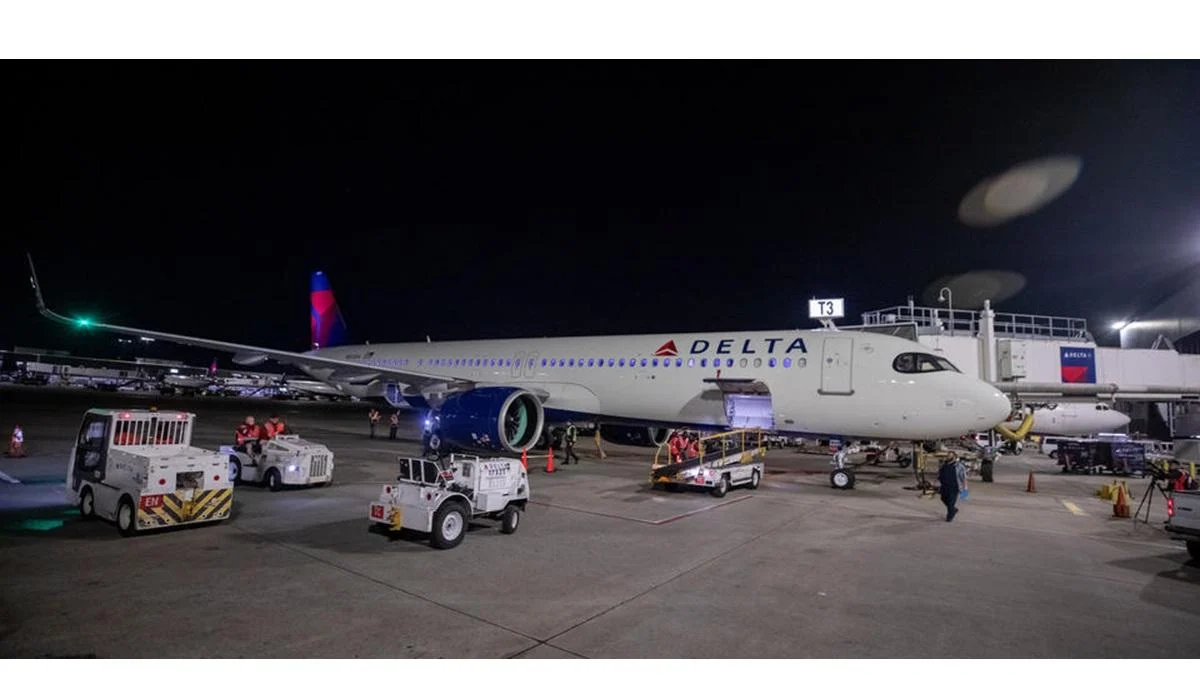
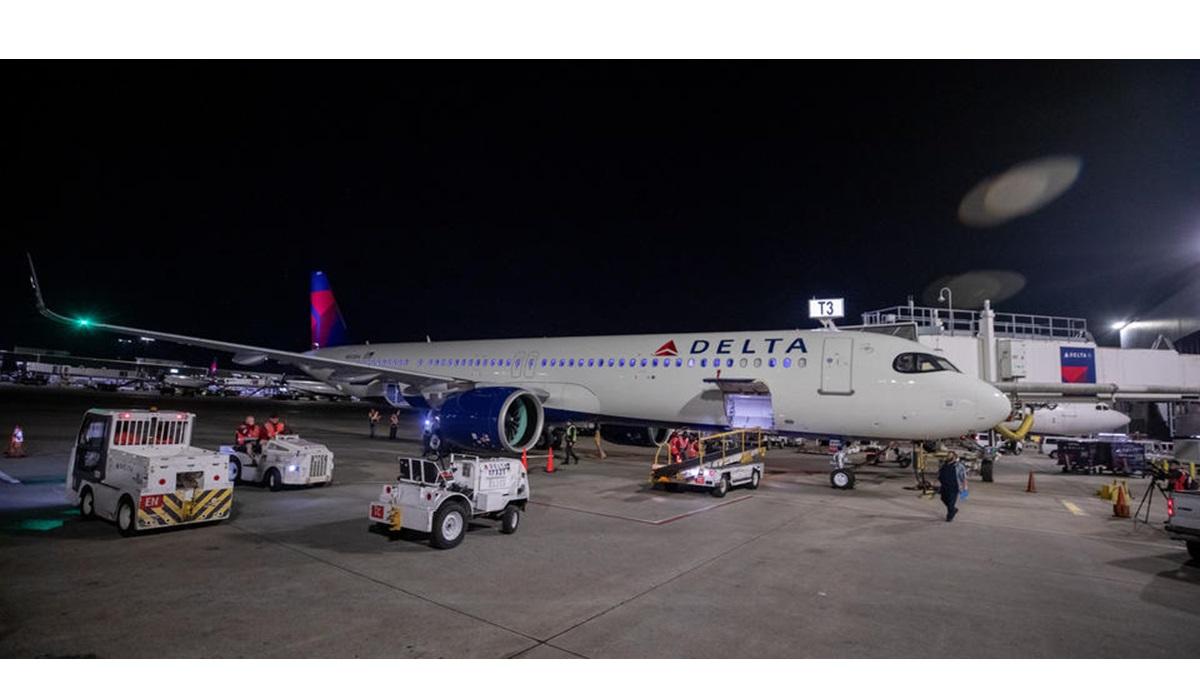
A striking example of this friction occurred on September 9, during Delta Air Lines Flight 983, which was scheduled to operate along the heavily trafficked international route between El Dorado International Airport in Bogotá, Colombia, and Hartsfield-Jackson Atlanta International Airport in the United States.
The flight, which was grounded before departure due to an escalating confrontation between a passenger and the cabin crew, culminated in the traveler being forcibly removed from the aircraft. The incident quickly transcended a routine aviation dispute, transforming into a viral social media phenomenon after the affected passenger utilized his Meta Glasses—smart eyewear equipped with discreet cameras—to record the entire interaction.
Delta Air Lines later issued a definitive statement defending its crew’s actions, asserting that the passenger was removed strictly because he repeatedly refused to follow direct instructions given by authorized personnel, rather than for initially declining a seat re-assignment request. The case has since ignited widespread discussions across digital platforms regarding passenger rights, the limits of in-flight recording, and the absolute authority of flight crews to maintain order before takeoff.
Chronology of Events: Flight 983 on September 9
To fully understand how a simple seating request escalated into an involuntary removal from an international flight, it is essential to examine the sequence of events as they unfolded aboard the aircraft prior to pushback.
1. The Initial Seating Request
As passengers boarded Delta Flight 983 in Bogotá, the aircraft’s cabin crew attempted to resolve a seating configuration issue for a traveling couple. A flight attendant approached the passenger in question, politely asking if he would be willing to surrender his current seat and relocate to a different part of the cabin to allow a husband and wife to sit together.
According to the traveler’s public testimony, he initially agreed to the crew’s request out of courtesy. However, upon investigating the location and physical characteristics of the proposed alternative seat, he quickly changed his mind. He determined that the new seat was significantly smaller, less comfortable, and located in a less desirable section of the aircraft compared to the seat he had originally selected and paid for. Consequently, he returned to his original seat and informed the crew that he preferred to remain there.
2. Escalation and the Introduction of Meta Glasses
While disputes over seat changes are relatively common during the boarding process, the situation intensified when a second crew member approached the passenger to address his refusal. Sensing that the conversation was turning contentious, the passenger activated his Meta Glasses—a pair of smart glasses capable of recording video—to document the interaction.
Video footage later shared on social media shows a cabin crew member addressing the passenger and explicitly instructing him to cease recording. The visual and audio evidence captures a tense dialogue between the airline employee, who emphasizes the privacy and operational protocols of the aircraft, and the passenger, who insists on his right to document the encounter.
3. Intervention of the Captain and Removal from the Aircraft
Minutes after the verbal exchange regarding the recording, another representative of the airline—acting on direct orders from the flight deck—approached the traveler. He was informed that the captain of the aircraft had made the executive decision to revoke his passage on Flight 983.
Faced with the captain’s orders, the passenger was escorted off the aircraft by airport security and airline personnel while the rest of the passengers watched. Despite the disruption and the delay caused by the incident, the traveler was subsequently rebooked on a later flight to Atlanta, while the viral digital footprint of his removal began circulating globally.
Official Responses and Corporate Standpoint
The fallout from the incident prompted swift public relations management from Delta Air Lines, which sought to clarify its position amidst mounting online commentary and speculation from travelers.
Delta Air Lines’ Official Statement
In its official communication regarding the incident on Flight 983, Delta strongly emphasized that the safety, security, and comfort of everyone on board—both passengers and crew—remain the company’s highest priorities. The airline highlighted that federal aviation regulations and internal corporate policies strictly mandate that passengers comply with all instructions issued by flight attendants and pilots.
"The safety of our customers and our crew is always above everything, and federal regulations require that customers follow all instructions from crew members. We always back our employees in their work to maintain a safe and respectful environment for everyone on board," Delta Air Lines stated.
Furthermore, airline representatives clarified that the core reason for the passenger’s removal was not his initial hesitation or refusal to switch seats to accommodate another party. Instead, the decision was triggered by his subsequent refusal to follow instructions—specifically the directive to stop recording crew members during the performance of their duties—and his failure to cooperate with the ultimate authority of the captain. Delta underscored that its employees are thoroughly trained to manage cabin safety and that management fully supports staff members who take decisive action to resolve insubordination before takeoff.
The Passenger’s Perspective and Social Media Impact
Conversely, the traveler utilized his digital footprint to present a vastly different narrative. By uploading the footage captured through his Meta Glasses, he aimed to portray himself as a consumer subjected to arbitrary mistreatment and unfair downsizing of his seat accommodations.
His narrative resonated with a distinct segment of social media users who frequently criticize airlines for overbooking, seating shuffling, and what they perceive as heavy-handed authoritarianism by flight crews. By framing the issue around consumer rights and his personal autonomy regarding seat selection, the passenger sparked an online debate regarding whether airlines wield too much unilateral power during the boarding phase.
Supporting Data and Industry Context: The Rise of In-Flight Disputes and Wearable Tech
The confrontation aboard Delta Flight 983 is not an isolated incident; rather, it sits within a broader, troubling trend of rising unruly passenger incidents and the complicated integration of wearable recording technology in commercial aviation.
Unruly Passenger Statistics
According to data compiled by international aviation authorities such as the International Air Transport Association (IATA) and the Federal Aviation Administration (FAA) in the United States, incidents involving unruly passengers have remained a persistent challenge for airlines globally. While numbers surged exponentially during the immediate post-pandemic travel boom, thousands of cases continue to be reported annually.
Common triggers for these incidents include:
Disagreements over seating assignments and baggage space.
Refusal to comply with crew instructions regarding electronic devices.
Intoxication or interpersonal disputes between travelers.
Regulatory bodies have maintained a zero-tolerance policy toward disruptive behavior, granting captains broad legal discretion to remove any individual whose actions are deemed a potential threat to good order, discipline, or flight safety.
The Legal Gray Area of Wearable Recording Devices
The use of Meta Glasses and other smart eyewear introduces unique regulatory and privacy challenges within the confined space of an airplane cabin. Unlike traditional smartphones, which are held up visibly, smart glasses record from the perspective of the wearer, often without immediate visual cues to surrounding passengers or crew members that filming is taking place.
Aviation experts note that while passengers generally possess the right to document public spaces, commercial aircraft are private property operating under strict federal and international regulations. Crew members have the legal authority to prohibit the filming of safety-sensitive operations or the recording of employees without consent, particularly if that recording interferes with the performance of safety duties or creates an atmosphere of intimidation. When a passenger defies a crew member’s direct instruction to stop recording, it legally transitions from a documentation issue into an act of non-compliance—the exact legal threshold that justified Delta’s decision to remove the traveler.
Broader Implications for the Future of Commercial Aviation
The Bogotá-to-Atlanta flight incident offers several critical takeaways for the future of air travel, touching upon passenger etiquette, airline protocols, and the evolving nature of digital documentation.
1. The Absolute Authority of the Flight Deck
For travelers, the incident serves as a stark reminder that an airplane cabin is not a public forum where disputes can be arbitrated via social media standards. The captain of an aircraft holds near-absolute authority under international maritime and aviation law to ensure the safety of the flight. Arguing with crew instructions—regardless of how frustrating a seating change or administrative request may feel—rarely ends favorably for the passenger on the ground. Once a captain orders a passenger removed, the decision is virtually irreversible for that specific flight.
2. The Ethics and Boundaries of Smart Technology
As wearable technology becomes more mainstream, airlines and regulatory agencies will likely need to issue clearer, more explicit guidelines regarding the use of smart glasses, hidden cameras, and continuous recording devices inside aircraft cabins. Striking a balance between a consumer’s desire to document potential injustices and an employee’s right to privacy and a safe working environment is a complex challenge that legal experts will continue to grapple with.
3. Customer Service vs. Operational Compliance
Airlines, on their part, face the delicate task of balancing customer satisfaction with strict security enforcement. While the initial request to accommodate a family is a standard courtesy, how gate agents and cabin crews communicate seat changes can sometimes exacerbate tensions. Ensuring transparent, polite, and firm communication from the outset can prevent minor inconveniences from escalating into full-scale security events that delay flights and inconvenience hundreds of other travelers.
Ultimately, Flight 983 stands as a modern cautionary tale of what happens when seating logistics, technological innovation, and clashing interpretations of authority collide at 35,000 feet—or, in this case, right before the wheels even leave the tarmac in Bogotá.
By Global Environmental Desk Published: September 26, 2026 Main Facts: The Inevitable Breach of the Paris Agreement The global community must come to terms with an uncomfortable and rapidly approaching reality: the average global temperature…
BOGOTÁ — In a swift and unexpected administrative pivot, the administration of President Abelardo de la Espriella has reversed the appointment of the priest and lawyer Father Rodolfo Andrés Londoño de la Espriella as the…
BOGOTÁ — In a political and educational landscape defined by high stakes and shifting paradigms, higher education in Colombia has once again taken center stage. At the heart of the current national discussion is a…