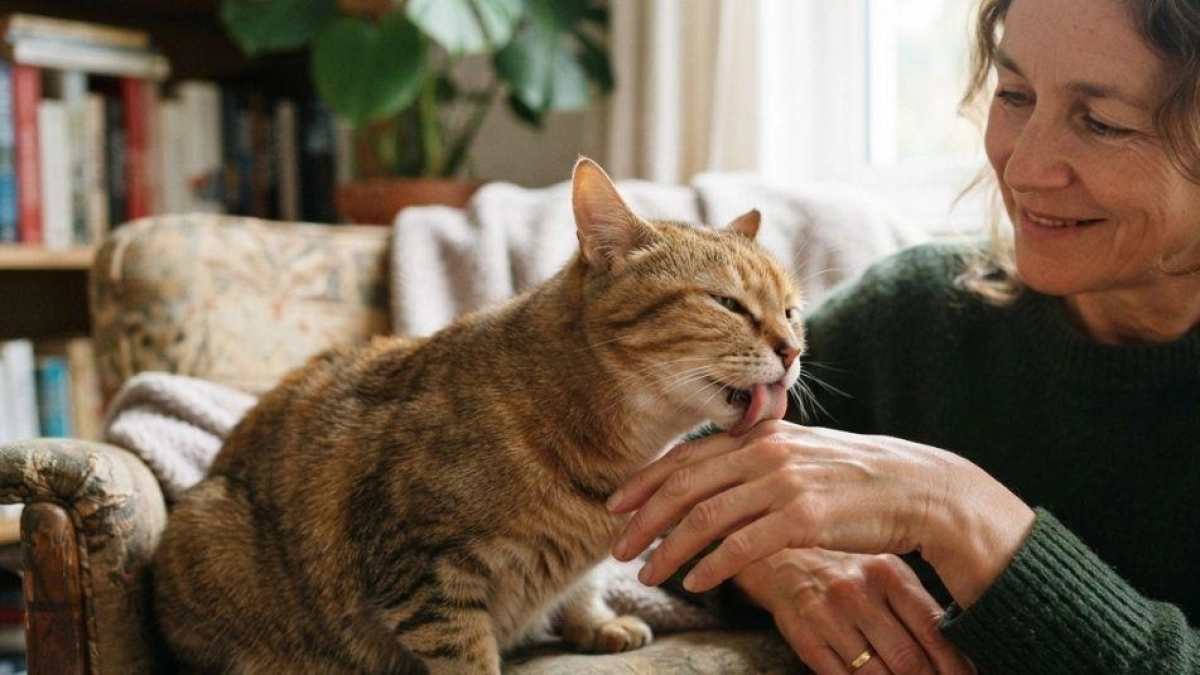
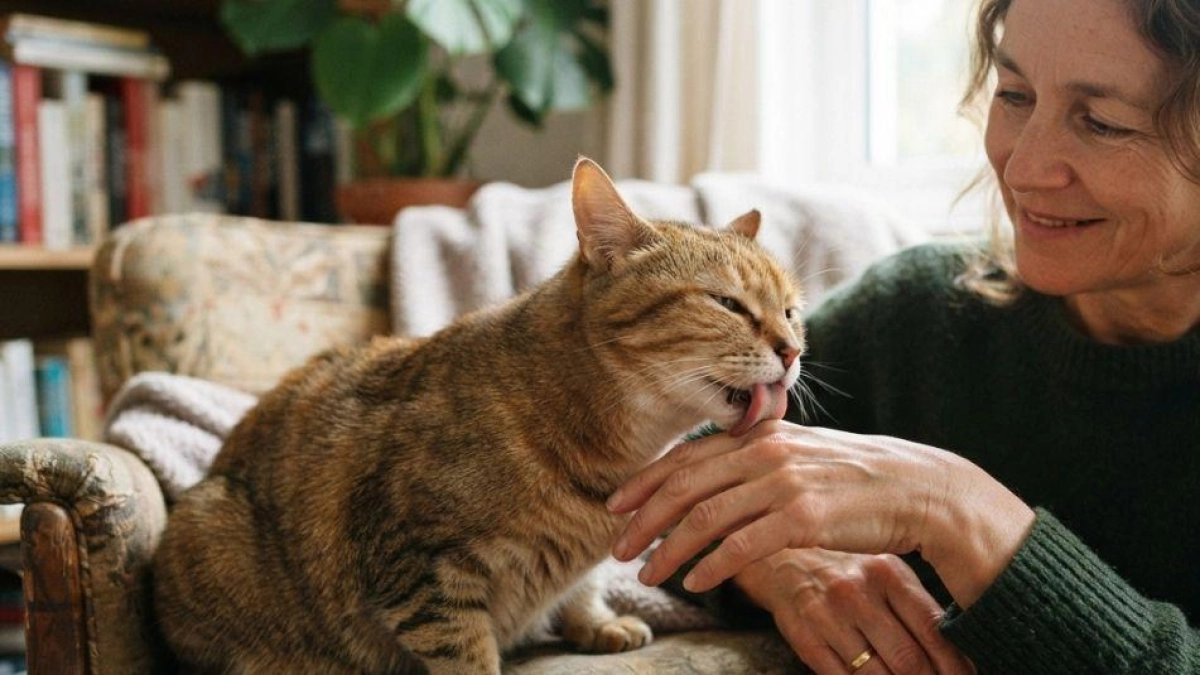
For centuries, cats have maintained a reputation as enigmatic, emotionally distant creatures. Unlike dogs, whose loyalty and comprehension are constantly on display through tail wags, eager greetings, and enthusiastic obedience, felines often seem indifferent to human presence. However, a groundbreaking scientific study published in the peer-reviewed journal PLOS One by a team of Japanese researchers has scientifically validated what many cat owners have known all along: cats not only recognize the distinct scent of their human companions, but they also process olfactory information through a sophisticated, asymmetrical biological mechanism previously undocumented in such detail.
The research reveals a fascinating dynamic of feline cognition. When presented with a novel or unfamiliar scent, cats systematically use their right nostril first before shifting to the left once the aroma becomes familiar. This subtle physical shift opens a new window into how animals process environmental stimuli and hints at complex lateralized brain functions that bridge the gap between cats, dogs, and potentially other mammals.
Main Facts
The study, spearheaded by Hidehiko Uchiyama, a professor of Animal Science at the Tokyo University of Agriculture, provides definitive scientific proof regarding feline olfactory recognition and behavior.
Owner Recognition: For the first time in a controlled scientific setting, researchers confirmed that cats can reliably distinguish the scent of their owners from that of complete strangers.
The Nostril Switch: When exposed to novel or unfamiliar scents, felines predominantly lead with their right nostril. As the scent becomes familiar or recognizable, they transition to using their left nostril.
Methodology: The experiment involved 30 domestic cats tested within the comfort of their own homes. Researchers used cotton swabs rubbed behind the owners’ ears, between their toes, and under their armpits to capture unique human scent profiles.
Behavioral Preference: Intriguingly, the cats spent significantly more time actively sniffing the scent samples of strangers compared to the samples of their own owners, demonstrating a strong exploratory drive toward the unfamiliar.
Chronology of the Experiment: Unlocking Feline Behavior
Studying cats in a laboratory setting has historically presented immense logistical hurdles. Because felines are notoriously independent, easily stressed by unfamiliar environments, and resistant to behavioral conditioning, traditional animal behavior paradigms used for dogs or rodents rarely work on them.
To overcome these challenges, Professor Uchiyama and his team designed a non-invasive methodology that allowed the cats to remain in their home territories.
Phase 1: Recruitment and Scent Collection
The research team recruited 30 household cats alongside their respective owners. Additionally, eight individuals with no pets—who had no prior interaction or familiarity with the participating owners—were enlisted to act as "scent donors."
To capture authentic individual aromas, the human participants were instructed to use cotton swabs to collect natural body odors from specific high-concentration sweat and pheromone zones: behind the ears, between the toes, and underneath the armpits.
Phase 2: In-Home Testing
Instead of bringing the cats to a sterile laboratory, the researchers brought the experiment to the cats. In each cat’s home environment, researchers presented a set of testing tubes containing three distinct samples:
The swab from the cat’s owner.
The swab from an unfamiliar human (stranger).
An empty control tube.
Phase 3: Video Recording and Analysis
High-definition cameras recorded every second of the cats’ reactions to the tubes. When analyzing the footage frame-by-frame, the research team discovered patterns that went far beyond simple duration of sniffing. They tracked not only how long the cats interacted with the samples, but which nostril they used first upon initial contact.
Supporting Data and Observations
The data yielded clear behavioral trends that point to distinct cognitive processes happening beneath the surface of the domestic cat’s quiet exterior.
Exploratory Bias: The cats consistently dedicated more investigative time to the tubes containing the strangers’ scents. Scientists interpret this as a sign that the cats immediately recognized their owners’ scents as familiar background elements of their daily environment, whereas the stranger’s scent demanded deeper investigation and cognitive processing.
The Right-Nostril Phenomenon: Regardless of where the unfamiliar tubes were placed within the testing apparatus, the cats overwhelmingly initiated sniffing with their right nostril when encountering the stranger’s scent.
The Left-Nostril Shift: As the cats repeatedly sampled the strange odor and grew accustomed to it over the course of the experiment, their behavior shifted. They transitioned to using their left nostril, mirroring a pattern previously observed in canine and other mammalian studies when processing safe, familiar information.
Official Responses and Expert Perspectives
The study has generated considerable discussion within the global veterinary and animal behavior communities, highlighting both the ingenuity of the Japanese research team and the inherent complexities of studying feline neurology.
Lead researcher Hidehiko Uchiyama addressed the historical disparity in cognitive research between dogs and cats.
"In reality, cats understand many things just as well as dogs do, but they do not demonstrate it in their behavior and are much more reserved, which makes conducting experiments difficult," Uchiyama explained.
Commenting on the functional significance of the nostril switching behavior, Uchiyama noted a direct link between physical anatomy and neural processing:
"The left nostril is used for familiar odors, and the right for new and alarming odors, suggesting that the sense of smell may be related to brain functioning."
According to the research team, this indicates that the right hemisphere of the feline brain is likely recruited to process emotionally charged, novel, or potentially threatening sensory inputs.
However, external experts urge caution against overinterpreting the neurological implications without direct brain imaging. Carlo Siracusa, an associate professor of animal behavior at the University of Pennsylvania who was not involved in the study, praised the research while offering a balanced scientific critique.
"This is how science works. You have to prove everything," Siracusa stated, emphasizing the fundamental importance of empirical validation for assumptions pet owners take for granted.
Regarding the claim that the nostril switch directly maps to hemispheric brain activity, Siracusa noted that more direct evidence is needed:
"The study did not prove that the right side of the brain is activated."
He pointed out that proving this definitively would require cats to willingly cooperate while undergoing brain scans—an improbable scenario given the independent nature of the species.
Despite these limitations, Siracusa offered high praise for the researchers’ persistence:
"I truly commend this group of scientists for getting 30 cats involved in these things. Most cats do not want to participate in research."
Implications for Feline Welfare and Human-Animal Bonds
While the study may seem like a lighthearted look into the quirks of house pets, the implications extend deeply into practical veterinary medicine, animal welfare, and behavioral science.
1. Enhancing Understanding of Feline Stress
Understanding that cats process novel smells through a specific physiological pathway (the right nostril) gives behavioralists a new tool to assess when a cat feels threatened or overwhelmed. In shelter environments or veterinary clinics, where strange scents are constant, recognizing signs of sensory overload can help staff minimize stress.
2. Improving Enrichment and Environment Design
Cats rely heavily on their sense of management to navigate their territories. Knowing that they distinguish familiar humans from strangers through precise olfactory cues reinforces the importance of maintaining scent stability in multi-pet households or homes undergoing major lifestyle changes. Introducing new people or animals gradually, with respect to how cats process olfactory data, can prevent behavioral issues like anxiety, aggression, or inappropriate elimination.
3. Bridging the Gap in Comparative Psychology
For decades, canine science dominated animal cognition research simply because dogs are cooperative subjects. By proving that complex, methodologically sound studies can be successfully executed with cats—even when working around their stubborn independence—this research paves the way for a new wave of feline studies. As science begins to catch up with what pet owners have always intuitively known, the domestic cat is finally receiving the rigorous academic attention it deserves.
In a decisive move to address the long-standing challenges of student debt in Colombia, the Colombian Institute of Educational Credit and Technical Studies Abroad (ICETEX) has launched an expansive "Plan of Opportunities 2026." This initiative…
By Alexandra Cabrera Published: September 26, 2026 Main Facts: Navigating the Astrological Landscape of the Week As the cosmic wheel turns, a profound shift in energy invites humanity to reevaluate its trajectory, emotional attachments, and…
By Edwin Caicedo Environmental and Health Journalist September 16, 2026 Main Facts The relentless threat of climate variability, driven by recurring climatic anomalies such as the El Niño phenomenon, has placed Colombia’s energy matrix under…