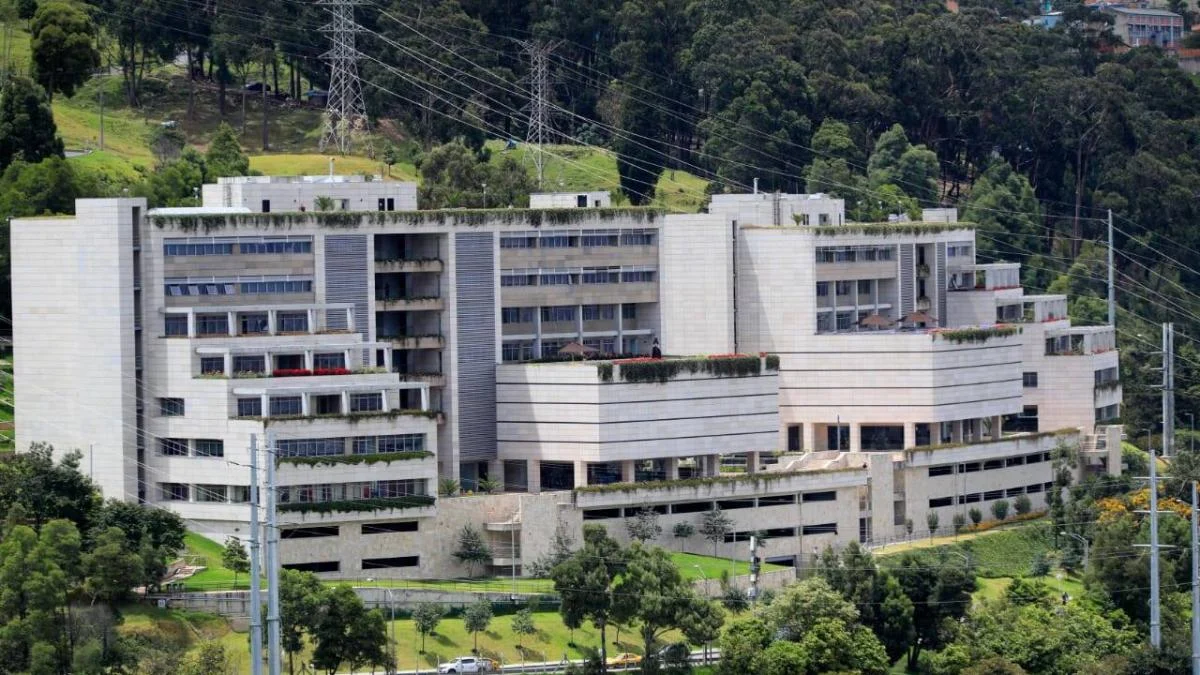
BOGOTÁ — In a move that highlights the mounting economic pressures facing even the most well-endowed higher education institutions in Latin America, the Universidad Externado de Colombia has announced a comprehensive, three-year workforce reduction plan. Approved unanimously by the institution’s Board of Directors (Consejo Directivo), the strategy aims to curb a persistent operational deficit that has plagued the university since 2017.
Despite boasting the highest asset valuation among private universities in Colombia—anchored by substantial corporate holdings and a robust multi-trillion-peso patrimony—the Externado is grappling with a widening gap between its operational revenues and expenditures. The restructuring marks a painful milestone for one of the country’s most prestigious centers of legal, political, and social sciences education, signaling that elite private academies are not immune to the demographic, economic, and structural shifts transforming the global academic landscape.
Main Facts: A Paradigm Shift for an Academic Heavyweight
The core of the crisis lies in a simple, unsustainable fiscal equation: for years, the costs of running the institution have outpaced its income from tuition and fees. According to internal communiqués and independent analyses of institutional reports, the university’s operational results have been heavily in the red for nearly a decade.
To address this, the Board of Directors approved a multi-phased downsizing strategy. Key elements of the decision include:

- A Phased Timeline: The reduction of the personnel structure will take place progressively over a three-year period.
- Targeted Reductions: While the administration has emphasized minimizing forced layoffs, vacant positions across administrative and academic departments will be heavily frozen, with new hires permitted only under strict criteria of absolute necessity.
- Mitigation and Support: Staff members affected by the transition are slated to receive individual and group support, alongside financial compensation packages featuring specialized bonuses and benefits.
- Safeguarding Academic Quality: The board’s resolution mandates that all reductions strictly comply with statutory regulations, labor laws, and the university’s professorial statutes to protect the quality of instruction and institutional services.
- Protection of the Electoral Process: To maintain absolute transparency ahead of the non-binding presidential consultation scheduled for March 2027—where a new rector will be chosen—the downsizing will be applied gradually and configured so as not to disrupt the census of eligible voting professors.
Chronology of a Crisis: From Austerity Measures to Workforce Reductions
The journey toward structural downsizing was neither sudden nor taken lightly. It represents the culmination of years of escalating financial strain and increasingly aggressive internal budget cuts that ultimately proved insufficient.
2017–2018: The Onset of Operational Deficits
According to data compiled by the Observatorio de la Universidad Colombiana from management reports and the National Higher Education Information System (SNIES), the institution’s operational deficit originated around 2017 and deepened significantly by 2018. Even as total revenues experienced modest, incremental growth, expenditure on the university’s large staff grew at a disproportionate rate relative to student enrollment.
October 26, 2026: The Specialized Audit Presentation
Recognizing that standard budgetary belt-tightening was failing to close the gap, the Rector’s office commissioned an external specialized consulting firm to evaluate the institution’s overhead. On October 26, the firm presented its findings to the Board of Directors, outlining several alternatives aimed at fundamentally resizing the personnel structure to prevent the continuous erosion of the university’s historical reserves.
November 3, 2026: Board Approval and Gradual Implementation
Following initial evaluations, the Board of Directors held a pivotal session on November 3, formally greenlighting the restructuring proposal. Crucially, the board factored in the upcoming March 2027 rector selection process, deciding to execute the plan gradually to foster stability within the Externadista community and safeguard the integrity of the upcoming electoral censo without raising procedural questions or casting shadows over the democratic transition.

November 9, 2026: Official Communication (Bulletin 04)
The university formally publicized the measures via Bulletin 04 of 2026. The document highlighted that the root cause of the crisis was a structural decline in tuition revenue driven by external pressures entirely outside the university’s control, cementing the reality that drastic workforce optimization was the only remaining path to long-term financial viability.
Supporting Data: A Deep Dive into the Numbers
A financial autopsy of the Universidad Externado de Colombia reveals a fascinating paradox: an institution of immense structural wealth operating under chronic, multi-billion-peso annual deficits.
The Operational Deficit
Independent analyses based on SNIES records outline the stark reality of the university’s profit-and-loss margins over recent years:
- 2023: Negative operational result of approximately 59.924 billion pesos.
- 2024: Negative operational result widening to 66.660 billion pesos.
- 2025: Negative operational result hovering around 62.478 billion pesos.
To put this in perspective, during the 2025 fiscal year, operational revenues totaled roughly 278.227 billion pesos, while costs and expenses surged to approximately 340.705 billion pesos. In practical terms, the university spent roughly 1.22 pesos for every single peso it brought in through its educational mission.

A Multi-Trillion-Peso Patrimony
Despite these operational losses, the Externado remains an economic powerhouse in terms of net worth. At the close of 2024, the institution’s total assets stood at roughly 4.8 trillion pesos, offset by liabilities of less than 103 billion pesos. This yielded a staggering patrimony of approximately 4.7 trillion pesos.
Among Colombian higher education institutions, the Externado ranks third overall—behind only the public giants SENA and the National University of Colombia. Among private institutions, it holds the highest net worth in the country, outstripping heavyweights like the Pontificia Universidad Javeriana (approx. 1.82 trillion pesos) and the Universidad de los Andes (approx. 1.62 trillion pesos).
The Grupo Bolívar Lifeline
This immense wealth, however, is largely disconnected from day-to-day classroom operations. The university’s endowment is substantially supported by a 25.9 percent stake in Grupo Bolívar, which generates approximately 57 billion pesos annually in dividends (roughly 5 billion pesos per month).
While these massive portfolio returns and dividends have historically subsidized the ongoing operational deficits, financial analysts point out a glaring vulnerability: the annual 57 billion peso dividend is no longer sufficient to cover the operational shortfall, which surpassed 62 billion pesos in 2025. Relying on investment returns to plug operational leaks threatens to slowly consume the university’s asset base if structural reforms are not enacted.

Enrollment Trends and Program Granularity
Compounding the financial pressure is a steady contraction in the student body. Enrollment data indicates a clear downward trend:
- 2017: 14,052 students
- 2021: 12,406 students
- Late 2025: 11,439 students
This represents a loss of roughly 2,600 students—an 18.6 percent decline over an eight-year span.
Furthermore, the university’s academic portfolio presents unique cost burdens. Of its total student population, 57.7 percent (6,597 students) are enrolled in postgraduate studies spread across an expansive catalog of roughly 200 specialized programs. Meanwhile, only 42.3 percent (4,840 students) are enrolled across its 18 undergraduate offerings. While a heavy focus on postgraduate education serves as a competitive differentiator, it also inflates operational overhead by maintaining numerous small-cohort programs that lack economies of scale.
Official Responses and Administrative Strategy
The leadership of the Universidad Externado de Colombia has moved deliberately to frame the downsizing not as a retreat from its academic mission, but as a necessary surgical intervention to preserve it.

In its public communications, the Board of Directors has stressed that the resizing initiative is guided by three non-negotiable principles:
- Preservation of Academic Standards: Ensuring that classroom instruction, research output, and institutional accreditations remain untouched.
- Protection of Student Services: Guaranteeing that the student experience, campus life, and support systems experience no degradation.
- Respect for Labor Rights: Executing all adjustments in strict adherence to Colombian labor law, internal institutional statutes, and the specific guidelines of the professorial code.
To ensure oversight, the board established a dedicated tracking commission charged with monitoring the execution of the plan. Additionally, departing personnel are slated to receive comprehensive outplacement assistance, psychological and career counseling, and robust severance and bonus packages designed to soften the blow of transition.
By opting for a gradual implementation window leading up to the 2027 rectoral consultation, the administration has sought to insulate the university’s governance structures from internal panic, prioritizing institutional continuity and calm dialogue over abrupt shocks.
Broader Implications for Higher Education in Colombia
The structural crisis at the Universidad Externado de Colombia serves as a bellwether for the broader higher education sector in the Andean nation and Latin America at large. Several macro-level factors driving the Externado’s predicament are reshaping the industry:

- Demographic Shifts: Declining birth rates and shifting youth populations are shrinking the traditional college-age demographic pool, leading to fiercer competition for incoming freshman classes.
- Changing Educational Preferences: Modern students increasingly favor flexible, shorter, or fully virtual credentials over traditional, campus-bound multi-year degrees.
- Macroeconomic Pressures and Student Financing: Difficulties within state-backed student loan mechanisms—such as ICETEX—coupled with the phasing out or restructuring of historical state scholarship and support programs (like Generación E), have severely restricted the purchasing power of middle- and lower-income families seeking elite private education.
- The Cost of Prestige: Institutions that heavily invest in comprehensive faculty bodies, sprawling campuses, and specialized, low-student-ratio postgraduate programs find themselves trapped between rising inflationary labor costs and an inelastic ceiling on what families can afford to pay in tuition.
Conclusion
The decision by the Universidad Externado de Colombia to downsize its workforce over the next three years is a sobering reminder that financial resilience requires constant adaptation. Even an institution fortified by nearly five trillion pesos in assets and decades of historical prestige must confront the realities of a shifting educational marketplace.
As the Externado navigates this delicate three-year transition, the outcome will be closely watched by peer institutions across Colombia. How the university balances its fiscal health with its historic commitment to academic excellence will likely set a precedent for how private higher education manages the complex economic realities of the post-pandemic era.