By Editorial Staff
September 16, 2026
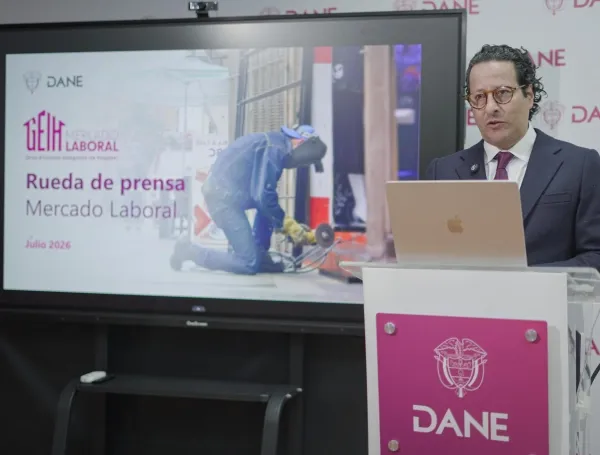
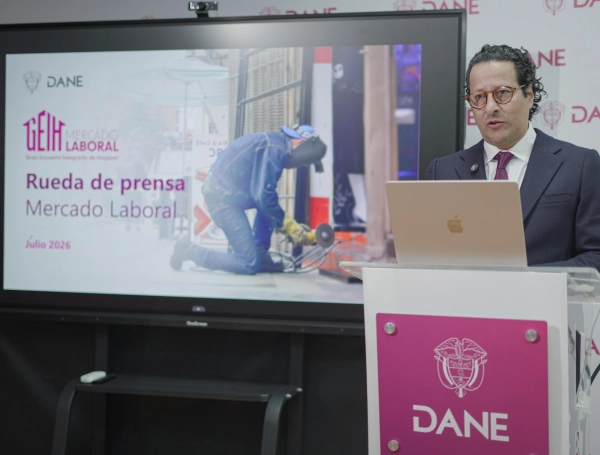
The integrity of Colombia’s economic data is under the spotlight once again. Following the abrupt departure of Ricardo Valencia from the helm of the National Administrative Department of Statistics (DANE)—a tenure that lasted a mere 29 days—the discourse surrounding the independence of the institution has reached a fever pitch. Juan Daniel Oviedo, who served as DANE’s director from 2018 to 2022 and is widely regarded as a guardian of the entity’s technical rigor, has emerged as a key voice calling for a fundamental restructuring of how the agency operates to shield it from political influence.

Oviedo’s position is clear: the credibility of the state’s statistical engine cannot be left to the whims of the current administration. He is advocating for a legislative overhaul to redefine the appointment processes for the agency’s leadership and to formalize strict protocols for how data revisions and audits are conducted.
The Core Argument: Independence Beyond Personalities
For Juan Daniel Oviedo, the independence of DANE is not merely a moral imperative; it is a legal requirement that is currently being tested by political instability. "The Law 2335 already protects the independence of decisions regarding the methodology, production, and dissemination of statistics," Oviedo stated in a recent interview. "The first step is to strictly comply with it: DANE must maintain its publication calendar, provide transparent explanations of its results, and respond to public inquiries without the interference of political directives regarding the content or format of those explanations."

Oviedo emphasizes that the institution’s strength lies in its procedural consistency. When a director is pressured to adjust the narrative around a set of statistics, the entire foundation of national economic planning is compromised. He argues that the institution must function as a "black box" of technical excellence where political considerations are entirely excluded from the production and presentation of data.
Chronology: A Turbulent Month for DANE
The recent departure of Ricardo Valencia has reignited concerns about the stability of technical institutions in Colombia. To understand the gravity of the situation, one must look at the timeline of recent events:

- Early August 2026: Ricardo Valencia takes office, inheriting the complex machinery of DANE and the pressure of a shifting economic climate.
- Late August 2026: Under the new administration, questions arise regarding the veracity and consistency of July’s unemployment data. Valencia makes a public statement asserting that, upon initial review, no anomalies or inconsistencies were found in the data.
- Early September 2026: Despite his assertion, rumors of internal audits and further "extraordinary" reviews circulate, creating an atmosphere of uncertainty within the agency.
- September 16, 2026: Ricardo Valencia steps down after just 29 days. The brevity of his term raises alarm bells among economic analysts who fear that high turnover at the top leads to "institutional capture."
This rapid succession of events has left the public and international investors questioning whether the data produced by the agency remains insulated from the political agenda of the day.
Structural Proposals: Insulating the Agency from Political Cycles
Oviedo’s critique goes beyond the current administration. He argues that the problem is systemic and rooted in how the agency’s leadership is chosen. He is proposing that the Colombian Congress take up a legislative study to establish new, rigid rules for the appointment and tenure of the DANE director.

H3: Reducing Vulnerability to Government Transitions
Currently, the director of DANE is highly susceptible to the political cycle. Every time a new administration takes office, the leadership of the agency is effectively "up for grabs." Oviedo suggests that this creates a state of perpetual vulnerability.
"The independence of the institution should not depend on whether we trust a specific director blindly," Oviedo explains. "It must depend on institutional guarantees that protect the work of the technical teams, regardless of which political party holds the executive office." His proposal involves creating a more meritocratic, long-term appointment process that makes it difficult for any president to install an individual whose primary qualification is political loyalty rather than technical expertise.
H3: Standardizing Audits and External Reviews
A critical component of the controversy surrounding Valencia’s departure involved the "extraordinary reviews" of unemployment data. Oviedo argues that such reviews are a normal part of DANE’s operations, but they must be institutionalized to prevent them from becoming tools of political skepticism.
"Reviewing the quality of statistics is a permanent task of DANE, not a special favor or a political cudgel that is picked up only when the government changes," he notes. To combat this, Oviedo suggests:

- Transparency of Scope: Any audit must publicly declare its objectives, the methodologies it will employ, and the expected timeline for results.
- Accountability: If an audit finds an error, the agency must provide a comprehensive explanation of its impact and how it was corrected. If no error is found, the agency must be equally vocal in affirming the validity of the original data.
- Elimination of Vague Suspicion: "A suspicion cannot indefinitely occupy the space of a confirmed finding," says Oviedo. He advocates for a system where, if an audit is triggered, there is a fixed deadline for the final report to be made public, thereby preventing the lingering, damaging rumors that currently plague the data.
The Implications of "Data Skepticism"
The implications of these administrative struggles are far-reaching. When the public—and more importantly, the markets—begin to doubt the figures produced by DANE, the cost of borrowing for the nation increases, foreign direct investment may stall, and the government’s own ability to formulate effective social and economic policies is hampered.
If the "suspicion" of data manipulation becomes a permanent fixture of the discourse, the statistical entity loses its status as the "source of truth." Oviedo warns that this is a dangerous path. In his view, a "provisional answer" from a director—such as the one given by Valencia—is not a shield against critique. Instead, it is an admission that the institution is not fully equipped to handle high-pressure questions with the depth and speed that modern markets demand.

Official Responses and the Road Ahead
While the government has yet to issue a formal statement regarding the specific legislative changes proposed by the former director, the internal climate at DANE remains tense. The search for a successor to Valencia is underway, with industry observers closely monitoring whether the administration will prioritize technical independence or political alignment.
International organizations and economic think tanks have historically lauded DANE for its technical rigor. However, the recent events suggest that even the most robust institutions are not immune to the pressures of an increasingly polarized political environment.

The debate sparked by Juan Daniel Oviedo serves as a timely reminder that statistical independence is not a static achievement but an ongoing process. As Colombia looks toward the future, the question remains: will the legislative branch heed the call to fortify the agency, or will the institution continue to be buffeted by the winds of political change?
For now, the mandate from experts is clear: the data must remain untouched by the narrative, and the institution must remain untouched by the political cycle. Only then can the country ensure that its economic future is built on a foundation of reality, rather than the shifting sands of political convenience.

Key Takeaways for Stakeholders
- Legislative Reform: A call for Congress to regulate the appointment of DANE directors to ensure continuity.
- Procedural Integrity: The necessity of making all data quality audits transparent, defined by clear methodologies, and bound by strict deadlines.
- Public Trust: The realization that suspicion without evidence is as damaging to the economy as the manipulation of data itself.
- Independence: The need to detach the statistical agency’s operations from the executive branch’s political objectives.
As the nation watches the next steps, the legacy of DANE’s independence rests on the ability of the state to prioritize long-term institutional stability over short-term political maneuvering.