By Jos Guerrero / Digital Reach Desk Published: November 4, 2026
Main Facts
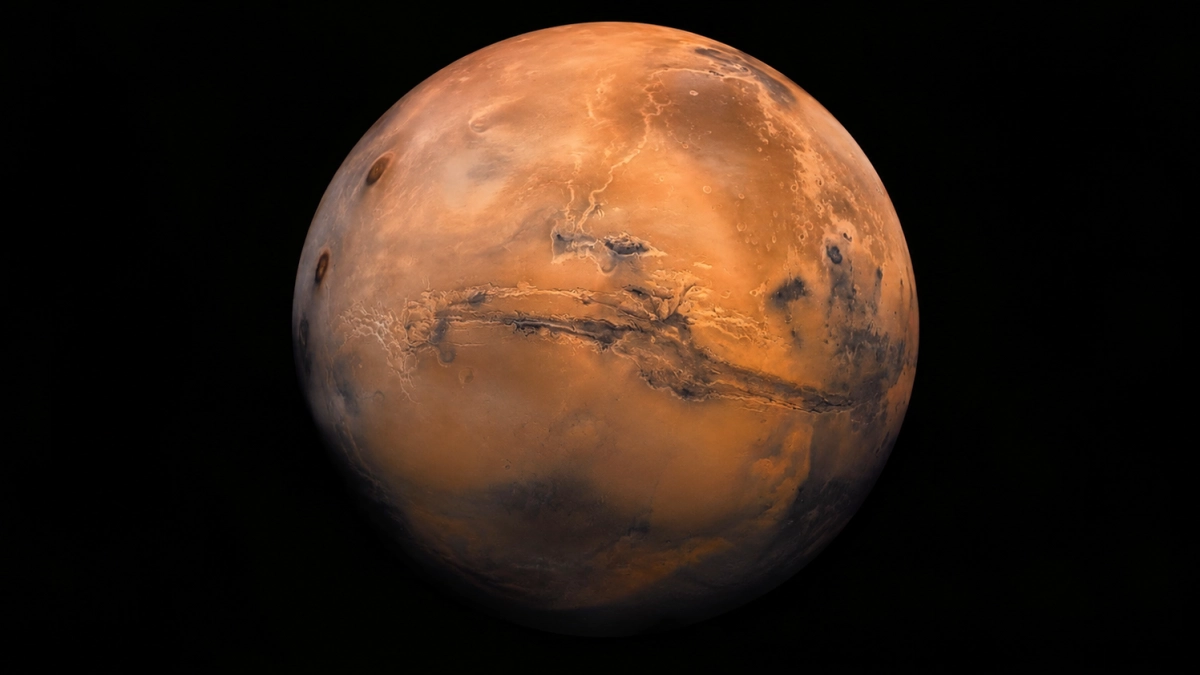
The National Aeronautics and Space Administration (NASA) has officially confirmed that the two spacecraft comprising the ESCAPADE (Escape and Plasma Acceleration and Dynamics Explorers) mission will perform a series of consecutive close flybys of Earth this November. These crucial maneuvers serve as a celestial slingshot, modifying the trajectory of the twin probes as they continue their prolonged interplanetary journey toward the Red Planet.
According to flight dynamics schedules released by the agency via the official NASA Solar System channel on the social media platform X, the twin vehicles will skim past our planet in two distinct pairs: the first spacecraft will make its closest approach between November 6 and 7, 2026, followed immediately by the second vehicle between November 8 and 9.
Astrophotographers and amateur astronomers equipped with medium-to-large backyard telescopes may have a fleeting opportunity to spot the probes during the hours leading up to each scheduled maximum approach. NASA reports that the spacecraft will appear as faint, slow-moving points of light traversing the night sky from east to west. However, the visibility of the probes is not guaranteed, as successful observation hinges entirely on local weather conditions, light pollution, and the exact geographic coordinates of the observer. To assist stargazers, the agency has published detailed star charts tailored to various regions across the United States to guide tracking efforts.
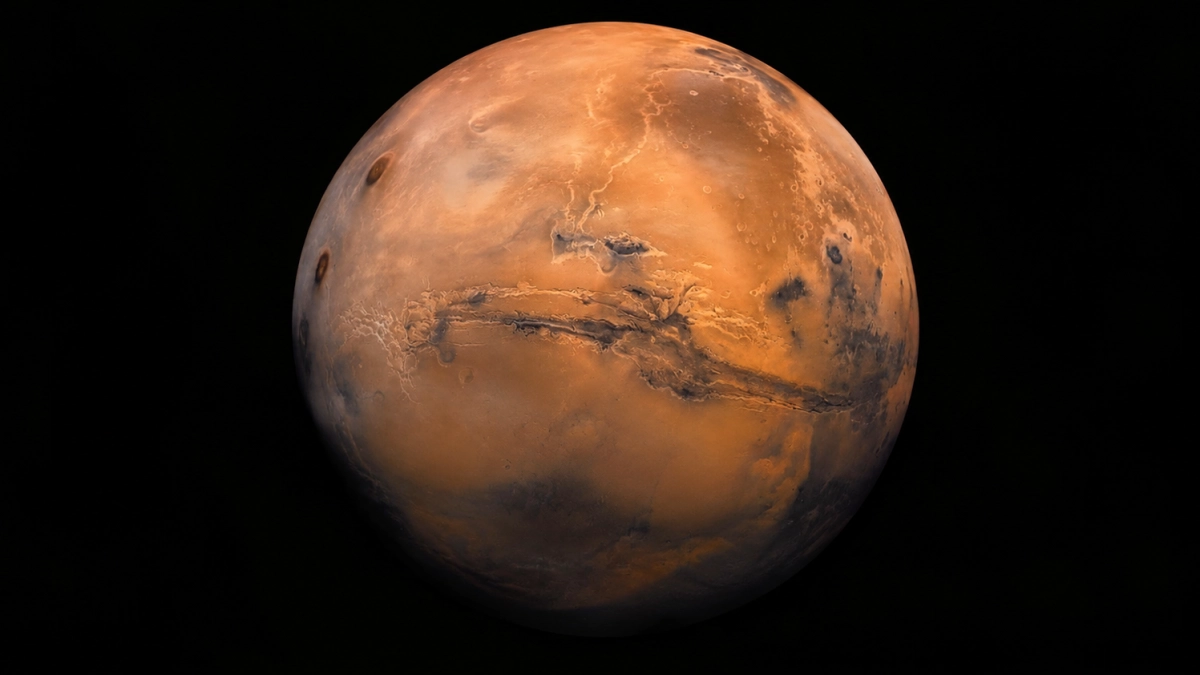
The ESCAPADE mission, originally launched in November 2025, remains on schedule to complete its interplanetary transit and arrive at Mars by September 2027. Once the probes cross into Martian orbit, they will initiate a complex series of braking and synchronization maneuvers designed to establish them in complementary orbits, paving the way for groundbreaking scientific observations regarding Mars’ unique magnetosphere.
Chronology of the ESCAPADE Mission
To fully understand the significance of the upcoming November 2026 Earth flybys, it is necessary to examine the timeline of the mission from its conception to its ultimate scientific objectives at Mars:
November 2025: The ESCAPADE mission officially begins with a successful liftoff. The twin spacecraft blast off from Space Launch Complex 36 at the Cape Canaveral Space Force Station in Florida. Propelled by a powerful New Glenn rocket built by Blue Origin, the launch occurs precisely at 3:55 p.m. EST, injecting the probes into their initial heliocentric trajectories.
Late 2025 – Late 2026: Following launch, the spacecraft enter a specialized cruise phase designed to optimize fuel consumption. Instead of heading straight for Mars, mission architects planned an extended orbital loop that brings the probes back toward Earth to harness gravitational assist mechanics.
November 6–9, 2026: The critical Earth flyby window opens. The twin spacecraft execute consecutive close approaches over a four-day span. During this window, mission controllers prepare the vehicles for the trans-Mars injection phase, taking advantage of the planet’s gravitational field and maximizing engine efficiency via the Oberth effect.
November 2026 (Post-Flyby): The spacecraft perform deep-space trajectory correction maneuvers, officially leaving the Earth-Moon system behind as they accelerate onto their definitive interplanetary collision-free course toward Mars.
September 2027: The twin probes arrive at the Red Planet. Upon reaching Mars, they will be captured into an initial, highly elliptical capture orbit. Mission operators will then spend several months meticulously adjusting and circularizing the orbits of both vehicles to match their spatial relationship.
Spring 2028: The primary science phase officially commences in the northern hemisphere spring of Mars. The twin spacecraft begin simultaneous dual-point measurements of Martian plasma and magnetic field dynamics, a configuration that has never been achieved before in planetary science.
Supporting Data and Technical Mechanics
The engineering behind interplanetary missions requires absolute precision, relying on complex gravitational mechanics and orbital physics. The ESCAPADE mission is no exception, utilizing principles that maximize the efficiency of contemporary launch vehicles and spacecraft propulsion systems.
The Oberth Effect and Gravitational Assists
A cornerstone of the November 2026 flybys is the exploitation of the Oberth effect, a fundamental principle in orbital mechanics. The effect states that an engine operating at high speed yields significantly more useful mechanical energy than one operating at lower speeds. As the ESCAPADE probes plunge inward toward Earth’s gravity well, they accelerate dramatically. By firing their onboard thrusters at the exact point of closest approach (periapsis), the spacecraft maximize the kinetic energy imparted by the chemical burn, achieving a greater velocity boost than would be possible in deep space with the same fuel expenditure.
This gravity assist maneuver effectively alters the heliocentric orbital energy of the probes without requiring massive, cost-prohibitive quantities of onboard chemical propellant. By leaning on Earth’s mass and orbital velocity, the mission saves critical weight, which can instead be allocated toward redundant systems and scientific instrumentation.
Mission Architecture: Dual-Spacecraft Science
Unlike traditional single-spacecraft missions, ESCAPADE relies on simultaneous measurements taken from two distinct points in space. This dual-probe architecture is revolutionary for studying space weather and planetary interactions:
Simultaneous Sampling: By placing two identical spacecraft into orbit around Mars, scientists can simultaneously observe how the solar wind impacts the Martian upper atmosphere and magnetic field at different locations and times.
Separation Dynamics: The ability to differentiate between spatial and temporal changes in the Martian magnetosphere solves a long-standing dilemma in planetary science, where single-spacecraft missions often struggle to determine whether a recorded change is due to the spacecraft moving or the environment changing around it.
Official Responses and Strategic Significance
NASA officials and mission principal investigators have repeatedly emphasized the unique cost-effectiveness and high scientific return of the ESCAPADE mission. Developed under NASA’s Small Innovative Missions for Planetary Exploration (SIMPLEx) program, ESCAPADE proves that profound interplanetary science can be conducted without the multi-billion-dollar price tags traditionally associated with flagship planetary missions.
"Utilizing our home planet as a kinematic stepping stone allows us to reach distant destinations with unprecedented efficiency," notes mission documentation from NASA’s planetary science division. "The flybys in November 2026 are not merely milestones of transit; they are active, high-precision operational windows where our navigation teams put years of computational modeling into practice."
Furthermore, the mission represents a major flight milestone for Blue Origin’s New Glenn launch vehicle, demonstrating the heavy-lift rocket’s capability to deliver complex, deep-space payloads accurately into interplanetary transfer trajectories. The successful execution of the launch and subsequent orbital mechanics validates private aerospace integration within NASA’s deep-space exploration roadmap.
Implications for Future Planetary Exploration
The implications of the ESCAPADE mission extend far beyond the immediate thrill of watching twin spacecraft glide past Earth’s night sky or the technical triumphs of orbital mechanics.
Understanding Mars’ Atmospheric Loss
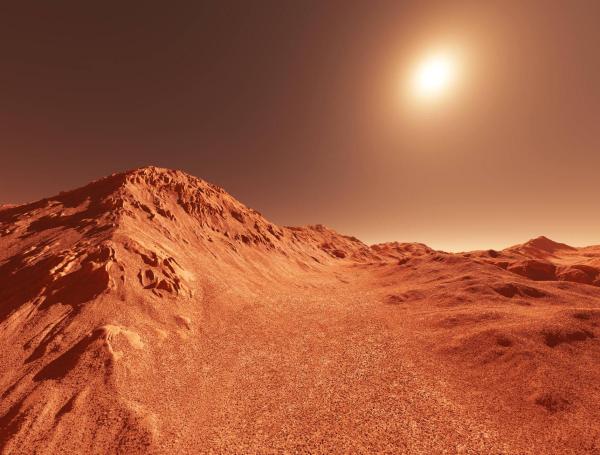
One of the most profound scientific questions regarding Mars is how it transformed from a warm, wet world potentially capable of supporting ancient microbial life into the cold, arid desert we observe today. The answer lies largely in the stripping away of its primordial atmosphere by the solar wind. Because Mars lacks a global intrinsic magnetic field like Earth’s, its atmosphere is directly exposed to high-energy solar radiation and charged particles.
ESCAPADE’s dual-probe constellation will map the flow of energy and matter through Mars’ magnetosphere in unprecedented detail. By studying how solar wind strips ions from the Martian upper atmosphere in real time, researchers hope to construct comprehensive models of planetary climate evolution across the solar system.
A Blueprint for Low-Cost Interplanetary Fleets
From an engineering perspective, ESCAPADE serves as a pathfinder for future multi-spacecraft planetary constellations. Historically, launching multiple independent probes to another planet required immense financial resources and separate launch vehicles. By packing two identical, highly capable science platforms into a single launch window and utilizing creative trajectory design—such as Earth gravity assists—NASA is establishing a sustainable framework for future low-cost planetary exploration.
As the spacecraft complete their historic November 2026 flybys and set their sights firmly on the horizon of the solar system, they carry with them the hopes of a global scientific community eager to unlock the remaining secrets of the Red Planet. When the probes finally enter Martian orbit in September 2027, humanity will stand on the precipice of a new era in comparative planetology.
Medellín, Colombia — For years, the "City of Eternal Spring" has wrestled with a paradox. Nestled within a steep Andean valley that traps industrial emissions, vehicular exhaust, and particulate matter, Medellín frequently registers some of…
By Global Environmental Desk Published: September 26, 2026 Main Facts: The Inevitable Breach of the Paris Agreement The global community must come to terms with an uncomfortable and rapidly approaching reality: the average global temperature…
Sixty-six million years ago, the Earth was a vastly different place. The landscape was dominated by the colossal silhouettes of non-avian dinosaurs, thriving in a world that showed no signs of an impending global catastrophe.…