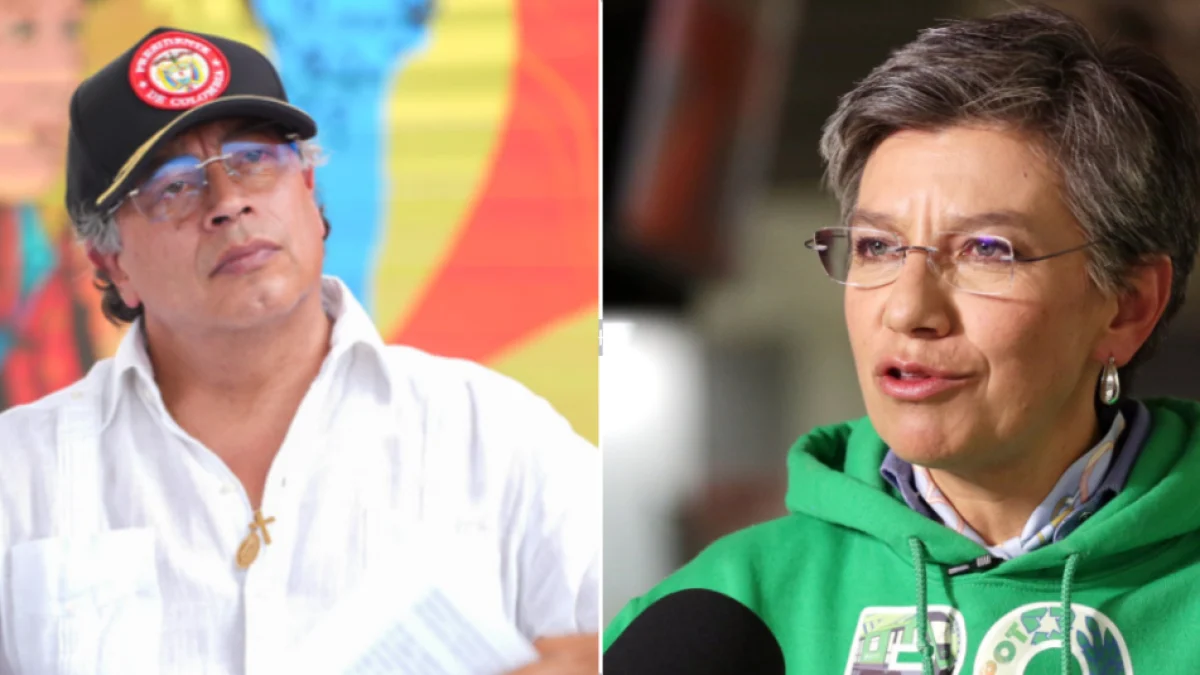
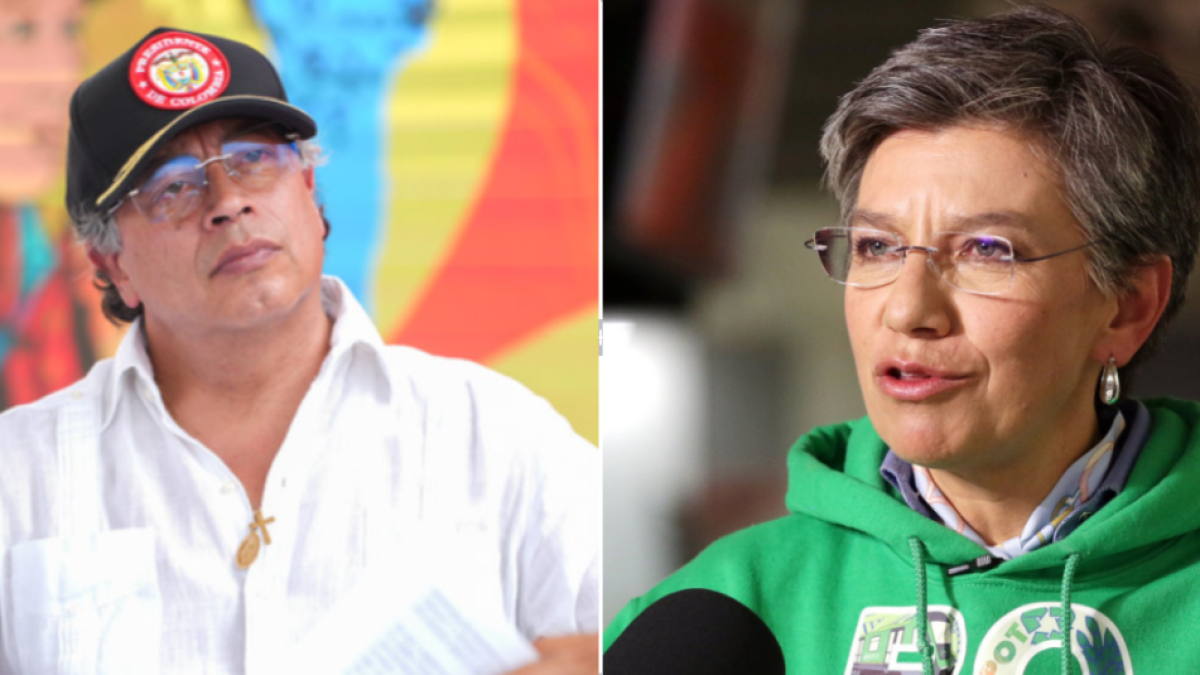
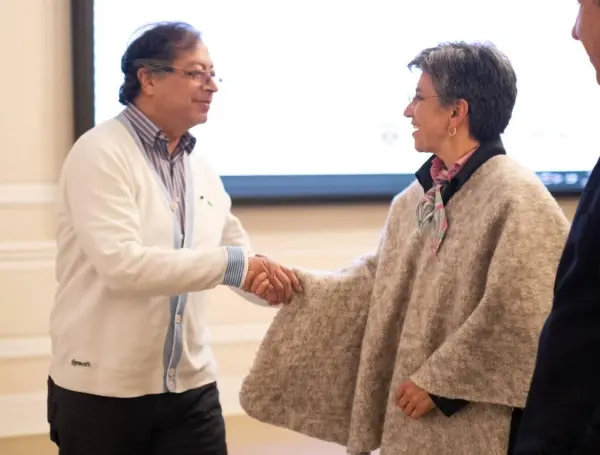
BOGOTÁ — In a surprising political development that has sent shockwaves through Colombia’s political landscape, former President Gustavo Petro and former Bogotá Mayor and presidential candidate Claudia López have reemerged together. The unexpected meeting, documented and shared publicly by Petro on social media this Thursday, September 10, 2026, has immediately ignited widespread controversy, intense public debate, and profound questions regarding the shifting alliances shaping the country’s future electoral horizons.
The photograph, which captures the two prominent figures side by side, was accompanied by a defiant and urgent call to action from the former head of state. Petro asserted that the time has arrived for "maximum unity" to combat what he defines as "anti-democracy and anti-patriotism," signaling a dramatic pivot in relations between figures who have spent years locked in fierce public and institutional combat.
Main Facts
The core of this developing story centers on a newly publicized encounter between Gustavo Petro and Claudia López, which took place behind closed doors within the last 48 hours. While specific logistical details of the summit remain scarce, the political fallout has been immediate and expansive.
In a post published on the social media platform X (formerly Twitter), Petro emphasized the necessity of expanding the political coalition known as Alianza por la Vida (Alliance for Life) to every corner of Colombia. According to the former president, this coalition must aggressively mobilize to capture "the maximum number of congressional seats, mayoral offices, and governorships," framing the movement as a necessary mechanism to "be ready to replace a foreign and incapable government."

This sudden display of solidarity has baffled political analysts and citizens alike. For years, Petro and López stood as archetypes of bitter political friction within the Colombian left and center-left spectrums. Their history is defined by major policy clashes—most notably over the contentious construction of the Bogotá Metro—and, more recently, by severe legal and political accusations levied during the 2026 presidential campaign cycle. Consequently, their joint appearance has triggered a flurry of speculation over whether this signifies a strategic, pragmatic realignment ahead of upcoming regional and national power struggles, or merely a temporary tactical truce.
Chronology of a Tumultuous Relationship
To fully understand the gravity and friction of this recent photograph, it is essential to trace the arc of the relationship between Gustavo Petro and Claudia López, which has transitioned from ideological friction to direct institutional confrontation over the past several years.

The Battle for Bogotá’s Metro (2022–2023)
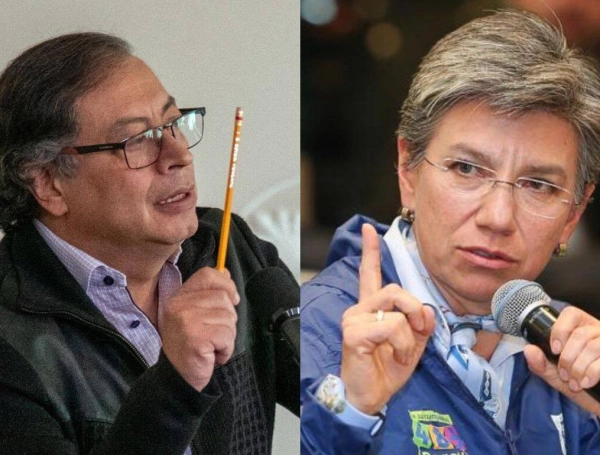
The ideological and administrative fault lines between the two politicians became glaringly apparent during Petro’s presidency and López’s tenure as Mayor of Bogotá. The central point of contention was the macro-project of the First Line of the Bogotá Metro.
Petro, long critical of the elevated design chosen and advanced by prior administrations, sought substantial structural modifications to the project, advocating for underground elements to better serve citizens. López, however, stood her ground firmly, arguing that the city had waited decades for a metro and that the ongoing works could not afford paralyzing delays or sweeping alterations.

At the height of the dispute, López publicly declared: "I have been clear on the issue. Bogotá will not accept having its priorities changed regarding Regiotram and the three cable lines for the sake of the money from an eventual modification of the first line. No."
Petro countered by asserting the national character of the investment: "It is the money of the entire nation that will be invested predominantly in the Bogotá metro, and we demand its highest quality in favor of the users and the neighborhoods through which it will pass." This standoff set a precedent of institutional friction that would characterize their respective executive terms.
The 2026 Presidential Campaign and Formal Accusations (Early 2026)
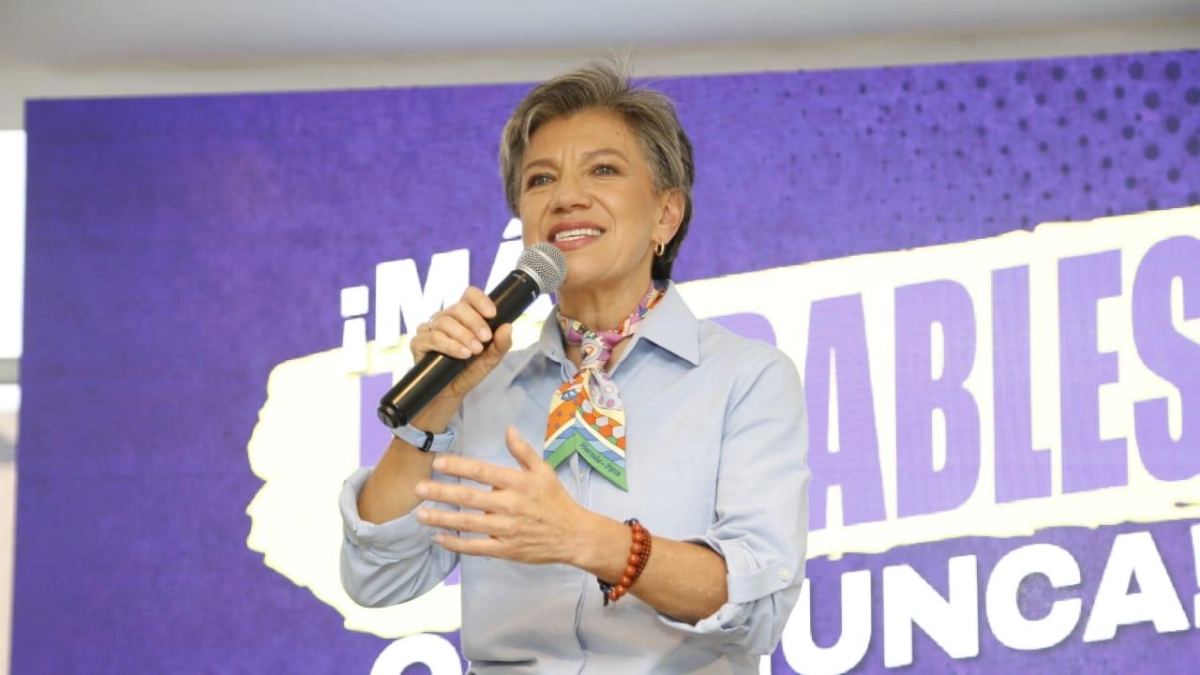
The rift deepened significantly during the fierce political campaigns leading into the 2026–2030 presidential cycle. As Claudia López positioned herself as a major contender for the presidency, the hostility between her camp and the national executive branch reached a boiling point.
In a move that underscored the breakdown of their political dialogue, López formally filed a sweeping legal complaint against then-President Gustavo Petro before the Investigation and Accusations Commission of the House of Representatives. She accused the sitting president of committing grave violations regarding undue political participation, arguing that his actions severely skewed the fairness and equity of the electoral contest.

Upon filing the formal complaint, López did not mince words before the press: "I am sustaining here at least 20 undue interventions in politics by Gustavo Petro, where he used and abused public resources, public budgets, public media, and mass media to affect my candidacy in a deceitful manner, with calumnies, defamation, and false narratives."
López repeatedly insisted that Petro’s public declarations and policy interventions systematically breached the constitutional duty of neutrality required of the executive branch. A focal point of her grievance involved Petro’s assertions regarding her ascension to the Bogotá Mayoralty in 2019. López fiercely rejected Petro’s repeated claims that she had been elected under a "petrista" political platform only to subsequently "betray" the movement.
Supporting Data and Institutional Context
The sudden transition from the courtroom and public denunciations to a joint photographic appearance highlights the fluid and often unpredictable nature of Colombian political alliances.
- The Electoral Horizon: With the 2026–2030 political architecture now in motion, opposition and coalition-building strategies are shifting rapidly. Petro’s call for "maximum unity" under the Alianza por la Vida banner suggests an urgent push by progressive and allied factions to consolidate power bases at the municipal and departmental levels.
- The Legal Landscape: López’s prior filing with the House Investigation and Accusations Commission underscores the high-stakes friction that previously characterized interactions between the executive office and independent or centrist political contenders. The current status of these complaints remains a point of intense interest for legal scholars monitoring the boundaries of presidential neutrality during electoral cycles.
- Public Reaction: Digital platforms have experienced an influx of critique, analysis, and skepticism. Civil society actors, political commentators, and voters have flooded social media networks questioning how two figures with such profound ideological and personal clashes—highlighted by legal actions just months prior—can project a unified front under a single banner.
Official Responses and Public Statements
As of the publication of this report, neither Gustavo Petro nor Claudia López has issued an exhaustive, formal press release detailing the specific agenda, location, or duration of their recent meeting. The primary window into the encounter remains Petro’s verified social media channels, where the imagery was launched alongside concise ideological messaging.

Representatives from various political parties have responded with cautious skepticism or outright critique. While members of Petro’s political circle have cautiously welcomed any dialogue aimed at strengthening progressive and allied legislative blocs, centrist and opposition figures have raised concerns over political pragmatism superseding past institutional grievances. Legal analysts note that while political actors frequently realign in the face of shifting legislative and electoral majorities, the abruptness of this reconciliation leaves many questions unanswered regarding the future direction of the coalition Petro seeks to build.
Implications for the Colombian Political Landscape
The political implications of this unexpected rapprochement are vast and multifaceted.

- Strategic Realignment on the Left and Center: Should this meeting serve as the foundational step toward a broader electoral pact, it could significantly reshape the dynamics of upcoming regional and legislative contests. By attempting to bridge the gap between distinct factions of the political spectrum, leaders like Petro are signaling an acknowledgment that fragmented opposition or allied forces risk losing ground in future institutional battles.
- Impact on Voter Trust and Political Narrative: The juxtaposition of López’s fierce campaign accusations—wherein she alleged the misuse of public resources to undermine her candidacy—with a smiling photograph alongside the former president presents a complex messaging challenge. For the electorate, witnessing such rapid shifts from legal confrontation to public camaraderie underscores the transactional nature of political survival in Colombia, potentially alienating voters who demand ideological consistency.
- Future Governance and Coalition Building: As the Alianza por la Vida seeks to expand its reach into local governments, municipal councils, and departmental seats, the ability of figures like Petro and López to maintain a functional working relationship will be heavily scrutinized. Whether this unity translates into a cohesive legislative block or remains a fleeting gesture of political convenience will become clearer as the electoral calendar progresses toward the next major milestones in Colombian democracy.
Reporting by Luisa Fernanda Gutiérrez Henao.
Redacción Últimas Noticias.