By Mateo Chacón Orduz
Sub-editor, Vida Section
Updated: September 12, 2026
The last few years have witnessed a tectonic shift in global education. The rapid integration of generative artificial intelligence (AI) and the ubiquity of digital devices are no longer speculative subjects for academic debate; they are the new reality of the classroom. Data from the 2025 PISA (Programme for International Student Assessment) report has finally provided a tangible look at how these technologies are impacting formative processes worldwide. For many stakeholders in the education sector, the findings confirm their deepest fears: that the unbridled use of AI and constant exposure to screens may be eroding the cognitive foundations of an entire generation.
The Global Performance Slide
The 2025 PISA results present a sobering picture for the international community. Average scores in Reading, Mathematics, and Science have hit their lowest points in recorded history. Compared to the 2015 benchmark, global reading scores have plummeted by 28 points, mathematics by 22 points, and science by 7 points.
Colombia, in particular, finds itself in a precarious position. The nation saw a decline in both Reading and Mathematics, with only a marginal improvement in Science. While Colombia’s struggle is significant, it is far from an outlier; the decline is a systemic, global trend that suggests that the traditional methods of schooling are struggling to keep pace with the digital transformation of students’ daily lives.

Chronology of the Digital Disruption
To understand this decline, one must look at the timeline of the digital integration in schools:
- Pre-2020: Digital tools were largely supplementary, used primarily for research and basic word processing.
- 2020-2022: The global pandemic forced an overnight transition to digital-first learning. Screen time surged, and reliance on remote platforms became the norm.
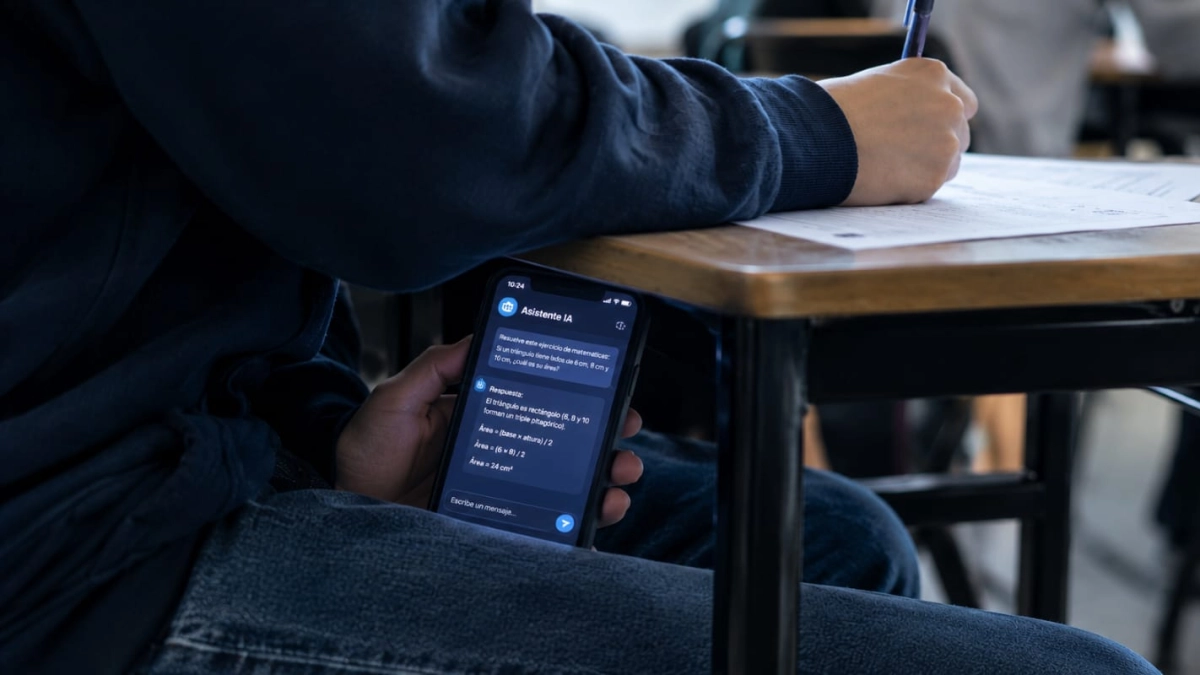
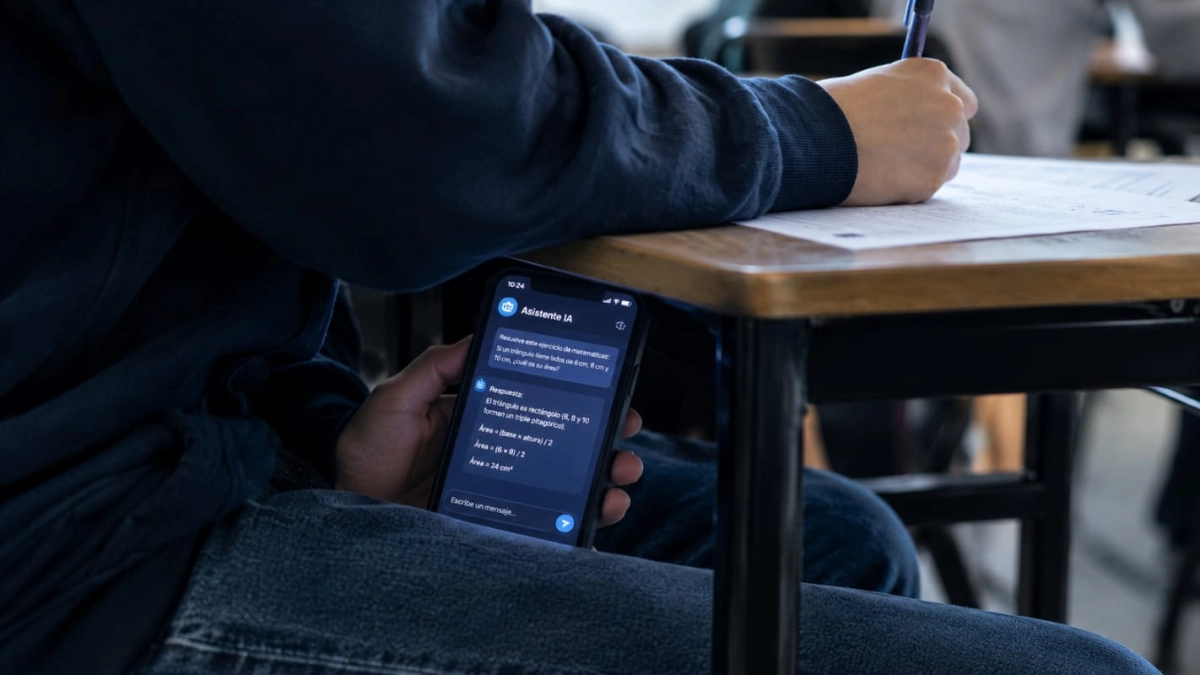
- 2023-2024: The sudden explosion of generative AI tools (such as ChatGPT, Gemini, and Claude) caught educational systems unprepared. These tools shifted from being "novelties" to "essentials" for completing homework.
- 2025: The PISA 2025 assessments measured the first full cycle of education where AI was an integrated component of student life, revealing the direct correlations between usage patterns and academic performance.
Data Analysis: The AI Usage Index
The PISA report introduced a specific index to measure the use of AI in schoolwork, where 0 represents the OECD average. Scores closer to 1 indicate high usage, while scores closer to -1 indicate low usage.

Colombia emerged as an outlier in this study, recording an index of 0.34—the highest among all OECD economies and the fifth-highest globally. This intense reliance on AI contrasts sharply with high-performing nations that utilize these tools more conservatively. For instance, Japan (-0.69), Ireland (-0.48), and Finland (-0.35) maintain some of the highest academic rankings while reporting significantly lower AI dependency.
Furthermore, the percentage of students who claim they never use AI for schoolwork is telling. In Colombia, that figure is a mere 6.3%. In contrast, countries like Japan (39.1%) and Finland (26%) show a much higher proportion of students who perform academic tasks without the aid of chatbots.
The Cognitive Cost: Is There a Causal Link?
Andreas Schleicher, Director of Education at the OECD, notes that while the data does not offer a "smoking gun" of causality, the trend is undeniable. "PISA does not provide a definitive answer, but at first glance, the data is not positive. Students who report using AI chatbots regularly obtain lower scores than those who do not," Schleicher explains.
On average, non-users of AI outperform users by roughly 20 points—a gap equivalent to an entire year of schooling. In countries like Canada and New Zealand, the gap widens to 29 and 36 points, respectively, for those using AI on a daily basis.

Researchers are particularly concerned about "cognitive laziness." When students use AI to generate summaries or write essays, they bypass the critical thinking processes required for genuine learning. The danger is that students are optimizing for the "answer" rather than the "process," leading to a decline in metacognitive skills and a loss of interest in deep intellectual engagement.
The Double-Edged Sword of Screen Time
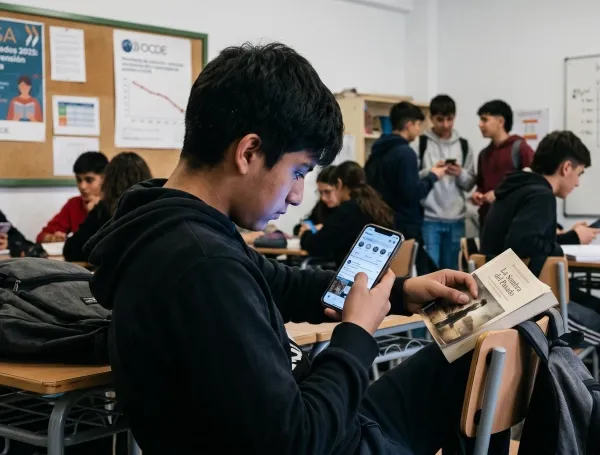
Beyond AI, the issue of screen time remains a persistent challenge. According to the PISA data, the average student in an OECD country spends 4.3 hours on screens for academic purposes during school, and an additional 3.4 hours on screens for leisure. This creates a total of 7.7 hours of daily screen exposure.
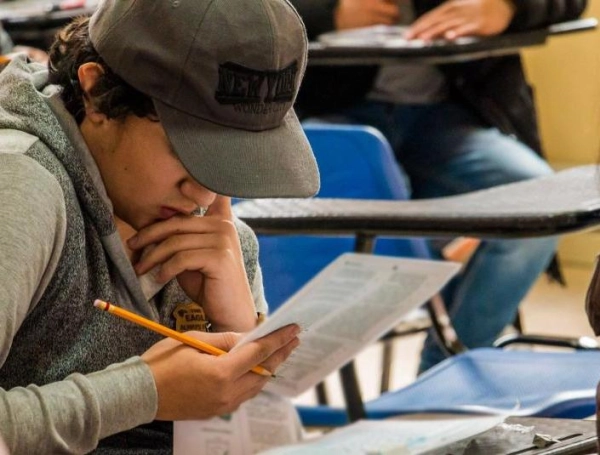
The correlation between excessive screen time and academic performance is stark. Students who limit their leisure screen time to one hour per day score 72 points higher in Science than those who spend five to seven hours on screens. The constant barrage of notifications, videos, and social media creates an environment of fragmented attention, which undermines the ability to retain concepts or engage in long-form scientific reasoning.
Official Responses and Expert Perspectives
The debate among educators is polarized. While some argue for total bans on smartphones, others advocate for a "digital literacy" approach that teaches students to use these tools responsibly.

Ricardo Rodríguez, an education analyst, emphasizes that the issue is not the technology itself, but the pedagogical strategy. "The OECD does not necessarily advocate for banning AI, but it is clear that current usage patterns are destructive. We are not just talking about grades; we are talking about the erosion of the learning process itself."
The challenge for teachers is unprecedented. Educators report feeling "handcuffed" by the ubiquity of AI. When a student can generate a perfectly coherent essay in seconds, the traditional homework assignment loses its value as a tool for assessment. This necessitates a fundamental change in how schools evaluate knowledge—shifting from rote output to in-class critical analysis and oral defense of ideas.
Toward a New Pedagogical Model
The path forward requires a nuanced approach. The PISA report highlights that countries like South Korea and Singapore have managed to maintain top-tier performance while implementing large-scale digital learning policies. The difference, according to analysts, is that these countries have integrated technology into their curricula with specific, guided objectives rather than allowing it to become a "black box" solution for homework.
To address the current crisis, educational systems must focus on several key areas:
- Restricting Distractions: Schools should consider implementing strict policies on personal device usage during instruction time to mitigate the "distraction effect."
- Redesigning Assessment: Moving away from take-home assignments that can be easily outsourced to AI, and toward assessments that verify student understanding in real-time.
- Critical Literacy: Training students to treat AI not as an oracle of truth, but as a secondary tool that requires verification, fact-checking, and critical synthesis.
- Teacher Empowerment: Educators require specialized training to identify how to use AI for pedagogical support rather than letting it substitute for student effort.
Conclusion: The Path Ahead
The 2025 PISA results serve as a wake-up call. We are in the midst of a transition where the tools of the future are currently being used to undermine the education of the present. As Schleicher concludes, "If AI is used without critical thought, we run the risk of widening inequalities and fostering a generation that has the answers but lacks the ability to formulate the questions."
The evidence is clear: the digital revolution in the classroom is not going away. However, unless the pedagogical approach is radically updated to favor critical thinking over speed and convenience, the "digital generation" may find itself increasingly disconnected from the very knowledge they seek to acquire. The task for governments, schools, and parents is no longer about whether to adopt these tools, but how to ensure they serve the student, rather than the other way around.