A Legacy of Leadership and Academic Rigor
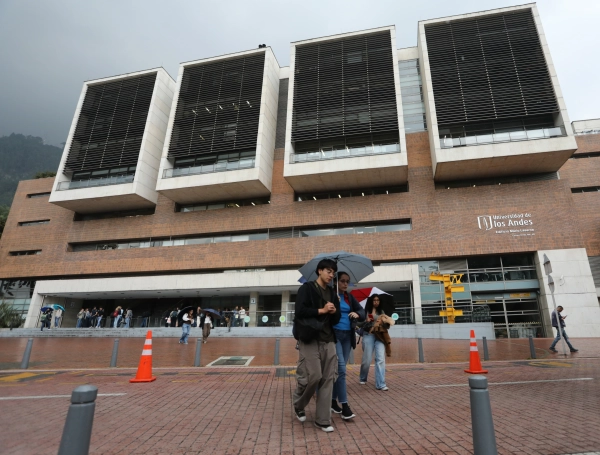
The auditorium of the Mario Laserna building at the Universidad de los Andes in Bogotá became the epicenter of national political reflection this week. The institution commemorated the 20th anniversary of the Alberto Lleras Camargo School of Government, an entity that has redefined the standards of public administration and policy analysis in Colombia.
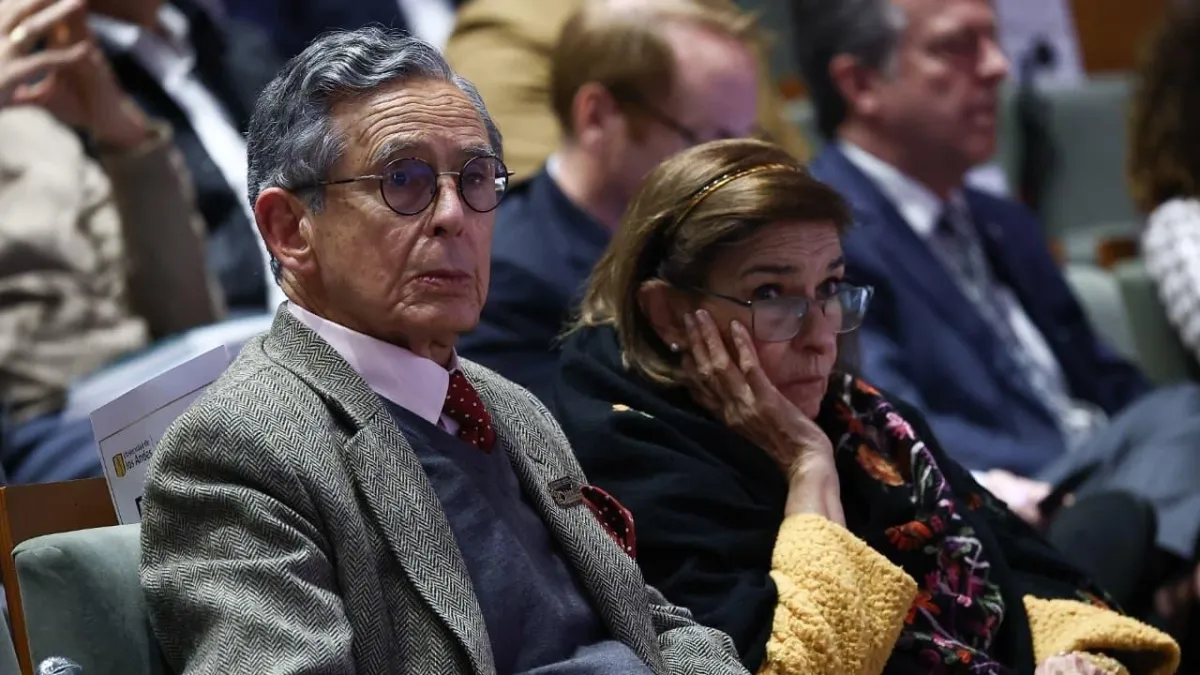
The ceremony was attended by a distinguished assembly of former directors, esteemed faculty members, alumni, and key figures of the Colombian intellectual landscape, including former minister and university rector Alejandro Gaviria, and Carlos Caballero Argáez, the school’s founder and a noted columnist for EL TIEMPO. The celebration, which will span several days of academic forums and commemorative events, served not only to highlight two decades of achievements but also to confront the challenges facing contemporary democracy.

Chronology: From Foundation to the Modern Era
The Alberto Lleras Camargo School of Government was established with a singular vision: to bridge the gap between rigorous academic research and the practical, often volatile, realities of public service. Over the last twenty years, the school has evolved from a nascent department into a premier hub for policy development.
- 2006: Founding of the school, with Carlos Caballero Argáez as a primary architect.
- 2015-2020: Expansion of regional consultancies, moving beyond the capital to work directly with local communities.
- July 7, 2025: A tragic turning point in the community’s history when former student and presidential hopeful Miguel Uribe Turbay was the victim of a fatal assassination attempt.
- September 2026: The 20th-anniversary milestone, marked by a series of commemorative events and the inauguration of the Carlos Caballero Collection.
Supporting Data: Impact and Reach
The statistics surrounding the School of Government underscore its profound influence on the state’s institutional framework. Since its inception, the school has produced a consistent stream of leaders and technical experts capable of steering the country’s future.

- Human Capital: 1,446 graduates, with at least 150 holding high-level positions in the public sector, including ministerial roles, mayoral offices, senate seats, and legislative assemblies.
- Intellectual Output: 550 academic articles and 129 specialized working documents, alongside numerous books covering critical themes such as migration, healthcare equity, peace-building, and democratic governance.
- Field Research: Over 250 distinct research and consultancy projects, many of which were developed outside of Bogotá, reflecting a shift toward decentralized policy-making. One notable example is a comprehensive public health plan developed in collaboration with the university’s Faculty of Medicine, which has served as a blueprint for local interventions.
Honoring the Memory of Miguel Uribe Turbay
A poignant moment during the anniversary proceedings was the tribute to the late Miguel Uribe Turbay. A former student of the school, Uribe Turbay was a rising star in Colombian politics whose life was cut short following an assassination attempt on July 7, 2025. After weeks of medical struggle at the Fundación San José, his passing left a void in the institution. Attendees shared testimonials during the event, emphasizing that his commitment to public service remains a guiding light for the current student body, representing the type of leadership the school aims to cultivate.
Official Responses: Leadership Perspectives
During the event, the university’s leadership spoke at length regarding the necessity of the School of Government in the current socio-political climate.
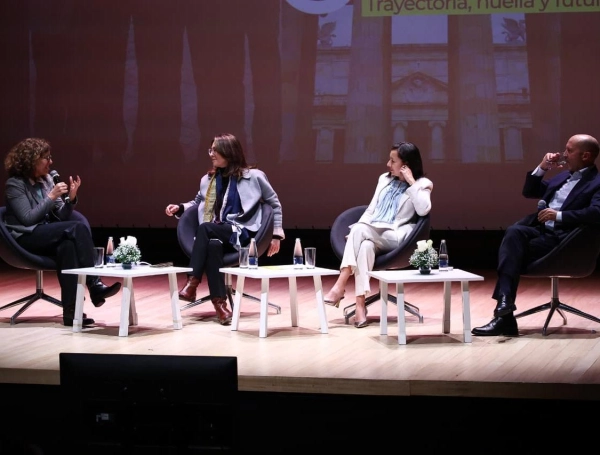
Rector Raquel Bernal remarked: "The School of Government represents a concrete expression of our vocational service and our commitment to the nation’s transformation. Its contribution lies in combining academic rigor with the training of leaders and the production of knowledge that is not merely theoretical, but applicable to building stronger institutions."
Ramiro Guerrero, the current Director of the School, emphasized the existential threat of modern populism: "Democracy is not an automatic system; it is a culture. In an era of rampant disinformation and extreme polarization, our mission to defend democratic values is more vital than ever. We must continue to foster critical thinking and produce knowledge that strengthens the social fabric."
Implications: Populism, Technology, and the Future of Democracy
A significant portion of the anniversary was dedicated to an intellectual panel moderated by Juanita León, director of La Silla Vacía. The panel featured Rector Raquel Bernal, constitutional expert Catalina Botero, and author Carlos Granés. The discussion centered on the rise of "outsider" political figures—a phenomenon that has reshaped the global landscape.
The Rise of the "Political Spectacle"
Carlos Granés provided a sobering analysis of how leaders like Jair Bolsonaro in Brazil, Donald Trump in the United States, and Javier Milei in Argentina have successfully navigated the political arena. Granés argued that these figures have effectively transformed political discourse into a form of entertainment, where the population becomes "addicted to the spectacle." This shift, he warned, alienates traditional policy experts and creates a void often filled by populist rhetoric, which prioritized emotional engagement over institutional problem-solving.
The Role of Artificial Intelligence
Catalina Botero shifted the focus to the intersection of technology and public policy. While artificial intelligence is often touted as a panacea for administrative inefficiency, Botero urged caution. She highlighted that AI systems, if left unchecked, can perpetuate biases and undermine the human-centric nature of policy-making. "There is no AI that can replace the nuanced judgment required in constitutional law or the creation of smart public policy," she noted. The challenge, according to the panel, is to harness technology as a tool for transparency and access, rather than allowing it to be used as a shortcut that bypasses the democratic process.
A Lasting Legacy: The Carlos Caballero Collection
To mark the 20th anniversary, the school received a historic donation: the personal library of founder Carlos Caballero Argáez. The collection, which will be accessible to the public starting September 15, is housed in a newly designated space within the university.
A commemorative plaque has been installed, reading: "Collection donated by Carlos Caballero, an exemplary human being, committed citizen, and influential academic. An inspiration and mentor to public servants for a better country."
This gesture serves as a symbolic bridge between the founding generation and the next generation of students. By making his private research materials public, Caballero ensures that the intellectual history of the school remains a living, accessible asset for students tasked with navigating the complexities of the 21st century.

Conclusion
As the Universidad de los Andes looks toward the next twenty years, the School of Government stands at a crossroads. The events of this week have underscored that the institution’s success is measured not just in academic papers or graduates placed in high office, but in its ability to defend the very concept of "the public" in an age of skepticism. With the integration of new technologies, a commitment to decentralized field work, and a renewed focus on democratic resilience, the Alberto Lleras Camargo School of Government continues to be a cornerstone of Colombian stability and intellectual growth.