By Sofia Gomez G. | Culture Correspondent
September 25, 2026
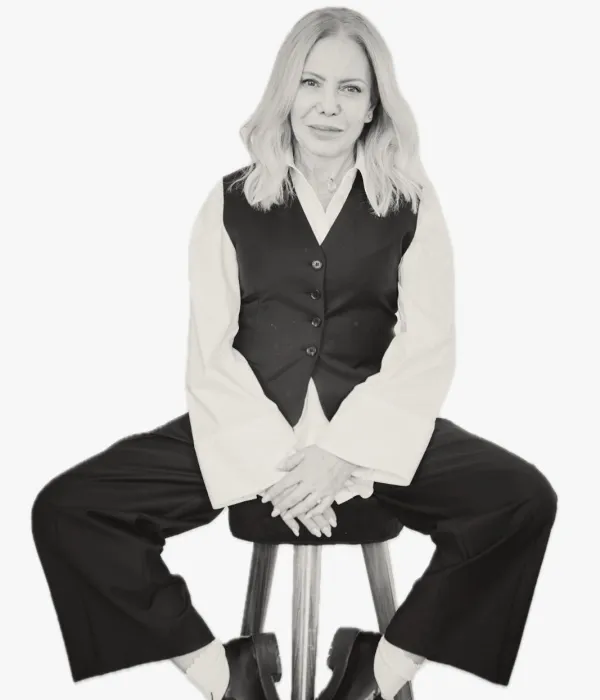
Cecilia Roth, an icon of Ibero-American cinema and a name synonymous with the golden age of Spanish and Argentine film, recently visited Bogotá. Her presence in the Colombian capital was marked by her role as the guest of honor at the 12th edition of Smartfilms, a groundbreaking festival dedicated to cinema produced entirely with mobile devices. From her hotel, reflecting on the vibrant atmosphere of the city, Roth engaged in a thoughtful conversation about the nature of storytelling, the evolution of technology in the arts, and the immense challenge of her latest project: the Netflix series Moria.

The Evolution of the Medium: Beyond the "Grain"
For a performer who cut her teeth in the analog era, witnessing the democratization of filmmaking through smartphones has been a profound experience. Roth, whose career was forged in the classic era of film reels—where the "grain" of the image provided a tactile, visceral quality—rejects the notion that digital filmmaking is a "lesser" evolution.
"It is not about evolution in a linear sense, where the past was primitive," Roth explains. "It is about addition. Technology modifies the image, and the image, in turn, modifies the narrative. I am a fan of films like Sean Baker’s The Florida Project, which was shot on an iPhone. It democratizes the ability to create. It reminds us that everyone now has access to a brush and a canvas."

For Roth, the medium—whether it is 35mm film or a digital sensor—is secondary to the intent of the artist. She advocates for the term "audiovisual" over "cinema," noting that in an era where content is consumed on every screen imaginable, the priority remains the power of the narrative.
Chronology of a Career: From Almodóvar to ‘Moria’
Cecilia Roth’s career is a tapestry of iconic roles. She is internationally recognized for her collaborations with Pedro Almodóvar, most notably in Todo sobre mi madre (All About My Mother), a film that earned her a Goya Award and cemented her status as a global powerhouse. Yet, her roots lie in the rigors of Argentine cinema, particularly her work with the late director Adolfo Aristarain, who passed away in April 2026.
"Adolfo was my mentor," she recalls. "He adopted me into his life when I was just 16 years old. He taught me the language of the camera, the nuance of light, and the importance of cinematic precision."
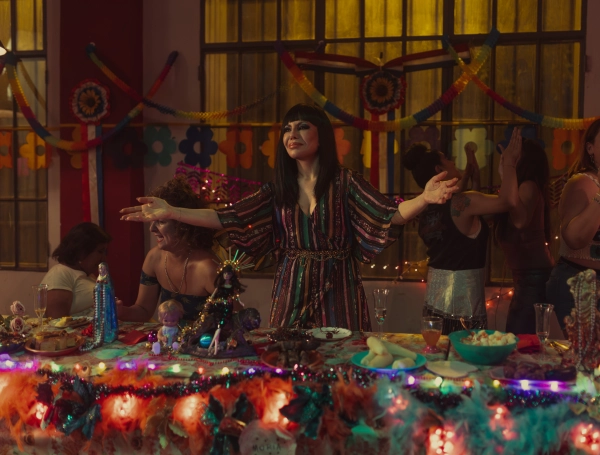
Her journey has now brought her to Moria, the highly anticipated Netflix series based on the life of Argentine television diva Moria Casán. Portraying a living legend—a woman who has spent decades in the public eye—represented a unique challenge for the actress.
The Complexity of ‘Moria’: Searching for the Soul
"It is the most difficult role of my life," Roth admits. "I am still searching for her."
The challenge of Moria lies in the fact that much of the character’s life—her private struggles, her time in prison, and her complex relationship with her daughter—remains undocumented. There is no "reference footage" for the most vulnerable, interior moments of the diva’s life.
"I didn’t want to mimic her. I didn’t want a caricature," she says. "I wanted to find my version of her. I wanted to go to the ‘almond’—the core—of who she is. She is a woman who constantly sheds her skin, who reinvents herself not as a gimmick, but as a survival mechanism. She is a sponge who absorbs the world, and playing her required me to be that same kind of sponge."
Supporting Data: A Legacy of Accolades
Cecilia Roth’s influence on cinema is quantifiable through her extensive list of awards, including being named Best Actress in European Cinema and securing multiple Goya awards. Her work with Pedro Almodóvar created a cultural archetype: the "Almodóvar girl."

When asked about this label, she reflects with humility: "It was a term invented by the press. I accept it with joy, but I am much more than that. I am the sum of all my roles."
Her recent performance in Moria is already being hailed by critics as a masterclass in psychological transformation, with viewers noting the depth she brings to the portrayal of a woman who has become an "iconic living legend" in Argentina.

Implications: The Future of Acting
As she looks at the next generation of actors, Roth emphasizes the necessity of observation. She notes that in the modern digital age, the focus has shifted too heavily toward celebrity and away from the craft.
"In my generation, we didn’t think about money. We didn’t think about becoming stars," she recalls. "We thought about observing. To act is to be a sponge. You have to sit in a bar and watch people walk by, invent their stories, and understand their humanity. That is how you learn to play a character—by understanding the lives of others."

She remains steadfast in her belief that acting is a tool for empathy. By living many lives, the actor learns to love humanity, a perspective that has allowed her to remain relevant in an industry defined by rapid change.
Official Stance: Embracing the Unknown
Perhaps the most striking aspect of Roth’s professional philosophy is her refusal to map out her future. She prefers to leave space for "surprises."

"I never imagined I would play Moria. It was a surprise, and a wonderful one at that," she notes. "I prefer to let the universe bring what it needs to bring."
When asked about regrets, she remains stoic. "I prefer not to have them. Things happen for a reason. I have made mistakes in my work, in my choices, but those mistakes are part of the process of refining one’s craft. You have to learn to be honest with yourself."

Conclusion
Cecilia Roth stands as a bridge between the analog past and the digital future. Her performance in Moria serves as a testament to her enduring ability to inhabit complex, real-world figures with grace and nuance. As she continues to navigate her career, she does so with the same curiosity she had at 16—always observing, always learning, and always ready to shed her skin for the next great role.
In an industry that often discards talent as quickly as it creates it, Roth remains a constant: a dedicated student of the human condition, finding the truth in every frame, whether it is captured on 35mm film or the lens of a smartphone.
Chronology of Key Milestones:
- Early Career (Age 16-18): Debut in Argentine cinema under the direction of Adolfo Aristarain.
- The Almodóvar Years: Rise to international fame through collaborations with Pedro Almodóvar, defining the "Almodóvar girl" archetype.
- The Goya Recognition: Awarded for her performance in Todo sobre mi madre, solidifying her position in European cinema.
- April 2026: Death of her mentor, Adolfo Aristarain, marking a period of reflection on her foundational years.
- September 2026: Guest of honor at Smartfilms, celebrating 12 years of mobile cinema.
- Late 2026: Release of Moria on Netflix, marking her most challenging performance to date.