NEW YORK / BOGOTÁ — In a major boost to the national economy and international connectivity, Colombian flag carrier Avianca has announced a monumental $3 billion investment plan for Colombia. The landmark announcement was made public by Vice President José Manuel Restrepo following a high-level strategic meeting with Gabriel Oliva, president of the airline.
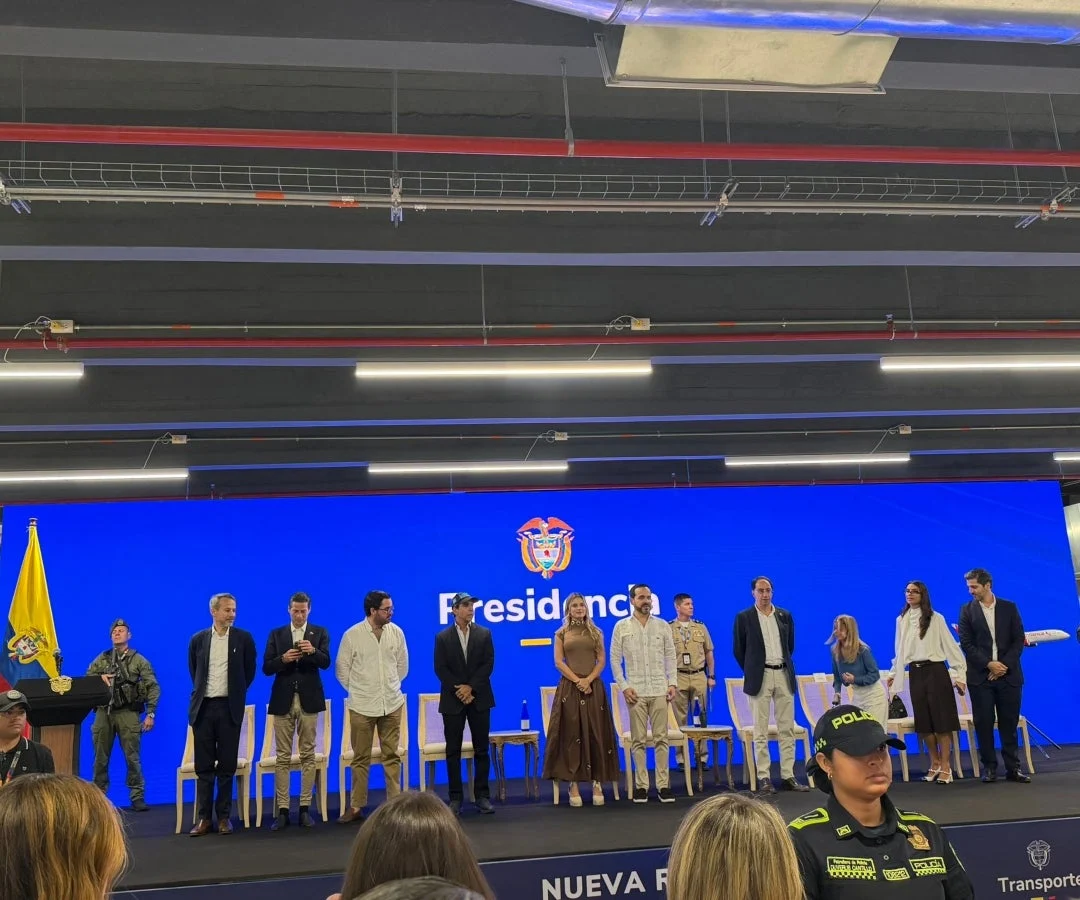
The revelation served as the crown jewel of an eventful departure for a robust delegation of Colombian business leaders, entrepreneurs, and government officials, who boarded the pre-inaugural flight connecting Barranquilla directly to New York City. The mission marks the commencement of the inaugural Milagro Week in the United States, an ambitious trade and investment initiative designed to position Colombian enterprise on the global stage.
Main Facts
The convergence of aviation expansion and international capital attraction highlights a coordinated effort between the Colombian government and the private sector to stimulate economic growth. The primary takeaways from the unfolding developments include:
- The Avianca Investment: Avianca has committed to a sweeping $3 billion investment in Colombia. Although specific timelines and detailed project allocations have yet to be finalized or formally released, the commitment underscores the airline’s long-term confidence in the South American market’s structural development and connectivity.
- The Barranquilla–New York Route: The announcement broke mid-air aboard flight AV280, the special pre-inaugural journey linking the Caribbean coastal hub of Barranquilla with New York. The route is expected to significantly bolster trade, tourism, and diaspora relations between Colombia’s Caribbean coast and the United States.
- Milagro Week in New York: Running from November 16 to 19, the inaugural Milagro Week—an offshoot of the broader Misión Crecer initiative backed by ProColombia—has brought 97 premier Colombian projects to New York. These initiatives represent a staggering combined investment and financing expectation of $41.9 billion across critical sectors such as infrastructure, energy, agro-industry, technology, and tourism.
Chronology of Events: From the Caribbean Skies to Wall Street
The sequence of events leading up to the multi-billion-dollar announcement reflects a meticulously planned diplomatic and commercial strategy aimed at leveraging high-profile infrastructure milestones to attract foreign direct investment (FDI).
Phase 1: The National Call and Project Filtering
Months prior to the New York expedition, ProColombia spearheaded a rigorous national selection process under the Misión Crecer framework. Out of an initial pool of 250 proposals submitted from across the country, a curated selection of 133 high-impact projects was published for international scrutiny. Following intense preliminary interest and scheduling coordination, exactly 97 projects were chosen to be physically and digitally presented to global investment funds, private equity firms, and international financial institutions in New York. Two-thirds of these selected ventures represent private sector initiatives, demonstrating a healthy balance of entrepreneurial dynamism and government backing.
Phase 2: The Pre-Inaugural Flight (AV280)
On the eve of the formal conference, the Colombian delegation—comprising top-tier government officials, business leaders, and tourism executives—gathered in Barranquilla. Among the prominent figures aboard the special pre-inaugural AV280 flight were Vice President José Manuel Restrepo, Minister of Commerce, Industry and Tourism Mauricio Gómez Amín, and prominent business leader Abelardo de la Espriella. The choice of Barranquilla as the departure point was intentional, highlighting the immense untapped potential of Colombia’s Caribbean coastline as a burgeoning international tourism and business nexus.
Phase 3: The Mid-Air Breakthrough
Before the aircraft’s landing gear even touched down on American soil, Vice President Restrepo took to social media to share the historic news with the public. "Before landing in New York, we have our first major announcement," Restrepo posted, officially breaking the news of Avianca’s $3 billion capital commitment following his direct discussions with airline president Gabriel Oliva.
Phase 4: The Rollout of Milagro Week
Upon arrival in New York, the delegation immediately transitioned into the high-stakes networking phase of Milagro Week. The agenda is structured to facilitate direct, pre-scheduled business meetings between Colombian project owners and North American financial powerhouses, turning expressions of interest into concrete underwriting agreements and joint ventures.
Supporting Data and Economic Context
To fully grasp the magnitude of the $3 billion Avianca pledge and the $41.9 billion portfolio showcased during Milagro Week, one must analyze the broader macroeconomic framework driving Colombia’s current outward-looking commercial strategy.
The Avianca Capital Commitment
While the exact multi-year disbursement schedule for Avianca’s $3 billion injection remains under wraps, industry analysts point out that capital of this scale in the aviation sector typically targets fleet modernization, technological upgrades, digital transformation, sustainable aviation fuel (SAF) integration, and the expansion of hub capacities at Bogotá’s El Dorado International Airport and secondary nodes like Barranquilla’s Ernesto Cortissoz International Airport. Avianca, which has undergone profound restructuring in recent years, is positioning itself as a dominant, highly efficient network carrier connecting Latin America to North America and Europe.
The Milagro Week Portfolio Breakdown
The $41.9 billion in investment opportunities presented during the four-day New York summit is distributed across several foundational pillars of the Colombian economy:
| Sector | Estimated Value / Focus | Private vs. Public Split |
|---|---|---|
| Infrastructure & Transport | Regional connectivity, ports, and urban transit systems | Heavily weighted toward public-private partnerships (PPPs) |
| Energy & Transition | Renewable energy generation, green hydrogen, and grid modernization | Predominantly private sector initiatives |
| Agroindustry | Value-added agriculture, sustainable farming, and export logistics | Private agribusiness ventures |
| Technology & Innovation | Digital infrastructure, fintech, and software scaling | 100% private entrepreneurial ventures |
| Tourism & Hospitality | Hotel infrastructure, ecotourism development, and regional hubs | Private hospitality developers |
According to data released by Vice President Restrepo’s office, approximately 66% of the 97 featured projects are private ventures, signalling a mature, market-driven economy capable of generating bankable proposals without total reliance on state treasuries.
Official Responses and Stakeholder Perspectives
The dual announcement of the airline investment and the launch of the Barranquilla route has drawn enthusiastic reactions from leaders across government, aviation, and tourism sectors.
Vice President José Manuel Restrepo
Highlighting the seamless synergy between infrastructural expansion and international diplomacy, Vice President Restrepo emphasized that the Avianca announcement sets a triumphant tone for the entire mission.
"This is a testament to the enduring confidence that major global corporations have in Colombia’s economic trajectory," Restrepo stated. "To secure a $3 billion commitment even before our feet touch the ground in New York proves that when government policy, private enterprise, and visionary connectivity align, international investors take notice. We are here not just to showcase projects, but to close deals that will transform our economy."
Cotelco and Tourism Leadership
The strategic importance of the new Barranquilla–New York route was underscored by José Duarte García, president of Cotelco (the Hotel and Tourism Association of Colombia). Duarte García noted that the enhanced aerial gateway is a game-changer for the Colombian Caribbean.
"The participation of leaders like Abelardo de la Espriella in this launch highlights the collaborative spirit required to lift our tourism sector to new heights," Duarte García remarked. "The Caribbean coast has world-class potential, but it requires frictionless international access. This route, combined with the capital we are pitching this week in New York, will directly translate into hotel occupancy, job creation, and sustainable regional development."
Airline Leadership
While detailed technical statements from Avianca executives are expected to follow the conclusion of the Milagro Week panels, sources close to airline president Gabriel Oliva reiterated that the carrier remains deeply committed to cementing Colombia’s status as a continental aviation powerhouse. The infusion of $3 billion is expected to solidify the airline’s operational resilience and expand point-to-point connectivity, bypassing traditional bottlenecks and directly linking secondary Colombian cities with major North American economic centers.
Implications for Colombia’s Future
The convergence of Avianca’s massive capital injection and the high-level business mission in New York carries profound strategic implications for Colombia’s economic horizon:
- Aviation as an Economic Catalyst: By committing $3 billion to the domestic market, Avianca is not merely expanding its own commercial footprint; it is providing the vital logistics backbone necessary for tourism, commerce, and foreign direct investment to thrive. Reliable, frequent, and direct air routes are the absolute prerequisite for global business integration.
- Decentralization of International Trade: The direct connection between Barranquilla and New York demonstrates a deliberate move away from hyper-centralized models that route all international traffic through Bogotá. Empowering regional capitals like Barranquilla opens up the entire Caribbean basin to direct North American trade, logistics, and tourism dollars.
- Maturation of Private Enterprise in Colombia: The fact that two-thirds of the projects brought to Milagro Week originate in the private sector reflects a structural shift. Colombian companies are increasingly sophisticated, capable of structuring bankable, international-grade investment propositions that can compete globally for capital.
- Strengthening Bilateral Ties with the United States: As global supply chains undergo near-shoring and friend-shoring transformations, Colombia is strategically positioning itself as the premier business partner in northern South America. Initiatives like Milagro Week, led jointly by Vice President Restrepo and Minister of Commerce, Industry and Tourism Mauricio Gómez Amín, signal to Wall Street and corporate America that Colombia is open, stable, and eager for mutually beneficial commercial alliances.
As Milagro Week progresses through its scheduled panels and B2B matchmaking sessions in New York, the eyes of the Latin American financial community remain fixed on the delegation. With an initial $3 billion already secured in the clouds above the Atlantic, the Colombian government and private sector enter the global financial capital with significant momentum, aiming to turn billions in prospective portfolio value into finalized contracts that will shape the nation’s economic landscape for decades to come.