
MEDELLÍN — For decades, the global fashion industry has thrived on a delicate paradox: a business built on ephemeral, fast-moving creative trends operating within legacy supply chains that are often notoriously slow, manual, and wasteful. Today, however, that paradigm is shifting dramatically. Within the boardrooms and design studios of modern fashion enterprises, the central question has evolved from "What jobs will artificial intelligence replace?" to a far more urgent operational query: "Where are we losing time, money, and data in our business, and what technology can fix it?"
This fundamental shift in perspective took center stage at Nextech, a premier technology and innovation fair for the Sistema Moda ecosystem held in Medellín, Colombia. Gathering cutting-edge solutions in artificial intelligence (AI), augmented reality (AR), 3D modeling, advanced e-commerce automation, and digital analytics, the event underscored a broader industrial awakening. Fashion technology is no longer just about futuristic robots on a runway; it is about rewriting the anatomy of the supply chain—from the first digital sketch to the final click of an online checkout.
1. Main Facts: The Technological Overhaul of Modern Fashion
The intersection of fashion and technology has matured beyond novelty applications. Artificial intelligence, augmented reality, immersive 3D models, and automated photography suites are now seamlessly embedding themselves into every phase of the apparel lifecycle.
According to recent industry data, fashion brands are pivoting rapidly toward digital integration to match the relentless speed demanded by today’s consumers. Rather than viewing technology as an existential threat to human creativity, forward-thinking executives are deploying digital tools to eliminate operational friction.
At Nextech, this transformation was manifested through three pioneering international and local players demonstrating how technology solves distinct bottlenecks across the value chain:
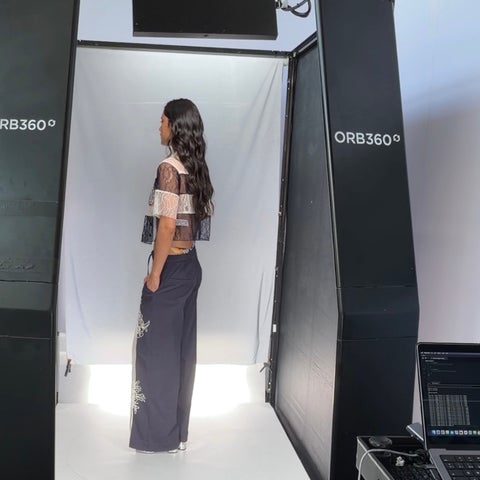
- ORB360: Revolutionizing digital merchandising and e-commerce content generation through high-speed hardware and software that produces 360-degree imagery, dynamic videos, and multi-angle product shots in mere seconds.
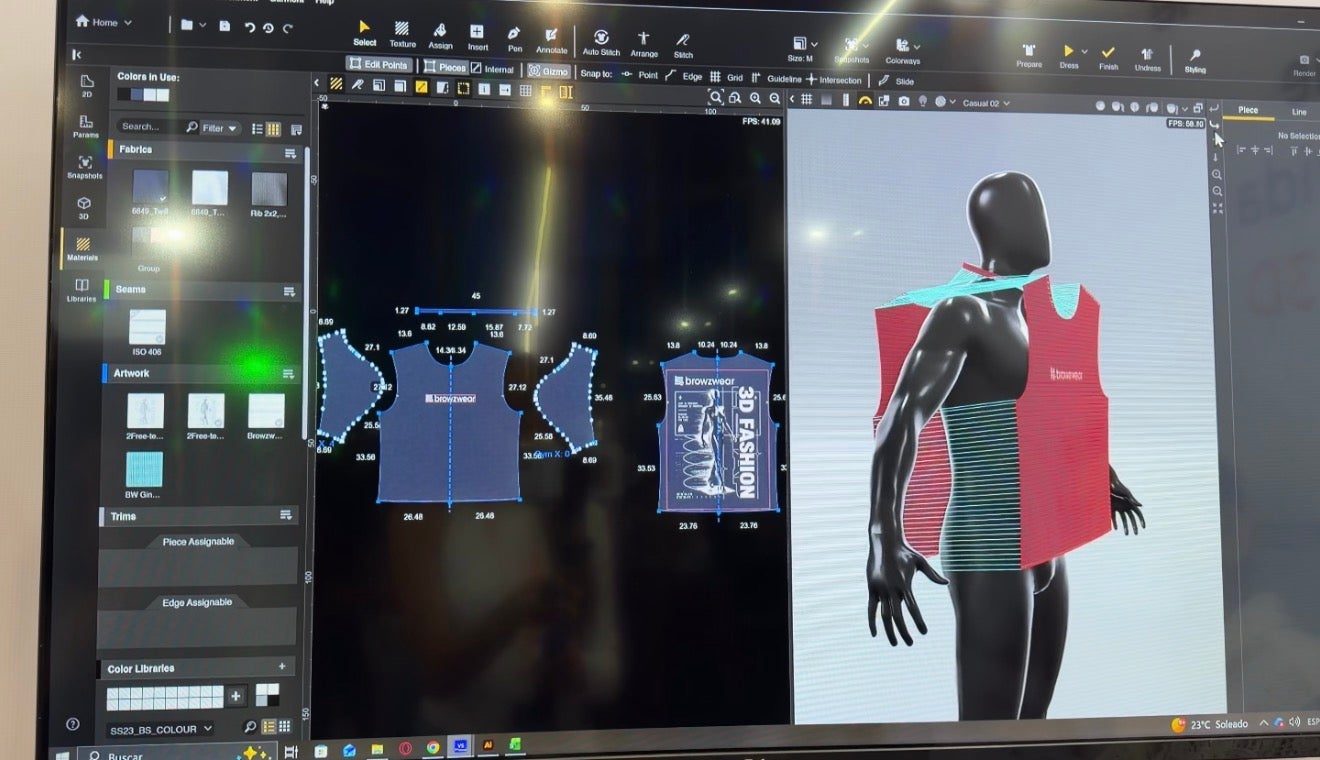
- Browzwear: Spearheading the 3D design revolution with digital twins, enabling global apparel giants to create, modify, and validate garments entirely in virtual space before manufacturing a single physical sample.
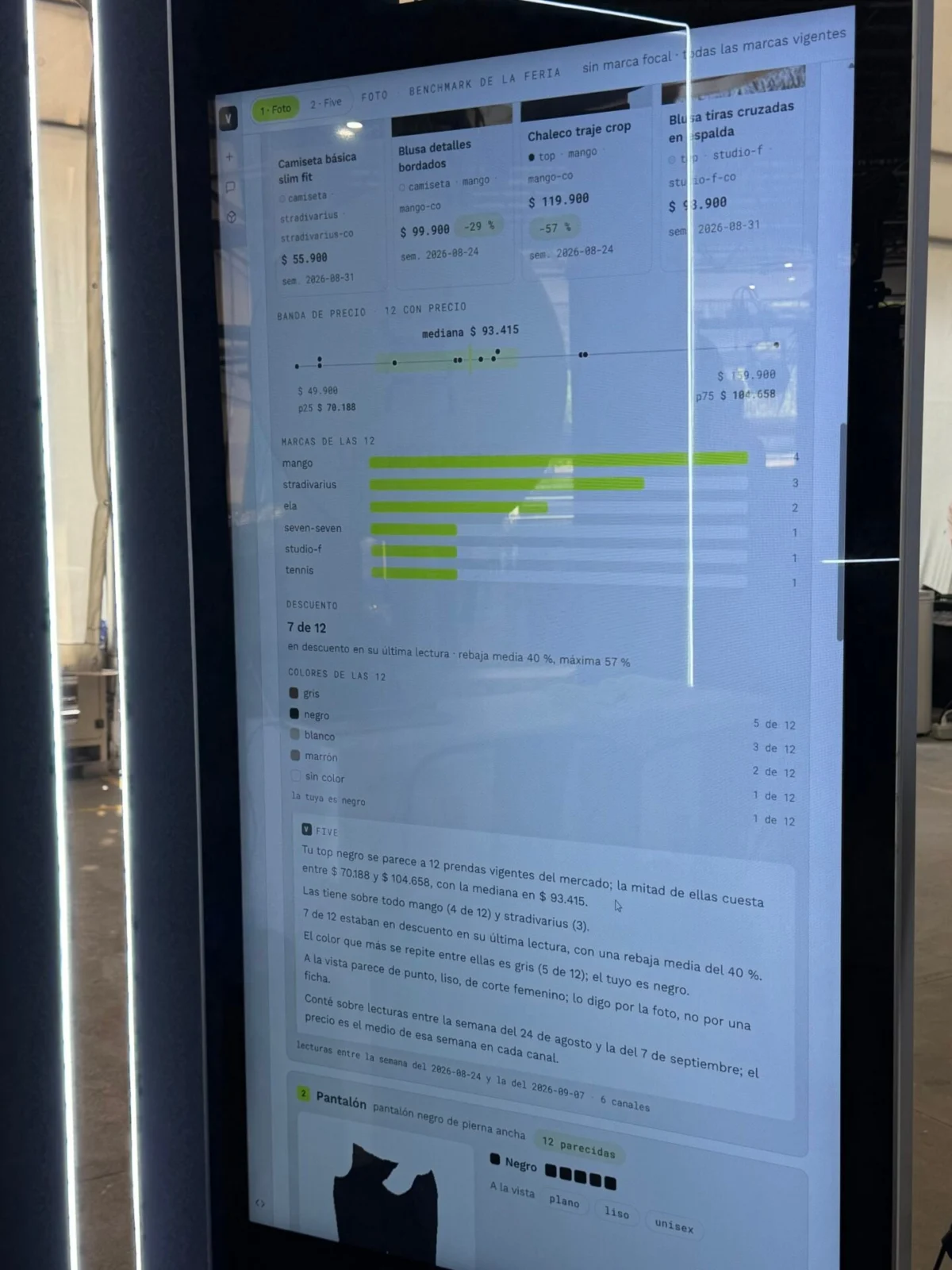
- Moda Lab: A Colombian innovation tackling the invisible administrative bottlenecks that occur before a garment ever reaches a retail floor or website, utilizing AI to automate product descriptions, metadata, lookbooks, and wholesale catalogs.
Together, these innovations illustrate a singular objective: empowering fashion companies to achieve higher productivity, slash material waste, and accelerate time-to-market without inflating operational budgets.
2. Chronology: The Evolution of Fashion’s Digital Transformation
To understand how the fashion industry arrived at this technological inflection point, it is helpful to trace the gradual integration of digital tools over recent decades:
- Late 1990s – Early 2000s (The Digitization of Basic Operations):
Fashion brands begin adopting basic Enterprise Resource Planning (ERP) software and rudimentary inventory management databases. E-commerce emerges, but websites are largely static digital catalogs mirroring print magazines. - 2010 – 2015 (The E-Commerce Boom and Digital Marketing):
Online retail explodes, forcing brands to invest heavily in digital photography studios. However, traditional photoshoots remain slow, expensive, and logistically complex, often requiring weeks of turnaround time per collection. - 2016 – 2020 (The Rise of 3D Prototyping and Early CAD Integration):
Computer-Aided Design (CAD) software evolves into sophisticated 3D rendering engines. Early adopters begin experimenting with digital clothing samples to reduce material waste, though adoption is largely confined to tech-forward sportswear giants. - 2021 – 2023 (Post-Pandemic Acceleration):
Global supply chain disruptions expose the fragility of traditional, geographically fragmented fashion manufacturing. Brands are forced to digitize remote collaboration, leading to a surge in demand for virtual showrooms and cloud-based design validation tools. - 2024 – Present (The AI and Automation Era):
Generative AI and automated capture hardware achieve mainstream enterprise readiness. Platforms like ORB360, Browzwear, and Moda Lab move from experimental pilots to core operational infrastructure, cementing a new era where data-driven efficiency dictates market competitiveness.
3. Supporting Data: Investment Trends and Metrics of Efficiency
The appetite for technological modernization within the fashion sector is not merely anecdotal; it is heavily backed by quantitative research and empirical performance metrics.
Investment Intentions in Latin America
A comprehensive survey conducted between March and April by Inexmoda—polling approximately 200 Colombian enterprises regarding machinery and technology—revealed a clear roadmap for capital allocation:
- 40% of surveyed companies explicitly plan to invest heavily in advanced production technology and machinery.
- 33% are actively channeling financial resources into marketing infrastructure, e-commerce enhancements, and digital growth strategies.
Quantifying Efficiency Gains on the Global Stage
The return on investment for fashion tech is vividly demonstrated by the performance metrics reported by platform leaders:
- ORB360’s Speed Metrics: By utilizing specialized hardware and integrated software, a single 360-degree product rotation is captured in just 40 seconds. Each rotation consists of 72 individual high-resolution photographs that can be instantly cropped, zoomed, or repurposed into diverse marketing assets for e-commerce, B2B wholesale platforms, and social media channels.
- Browzwear’s Waste Reduction: Operating across a global client base of over 1,000 fashion brands (including industry titans like Nike, Lululemon, and Puma), Browzwear has facilitated the creation of more than 10 million digital garments. Crucially, the platform reports a staggering 50% to 80% reduction in physical sample creation. By minimizing physical prototypes, brands drastically cut down on fabric waste, shipping emissions, and lead times.
- Moda Lab’s Administrative Output: Addressing the hidden administrative backlog, Colombian tech solutions are now capable of processing up to 150 references per collection sample, automating the generation of product names, technical specification sheets, pricing matrices, and lookbooks via artificial intelligence.
4. Official Responses and Industry Perspectives
Industry leaders speaking at Nextech emphasized that the modern fashion landscape requires a fundamental psychological shift. Founders and CEOs are no longer romanticizing the notion of "doing everything alone"; instead, they are actively sourcing specialized technological partners.
Transforming the Commercial Visuals: ORB360
José Aragón, CEO of ORB360, shed light on how high-end visual production is being democratized and accelerated for the world’s most prestigious luxury houses—including Victoria Beckham, Stella McCartney, Hermès, Gucci, Loewe, and Jimmy Choo.
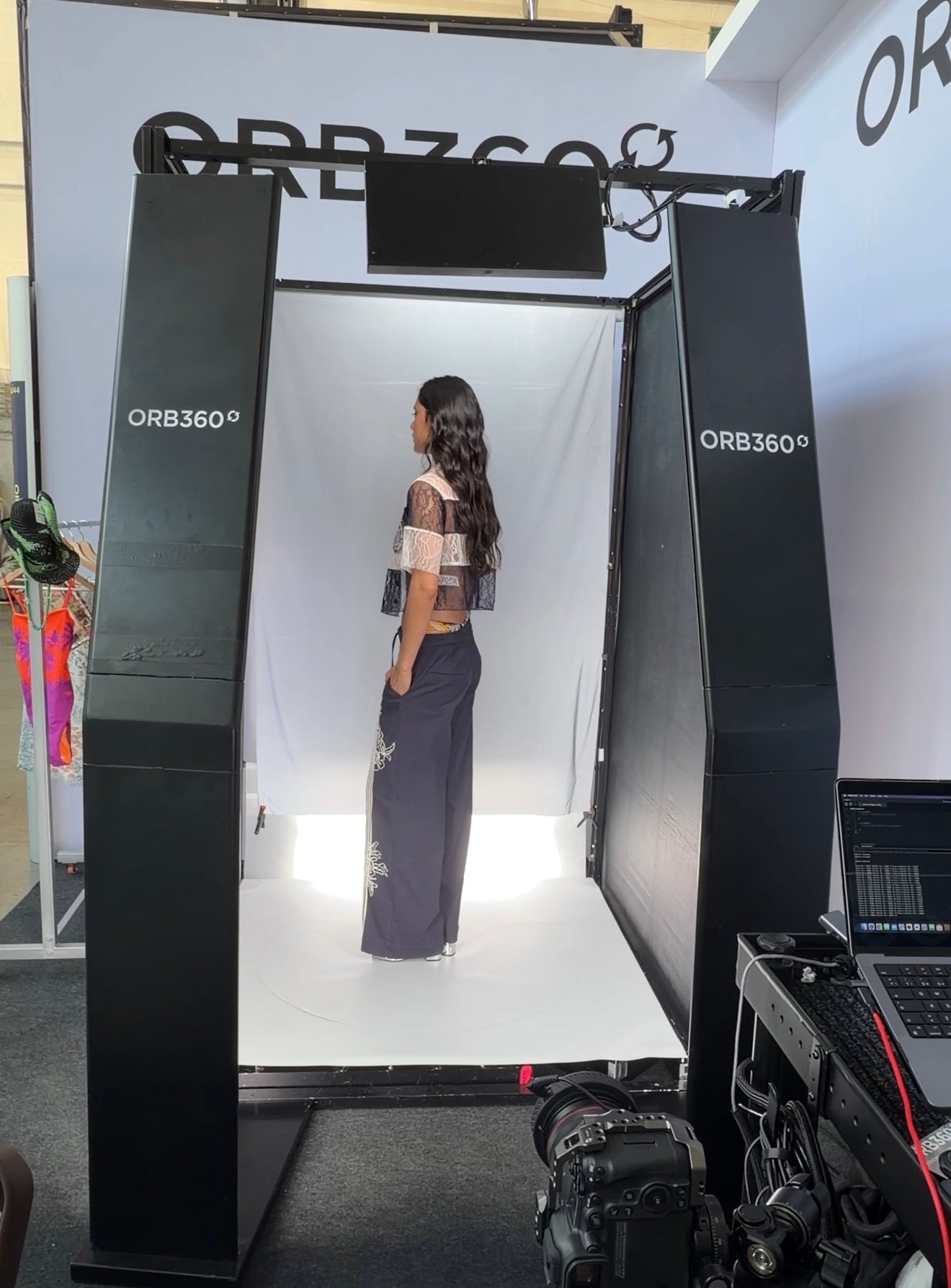
"Within our ecosystem, we are changing something as traditionally tedious and time-consuming for a brand as a commercial photoshoot," Aragón explained in an interview with La República. By blending advanced hardware with intelligent software, the company allows brands to bypass protracted studio sessions, generating comprehensive visual portfolios that seamlessly service direct-to-consumer e-commerce portals and complex B2B wholesale integrations.
Bridging the Design Gap: Browzwear
The philosophy of digital-first creation was further reinforced by representatives of Browzwear. By establishing accurate digital twins of fabrics and garments, designers can evaluate drape, physics, color, and fit within virtual environments.
"An enterprise can design a garment digitally, review its structural behavior, execute modifications, and share that asset across international production teams long before any physical material is cut," noted industry analysts at the event. By reducing the number of physical sample iterations, brands eliminate unnecessary material consumption while synchronizing design with real-time consumer feedback.
Streamlining the Back-End: Moda Lab
While design and photography capture public imagination, local innovation is tackling the administrative chaos that precedes sales. Ana María Zúñiga, CEO of Moda Lab, highlighted the invisible friction points that drain corporate resources.
"There is another problem that is far less visible, yet extremely common among fashion companies: everything that happens before a garment ever lands in a physical store or on a website," Zúñiga told La República. Catalog management, product specification sheets, pricing updates, buyer documentation, and commercial marketing materials often devolve into manual, hours-long bottlenecks.
By integrating artificial intelligence into its Innovation Hall, Moda Lab enables brands to automatically generate product descriptions, SEO tags, and multi-channel marketing assets, proving that technological transformation is just as vital in the back-office as it is on the design floor.
5. Implications: The Future of the Sistema Moda
The widespread integration of artificial intelligence, 3D prototyping, and automated workflows carries profound implications for the global fashion economy, and particularly for emerging hubs like Colombia’s Sistema Moda.
1. The Redefinition of the Fashion "Partner"
The romantic, solitary artisan archetype—the designer who sketches, cuts, sews, and photographs entirely on their own—is increasingly unsustainable in a hyper-accelerated global market. When a company seeks scalable growth, attempting to manage every operational silo internally introduces fatal delays. Consequently, a new class of specialized technology "partners" has emerged. These platforms act as digital connective tissue, allowing creative directors to focus on core aesthetics while algorithms and automated machinery handle data processing, physical simulation, and visual capture.
2. Sustainability Through Digitization
For an industry frequently scrutinized for its environmental footprint, technology offers a tangible path toward genuine sustainability. By slashing physical sample creation by up to 80% through 3D platforms like Browzwear, fashion houses drastically reduce textile waste, chemical dyeing impacts, and international freight emissions. Furthermore, AI-driven demand forecasting and automated cataloging ensure that overproduction is curbed before manufacturing begins.
3. Competitiveness in the Colombian and Regional Market
For the Colombian fashion sector, embracing these technologies is no longer an optional luxury; it is a prerequisite for international survival. With 40% of local companies planning investments in production tech and a third focusing on digital marketing, the regional industry is positioning itself to compete on speed, precision, and agility rather than relying solely on low labor costs.
Conclusion
As the discussions at Nextech clearly demonstrated, the future of fashion will not be won by those who resist automation, but by those who ask the right diagnostic questions. By identifying precisely where time, capital, and data are leaking through legacy operational models—and deploying targeted artificial intelligence, 3D design, and automated workflows to seal those gaps—fashion enterprises can finally align their supply chain velocity with the dynamic demands of the modern consumer.