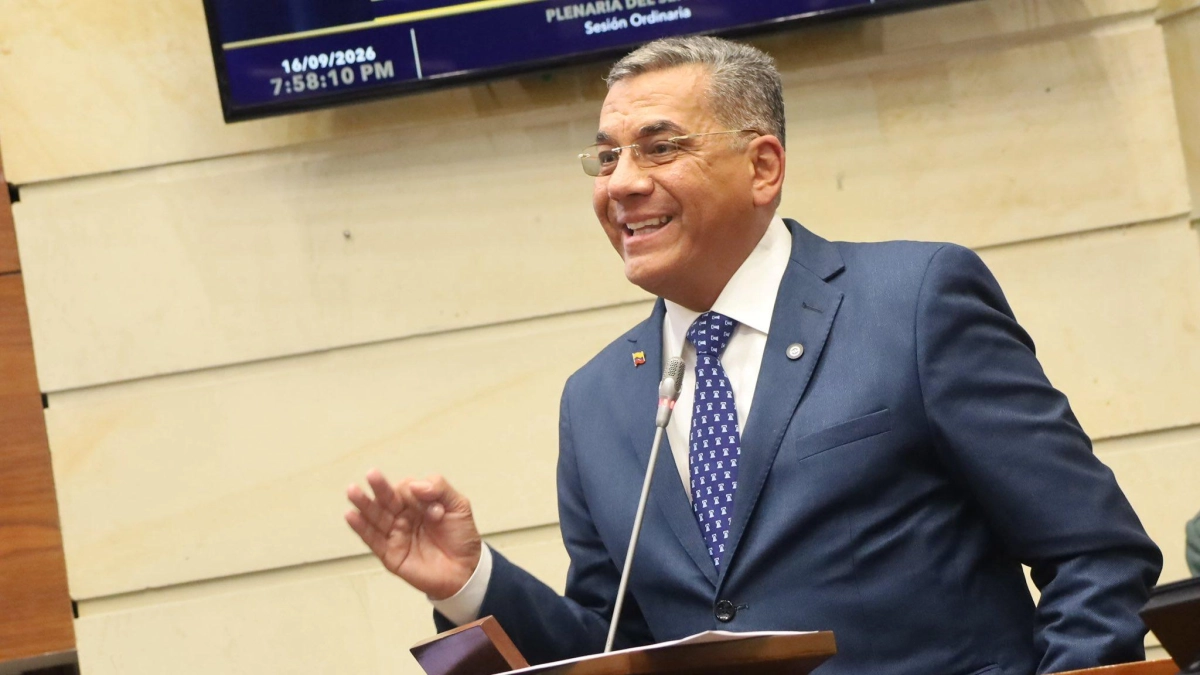
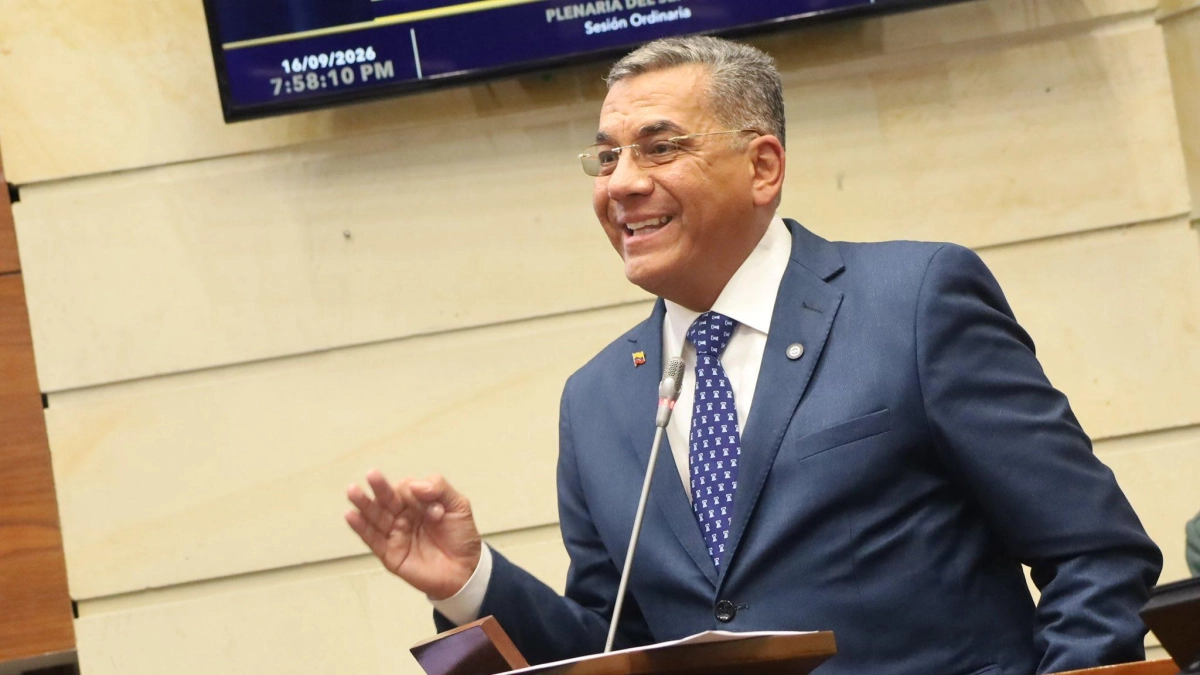
POLITICS — In a high-stakes confrontation before the Senate, the current security strategy of the administration led by President Abelardo De La Espriella faced its most rigorous legislative test to date. General (r) Jorge Eduardo Mora, Minister of Defense, defended the government’s military stance during a motion of censure debate called by opposition lawmakers. The session was triggered by controversial military operations in the department of Guaviare, where underage minors—allegedly forcibly recruited by illegal armed groups and used as human shields—lost their lives during bombing raids against dissidents of the FARC.
While defending the legality and necessity of the armed forces’ actions, Minister Mora used the platform to deliver a sobering assessment of the national security landscape, warning that Colombia currently confronts an existential threat from more than 30,000 armed terrorists whose ranks, he claims, doubled under the previous administration’s "total peace" policies.
Main Facts of the Debate and Security Crisis
The crux of the legislative clash centered on the delicate balance between national security operations and the protection of human rights, particularly concerning minors caught in the crossfire of asymmetric warfare.
Opposition senators severely criticized the Ministry of Defense over the Guaviare bombings, arguing that military actions targeting camps housing underage recruits violate international humanitarian protocols and display a disregard for vulnerable populations. The political friction highlights ongoing anxieties regarding how the state manages encounters with criminal organizations that systematically incorporate children into their ranks.
Minister Mora, however, pushed back forcefully against the narrative presented by the opposition. He stated that the state operates strictly within the framework of International Humanitarian Law (IHL), emphasizing that the practice of forced recruitment cannot be weaponized as a "perverse incentive" to shield criminal structures and high-value targets from military engagement.
"The best way to protect minors from being recruited and turned into combatants is by attacking the armed groups, by not giving them breathing room, by denying them freedom of action, and by snatching away the territorial control that they were allowed to maintain over the last four years," Mora declared to the plenary.
According to figures presented by the defense chief during the hearing, security forces have successfully rescued 39 underage minors in active combat zones during the current administration. These youths, he noted, had been forcibly incorporated into terrorist ranks before being recovered by state forces, which subsequently restored their fundamental rights.
Chronology of the Political Escalation
The road to the Senate floor on September 16, 2026, was paved by weeks of mounting tension between the executive branch, military leadership, and legislative watchdogs.
Initial Reports from Guaviare: Investigative reports and local human rights organizations brought to light the casualties resulting from precision bombing operations against dissident factions of the FARC in the southern jungles of Guaviare. The confirmation that minors were among the dead immediately galvanized opposition parties.
The Motion of Censure Call: Leveraging public concern over the welfare of child soldiers and civilian protection, opposition legislators officially filed and scheduled a motion of censure against Defense Minister Jorge Eduardo Mora, demanding accountability for the military’s operational protocols.
The Senate Hearing (September 16, 2026): Minister Mora appeared before the full Senate to deliver his testimony, expanding the scope of the debate from the specific Guaviare incident to a comprehensive national security diagnosis. He detailed the systemic challenges facing the public force, logistical deficits, and cross-border threats.
Upcoming Vote (Scheduled for the Following Wednesday): Congressional analysts and legislative vote counts indicate that the motion of censure is unlikely to prosper. The official coalition in Congress remains solid, mirroring the outcome of a recent, unsuccessful censure attempt against Minister of Housing Jaime Andrés Beltrán. Furthermore, moderates and ruling-party allies argue that the opposition failed to present sufficient legal or factual grounds to justify removing the defense minister from office.
Supporting Data and Strategic Vulnerabilities
Beyond addressing the immediate fallout from the Guaviare operation, Minister Mora used the congressional platform to outline structural deficiencies within Colombia’s defense apparatus. His testimony laid bare a sobering reality regarding institutional readiness and the scale of the criminal threat.
1. Exponential Growth of Armed Groups
Mora stated that the active threat facing the country comprises roughly 30,000 armed combatants belonging to various dissident factions, guerrillas, and criminal syndicates. This figure notably excludes the extensive urban and rural militia networks, which are estimated to contribute an additional 15,000 to 20,000 irregular supporters. According to the minister, these terrorist structures effectively doubled in size over a four-year period, fueled by what he characterized as overly lenient concessions and strategic breathing room granted under past appeasement policies.
2. The Cross-Border Safe Haven Dilemma
A major focal point of the minister’s strategic critique involved the regional dimension of Colombia’s security crisis. Mora explicitly singled out neighboring Venezuela as a critical vulnerability, pointing to the unhindered presence and operational mobility enjoyed by the National Liberation Army (ELN) and FARC dissident remnants across the international border.
"Another tragedy that we have to face," Mora remarked. "We are going to combat them with total force here, but unfortunately, the government of Venezuela does not fight them and remains permissive."
3. Budgetary Deficits and Equipment Shortages
Highlighting the logistical strain on the armed forces, Mora revealed that the Ministry of Defense is grappling with a staggering budgetary deficit of 40 billion pesos. Among the most pressing operational emergencies is the urgent requirement to acquire 120,000 standard-issue rifles—the fundamental equipment necessary to sustain basic infantry and police operations nationwide.
Official Responses and Perspectives
The debate underscored a deep ideological chasm within Colombian politics regarding how to achieve lasting peace and security.
The Opposition Perspective: Critics of the De La Espriella administration maintain that kinetic military solutions, such as aerial bombardments in areas where civilian populations or recruited minors are present, constitute grave policy failures. They argue that state strategy must prioritize non-violent disengagement, intelligence-led pinpoint captures, and robust preventative measures against forced recruitment over heavy-handed tactical strikes.
The Executive and Military Defense: The government maintains that military pressure is the only language understood by transnational criminal syndicates and unrepentant insurgents. By framing the operations as protective measures for society at large, the administration insists that paralyzing the military out of fear of collateral consequences would effectively surrender national sovereignty to criminal networks that routinely exploit humanitarian rules as tactical armor.
Implications for National Security and Governance
As the political dust settles ahead of the upcoming legislative vote, the implications of this censure debate extend far beyond the political survival of Minister Jorge Eduardo Mora.
First, the defeat of the motion of censure—widely anticipated by political analysts—will likely solidify the current administration’s hardline security posture. Rather than compelling a pivot in military doctrine, the parliamentary showdown has reinforced the executive’s resolve to intensify operations against illegal armed groups without altering its core tactical approach.
Second, the public airing of severe logistical shortfalls, such as the multi-trillion-peso budget deficit and the urgent need for basic infantry weaponry, places immense pressure on the national treasury. Addressing these gaps will require critical fiscal adjustments if the state intends to sustain a multi-front war against expanding terrorist networks.
Finally, the cross-border dynamics highlighted by the Ministry of Defense underscore the persistent diplomatic friction between Bogotá and Caracas. As long as insurgent leadership and logistical rear guards find sanctuary across the border, Colombia’s domestic security apparatus will continue to face asymmetric challenges that standard conventional military strategies alone cannot fully resolve.
With the censure vote slated for next Wednesday, the congressional majority is poised to back the administration, granting Minister Mora the political continuity to pursue his stated objective: reclaiming territorial control through unyielding military pressure.
By Juan Sebastián Lombo Delgado Political Redaction / International Desk Translation Published: November 3, 2026 Main Facts In a decisive move to confront what it has termed an unprecedented structural crisis, the administration of President…
Bogotá, Colombia — In a move that signals a significant departure from traditional military appointments, the administration of President Abelardo De La Espriella has officially published the nomination of Lucas Eduardo Ariza as the new…
By Juan Sebastián Lombo Political Desk, El Tiempo (Adapted for International Distribution) Main Facts As Colombia approaches the milestone of 100 days under the administration of President Abelardo De La Espriella, the political landscape of…