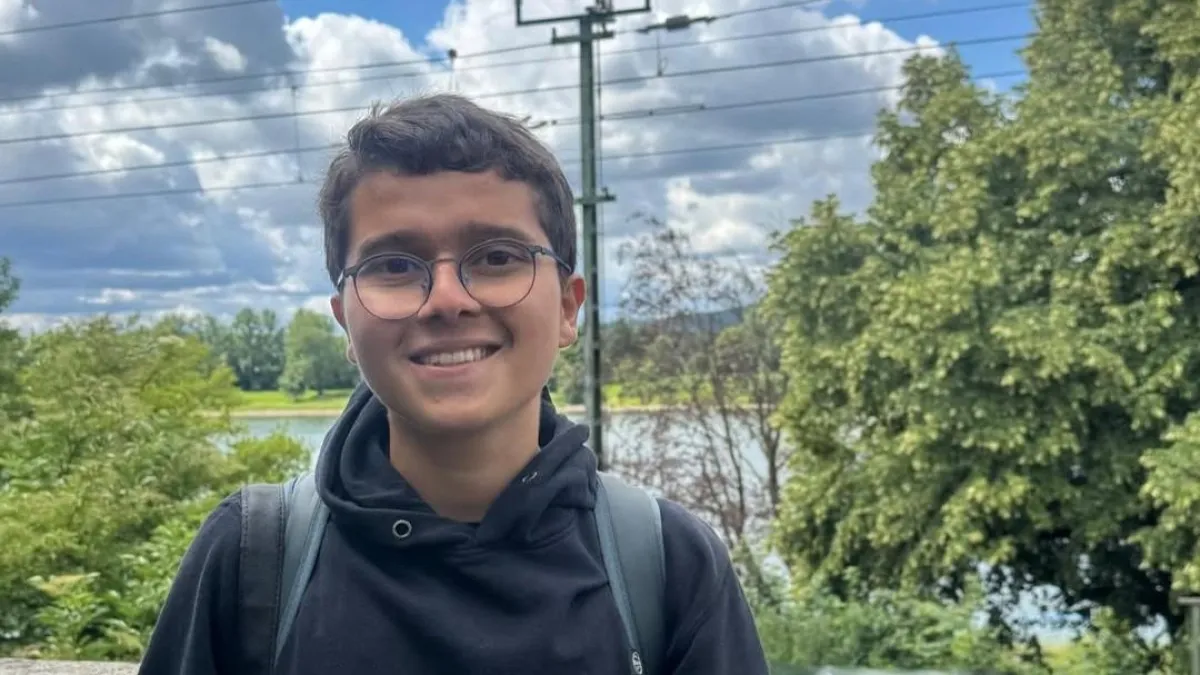
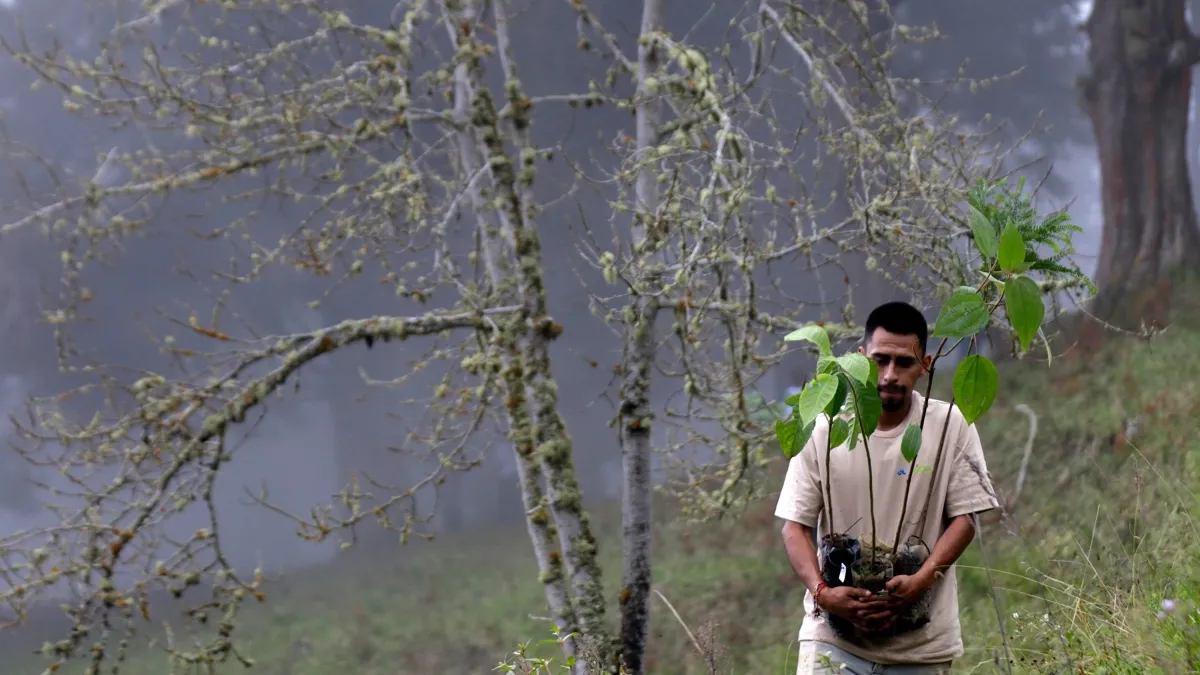
LA HAGUE, NETHERLANDS — In a resounding validation of youth-led global advocacy, 17-year-old Colombian environmentalist and human rights defender Francisco Javier Vera Manzanares has been officially named among the top three finalists for the prestigious 2026 International Children’s Peace Prize.
Awarded annually by the Dutch organization KidsRights, the international accolade honors brave children and teenagers who have made extraordinary contributions to advocating for the rights of the child and engineering transformative changes within their communities and beyond. Vera Manzanares, originally from the municipality of Villeta in the department of Cundinamarca, Colombia, was selected from an intensely competitive pool of 280 international nominations spanning diverse corners of the globe. His inclusion highlights a growing worldwide consensus: that the existential crises of our time—chiefly climate change—cannot be adequately addressed without centering the voices, insights, and leadership of the youngest generations.
The grand announcement sets the stage for a high-stakes ceremony scheduled for November 19, 2026, at 9:30 AM (Colombian time), which will take place inside the historic walls of the Peace Palace in The Hague, Netherlands. The ultimate recipient of the prize will be awarded the iconic Nkosi statuette, a specialized international platform designed to amplify their advocacy, and a 50,000-euro project fund dedicated to scaling their ongoing community initiatives.
Main Facts: The Milestone and the Nominee
Francisco Vera Manzanares has captured global attention not merely as a symbol of youth potential, but as a seasoned strategist and grassroots organizer. His selection as a finalist for the 2026 International Children’s Peace Prize anchors on three foundational pillars of his life’s work: climate justice, environmental protection, and child rights advocacy.
While many youths his age are navigating the transitional pressures of secondary school and impending adulthood, Vera Manzanares has spent nearly half his life in the public eye, lobbying political leaders, organizing peaceful civic actions, and demanding institutional accountability. His nomination underscores the maturation of youth-led climate movements in the Global South, where environmental degradation directly threatens the livelihoods, safety, and cultural survival of vulnerable communities.
The finalists’ pool from which Vera Manzanares emerged represents the pinnacle of contemporary youth activism. Alongside the young Colombian, the final trio includes:
Issaiah Guzmán Arancibia (Chile): A passionate advocate dedicated to reforming judicial systems to ensure children’s active participation in legal processes that directly impact their lives and welfare.
Sufaira (Bangladesh): A young human rights defender of Rohingya origin living inside a refugee camp, whose courageous work centers on protecting the rights of displaced children, fiercely campaigning for girls’ access to education, and fighting against child marriage.
While the 50,000-euro prize and the Nkosi statuette are reserved exclusively for the ultimate winner rather than distributed automatically among the finalists, the global visibility afforded to all three finalists marks a monumental leap forward for their respective causes.
Chronology of a Movement: From Villeta to Global Stages
The trajectory of Francisco Vera Manzanares’s activism offers a compelling case study in how localized grassroots outrage can rapidly scale into international movements. His journey can be traced through several defining historical milestones:
2019: The Spark in the Amazon
The genesis of Vera Manzanares’s public life occurred when he was just nine years old. Deeply disturbed by relentless, devastating news coverage of catastrophic forest fires tearing through the Amazon rainforest, he refused to remain a passive spectator. Rallying a small circle of six friends, he organized his very first peaceful demonstration in the central park of his hometown, Villeta.
The Birth of Guardianes por la Vida (Guardians for Life)
That initial park protest served as the incubator for what would become a powerful national and international phenomenon: Guardianes por la Vida. What started as a localized gathering quickly institutionalized into an organized collective focused on environmental education, clean-up operations targeting local water sources, and mobilizing citizens around ecological consciousness.
Scaling Up (2020–2024)
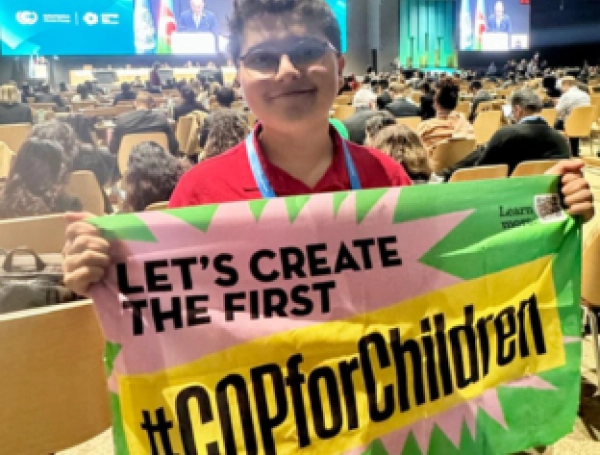
Over the subsequent years, the reach of Guardianes por la Vida expanded exponentially. The network eventually integrated more than 1,400 young members across Colombia and Latin America. As his organizational footprint grew, so did his policy ambitions. Vera Manzanares began transitioning from localized clean-ups to high-level institutional lobbying, famously issuing formal petitions and public calls urging global bodies to establish the first-ever "Children’s COP" (Conference of the Parties), ensuring that future international climate summits structurally incorporate youth delegates with binding consultative powers.
2026: Global Recognition
Culminating years of relentless advocacy, public speaking engagements, and encounters with national and international policymakers, his nomination as a top-three finalist for the International Children’s Peace Prize marks the apex of his journey as a teenager, positioning him as one of the most prominent youth voices of the 21st century.
Supporting Data and Context
To understand the weight of Vera Manzanares’s nomination, one must examine the rigorous selection mechanics of the KidsRights Foundation, the organization behind the International Children’s Peace Prize.
Established in 2005 during the Nobel Peace Laureates’ Summit hosted by Mikhail Gorbachev, KidsRights was created to spotlight courageous children who stand up for children’s rights. The selection process is exhaustive:
The Pool: For the 2026 edition, an independent expert committee meticulously reviewed 280 nominations submitted from dozens of countries.
The Criteria: Nominees are evaluated based on their proven ability to ignite structural change, their courage in facing systemic adversity, the measurable impact of their grassroots projects, and their capacity to inspire other youth globally.
The Prize Mechanics: The winner receives the Nkosi statuette—named after the legendary South African child rights activist Nkosi Johnson—alongside a €50,000 project grant. This funding is strategically designated to support the winner’s ongoing initiatives, creating a multiplier effect that deepens community impact rather than serving as a personal monetary reward.
Furthermore, demographic and environmental metrics contextualize the urgency of Vera Manzanares’s work. According to UNICEF’s Children’s Climate Risk Index, approximately 1 billion children—nearly half the world’s child population—live in extremely high-risk countries vulnerable to the compounding shocks of climate change, water scarcity, heatwaves, and vector-borne diseases. In Latin America and the Caribbean, millions of children face displacement, educational disruption, and health crises driven by environmental degradation. Activists like Vera Manzanares provide the critical grassroots counterweight to corporate and state inaction.
Official Responses and Public Reactions
The announcement of Vera Manzanares’s finalist status triggered an outpouring of institutional support, digital applause, and solidarity across Latin America and international human rights circles.
While major international figures and civil rights organizations frequently praise the young Colombian for his articulate critiques of governmental climate policies, his domestic trajectory has also faced unique hurdles. Over the years, as his public profile grew, Vera Manzanares has occasionally been the target of online intimidation by anonymous trolls—an alarming reality that underscored the risks faced by environmental defenders in Colombia, historically one of the most dangerous nations in the world for land and environmental protectors.
Despite these challenges, institutional backing has remained steadfast. Colombian civil society organizations, academic institutions, and international environmental agencies have leveraged their platforms to celebrate his recognition by KidsRights.
Marc Dullaert, founder and chairman of KidsRights, has frequently emphasized the core philosophy underpinning the prize:
"Every year, we are astonished by the extraordinary resilience, ingenuity, and bravery demonstrated by children who refuse to inherit a broken world. These finalists are not merely the leaders of tomorrow; they are driving necessary, uncomfortable changes today. Their actions demand our absolute attention and institutional support."
Domestically, environmental commentators in Colombia have framed Vera Manzanares’s nomination as a testament to the country’s vibrant, albeit embattled, civil society. Social media channels associated with the nominee, alongside digital spaces managed by Guardianes por la Vida, have been flooded with messages of solidarity from youth groups across the continent, who view his presence in The Hague as a collective victory for the entire region.
Implications of the Nomination
The recognition of Francisco Vera Manzanares as a finalist for the 2026 International Children’s Peace Prize carries profound implications across legal, political, and cultural dimensions:
1. Advancing Intergenerational Climate Justice
For decades, environmental policy has been drafted by older generations whose political timelines do not align with the multi-decadal catastrophe of climate collapse. By elevating a 17-year-old to the final stages of a major global peace prize, the international community signals a growing acceptance of intergenerational equity. The implication is clear: youth must be integrated into climate governance not as token participants for photo opportunities, but as co-architects of binding environmental treaties.
2. Validating Grassroots South-to-North Advocacy
Too often, global environmental narratives are dominated by institutions based in the Global North. By centering the work of Francisco Vera Manzanares (Colombia), Issaiah Guzmán Arancibia (Chile), and Sufaira (Bangladesh), the KidsRights Foundation redirects the global spotlight toward the frontline regions where the impacts of environmental destruction, systemic inequality, and displacement are acutely felt. It proves that innovation and courageous leadership originate intensely from the Global South.
3. Amplifying Protection for Young Human Rights Defenders
The international visibility provided by this nomination serves as a vital shield. For young activists operating in volatile security environments—particularly within Latin America—global recognition acts as a deterrent against threats and silencing tactics. When the international community shines a bright light on a young defender, local authorities are compelled to take matters of security and human rights protection far more seriously.
4. Inspiring the Next Wave of Global Youth
Ultimately, the primary implication is pedagogical and inspirational. When millions of children worldwide witness a peer from a small municipality like Villeta standing on a global stage in the Peace Palace at The Hague, the psychological barrier of perceived powerlessness shatters. It communicates a powerful, undeniable truth: that age is no barrier to impact, and that the collective voice of youth remains one of the most potent forces for planetary salvation in the 21st century.
As the world turns its eyes toward the Peace Palace on November 19, 2026, the journey of Francisco Vera Manzanares stands as an enduring reminder that the fight for a sustainable, just world is being forged, sustained, and fiercely defended by the children of today.
By Edwin Caicedo Environment and Health Journalist September 9, 2026 Main Facts: The Infrastructure Paradox in Colombia Constructing a highway, laying down an electrical transmission grid, or launching any other major strategic initiative in Colombia…
*By Aníbal Pérez García ()* Special Analysis for Razón Pública () Translated and adapted for international publication Introduction: The Looming Crisis of Territorial Habitability Colombia is currently caught in a linguistic and conceptual paradox. In…
By Global News Desk Published: September 10, 2026 Main Facts: The Legacy of August 10 It has been exactly one month since a powerful 7.4-magnitude earthquake struck western Colombia, shattering communities, reshaping landscapes, and leaving…