Main Facts
As Colombia navigates a critical economic juncture, the legislative battle over the newly proposed fiscal rescue bill has officially begun. Senator Sara Castellanos—representing Salvación Nacional, the political party closest to President Abelardo De La Espriella—has emerged as a key voice in the congressional economic commissions. Serving as the sole member of her party in the pivotal Third Commission of the Senate, Castellanos is positioning herself as a crucial bridge between executive ambition and legislative pragmatism.
The core of the debate centers on a sweeping fiscal rescue package introduced by the De La Espriella administration to combat a rapidly expanding fiscal deficit. According to government data, state expenditures ballooned by 89 percent between 2022 and 2026, leaping from 253 trillion pesos to 353 trillion pesos. This unsustainable expansion created a financial "snowball effect," where state revenues stand at roughly 24 trillion pesos monthly against expenditures reaching 40 trillion pesos.
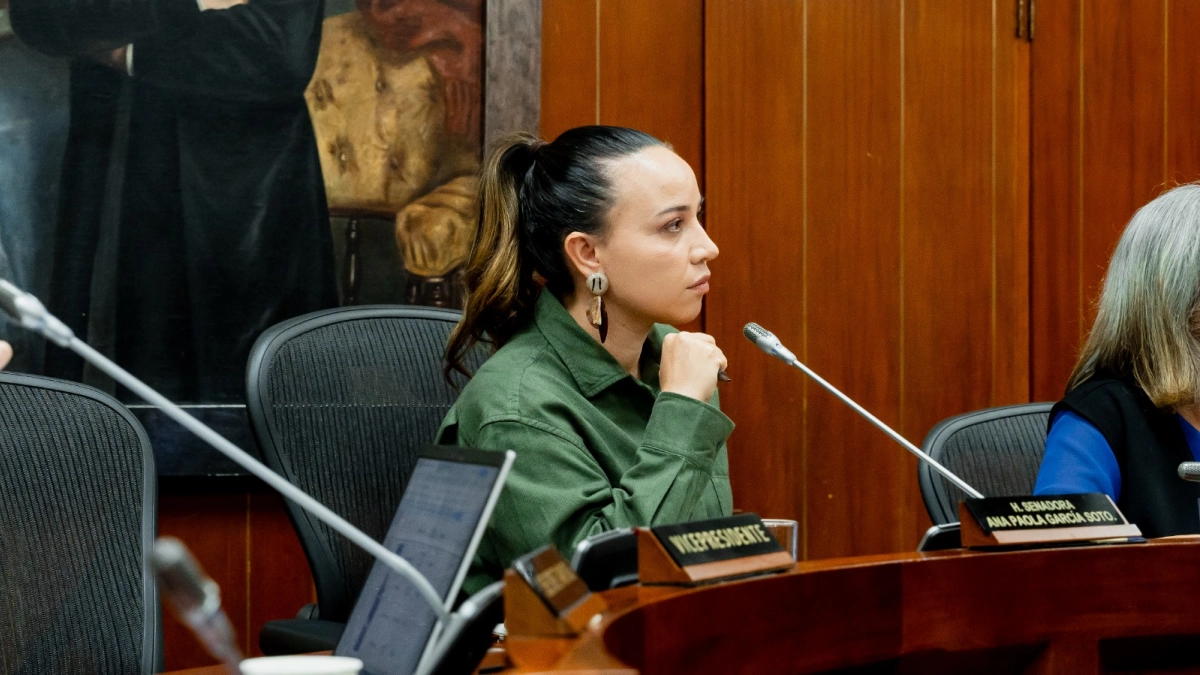
While Castellanos has pledged her support for the overarching architecture of the bill, warning that inaction could drag the country into an unprecedented economic recession, she has also drawn firm lines regarding specific revenue-raising measures. Notably, she opposes proposed Value Added Tax (VAT) hikes on essential items like food and critical services, advocating instead for structural state austerity, aggressive anti-evasion measures, and targeted taxation on luxury goods.
Chronology of Events
The unfolding fiscal crisis and the legislative response have accelerated through a series of key milestones over the past several years and weeks:

- 2022–2026 (The Preceding Period): Driven by an aggressive expansion in public spending, the national budget grows from 253 trillion pesos to 353 trillion pesos. Financial analysts note that public spending absorbs nearly 89 percent of the budget’s growth capacity, setting the stage for structural deficits.
- Early November 2026: President Abelardo De La Espriella’s administration officially crafts and submits the emergency fiscal rescue bill to Congress. The package is framed as a vital intervention to prevent a historic economic contraction.
- Saturday, November 10, 2026: High-level coordination meetings take place between the executive branch and congressional members of the economic commissions. The executive delegation—including the Vice President, the Minister of Commerce, the Minister of the Interior, and the Minister of Hacienda (Finance)—meets with allied political benches to build consensus, despite minor friction regarding the physical absence of President De La Espriella, who remains engaged in national security matters (such as the recent "Operation Noah").
- Mid-November 2026: Legislative debate heats up in the Third Commission. Senator Sara Castellanos outlines her strategy to review the bill article-by-article, pushing for deep state contractions while seeking alternative funding sources to protect the middle class and vulnerable sectors from broad tax increases.
- Upcoming (Late November 2026): The De La Espriella administration plans an international delegation trip to New York aimed at courting foreign investment, positioning the rescue bill’s pro-business initiatives as the largest push for capital influx in modern Colombian history.
Supporting Data and Economic Indicators
The urgency behind the De La Espriella administration’s fiscal rescue bill is underscored by stark economic indicators, spending metrics, and comparative policy models:
- Monthly Fiscal Imbalance: The Colombian state collects approximately 24 trillion pesos per month in revenues, contrasted against monthly expenditures of 40 trillion pesos.
- Debt Servicing Ratio: Current projections indicate that out of every three pesos collected from Colombian citizens, one peso is immediately funneled toward servicing the national debt.
- Projected State Savings: The Ministry of Finance (Hacienda) projects structural savings through spending cuts of 44 trillion pesos by 2027, scaling up to 66 trillion pesos in subsequent phases, and targeting an annual state saving of 76 trillion pesos by 2030.
- Proposed State Retrenchment: The structural austerity plan aims for a 20 percent reduction in public contractors, the complete elimination of official advertising budgets (pautas oficiales), severe cuts to official travel, the downsizing of general operating expenses, and the liquidation of underutilized state assets. Proposals also contemplate merging or cutting between six and eight government ministries.
- International Benchmarks: Proponents of the bill, including various congressional factions, have frequently pointed to Argentina’s sweeping state reduction model as a conceptual framework for cutting oversized bureaucratic apparatuses, albeit adapted to Colombia’s specific institutional framework.
Official Responses and Political Reactions
The fiscal rescue bill has triggered diverse reactions across the political spectrum, highlighting both solidarity and sharp dissent within congressional halls:

The Executive Branch Perspective
The administration, spearheaded by the Vice President and the economic cabinet, maintains that the rescue package is non-negotiable for the long-term viability of the nation. Government officials argue that seven out of every ten pesos generated by the reform will come from direct state austerity and expenditure cuts, marking a historic departure from traditional tax-heavy reforms that historically penalized citizens without forcing the government to tighten its own belt.
Senator Sara Castellanos (Salvación Nacional)
Representing the core political allies of the president within the Third Commission, Senator Castellanos has emerged as a pragmatic voice. In her interview with EL TIEMPO, she emphasized:

"The issue is that the country got so deeply into debt, opening the spending floodgates so wide over the last four years, that we entered a snowball debt cycle… If something drastic isn’t done—a rescue—the country will enter a recession. We have never entered an economic recession as a country; we don’t know what that is, but the numbers are already here."
Despite her backing, Castellanos remains critical of certain tax mechanisms, asserting:

"I personally am not in agreement with placing VAT on food… So what is our challenge? To see how the state can be squeezed further, where we can pull other sources from, or perhaps apply VAT, but not on the middle class, but rather on other sectors. There is the VAT on liquor, the VAT on luxury cars. There are other ways we can find with the government."
Congressional Opposition and Allied Pushback
While allied parties express a general willingness to support the executive’s goals, fierce debates persist. Opposition lawmakers and independent factions have questioned the true ratio of spending cuts versus tax hikes, with some independent estimates arguing that spending cuts account for a much smaller fraction of the relief than the 70 percent claimed by Hacienda. Furthermore, proposals from right-leaning blocs like Centro Democrático are pushing for even deeper state reductions, raising questions about whether the government risks crippling operational capacities if trimming goes too far.

Implications for Colombia’s Economic Future
The outcome of the legislative battles over the De La Espriella administration’s fiscal rescue bill will carry profound structural implications for Colombia’s economy over the next decade:
- Risk of Recession vs. Austerity Shock: For the first time in modern history, Colombia faces the realistic threat of a macroeconomic recession driven by chronic fiscal deficits. While the proposed austerity measures aim to stabilize public accounts, overly aggressive contractions risk temporarily dampening aggregate demand.
- Shifting the Tax Burden: The political friction over VAT implementation on basic goods, healthcare, and prepaid medicine highlights the delicate balancing act required to protect the middle and lower classes. If legislators successfully strip out consumption taxes on vulnerable populations, alternative revenue sources—such as luxury assets or deeper bureaucratic trims—must fully compensate for the shortfall.
- Investor Confidence and International Projections: The administration’s aggressive parallel strategy to boost productivity, streamline business creation, and court foreign investment—highlighted by upcoming roadshows in New York—relies heavily on passing a credible fiscal consolidation plan. International credit rating agencies and global investors are closely monitoring whether Colombia can successfully legislate long-term fiscal discipline.
- A New Precedent for Governance: By attempting to anchor a fiscal reform primarily on internal state retrenchment (cutting contractors, ending official publicity, and selling dormant assets) rather than solely relying on new citizen taxes, the De La Espriella government is setting a high-stakes precedent. Success or failure in passing this package will fundamentally define the economic identity and political capital of the administration for the remainder of its mandate.