Few culinary creations possess the global reach and historical gravitas of the Stroganoff. While the dish is synonymous with the grandeur of the Russian aristocracy, its evolution into the modern "Chicken Stroganoff" represents a fascinating intersection of culinary adaptation, socio-economic change, and the universal pursuit of comfort food. Today, this dish stands not merely as a relic of 19th-century Russia, but as a staple in households worldwide—a testament to how a recipe can transcend borders while remaining deeply rooted in its origins.
The Genesis of a Culinary Icon: A Historical Overview
The story of the Stroganoff begins in the mid-19th century, amidst the cold winters and opulent dining rooms of the Russian Empire. History attributes the dish to the noble Stroganov family, a dynasty whose influence spanned from the fur trade in the Urals to the upper echelons of the Romanov court.

The most enduring theory regarding its invention involves a French chef in the employ of Count Pável Aleksándrovich Stróganov. Faced with the challenge of creating a dish that was both sophisticated enough for a nobleman’s palate and practical for an aging count who reportedly had difficulty chewing traditional, tougher cuts of beef, the chef applied French sautéing techniques to the local pantry. By thinly slicing tender beef and simmering it in a sauce made of smetana (the thick, slightly sour fermented cream native to Eastern Europe) and a touch of piquant mustard, the chef created a masterpiece of texture and flavor.
The dish quickly migrated from the private kitchens of the elite to the menus of high-end restaurants in St. Petersburg and eventually Paris, where the addition of onions and mushrooms solidified the classic recipe we recognize today.

Chronology: From the Tsarist Table to the Global Plate
To understand the Stroganoff’s ubiquity, one must look at its timeline of adaptation:

- 1860s–1890s: The "Bœuf Stroganoff" gains fame in Russian aristocratic circles. It is documented in the iconic cookbook A Gift to Young Housewives by Elena Molokhovets, cementing its status in Russian home cooking.
- 1920s–1940s: Following the Russian Revolution, displaced aristocrats and chefs fled to China, Europe, and the Americas, bringing their recipes with them. The dish underwent its first major "globalization" during this period, with chefs adjusting ingredients based on local availability.
- 1950s–1970s: The dish reaches its peak of popularity in the United States. During the post-war economic boom, convenience foods—including canned mushroom soup and pre-packaged sour cream—transformed the recipe into a household staple, sometimes at the expense of its culinary finesse.
- 2000s–Present: The "Chicken Stroganoff" variant gains momentum. Driven by a desire for leaner protein, lower costs, and faster cooking times, the poultry version has emerged as the preferred weeknight adaptation, shedding the heavy, formal associations of its beef-based ancestor.
Supporting Data: Why Chicken Has Overtaken Beef
The shift from beef to chicken is not merely a matter of taste; it reflects broader shifts in dietary trends and domestic logistics. According to recent culinary surveys and market trends:

- Economic Accessibility: Beef—particularly the tender cuts required for a traditional Stroganoff (such as sirloin or tenderloin)—has seen significant price volatility. Poultry, by contrast, remains the most affordable and stable protein source globally.
- Nutritional Profiles: Modern consumers are increasingly health-conscious. Chicken breast, being significantly lower in saturated fat than red meat, aligns better with contemporary nutritional guidelines, allowing the richness of the cream sauce to remain the indulgent "star" of the dish.
- Efficiency: The "time-poor" demographic of the 21st century favors chicken because it requires less preparation time. While beef requires careful management to ensure tenderness, chicken cooks rapidly and is more forgiving in a fast-paced kitchen environment.
The Anatomy of the Perfect Stroganoff: A Culinary Breakdown
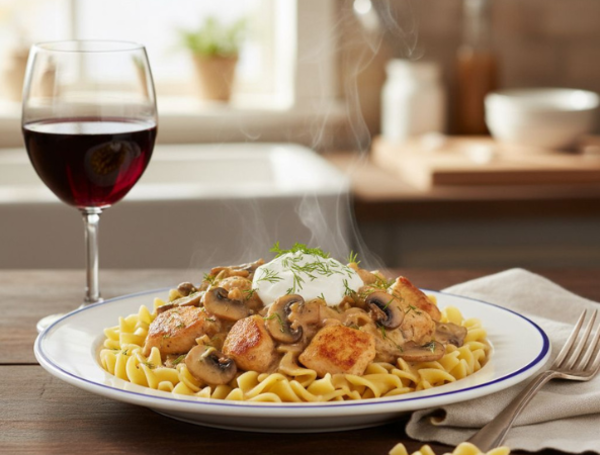
Regardless of the protein used, the soul of a true Stroganoff lies in the sauce. The technique requires precision to achieve the signature "untuous" consistency.
The Essential Elements
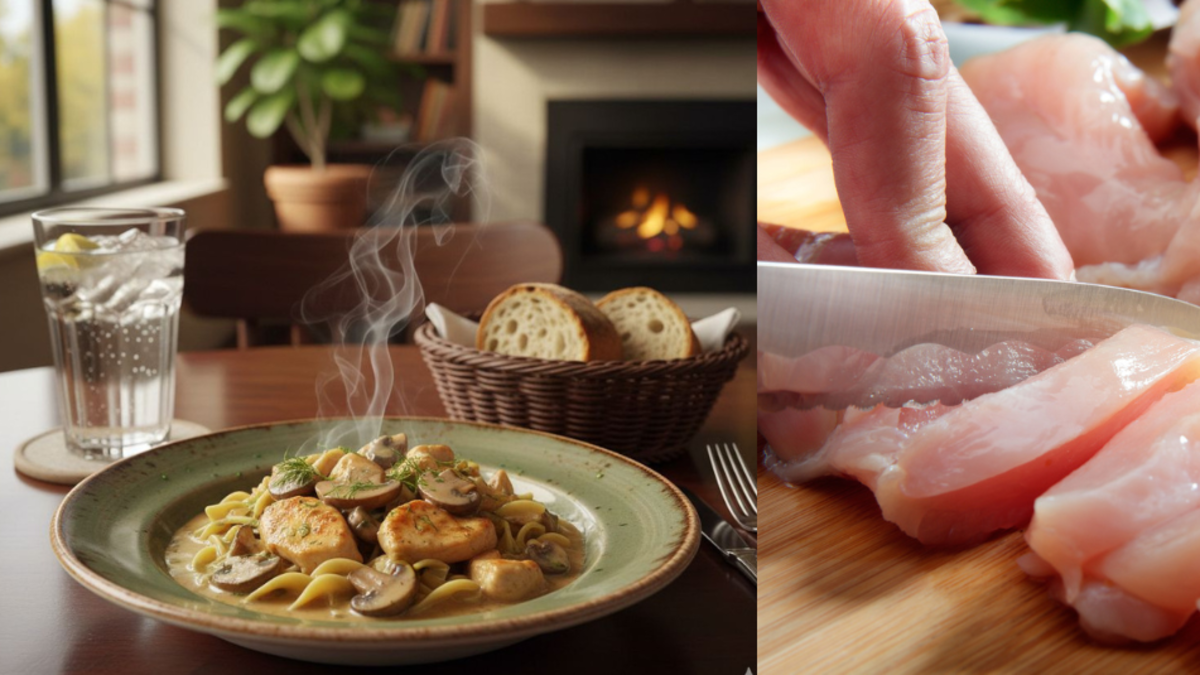
- The Protein: Whether using chicken breast or thighs, the key is uniform slicing. Thin strips ensure even searing and rapid absorption of the sauce.
- The Aromatics: Shallots or onions, finely minced, provide the necessary sweetness to cut through the richness of the dairy.
- The Earthiness: Mushrooms—typically cremini or button—are non-negotiable. They provide the umami depth that links the modern version to its Russian roots.
- The Cream: The smetana (sour cream) is the defining ingredient. It provides a slight acidity that balances the fat. Many modern recipes incorporate a splash of dry white wine or cognac to deglaze the pan, adding a layer of complexity that pays homage to the dish’s French-Russian heritage.
Implications for Modern Gastronomy
The evolution of the Stroganoff provides a compelling case study for how cultural assets are preserved. While traditionalists might argue that replacing beef with chicken dilutes the "authenticity" of the recipe, culinary historians suggest otherwise.
Authenticity in food is rarely static. The Stroganoff has survived for over 150 years precisely because it is flexible. Its capacity to be "remixed" for different economic realities ensures that the dish remains a living part of the culinary canon rather than a fossilized recipe confined to history books. By making the dish accessible to a wider audience, the Chicken Stroganoff ensures that the legacy of the Stroganov family and the techniques of 19th-century French-Russian fusion continue to be taught to new generations of home cooks.

Expert Perspective: Why We Still Crave It
"Comfort food is defined by its ability to provide emotional satiety," says noted food critic and historian Dr. Elena Varga. "The Stroganoff succeeds because it hits the ‘holy trinity’ of human cravings: salt, fat, and umami. When you pair that with a starch—be it pasta, rice, or potatoes—you create a meal that feels like a hug. The move to chicken is a logical evolution, not a degradation. It keeps the core sensory experience intact while responding to the practicalities of the modern dinner table."

Preparing the Perfect Chicken Stroganoff: A Guide
For those looking to recreate this historical classic with a modern twist, the process is straightforward but demands attention to detail:

- Sear the Chicken: Use a heavy-bottomed skillet over high heat. The goal is a golden-brown crust on the chicken strips without cooking them through entirely. Remove and set aside.
- Develop the Base: In the same pan, sauté the mushrooms and onions until the moisture from the mushrooms has evaporated and they are deeply caramelized.
- Deglaze: Add a splash of cognac or white wine, scraping up the browned bits (fond) from the bottom of the pan. This is where the flavor lives.
- The Emulsion: Reduce the heat to low before adding the sour cream. This prevents the sauce from curdling. Stir in a spoonful of Dijon mustard for the signature tang.
- Finish: Return the chicken to the pan, allowing it to heat through gently. Finish with a generous handful of freshly chopped parsley or dill to add a bright, herbaceous note that balances the cream.
Conclusion: A Living Legacy
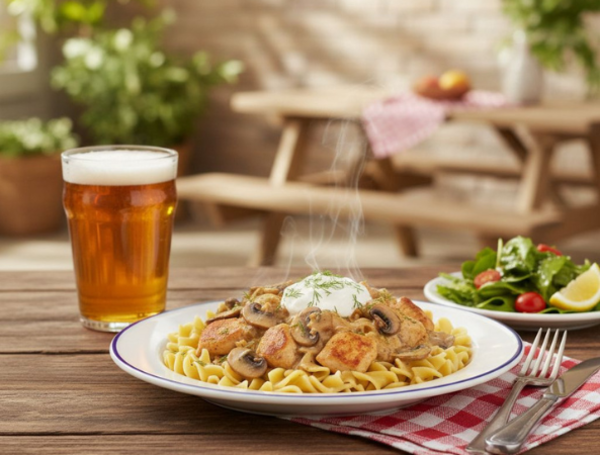
The Chicken Stroganoff is more than just a quick meal; it is a bridge between eras. It carries the weight of 19th-century Russian aristocracy while serving the practical needs of the 21st-century kitchen. As we continue to adapt and evolve, our relationship with food remains one of the most powerful ways we honor our past. Whether served over buttery egg noodles, fluffy white rice, or even crispy fried potatoes, this dish remains a timeless example of how culinary history can—and should—be tasted.