By Jesús Antonio Blanquicet and Natalia Peláez
Justice Desk – Reporting from Bogotá
As the ambitious, yet increasingly controversial, "Total Peace" (Paz Total) policy enters its final, turbulent stages, a grim reality has overshadowed the political rhetoric of the outgoing administration. While government officials have long touted the potential for dialogue, the tangible outcomes for the Colombian citizenry—particularly for those held against their will by illegal armed groups—have been catastrophic. Across the nation, dozens of families remain trapped in a cycle of anguish, awaiting the return of loved ones who have been reduced to mere bargaining chips in an escalating conflict.
For these families, the transition of power to President-elect Abelardo De la Espriella represents a final, desperate hope. As they prepare to hand over a comprehensive "Humanitarian Dossier" to the incoming administration, the message is clear: the state must prioritize the lives of its citizens over the failed experiments of the past four years.
The Escalation of Violence: A Final Act of Defiance
The waning days of the current administration have been marked by a chilling resurgence of violence. The National Liberation Army (ELN), emboldened by four years of inconsistent pressure and ineffective negotiations, has intensified its criminal activities.

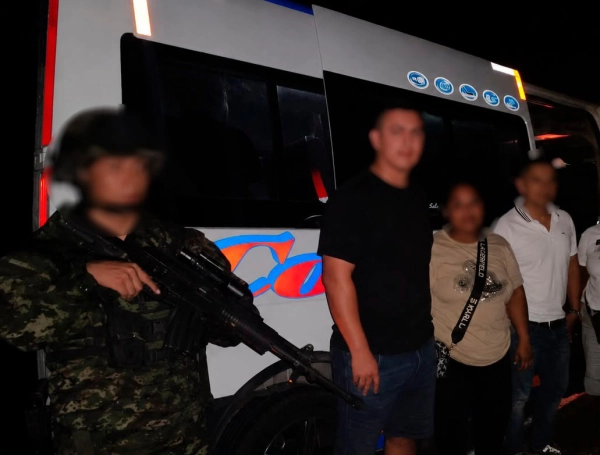
This week, the brutal cost of this strategy was laid bare: two soldiers were killed during a botched rescue operation intended to free 45 civilians who had been snatched in an illegal checkpoint on a highway in Chocó. This incident is not an outlier; it is a symptom of an organization that has expanded its footprint to 184 municipalities across 17 departments, boasting an armed force of nearly 7,000 members.
The ELN’s "farewell" to the current government has been marked by terror. In Betoyes, Arauca, the group’s Eastern War Front unleashed a barrage of tatucos—improvised explosive devices—against military and police installations. The attack claimed the lives of two police officers and a civilian woman, while wounding nine others. The audacity of the group was further demonstrated just days later, when the military’s "Marte" anti-explosives unit intercepted a dump truck packed with cylinder bombs parked directly in front of the Guahíbo Betoy Indigenous Educational Institution. The vehicle, left as a secondary threat, put the lives of dozens of children and teachers at grave risk.
A Statistical Snapshot: The Anatomy of a Failure
The data surrounding the security crisis is staggering. According to figures from the Ministry of Defense, between January and May of 2026, there were 156 kidnapping victims recorded in 92 separate incidents. While 125 of those victims have been recovered, 12 remain in captivity. Among the most desperate cases are two members of the Attorney General’s CTI (Technical Investigation Corps), whom the ELN has subjected to a mock "revolutionary trial," sentencing them to five years of further imprisonment.
The trajectory of the kidnapping epidemic reveals a disturbing trend:
- 2021: 160 cases
- 2022: 223 cases
- 2023: 338 cases
- 2024: 317 cases (a minor dip)
- 2025: 701 cases (the highest in a decade)
Experts warn that these numbers are merely the tip of the iceberg. The return of the "miraculous fishing" (pescas milagrosas)—random mass kidnappings on highways—has created an atmosphere of fear where many families choose not to report the crimes, fearing for the lives of their relatives or fearing retaliation from criminal syndicates and guerrilla fronts.
The "Humanitarian Dossier" and the Plea for Mercy
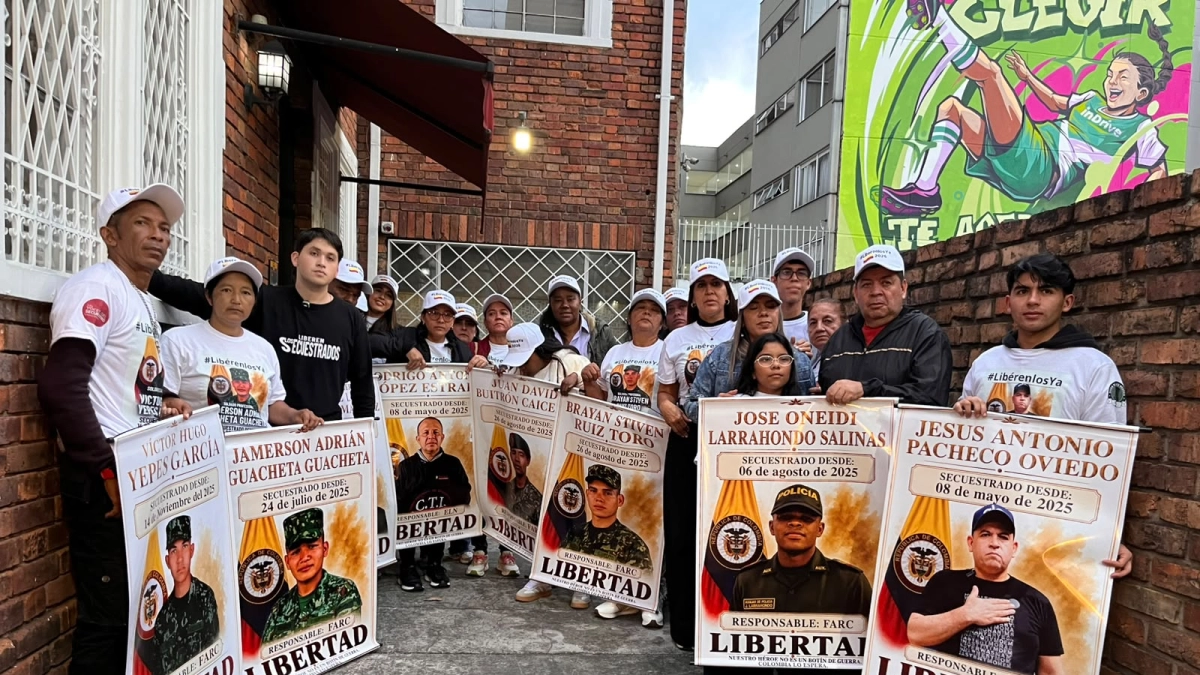
In response to the government’s perceived apathy, the organization "Voices of the Kidnapped" (Las Voces del Secuestro) has mobilized. Families from Arauca, Cauca, Huila, Nariño, Cesar, and Caquetá have converged on Bogotá to present a formal request for an audience with President-elect De la Espriella.
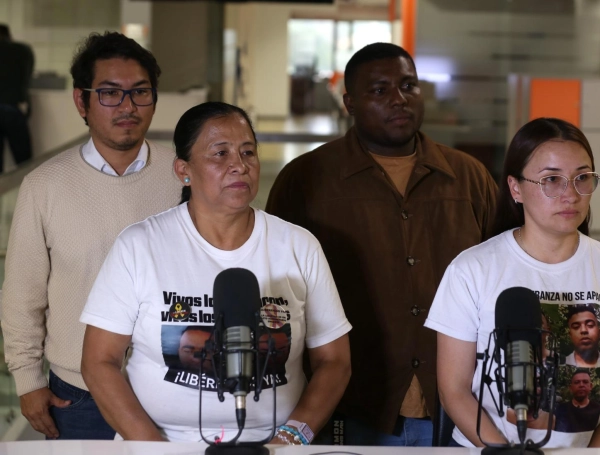
"Our request is strictly humanitarian and institutional," the group stated in a letter to the incoming President. "We do not seek to intervene in operational decisions. Our purpose is for the families to be heard directly by you, to present each case, and to understand the roadmap your government projects to protect the lives of the captives and advance their liberation."
The faces behind these statistics are haunting. Among those still held are eight civilians in López de Micay, two minors in Chocó, and military personnel such as Soldier Víctor Hugo Yepes García, seized by the Carlos Patiño dissident structure in November 2025, and Soldier Juan David Buitrago Caicedo, kidnapped in September 2025. For their families, every day is a battle against despair.

Official Responses and the Rejection of "Revolutionary Justice"
The ELN’s attempt to leverage the kidnapping of CTI agents for political gain—culminating in a 16-minute "proof of life" video released on July 10th—has been met with firm condemnation from state institutions.
Iris Marín Ortiz, the Ombudsman (Defensoría del Pueblo), has been a vocal critic of the guerrilla’s rhetoric. "Kidnapping is strictly prohibited by International Humanitarian Law. Freedom should have been immediate and unconditional," she stated. The Ombudsman’s office has also issued a sharp critique of the outgoing government’s failure to support the families. "The families have felt alone. They have reached out to us, and we have heard their cries, but they feel there has been insufficient support from the national government."

The Ombudsman’s office has urged the new administration to establish a dedicated, permanent support system for the relatives of victims, emphasizing that the state’s primary duty is to protect the dignity of the citizens it is sworn to serve.
Strategic Implications: A New Era or More of the Same?
The surge in kidnappings and the failure of the "Total Peace" negotiations have left the Colombian state in a precarious position. The outgoing administration’s promise to secure peace with the ELN within three months proved to be an exercise in political hubris, resulting in massive displacement crises—most notably in the Catatumbo region, where 60,000 people were displaced and 25,000 forcibly confined in a single year.

As President-elect De la Espriella prepares to take the oath of office, the challenge is clear. The security architecture of the country has been severely degraded, and the criminal actors have exploited the vacuum left by a policy that favored concessions over sovereignty.
The incoming government faces three immediate challenges:

- Restoring Intelligence and Operational Capacity: Rebuilding the ability to track and intercept illegal groups that have spent the last four years strengthening their logistics and territorial control.
- Addressing the Humanitarian Crisis: Moving beyond rhetoric to provide concrete, psychosocial, and financial support to families whose lives have been shattered by the loss of their primary breadwinners.
- Redefining Engagement: Shifting the narrative from "negotiation at any cost" to a state-centric approach that demands the release of all hostages as a precondition for any further dialogue.
The "Humanitarian Dossier" that will land on the President-elect’s desk is more than a list of names; it is an indictment of a policy that prioritized diplomatic theater over the fundamental rights of the Colombian people. Whether the new administration can navigate this wreckage and restore the state’s monopoly on force—and with it, the hope of the families—remains the defining question of the coming term.
For the wives, children, and parents currently gathered in Bogotá, the time for debate has passed. They are no longer interested in the semantics of "Total Peace." They are only interested in the return of their loved ones. As the nation watches, the new government must decide if it will continue the failed cycle of the past or finally place the lives of its citizens at the center of its mandate.