International Desk – EL TIEMPO
Published: September 10, 2026
1. Main Facts
A strong earthquake with a magnitude of 5.5 shook the Pacific coastline of Costa Rica in the early hours of Thursday, triggering a cascade of more than 80 aftershocks within the first twelve hours. Despite the considerable energy released by the initial tremor and its subsequent seismic tail, local emergency management agencies and specialized monitoring institutions confirmed that there were no immediate reports of structural damage, critical infrastructure failure, or injuries among the populace.
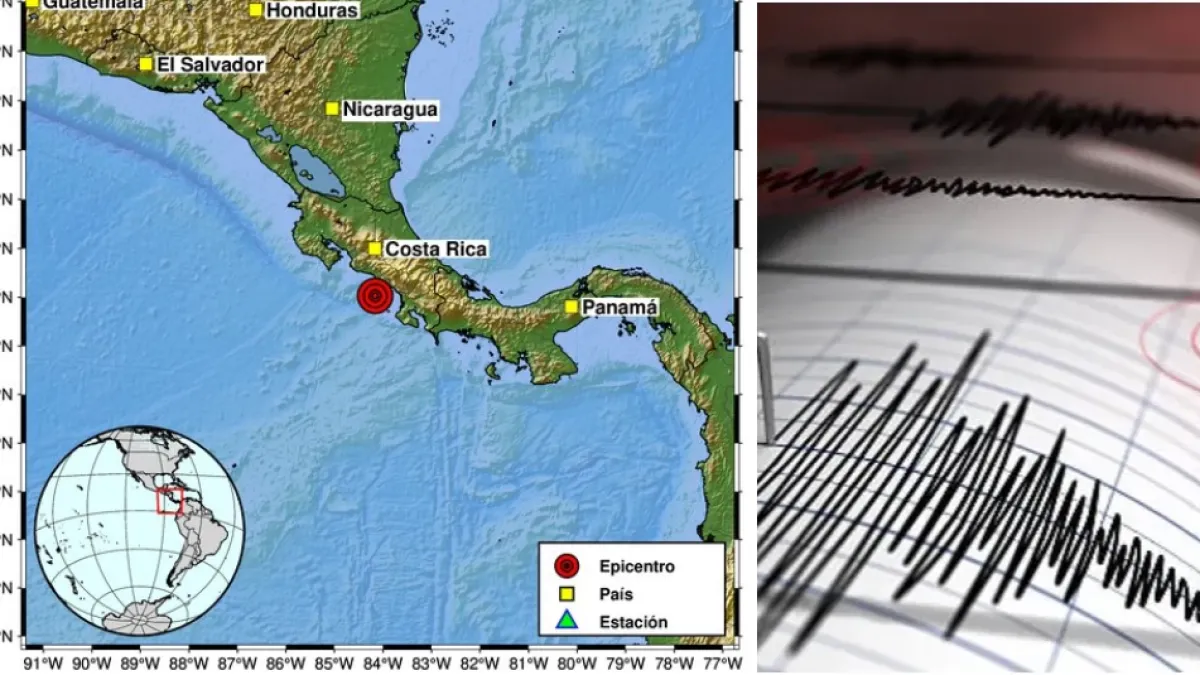
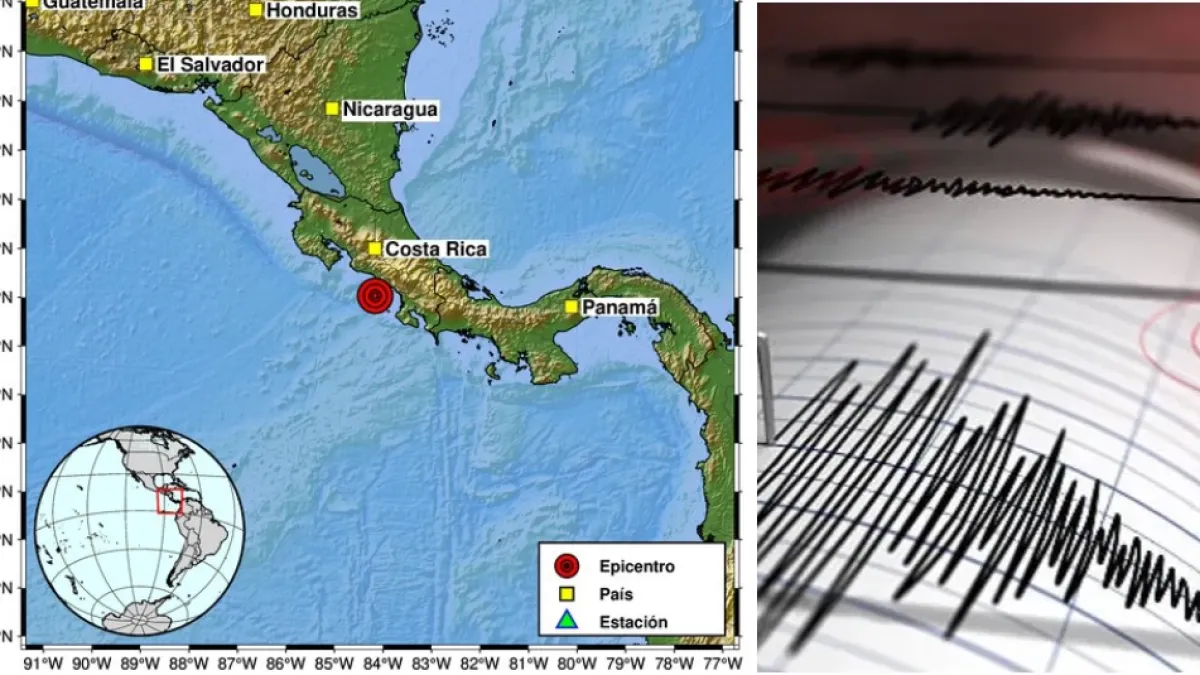
According to data released by the Vulcanological and Seismological Observatory of Costa Rica (Ovsicori), the primary event struck at precisely 2:26 a.m. local time (08:26 GMT). The earthquake originated offshore in the Pacific Ocean, at a shallow depth, with its epicenter located approximately 53 kilometers south-southwest of Uvita, a coastal community nestled in the picturesque Puntarenas province.
Seismologists have attributed the geological event to the active subduction process of the Cocos tectonic plate beneath the Caribbean plate—a primary tectonic mechanism responsible for the region’s frequent seismic and volcanic episodes. While the tremor was felt widely across the coastal areas closest to the epicenter, waking up startled residents in the middle of the night, the lack of heavy infrastructural vulnerability in the modern building stock of the affected zones prevented a humanitarian crisis.

Nevertheless, the high frequency of aftershocks—including a notable magnitude 4.8 tremor that registered at midday (12:03 p.m. local time / 18:03 GMT)—kept populations on edge. Civil protection authorities reiterated that while aftershocks are a normal physical adjustment of the Earth’s crust following a major release of seismic stress, they can cause psychological distress and occasionally dislodge unstable items or damaged facades.
2. Chronology of Events
The seismic sequence unfolded rapidly during the early hours of Thursday, transforming a quiet night into a period of high alert for residents along Costa Rica’s southern Pacific littoral.

- 2:26 a.m. (Local Time): The primary seismic event of magnitude 5.5 strikes off the coast of Puntarenas. Its epicenter is calculated at 53 kilometers from Uvita. The jolt is felt sharply in coastal communities, causing residents to evacuate homes and hotels in search of open spaces.
- 3:00 a.m. – 6:00 a.m.: Ovsicori automated monitoring systems begin registering a continuous sequence of micro-seisms and aftershocks. Within the first three hours, over two dozen minor tremors are logged, most of them unperceived by the general public but recorded by sensitive scientific instruments.
- 6:30 a.m.: Emergency response units, including the National Commission for Risk Prevention and Emergency Management (CNE), complete preliminary aerial and ground reconnaissance sweeps across the Puntarenas province. Early reports confirm no collapsed bridges, ruptured utility lines, or injured citizens.
- 12:03 p.m. (Local Time): A stronger aftershock, measuring 4.8 on the Richter scale, strikes the region. This secondary jolt is widely felt across the southern and central zones of the country, renewing concerns among locals who have been monitoring the seismic swarm throughout the morning.
- 3:00 p.m. (Local Time): Ovsicori updates its telemetry, confirming that the total count of recorded aftershocks has officially surpassed the 80 mark, with several exceeding magnitude 4.0. Authorities issue renewed calls for calm, noting that the sequence is behaving within expected geological parameters.
3. Supporting Data and Historical Context
Costa Rica is universally recognized as one of the most seismically active regions on the globe. Situated within the dynamic "Pacific Ring of Fire," the country sits atop a complex jigsaw puzzle of tectonic plates. The relentless convergence of the Cocos Plate sliding underneath the Caribbean Plate generates immense subsurface friction, which periodically releases energy in the form of earthquakes and drives the country’s volcanic arc.
Thursday’s event is part of a remarkably active seismic year for the Central American nation. According to official historical tracking by Ovsicori and the National Seismological Network (RSN), Costa Rica has recorded 13 earthquakes with a magnitude exceeding 5.0 during the current year alone.

- The April 15 Event: The strongest seismic event of the year prior to Thursday occurred on April 15, when a 5.7 magnitude earthquake struck off the coast of Playa Ostional in the northwestern province of Guanacaste. Like the latest event, it caused widespread alarm but left behind a clean slate regarding structural damage.
- The August 26 Metropolitan Jolt: On August 26, a magnitude 5.0 earthquake directly rattled the densely populated Metropolitan Area of San José, the nation’s capital. The proximity of the epicenter to urban centers generated intense panic and temporary evacuations of high-rise commercial and residential buildings, though municipal engineers later verified that no major structural compromises occurred.
Statistically, while the vast majority of Costa Rica’s annual thousands of earthquakes are completely imperceptible to humans—detectable only by high-tech broadband seismographs—events in the 5.0 to 6.0 magnitude range serve as stark reminders of the country’s vulnerability and the critical importance of preparedness.
4. Official Responses and Institutional Preparedness
In the wake of Thursday’s 5.5 tremor and the relentless wave of aftershocks, Costa Rican disaster management agencies mobilized swiftly. The National Commission for Risk Prevention and Emergency Management (CNE) coordinated with local municipal committees to evaluate risk zones, particularly focusing on areas prone to secondary hazards such as landslides, rockfalls along coastal highways, and localized liquefaction near river mouths.
"Our monitoring networks have operated flawlessly, providing real-time data that allows us to understand the behavior of this subduction-zone event," stated a representative from Ovsicori. "While we cannot predict the exact timing of earthquakes, our continuous observation allows us to keep the public and first responders precisely informed about aftershock trajectories."
Public institutions, disaster preparedness organizations, and international meteorological bodies have taken the opportunity to emphasize that earthquake prediction remains scientifically impossible. Consequently, government policy focuses entirely on structural resilience, public education, and early warning systems.

In neighboring nations and across the region, technological integration for earthquake readiness has also taken center stage. For instance, digital infrastructure providers have expanded earthquake notification tools—such as Google’s ‘ShakeAlert’ system, which utilizes massive networks of seismic sensors to broadcast automated warnings directly to mobile devices seconds before destructive shear waves arrive. While these tools provide crucial moments for individuals to take cover, authorities stress that personal preparedness remains the ultimate line of defense.
5. Implications: What to Do Before, During, and After a Seismic Event
The psychological impact of experiencing a 5.5 magnitude quake followed by dozens of aftershocks often leaves communities feeling vulnerable. Experts emphasize that preparedness is the most effective antidote to panic. Civil protection agencies, including national disaster management bodies, continuously urge families and businesses to maintain an updated emergency plan.
Essential Preparation Guidelines
Before an Earthquake:
- Develop a Family Emergency Plan: Establish communication protocols, designate a safe meeting place outside the home, and ensure every family member knows how to shut off main gas, water, and electricity valves.
- Secure Heavy Furniture: Anchor bookshelves, tall cabinets, and water heaters to wall studs to prevent them from tipping over during violent shaking.
- Prepare an Emergency Kit: Stock a waterproof backpack or container with non-perishable food, bottled water (at least one gallon per person per day for three days), a battery-powered radio, flashlights, extra batteries, a fully stocked first-aid kit, and essential medications.
During an Earthquake:
- Drop, Cover, and Hold On: Drop to your hands and knees so you don’t fall over. Crawl under a sturdy desk, table, or interior-facing structural column and hold on to it tightly until the shaking stops.
- Stay Clear of Hazards: Keep away from exterior glass windows, sliding doors, hanging light fixtures, and heavy appliances that could detach or shatter.
- If Outdoors: Move away from buildings, streetlights, electrical utility poles, and overpasses. Find an open area clear of overhead hazards.
- If Driving Safely: Pull over to the side of the road, away from bridges, overpasses, and power lines. Stay inside the vehicle until the shaking completely ceases.
After an Earthquake:
- Check for Injuries and Damage: Assess yourself and those around you for injuries. Provide first aid if necessary. Inspect your immediate environment for gas leaks, electrical shorts, or structural cracks.
- Avoid Elevators: Never use elevators to evacuate multi-story buildings, as power failures can trap occupants indefinitely. Stairwells should be used cautiously.
- Expect Aftershocks: Remain vigilant. Secondary tremors can occur minutes, days, or even weeks after the main shock, potentially destabilizing structures that were already weakened.
- Stay Informed: Tune into verified emergency broadcast channels or official government social media streams for reliable safety updates, rather than relying on unverified rumors circulating on digital messaging platforms.