By Edwin Caicedo Environment and Health Journalist Updated: September 30, 2026
Introduction: A 48-Hour Turning Point for Colombia’s Vital Ecosystem
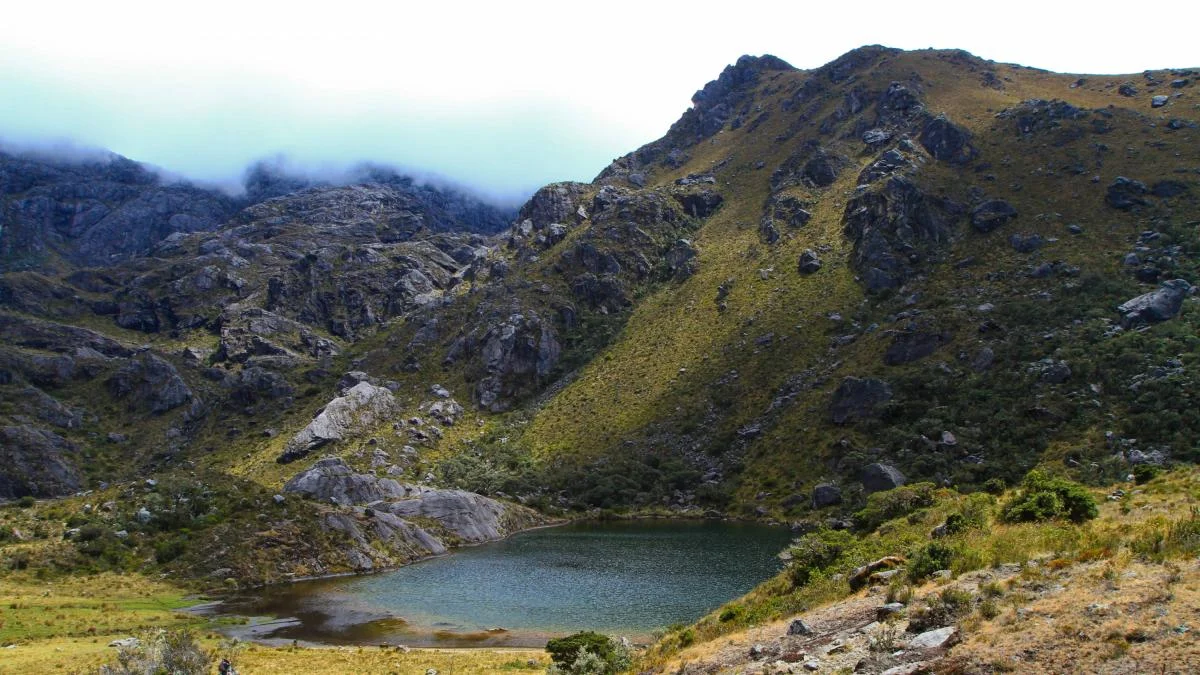
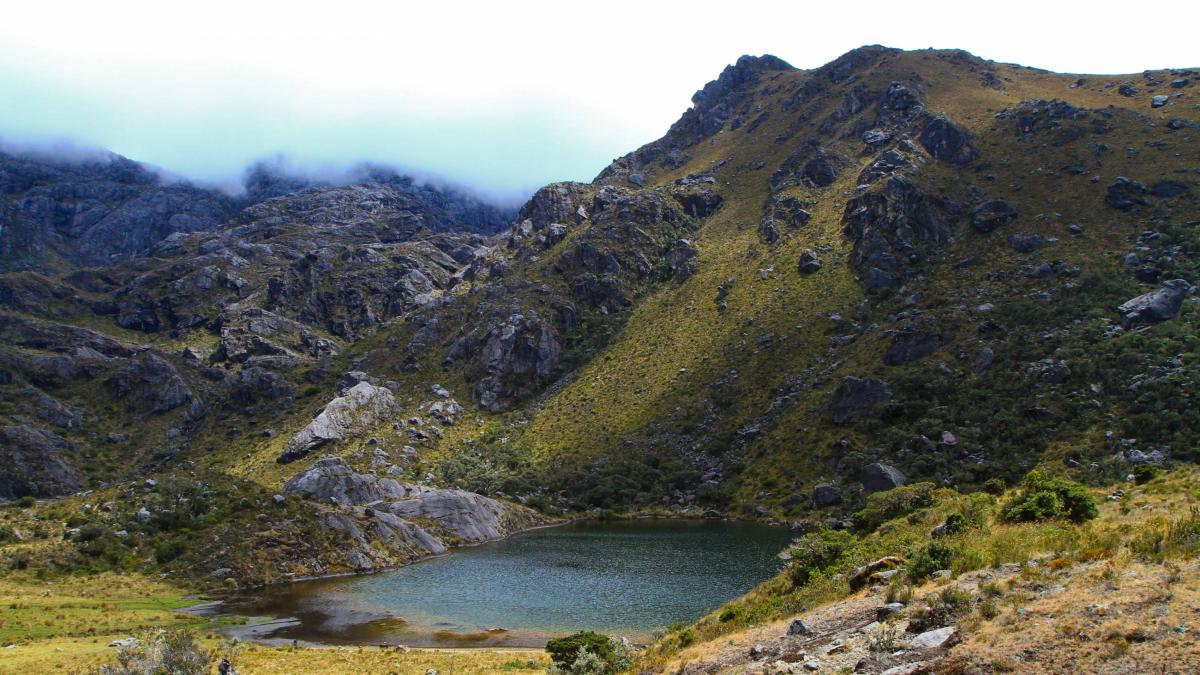
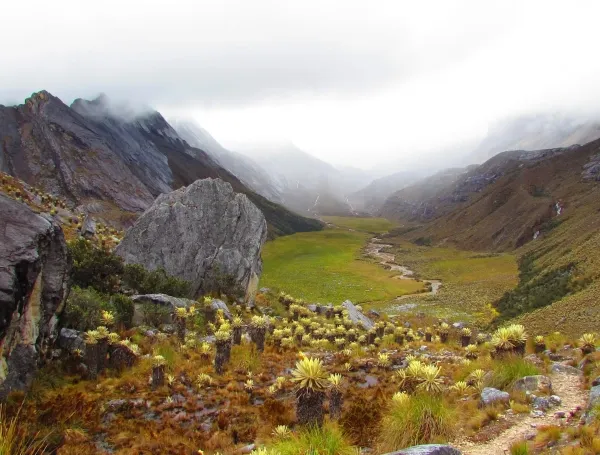
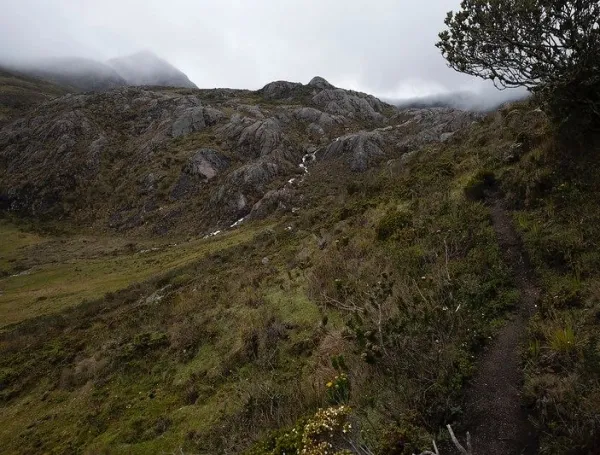
The future of the Santurbán Páramo—a high-altitude moorland ecosystem that supplies drinking water to over 2.5 million Colombians—has been thrown back into a state of profound legal and environmental uncertainty. In a rapid sequence of events spanning just 48 hours, the administration of President Abelardo de La Espriella upended two cornerstone environmental directives enacted under the previous government of Gustavo Petro.
First, the Ministry of Environment dismantled a resolution extending the temporary environmental protection zone until 2029. Shortly thereafter, in a move broken exclusively by EL TIEMPO, the government completely revoked the partial delimitation of the Jurisdicciones–Santurbán–Berlín páramo complex issued just weeks prior in August.
While administration officials insist that these aggressive legal maneuvers do not strip Santurbán of its baseline environmental protections, critics, legal scholars, and local communities are locked in sharp disagreement. The sudden policy shift halts years of delicate bureaucratic progress, pushing the complex debate over natural resource conservation versus local economic survival back to square one.
Chronology of the Decrees: How the Decisions Unfolded
The dismantling of the Petro administration’s environmental roadmap occurred in two swift legislative strikes at the end of September 2026:
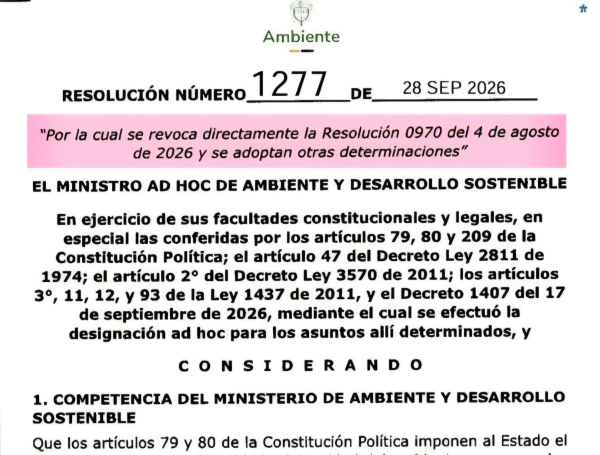
September 28, 2026 (Resolution 1277): The Ministry of Environment completely repealed Resolution 0970, which had been enacted on August 4. Resolution 0970 had updated the geographical boundaries and cartography of the temporary natural resource reserve, establishing a new timeline and extending its legal vigencies through 2029. By annulling this extension, the Ministry effectively reinstated the stricter—though heavily contested—regulatory framework of Resolution 0221 (March 2025), as amended by Resolution 0239.
September 30, 2026 (Resolution 1278): In a second major pivot, the Ministry issued Resolution 1278, striking down Resolution 0992 from August 6. This latter decree had adopted a partial delimitation of the Jurisdicciones–Santurbán–Berlín páramo complex.
According to internal Ministry justifications reviewed exclusively by this publication, the primary catalyst for revoking the August delimitation was widespread procedural non-compliance. Specifically, the government identified severe irregularities concerning citizen participation, improper evaluation of public observations, unilateral alterations to projects submitted for public comment, and a failure to adequately satisfy Sentence T-361 of 2017 issued by Colombia’s Constitutional Court.
At the heart of the government’s critique was the so-called "progressive delimitation" methodology. The Ministry concluded that this approach allowed authorities to push forward localized decisions while formal consultations with communities across at least 14 municipalities remained incomplete. The Constitutional Court’s landmark T-361 ruling explicitly mandates an exhaustive, inclusive, and genuinely deliberative process across all 40 affected municipalities before any permanent boundaries can be drawn.
Legal and Institutional Implications: A Vulnerable Foundation
While the government frames its actions as a necessary correction to procedural flaws, legal experts warn that the administration’s methods may invite a fresh wave of high-stakes litigation.
Juan Pablo Sarmiento, a professor at the Faculty of Legal, Political, and International Studies at the University of La Sabana, has raised profound concerns regarding the legal justification used to repeal the temporary reserve extension.
According to Sarmiento’s analysis, the Ministry grounded its direct revocation in numeral 1 of Article 93 of Law 1437 of 2011. This provision applies when an administrative act is found to be in "manifest opposition" to the law—in this case, because Resolution 0970 was signed while a formal recusal against decision-makers was still pending.
However, Sarmiento points out a critical nuance in administrative law. While Article 12 of the Code of Administrative Procedure and Contentious Administrative Matters dictates that administrative actions must be suspended upon the presentation of a recusal, the Council of State has consistently ruled that a "manifest opposition" requires a flagrant, evident, and direct violation of the law.
"Issuing an administrative act during the processing of a recusal may constitute a procedural flaw, but it does not automatically fit the narrow threshold of manifest opposition," Sarmiento explained.
Consequently, he warns that Resolution 1277 is highly susceptible to judicial challenges, including nullification lawsuits targeting its procedural motivations.
Furthermore, Sarmiento introduced the critical specter of the principle of non-regressivity in environmental law. By reverting to the terms of the older Resolution 0221 of 2025, the Ministry’s rollback may effectively shrink both the protected geographical area and the duration of conservation mandates compared to the revoked rules. This opens the door not only to nullification suits but also to acciones populares (class actions) aimed at safeguarding the right to a healthy environment.
Official Responses and Perspectives from the Ground
The Local Perspective: Seeking Legal Certainty in Vetas
For the mining-dependent communities of Soto Norte—particularly the municipality of Vetas—the government’s reversals are being met with cautious optimism and an urgent demand for finalized regulatory frameworks.
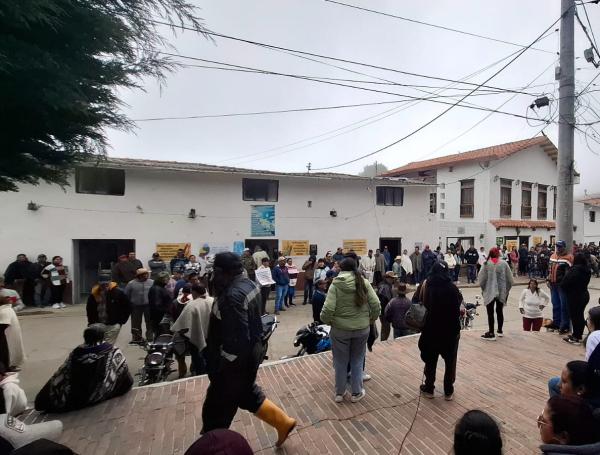
Angélica María García, Mayor of Vetas, openly celebrated the revocation of the temporary reserve extension. She argued that the decision forces the central government to comply with a July 2 ruling by the Administrative Tribunal of Santander, which mandates direct, localized townhall meetings to spearhead genuine community concertation.
"What the communities celebrate is that these types of administrative acts must be issued with the direct participation of the territory," García stated.
The economic reality of Vetas underscores why the debate is so fiercely contested. The municipality hosts four legal small-scale mining operators alongside 11 suspended titles tied to informal mining practices. Crucially, the mayor emphasizes that none of these active or historical extraction zones overlap with the páramo proper or the Santurbán Regional Natural Park.
For García, a definitive, legally sound delimitation is the only path forward to secure legal certainty for small-scale miners and advance formalization programs. Furthermore, she cautioned that transitioning the local economy away from mining—a vocation deeply rooted in the region for over 470 years—cannot happen overnight. Geographic and climatic constraints make direct substitution with agricultural ventures nearly impossible, necessitating a gradual, well-supported transition toward economic coexistence.
The Environmentalist Alarm: Risks to Water Security
In stark contrast, environmental organizations view the De La Espriella administration’s actions as a direct assault on Colombia’s water security.
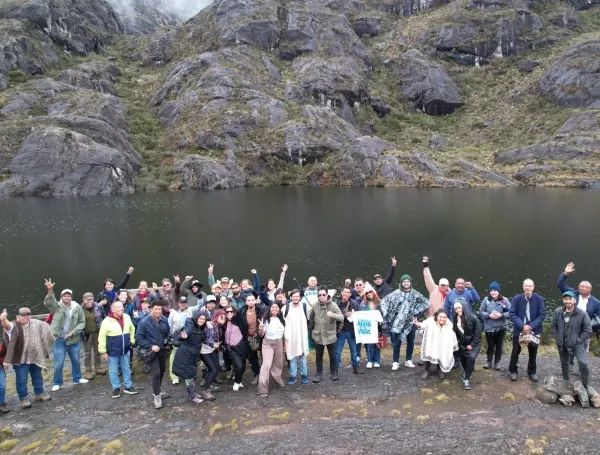
The Santurbán Committee issued an immediate condemnation following the announcements, asserting that the government is systematically dismantling every legal barrier protecting the vital moorland. Activists pointed out upcoming corporate milestones—such as Aris Mining’s anticipated environmental license application next year—as evidence of imminent threats to the water supply of millions.
The Committee has set a hard deadline of November 13 for the government to hold public consultations regarding the natural reserve safeguarding Santurbán, threatening massive mobilizations in Bogotá if the administration fails to comply.
+-------------------------------------------------------------------------+
                    THE STAKES IN SANTURBÁN
+-----------------------------+-------------------------------------------+
| Stakeholder Group           | Core Objective & Demands                  |
+-----------------------------+-------------------------------------------+
| Central Government          | Correct past procedural errors, comply    |
| (Ministry of Environment)   | with T-361 via inclusive, legal processes.|
+-----------------------------+-------------------------------------------+
| Local Communities           | Secure legal certainty, protect small-    |
| (Soto Norte / Vetas)        | scale mining, and ensure local dialogue.  |
+-----------------------------+-------------------------------------------+
| Environmental Organizations | Prevent any reduction of protected areas; |
| (Santurbán Committee)       | halt commercial mining expansion.         |
+-----------------------------+-------------------------------------------+
Conclusion: A Return to Square One
Ultimately, the actions taken by the De La Espriella administration over these two pivotal days do not resolve the historical tug-of-war over Santurbán. Instead, they erase recent regulatory shortcuts and thrust the dispute back into the administrative arena.
The Ministry of Environment maintains that repealing the partial delimitation does not abandon the Jurisdicciones–Santurbán–Berlín complex to ecological degradation. The stated objective remains the creation of a comprehensive, legally bulletproof framework that balances aggressive environmental preservation with the constitutional rights of local populations.
However, the path forward is fraught with obstacles. Soto Norte’s communities demand economic survival and legal clarity, environmentalists demand uncompromising ecological defense, and legal scholars anticipate a barrage of courtroom battles over procedural legitimacy and non-regressivity. Until a truly inclusive, definitive delimitation is achieved, Santurbán remains suspended in a delicate balance between policy ambition and legal vulnerability.
By Alexandra Cabrera Published: September 12, 2026 Main Facts: Navigating a Period of Collective Transformation As the celestial sphere shifts into a profound phase of introspection and restructuring, astrologers and esoteric practitioners report a collective…
WASHINGTON — It is a common frustration for home cooks and hospitality professionals alike: you pull a set of knives, forks, and spoons from the dishwasher or dish rack, expecting a pristine, gleaming table setting,…
Analysis by Edwin Caicedo, Environmental & Health Correspondent The uncertainty that once shrouded the arrival of the El Niño phenomenon has dissipated. It is no longer a question of if it will arrive, but rather…