By Global News Desk
Updated: September 30, 2026, 5:06 PM EST
Main Facts
The United States justice system has been forced to confront a deeply unsettling case of alleged institutional failure and sexual violence following the dramatic resurgence of a high-profile legal battle. Authorities in Tompkins County, New York, have officially re-opened a comprehensive criminal investigation into an alleged gang rape that took place in 2024 at the prestigious Cornell University, located in Ithaca, New York.
The case—which centers on a then-20-year-old female student—was thrust back into the national spotlight following the filing of a sprawling 100-page civil lawsuit. This legal action brought to light deeply incriminating private communications, graphic details of alleged drugging and abuse, and widespread accusations that the university administration heavily mishandled the initial disciplinary procedures, allegedly opting for minimal administrative sanctions rather than pursuing robust accountability.
According to the civil complaint filed on September 18, the victim—whose identity remains confidential—alleges that she was systematically incapacitated, drugged with ketamine, and sexually assaulted by seven members of the university’s Chi Phi fraternity chapter. The explosive nature of the allegations, amplified by leaked digital trails from platforms like Snapchat, has generated profound public indignation across the United States. High-profile figures, civil rights advocates, and political leaders have seized upon the case as a watershed moment exposing the pervasive protection of sexual misconduct within elite academic institutions.

The pressure resulting from public outcry, combined with new evidentiary leads unveiled in the civil filings, compelled Tompkins County District Attorney Matthew Van Houten to reverse an earlier prosecutorial stance. The case is now slated to be presented before a grand jury, marking a critical turning point in a multi-year ordeal that many feared would be swept under the rug.
Chronology of Events
To understand the gravity and complexity of the current legal proceedings, it is essential to trace the timeline of events from the initial night of the alleged assault to the recent explosive legal developments.

The 2024 Incident
The events in question unfolded during an off-campus gathering associated with members of the Chi Phi fraternity. According to court filings, the victim attended the gathering while visibly intoxicated. The complaint alleges that a male friend, acting in concert with another individual, aggressively pressured her into consuming ketamine—a potent dissociative anesthetic often leveraged as a date-rape drug.
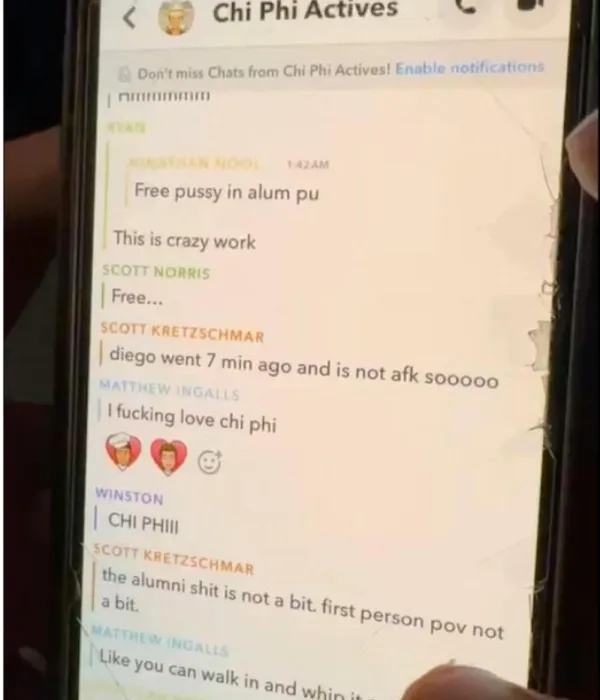
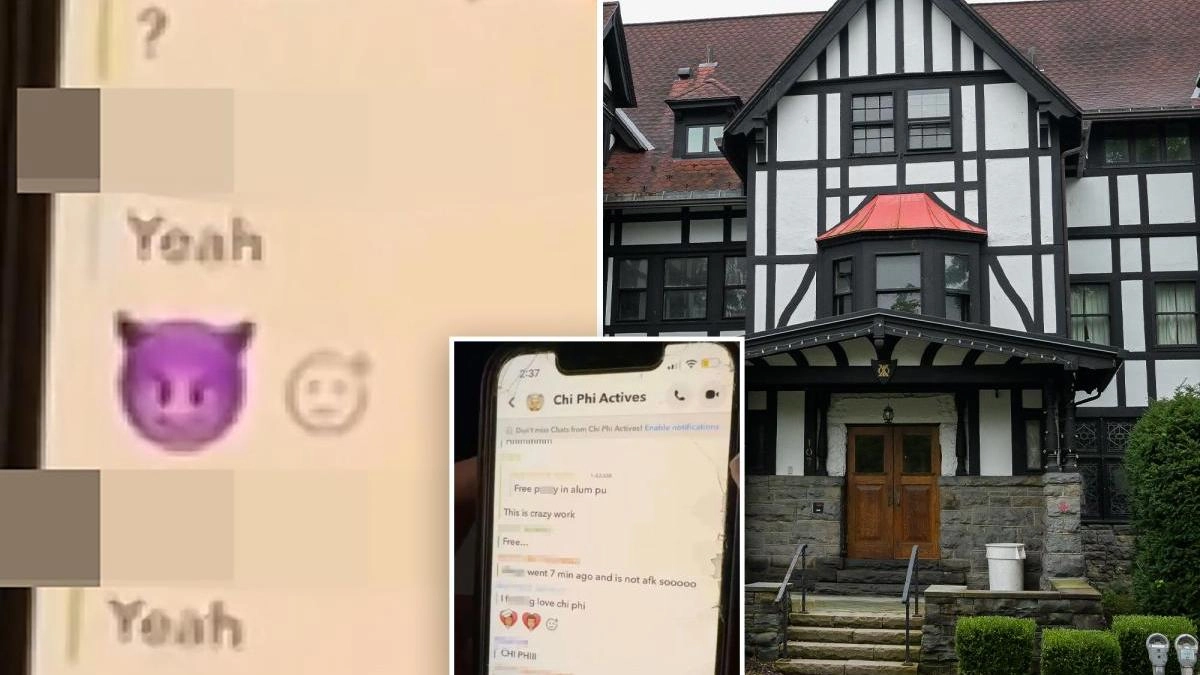
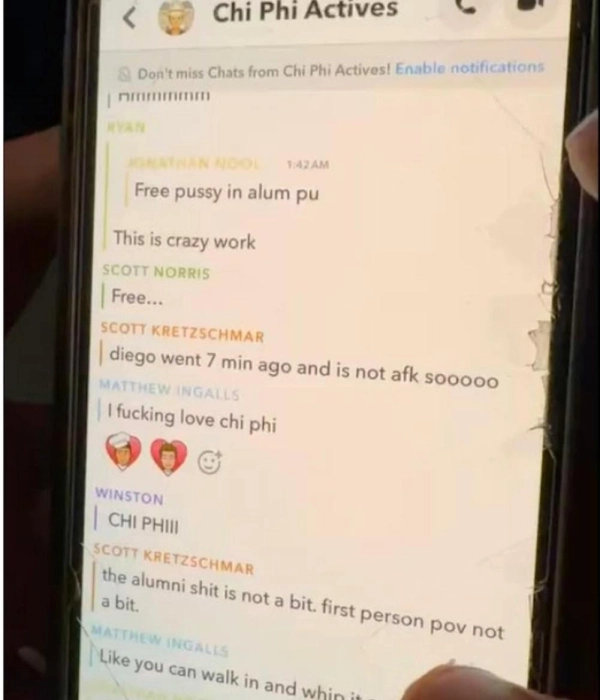
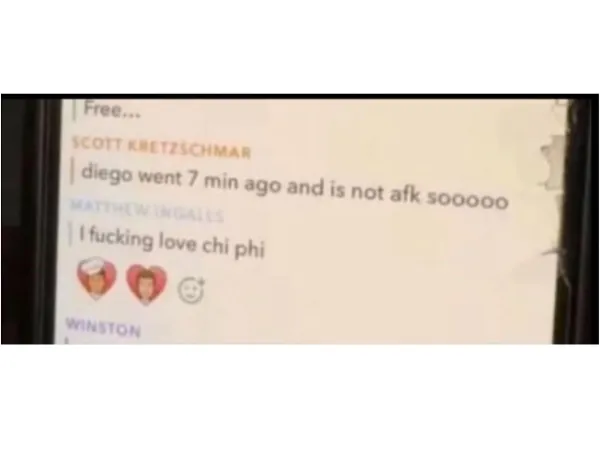
Following an initial sexual assault, the situation escalated rapidly. Court documents and leaked screenshots indicate that the primary perpetrators used a Snapchat group chat to broadcast the unfolding situation. Utilizing the dehumanizing phrase "free pussy," they allegedly invited additional fraternity brothers to the location to participate in hours of continuous abuse. The victim maintains in her filings that she was entirely incapacitated, legally and physically incapable of offering consent, and that the assaults continued unabated until she ultimately lost consciousness.
The Immediate Aftermath and Private Chats
In the days immediately following the alleged trauma, digital communications between the victim and one of the primary suspects took place, providing crucial evidence that has now been integrated into the expanded investigations.
According to reports cited by media outlets such as Univision and CBS, the suspect initiated contact by offering a vague apology regarding "how things went down." In these messages, the man admitted that his own memory of the night was "a little blurry." Furthermore, he conceded that both he and another individual were heavily impaired by alcohol, claiming they attempted to "stop the event and throw people out before it got completely out of hand." Despite these retrospective admissions of chaos and lack of control, the severe psychological and physical toll on the victim had already been exacted.

University Discipline and the Initial Closing
Following the victim’s formal report to university authorities in 2024, Cornell University initiated an internal Title IX and disciplinary review. The university’s process ultimately resulted in disciplinary actions against the chapter and specific individuals: the institution suspended and expelled select members, and crucially, imposed an outright campus ban on the Chi Phi fraternity.
However, the severity of these punishments quickly became a core point of contention. The victim’s legal team asserted that despite the multi-person nature of the gang assault, only two individuals faced formal expulsion. The remaining participants allegedly received lenient administrative penalties, with one of the most widely criticized allegations being that a subset of the accused men received a disciplinary sanction that amounted to nothing more than writing an assigned essay.

At the time, the Tompkins County District Attorney’s office opted not to move forward with criminal charges, concluding that the available evidence did not conclusively establish a legally actionable absence of consent under stringent criminal definitions.
The September 2026 Reopening
The dynamic shifted permanently in mid-September 2026. The filing of a 100-page civil lawsuit exposed previously undisclosed digital evidence, including the explicit Snapchat communications and detailed survivor testimonies. Faced with mounting evidence and intense public scrutiny, District Attorney Matthew Van Houten announced on Monday that his office was officially reopening the criminal probe to place the matter before a grand jury.

Supporting Data and Evidence
The evidentiary framework underpinning the reopened investigation relies on a combination of digital forensics, witness statements, and institutional records:
- The Snapchat Evidence: Central to the civil suit and the renewed criminal interest is a leaked screenshot from a Snapchat group chat utilized by Chi Phi members. The message explicitly read "free pussy," serving as a digital invitation for mass participation in the assault while the victim was incapacitated by alcohol and ketamine.
- Text Message Admissions: Transcripts of private conversations between the victim and one of the accused individuals reveal admissions of a chaotic environment, memory lapses among the participants, and acknowledged failures to control the escalating events.
- The 100-Page Civil Complaint: Filed on September 18, the comprehensive civil action meticulously details the mechanics of the drugging, the timeline of the multi-hour assault, and specific failures in institutional oversight by Cornell University officials.
- Scope of the Grand Jury Review: DA Van Houten confirmed that the upcoming grand jury will rigorously evaluate the victim’s detailed testimony alongside any fresh evidentiary material introduced via the civil litigation pipeline.
Official Responses and Institutional Stances
As the case reverberates across the national landscape, key stakeholders, legal authorities, and institutional leaders have issued formal responses addressing their roles and responsibilities.
The District Attorney’s Office
Tompkins County District Attorney Matthew Van Houten defended his initial decision while explaining the rationale behind the sudden reversal. Van Houten noted that during the initial 2024 review, the formal declaration provided by the victim lacked the specific legal evidentiary thresholds required to prove a lack of consent beyond a reasonable doubt in a criminal court.
However, emphasizing that a victim’s journey through trauma is non-linear, Van Houten stated:

"The credibility of the woman, who described the facts in atrocious detail, was never in question. While the conduct of these men was disgusting and morally reprehensible, criminal accusations must be built on ironclad evidence rather than public opinion shaped by misinformation. Nevertheless, recognizing that healing is deeply personal, my office has re-opened this investigation to let a grand jury consider the testimony and new civil filings."
Cornell University
Cornell University issued a statement expressing full support for the decision to bring the survivor’s account before a criminal grand jury. The administration defended its past record, maintaining that its 2024 internal investigation was thorough, resulting in concrete expulsions, student suspensions, and the permanent expulsion of the Chi Phi fraternity from campus grounds.

Addressing the severe public backlash regarding the alleged "essay" punishment for several of the accused students, Cornell forcefully pushed back against the narrative. The university clarified that writing an essay was not the sole consequence administered, though it declined to publicly detail confidential disciplinary records due to federal privacy laws.
Broader Implications and Cultural Fallout
The Cornell University fraternity scandal has transcended local legal boundaries, igniting a fierce national debate regarding campus safety, systemic misogyny, and accountability within the American Greek life system.

The case has drawn sharp criticism from prominent public figures and political leaders who view the incident as symptomatic of a broader institutional disease. Over the weekend, prominent actress Florence Pugh used her social media platform to voice profound outrage, urging men to proactively lead conversations aimed at eradicating sexual violence and challenging toxic fraternity culture.
Simultaneously, U.S. Representative Alexandria Ocasio-Cortez, speaking at a public rally in Ithaca, delivered a scathing condemnation of the alleged gang rape. Ocasio-Cortez asserted that sexual assault and institutional protectionism remain deeply entrenched within elite academic institutions throughout the United States, calling for radical systemic reform and absolute transparency from university boards.

Legal analysts predict that the civil lawsuit against Cornell University and the individual fraternity members will set a critical legal precedent regarding the liability of higher education institutions when private organizations operating on or near campus engage in violent criminal conduct. As the grand jury prepares to convene in Tompkins County, the nation watches closely, demanding justice, institutional transparency, and an end to the culture of impunity surrounding campus sexual assault.
Need Help? Break the Silence
If you or someone you know is facing a crisis, experiencing domestic violence, or has been the victim of psychological, physical, or sexual abuse, resources are available:
- In the United States: Call or text 988 to reach the Suicide & Crisis Lifeline, or contact the National Sexual Assault Hotline (RAINN) at 1-800-656-4673.
- In Colombia: Call 123 for general emergencies, or 155 for the national hotline dedicated to supporting victims of psychological, physical, economic, or sexual violence. You can also report incidents directly to the Office of the Attorney General (Fiscalía General de la Nación) at 018000919748, by dialing 122 from a mobile phone, or 601 5702000 in Bogotá.