By Juan Pablo Penagos Ramírez / Political Desk Analysis
Published: November 10, 2026
1. Main Facts: The Promise Versus the Reality of Colombia’s New Diplomatic Corps
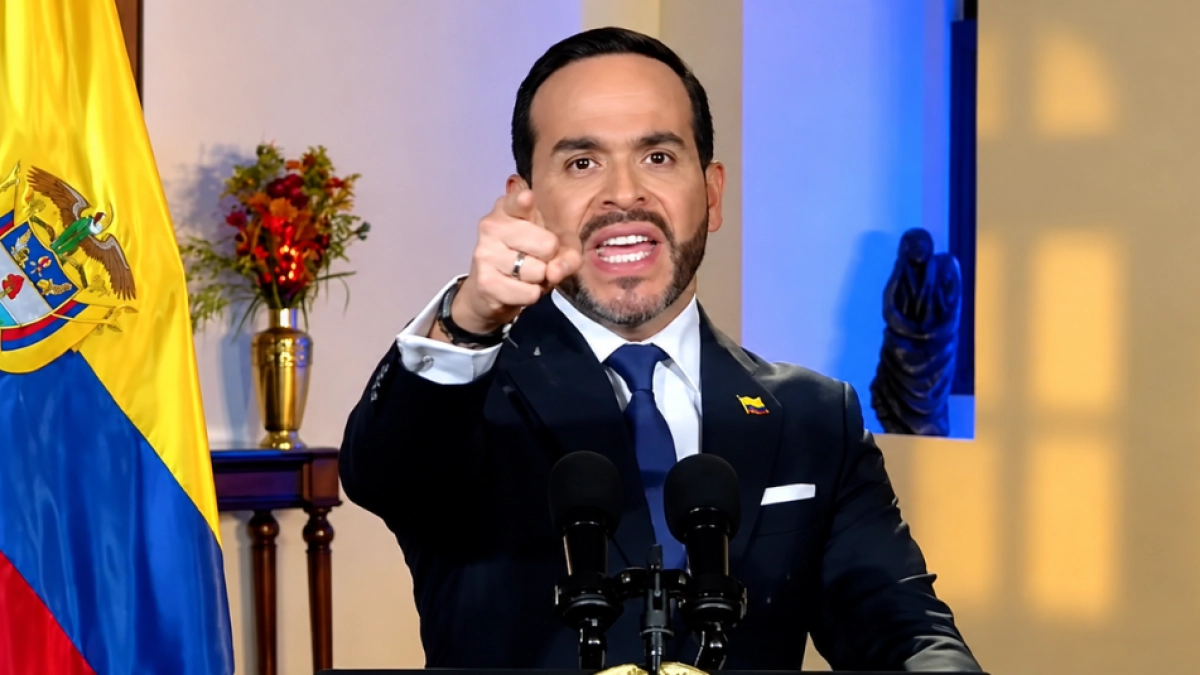
Before taking office, and even before officially stepping into the role of Minister of Foreign Affairs, Omar Bula Escobar drew a sharp, uncompromising line in the sand regarding Colombia’s international representation. Under the newly established administration of President Abelardo De La Espriella, Bula promised a total overhaul of the country’s global image. Unlike the preceding administration of Gustavo Petro—which Bula and his allies accused of diluting diplomatic standards—the new Chancellor vowed that professional language proficiency would form the absolute bedrock of the nation’s renewed diplomatic corps.
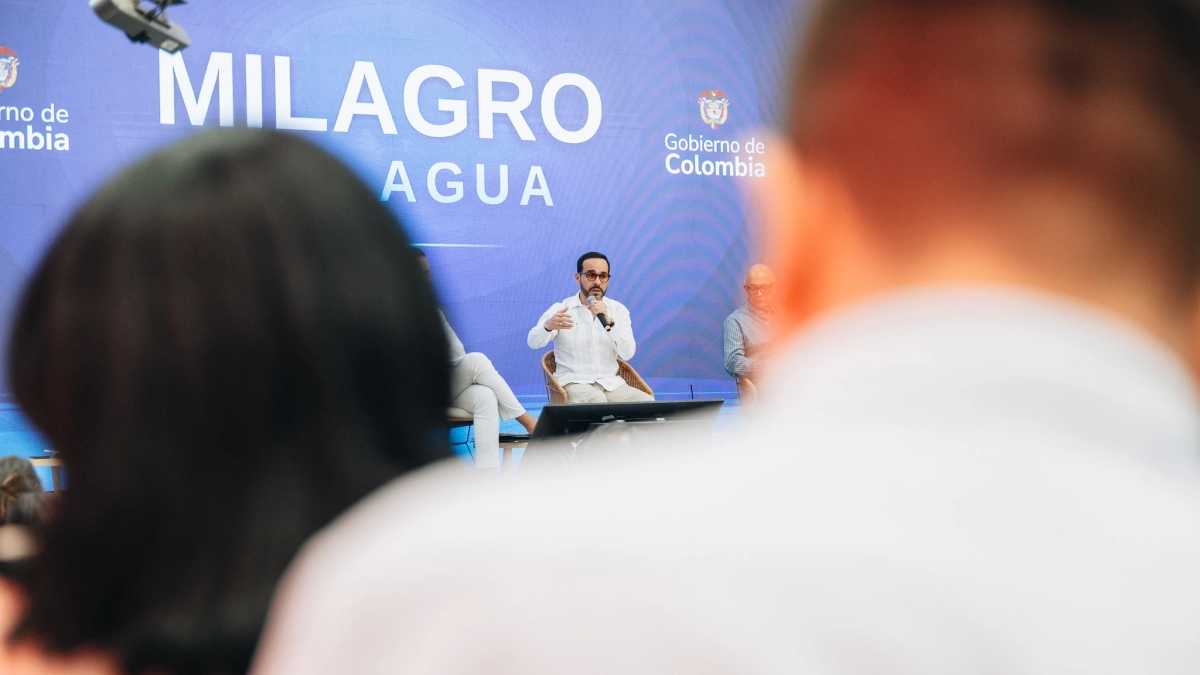
"You must have the capacity, the training, the languages: minimum English," Bula declared emphatically during a press briefing in July. "Not knowing English today is almost equivalent to illiteracy in the international arena. Minimum, but minimum, and good English. Not Open English first level."
The rhetoric was bold, aiming to signal a technocratic and sophisticated pivot away from what critics labeled ideological appointments under the previous government. However, three months into President De La Espriella’s mandate, a rigorous review of public candidate profiles and designated ambassadorial portfolios tells a more complex story. Out of 31 ambassadors appointed thus far—comprising 24 political appointees from outside the traditional diplomatic career path and seven career diplomats—a deep dive into available public resumes reveals that Bula’s high-bar standard is far from being applied uniformly.
While the administration has prioritized figures from the private sector, high-stakes litigation, and traditional political networks, the execution of its language mandate highlights significant vulnerabilities. The gap between political rhetoric and bureaucratic reality has once again thrust the professionalization of Colombia’s foreign service into the national spotlight.
2. Chronology: From Petro’s Decree to De La Espriella’s Pivot
To fully understand the current controversy surrounding linguistic requirements in Colombia’s diplomatic corps, it is essential to trace the policy timeline over recent years:

- May 2025: Amid ongoing debates regarding the democratization versus the professionalization of the public sector, the administration of President Gustavo Petro issues Resolution 10142. This controversial measure officially eliminates the mandatory second-language requirement for ambassadorial appointments falling outside the traditional diplomatic career path. Critics at the time argued this opened the floodgates for unqualified political loyalists, while defenders maintained it broadened representation.
- July 2026: Designated Chancellor Omar Bula Escobar, ahead of the official government transition, publicly castigates the Petro administration’s softening of standards. In a widely cited interview, Bula insists that fluent English is non-negotiable for anyone representing Colombia abroad, famously dismissing superficial language training.
- August 7, 2026: President Abelardo De La Espriella takes office in Santa Marta, promising a business-friendly, robust, and assertive foreign policy. Shortly after, the administration begins rolling out its roster of ambassadorial nominees.
- September – October 2026: The first waves of political and career ambassadors are designated. High-profile figures take up posts in Washington, the European Union, and major Latin American capitals. Concurrently, public transparency portals begin populating with the mandatory curriculum vitae of the nominees, inviting scrutiny from journalists, civil society, and professional bodies.
- Late 2026: The Association of Diplomatic and Consular Careers of Colombia (Asodiplo) formally files a nullification lawsuit against Resolution 10142, dragging the legal battle over merit and language requirements directly into the courts. Concurrently, data audits of available resumes expose stark discrepancies between Minister Bula’s promises and the actual linguistic profiles of the newly minted ambassadors.
3. Supporting Data: The Linguistic Audit of De La Espriella’s Ambassadors
An empirical examination of the public resumes available on the official candidate portal exposes deep fissures in the administration’s stated requirements. Out of a sample of 14 analyzed profiles of non-career ambassadors appointed by the De La Espriella administration, the data reveals concerning gaps in multilingual capabilities:
The Language Deficit: No English, No Second Language
Out of the 14 analyzed files, six appointees registered zero knowledge of English. More critically, five of those six failed to accredit any proficiency in an alternate foreign language whatsoever.
The individuals falling into this category include:
- Carlos Felipe Mejía (Ambassador to Spain)
- Jorge Jaller (Ambassador to Venezuela)
- Iván Rodrigo de Jesús Alvarado (Ambassador to Bolivia)
- Miguel Arrázola (Ambassador to El Salvador)
- Héctor Orlando Cure Bulicie (Ambassador to the Dominican Republic)
- Martín Eduardo Botero (Ambassador to the Netherlands) — Note: Botero’s resume indicates basic knowledge of Italian, though he lacks proficiency in Dutch or the local linguistic landscape.
With the notable exception of the Netherlands, the official language of every country on this list is Spanish. However, critics note that representing Colombia in bilateral or multilateral settings requires engaging with international bodies, foreign investors, and diplomatic peers where Spanish alone is insufficient.
Furthermore, this trend echoes past controversies. Notably, former Prosecutor General Alejandro Ordóñez—prior to his recent departure from his post at the Organization of American States (OEA) and subsequent transition to the Ministry of the Interior—also failed to accredit a second language during his tenure as ambassador.
The Fluent Exception: Strong Performers
In stark contrast, six of the nine analyzed ambassadors who do register English proficiency report a robust, well-rounded mastery across all three core competencies (speaking, reading, and writing):
- Edgardo Tomás Jaramillo Carbonell (Panama)
- Olga Sofía Gómez Garzón (Switzerland)
- Juvenal Infante (China)
- Juan Carlos Uribe (Ecuador)
- Juan Gonzalo Ospina (Belgium and the European Union)
- Tania Gilinski (Israel)
Three additional ambassadors present mixed levels of competency: Rosa Amalia Zuluaga (UN Geneva) reports speaking English well while reading and writing it very well; Juan Carlos Gossaín (France) indicates a regular speaking and writing level with good reading comprehension; and Orlando Abello (Costa Rica) reports speaking and writing well with very strong reading skills.
Beyond English: Third Languages and Local Tongues
When looking beyond English, only five of the 14 analyzed ambassadors possess a third language. French is the most recurrent, appearing in the portfolios of Juvenal Infante, Juan Carlos Uribe, Tania Gilinski, and Orlando Abello.
Specialized proficiencies are rare but notable:
- Juan Carlos Uribe also accredits strong Italian across all three competencies and a working level of German.
- Tania Gilinski reports a functional command of Hebrew (speaking well, reading/writing regularly).
- Juvenal Infante demonstrates an advanced command of French.
However, a glaring vulnerability remains: the absence of local native languages for critical diplomatic postings.
- Martín Eduardo Botero (Netherlands) speaks Italian, but not Dutch.
- Juvenal Infante (China) speaks English and French, but lacks proficiency in Mandarin.
- Juan Carlos Gossaín (France) possesses only intermediate English and no recorded French.
- Juan Gonzalo Ospina (Belgium and the EU) registers no command of French, Dutch, or German—the three official languages of the Belgian state.
Meanwhile, eight additional ambassadorial appointments—including high-profile postings like Mauricio Tobón (Mexico), Miguel Uribe Londoño (United Kingdom), Alfonso Plazas Vega (Peru), Andrés Gregorio Duque (Australia), Jaime Alberto Ochoa Muñoz (United Arab Emirates), and Amaury García Burgos (Uruguay)—remain unavailable on the public portal as they await formal placet (diplomatic clearance). Prominent figures like former minister María Consuelo Araújo (United States) and Mauricio Gaona (UN New York) possess well-known, highly competent linguistic profiles, but they remain exceptions in a mixed administrative rollout.
4. Official Responses and Legal Fronts: Asodiplo Strikes Back
The divergence between Chancellor Bula’s rhetoric and the reality of the published resumes has not gone unnoticed by institutional watchdogs and career diplomats.
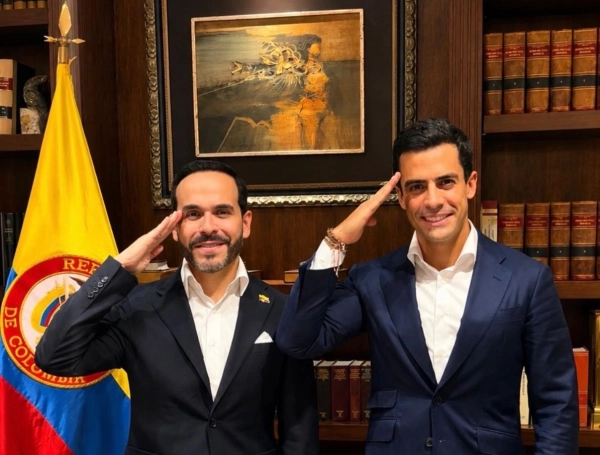
The Association of Diplomatic and Consular Careers of Colombia (Asodiplo) has taken aggressive legal action, formally filing a lawsuit for nullification against Resolution 10142 of 2025—the legacy decree enacted under Gustavo Petro that dismantled mandatory second-language requirements for political appointees.
In public statements accompanying the legal filings, Asodiplo representatives have underscored that the dilution of linguistic standards directly undermines the core constitutional principles governing public service: merit, technical suitability, and the professionalization of Colombia’s foreign service.
"Lowering the bar for political appointees not only demoralizes career diplomats who spend decades mastering international relations, trade law, and multiple languages; it actively degrades Colombia’s negotiation efficacy and institutional prestige on the global stage," an Asodiplo spokesperson argued.

To date, the Ministry of Foreign Affairs has defended its appointments by emphasizing the high-level executive experience, crisis management skills, and strategic political networks of its chosen ambassadors. The administration maintains that practical leadership in the boardroom and the courtroom often supersedes academic linguistic certifications. Yet, the Ministry has offered no official rebuttal regarding the specific data showing that several ambassadors lack even basic conversational English or the native tongue of their host nations.
5. Implications: What This Means for Colombia’s Global Standing
As President De La Espriella’s government approaches the end of its first quarter, the diplomatic language debate carries profound implications for Colombia’s foreign policy objectives.
- Multilateral Efficacy: In complex multilateral arenas—such as the European Union, the United Nations in Geneva, or complex bilateral negotiations with non-Spanish-speaking economic superpowers like China—relying on interpreters creates an unnecessary buffer. Effective diplomacy often relies on backchannel, unscripted, and culturally nuanced communication. Ambassadors unable to converse fluently in English or the local language of their host country are inherently disadvantaged.
- The Politicization vs. Meritocracy Tug-of-War: By relying heavily on political allies, figures from traditional political families, and the private sector, the administration risks alienating the professional diplomatic corps. If political appointees are perceived as underqualified linguistically, morale within the Ministry tanks, reinforcing the perception that ambassadorships are distributed as political favors rather than earned technical postings.
- A Test for Chancellor Bula: Omar Bula Escobar staked his early credibility on bringing rigorous standards back to San Carlos Palace. As public audits continue to expose gaps between his July declarations and the actual credentials of his appointed team, the Chancellor faces an uphill battle to prove that his ministry is genuinely modernizing Colombia’s diplomatic apparatus.
Ultimately, while the De La Espriella administration seeks to project a dynamic, business-oriented image to the world, the lingering language gap in key embassies serves as a cautionary tale: projecting power globally requires more than political will—it requires the linguistic tools to make oneself understood.