By Raúl Andrés García Suárez Breaking News Desk Published: September 29, 2026
Introduction and Main Facts
In an era where institutional detachment often defines the relationship between governments and the citizens they serve, a poignant intersection of digital media, personal vulnerability, and executive action has captured the attention of the Colombian public.
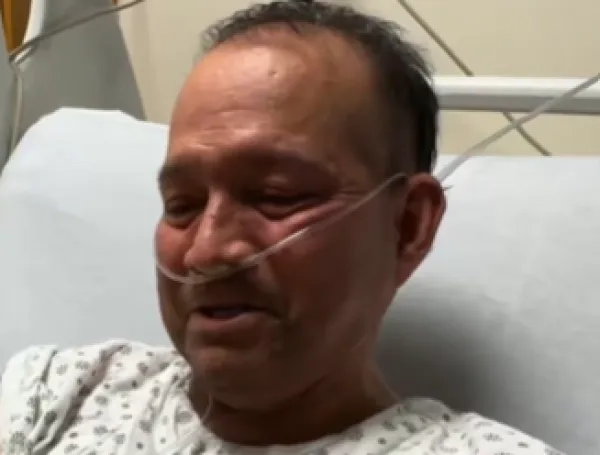
Henry Camargo, a professional soldier boasting over two decades of dedicated service to the Colombian military, found himself stranded in a hospital bed in New York City, battling a severe pulmonary condition. Facing the daunting reality that his survival depended on an urgent, high-complexity lung transplant unavailable to him locally without structural intervention, Camargo took to social media. In a video recorded directly from his medical ward, he made a direct, emotionally charged appeal to President Abelardo De La Espriella, asking for a humanitarian flight back to his homeland.
The digital plea did not fall on deaf ears. Within hours of the video’s dissemination, the executive branch mobilized. President De La Espriella publicly rebuked any notion of state abandonment toward veterans, ordering immediate consular intervention in New York.
Through a swift coordinated effort involving the Colombian Consulate in New York, the Ministry of Foreign Relations, and direct presidential oversight, Camargo was contacted, reassured, and promised an imminent repatriation via a humanitarian medical corridor. This unfolding narrative has since evolved into a national litmus test for how the administration handles the welfare of its retired and active military personnel, framing the episode not merely as a medical evacuation, but as a moral imperative of the state.
Chronology of Events: From Hospital Bed to Presidential Line
The dramatic sequence of events that bridged a hospital room in New York with the executive office in Bogotá unfolded over a tense, fast-moving 48-hour window in late September 2026.
Phase 1: The Sickness and the Silence
For months, retired professional soldier Henry Camargo had been fighting a losing battle against a deteriorating pulmonary condition. Having dedicated more than 22 years of his life to military service, protecting national security and constitutional order, Camargo’s body began to fail him. Medical evaluations in the United States concluded that his only viable path toward long-term survival was a complex lung transplant. Far from home, facing towering medical hurdles and financial strain, Camargo felt the crushing weight of isolation.
Phase 2: The Digital SOS
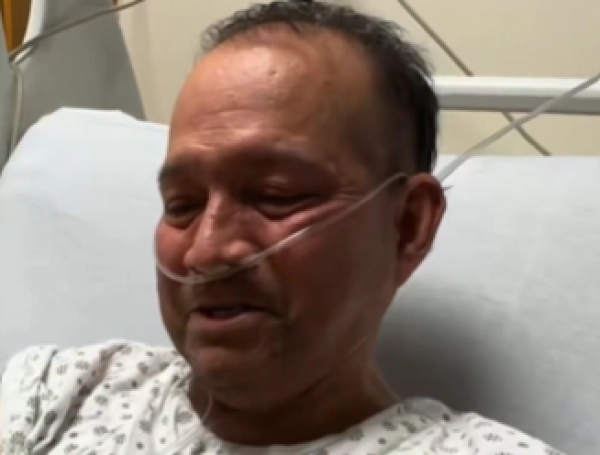
Realizing that standard bureaucratic channels were moving too slowly for a man running out of breath, Camargo recorded a video message from his New York hospital bed. Dressed in a hospital gown, looking frail yet resolute, he addressed President Abelardo De La Espriella directly.
"Mr. President De La Espriella, I ask you from the bottom of my heart, and believing in the miracle of our homeland, to help me transfer from here, the city of New York, in a humanitarian flight back to Colombia," Camargo pleaded, his voice carrying the exhaustion of a man fighting for every breath.
Phase 3: Executive Intervention and the Viral Response
The video quickly gained traction across digital platforms, eventually reaching the feeds of government officials and the president himself. Recognizing the urgency, President De La Espriella did not delegate the response entirely to mid-level bureaucrats. Instead, he took to his official X (formerly Twitter) account to issue a scathing critique of institutional neglect, followed immediately by direct operational orders.
"A country that does not care for those who gave their lives and their youth to defend the flag is a country without soul or honor," De La Espriella posted, setting a sharp moral tone for his administration’s policy toward veterans.
Phase 4: The Consular Visit and the Phone Call
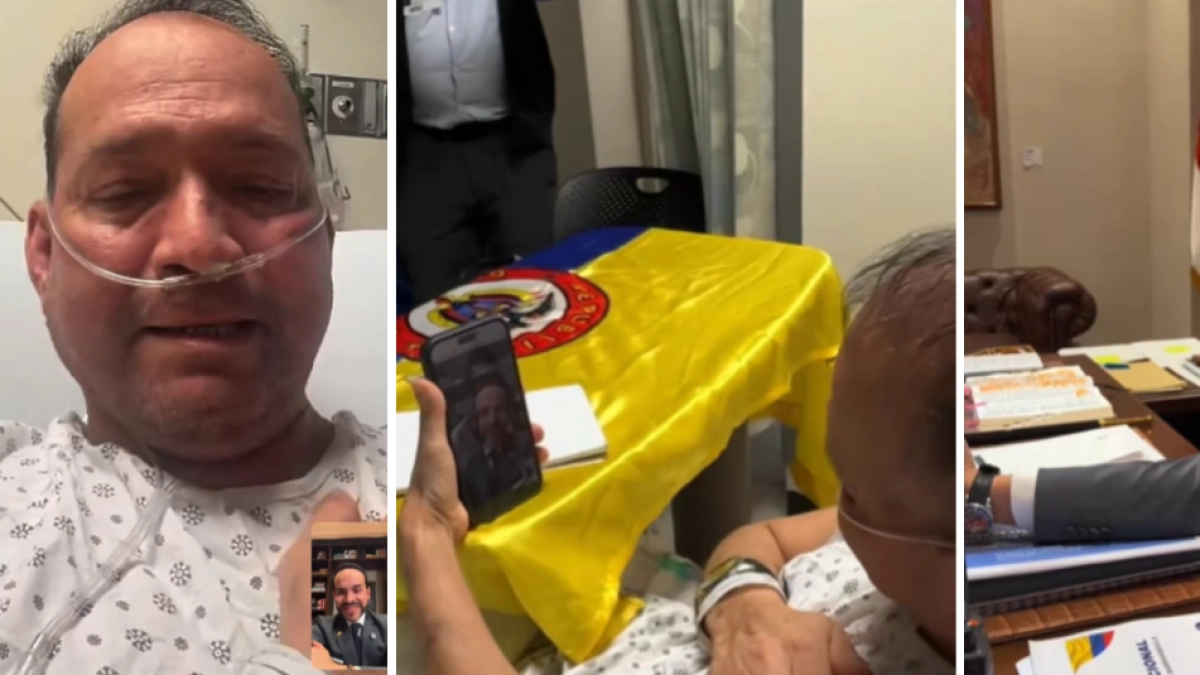
Acting on direct instructions from the presidency, the Colombian Consul in New York rushed to the medical center to evaluate Camargo’s condition firsthand and facilitate immediate diplomatic and logistical support.
During the consular visit, a cellular phone was handed to the ailing soldier. On the other end of the line was President De La Espriella. The conversation, later partially shared on social media, bridged thousands of miles. The president offered words of solidarity, absolute state backing, and a firm promise: Camargo was coming home.
Supporting Data and Context: The Plight of the Veterans
To fully understand the resonance of Henry Camargo’s case, one must examine the broader socioeconomic and medical landscape confronting retired members of the Colombian Armed Forces.
Length of Commitment: Camargo represents a generation of service members who entered the military during decades of intense internal conflict. With over 22 years logged under his service record, his career spans eras of sweeping security reforms and high-risk operations.
Complex Medical Needs Abroad: While Colombia’s major metropolitan health centers possess advanced surgical capabilities, military personnel and veterans who fall critically ill while traveling, residing, or undergoing specialized treatment abroad often fall into bureaucratic voids regarding international health coverage and emergency medical repatriation.
The Cost of Institutional Abandonment: According to veterans’ advocacy groups, hundreds of former soldiers face severe post-service hurdles, ranging from delayed pension disbursements to difficulties in securing high-cost treatments for combat-related or chronic systemic illnesses.
Digital Advocacy as a Last Resort: In recent years, social media platforms have increasingly functioned as shadow grievance channels for citizens and public servants alike when traditional petition mechanisms stall. Camargo’s utilization of a direct video appeal underscores how modern communication tools can bypass administrative inertia and compel immediate executive intervention.
Official Responses and Public Statements
The high-profile nature of the rescue mission drew extensive commentary from both the executive branch and military support organizations, highlighting a concerted push by the current administration to project a pro-military ethos.
President Abelardo De La Espriella’s Stance
Throughout his public statements and the recorded phone call with Camargo, President De La Espriella framed the operation not as a discretionary favor, but as an absolute duty of the state. His rhetoric leaned heavily on themes of honor, patriotism, and historical debt owed to those who wear the uniform.
During their phone conversation, the dialogue underscored mutual respect:
De La Espriella:"Brother Henry: we are going to bring you to Colombia so you can receive your transplant. With God’s blessing, your operation will be a success, and I will be there to visit you when you have pulled through."
De La Espriella:"Thank you for more than two decades of service. Thank you for giving everything for our freedom and our flag… In our country, there is no space to leave them abandoned. So you can count on us. We are going to bring you back."
Soldier Henry Camargo’s Reaction
Overwhelmed by the sudden turn of events, Camargo expressed profound gratitude, emphasizing how the president’s direct involvement restored his faith in national institutions.
Camargo:"With much honor, Mr. President. Believe me, I feel like a very blessed Colombian to have a president like you."
The consul accompanying Camargo in New York also reinforced the message of unified state support, noting that the consulate had mobilized all available resources to cut through red tape and clear the path for the soldier’s medical evacuation.
Implications: Policy, Morale, and Precedent
The rapid mobilization to rescue Sergeant/Soldier Henry Camargo carries significant implications for the Colombian government, the military apparatus, and the broader social contract between the state and its defenders.
1. Boosting Military Morale
For active-duty troops and the vast network of retired veterans, seeing a commander-in-chief intervene personally to save a long-serving soldier sends a powerful psychological signal. Military morale is intrinsically linked to the perception of post-service security. When a veteran is publicly rescued from foreign medical distress by executive decree, it reinforces the narrative that the state values individual sacrifice beyond the years of active combat.
2. Setting a High Executive Precedent
By bypassing standard bureaucratic channels through direct presidential command, the administration has set a high bar for responsiveness. However, this approach also introduces systemic challenges. Relying on viral social media videos to trigger emergency medical interventions risks establishing an informal hierarchy of need, where only those cases that capture public attention and media traction receive swift administrative relief. Future policy will need to address how these high-profile rescues can be institutionalized into streamlined, equitable protocols for all veterans facing foreign medical crises.
3. Diplomatic and Consular Agility
The operation highlights the pivotal role of consular offices in emergency humanitarian logistics. The speed with which the New York consulate executed presidential orders demonstrates that diplomatic outposts can function effectively as rapid-response humanitarian units when granted clear, unhindered directives from the capital.
4. The Human Element in Governance
Ultimately, the Camargo case transcends partisan politics, tapping into a universal humanitarian sentiment. It illustrates the potent intersection of digital connectivity and executive empathy. As Camargo prepares for his journey back to Colombian soil—where a high-stakes lung transplant awaits him—the narrative stands as a stark reminder of the fragility of human life and the profound capacity of the state to alter a citizen’s destiny when political will aligns with human necessity.
With the humanitarian flight finalized and medical teams standing by in Bogotá, the nation watches and waits, hoping that the promise made over a transatlantic phone call translates into a successful surgery and a new lease on life for a veteran who spent his youth in service to his country.
BOGOTÁ — Time is running out for the administration of President Abelardo de la Espriella. As the legislative clock ticks down toward the mandatory year-end recess on December 16, 2026, the Executive branch faces an…
By Laura Juliana Castellanos Guevara Political Desk, EL TIEMPO November 3, 2026 Main Facts The legislative future of President Abelardo De La Espriella’s administration rests on a razor-thin margin of time and procedural survival. On…
By Luisa Fernanda Gutiérrez Henao Breaking News Desk Published: November 1, 2026 Colombia’s political arena woke up to profound grief on Sunday, November 1, 2026, following the passing of Antonio Navarro Wolff at the age…