By Edwin Caicedo Environment and Health Journalist Updated: September 29, 2026
Executive Summary: The Santurbán Dispute Returns to the Forefront
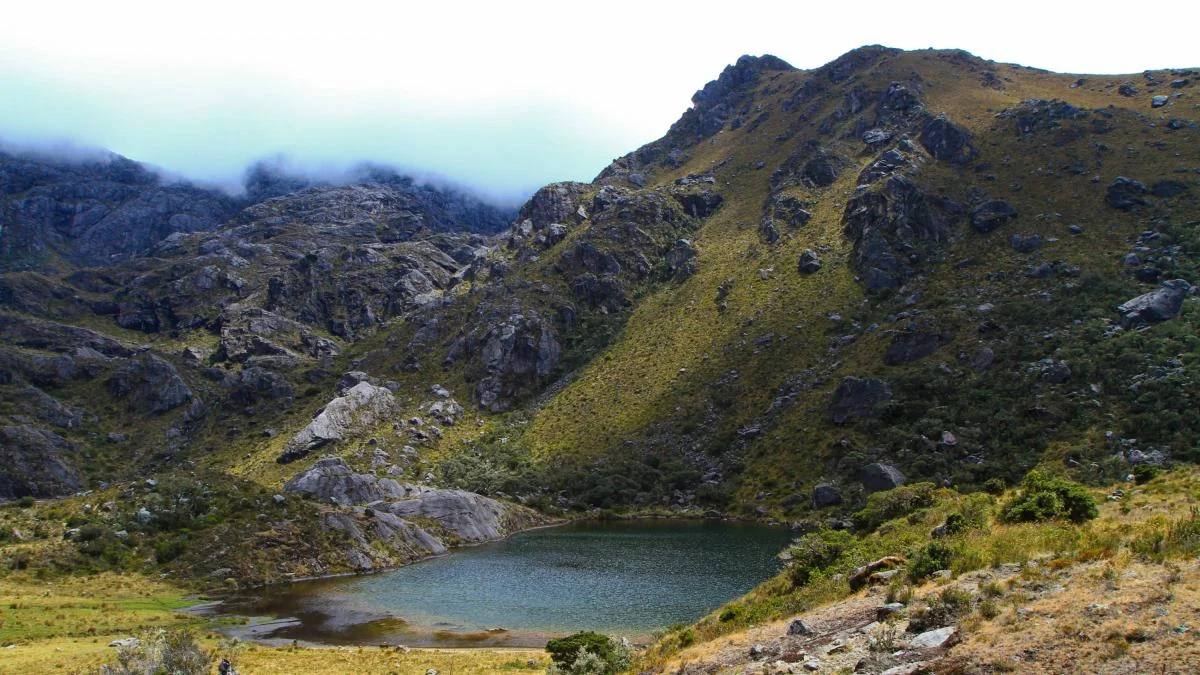
The ongoing, high-stakes battle over the future of the Santurbán páramo in the Department of Santander, Colombia, has once again taken center stage. This follows a pivotal administrative decision by the Ministry of Environment and Sustainable Development to completely revoke a controversial resolution that had extended the temporal natural resource reserve in the Soto Norte region until March 2029.
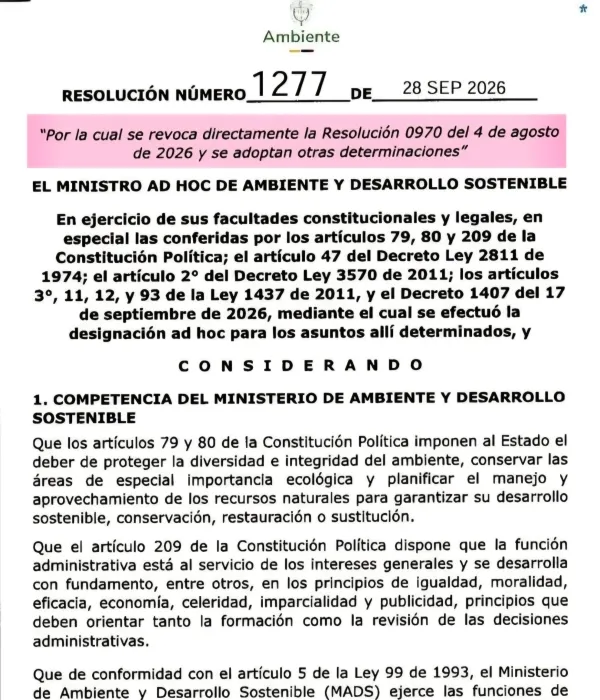
The reversal, formalized through Resolution 1277 on September 28, 2026, by the ad hoc Minister of Environment and Sustainable Development, Indalecio Dangond, has fractured public opinion. It has triggered immediate, opposing reactions from local mining communities who celebrate the move as a victory for due process, and environmental organizations who view it as a dangerous rollback of critical ecological protections.
As Colombia navigates the complex crosscurrents of ecological conservation, historical rights of small-scale miners, and large-scale multinational mining interests, this latest regulatory shift resets the clock on a nearly decade-long struggle to definitively delimit one of the country’s most vital water sources.
Chronology of Events: How the Crisis Unfolded
To understand the weight of the September 2026 decision, it is essential to trace the timeline of regulatory actions, temporary protections, and shifting governmental administrations that have shaped the current crisis in Santurbán.
2014 (Resolution 2090): The government previously established that the lower boundary of the Santurbán páramo begins at 3,100 meters above sea level, setting off years of legal battles, judicial interventions, and community protests over where environmental boundaries should lie.
March 2025 (Resolutions 0221 and 0239): Amid growing ecological concerns, the administration of President Gustavo Petro established a temporary Zona de Reserva de Recursos Naturales Renovables (Renewable Natural Resources Reserve Zone) covering approximately 75,000 hectares across seven municipalities in Santander. The primary goal was to temporarily safeguard strategic water-producing and biodiversity-rich ecosystems while technical studies and environmental zoning were developed. (Similar temporary figures were applied nationwide during this era, including a massive 151,000-hectare reserve in the Almorzadero Páramo across Santander and Norte de Santander).
August 4, 2026 (Resolution 0970): In the final stretches of the Petro administration, the Ministry of Environment issued Resolution 0970, updating the geographic boundaries, refining the cartography, adjusting timelines, and—most importantly—extending the validity of the Santurbán temporary reserve until March 2029. However, this measure was quickly bogged down by allegations of unresolved recusals, administrative shortcuts, and a lack of proper prior consultation.
September 28, 2026 (Resolution 1277): Under the current administration of President Abelardo de la Espriella, ad hoc Environment Minister Indalecio Dangond signed Resolution 1277, revoking Resolution 0970 "in its entirety." With this stroke of a pen, the government eliminated the 2029 extension, reinstating the original regulatory framework established by Resolutions 0221 and 0239 of March 2025, which carries a shorter timeline ending in March 2027.
Supporting Data and Institutional Reach
The administrative footprint of Resolution 1277 is extensive, requiring formal communication and coordination across multiple regional and national entities to realign environmental and mining management systems.
According to the Ministry of Environment’s directives, the revocation must be officially communicated to a broad spectrum of stakeholders within five business days following its publication. The impacted and notified entities include:
Regional and Local Authorities: The Corporación Autónoma Regional para la Defensa de la Meseta de Bucaramanga (CDMB), the Gobernación de Santander, and the municipal administrations of Suratá, Matanza, California, Vetas, Charta, Tona, and Bucaramanga.
National Oversight and Environmental Bodies: The Autoridad Nacional de Licencias Ambientales (ANLA), Parques Nacionales Naturales de Colombia, and the Procuraduría Delegada para Asuntos Ambientales, Minero Energéticos y Agrarios.
Mining Sector Institutions: The Ministerio de Minas y Energía, the Agencia Nacional de Minería (ANM), and individual stakeholders such as Fabio Augusto Maldonado Toloza.
Crucially, the Ministry mandated that the National Mining Agency (ANM) update its systems—specifically the Sistema Integral de Gestión Minera (SIGM)—within days of the notice to reflect the legal and geographic changes brought about by the reinstatement of the pre-0970 framework.
Official Responses and Stakeholder Positions
The revocation has exposed deep ideological and economic rifts between the communities living and working in the Soto Norte province and urban environmental movements based in Bucaramanga and Bogotá.
1. Asomineros Vetas: A Call for Definitive Delimitation and Legal Certainty
For artisanal and small-scale miners represented by Asomineros Vetas, the Ministry’s decision is seen as a long-overdue correction of a flawed decree pushed through by the previous government.
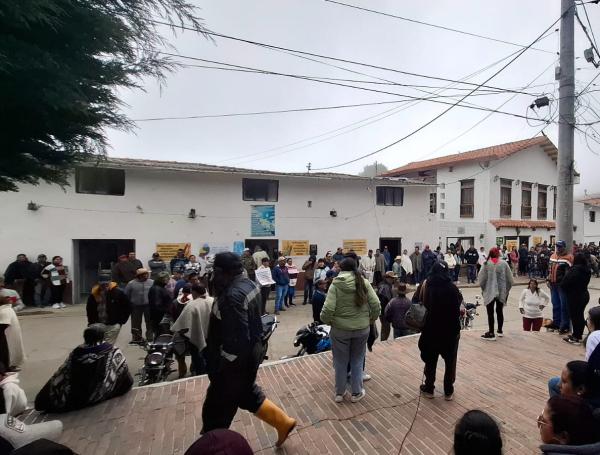
Ivonne González, president of Asomineros Vetas, recalled the massive mobilization earlier in the year when more than 2,500 miners and community members staged a sit-in outside the Ministry of Environment in Bogotá.
"As we warned when over 2,500 of us held a protest in Bogotá in front of the Ministry of Environment, things done at the last minute and under conflicts of interest were bound to fall apart," González asserted.
According to Asomineros, the expiration clock on the temporary reserve now resets to March 4, 2027, following the cancellation of the 2029 extension. The organization maintains that the disputed zone sits outside the legally defined limits of the Santurbán Páramo proper. Rather than utilizing broad temporary reserves that create administrative limbo, the mining community insists that the government must focus on concluding the definitive delimitation process.
Invoking Sentence T-361 of 2017 by the Constitutional Court—which mandates wide, meaningful participation and concertation with local communities—González urged the National Government to convene the 14 pending concertation meetings.
"What we are asking for is compliance with the law, an end to uncertainty, and the adoption of a definitive, concertated decision," González stated. Furthermore, she forcefully rejected claims that the mining sector aims to destroy the ecosystem: "Here, no one is asking to unprotect the Páramo or to allow mining inside it." Instead, she defended the constitutional right of local families to sustain their historical vocation of legal, small- and medium-scale mining in the buffer zones.
2. Comité Santurbán: Alarm Over Environmental Rollbacks
In stark contrast, the Comité Santurbán views the government’s action as an alarming capitulation to extractive interests. In an official statement released immediately after the decision, the organization pulled no punches:
"The government of Abelardo de la Espriella has just knocked down another of the measures that protected Santurbán."
The Comité criticized the revocation of the 2029 extension, arguing it systematically weakens the defensive perimeter around the water sources that supply millions of residents in Bucaramanga and its metropolitan area. Environmental activists pointed to an impending milestone: next year, multinational mining giant Aris Mining is expected to officially submit its request for an environmental license in the region. The Comité contends that the removal of the extended temporary reserve strips away a crucial legal shield just as large-scale projects advance.
Raising the stakes, the Comité Santurbán has issued a definitive ultimatum, setting November 13 as the deadline for the government to place a new, robust natural reserve proposal for Santurbán out for public consultation. Should the Ministry fail to act, the organization has vowed to mobilize massive protests in Bogotá, signaling that the street-level battles over the páramo are far from over.
Implications: What Lies Ahead for Soto Norte and Colombia’s Páramos?
The reversal of Resolution 0970 by the Ministry of Environment through Resolution 1277 opens a volatile new chapter in Colombia’s environmental governance. The implications of this decision stretch across legal, economic, and ecological dimensions:
The Prolonged Delimitation Crisis: As noted by regional industry groups, the process to accurately and justly delimit the Santurbán Páramo has languished for over nine years. Temporary decrees, administrative extensions, and subsequent revocations have created a perpetual cycle of legal whiplash, leaving local entrepreneurs, miners, and conservationists without a stable rulebook.
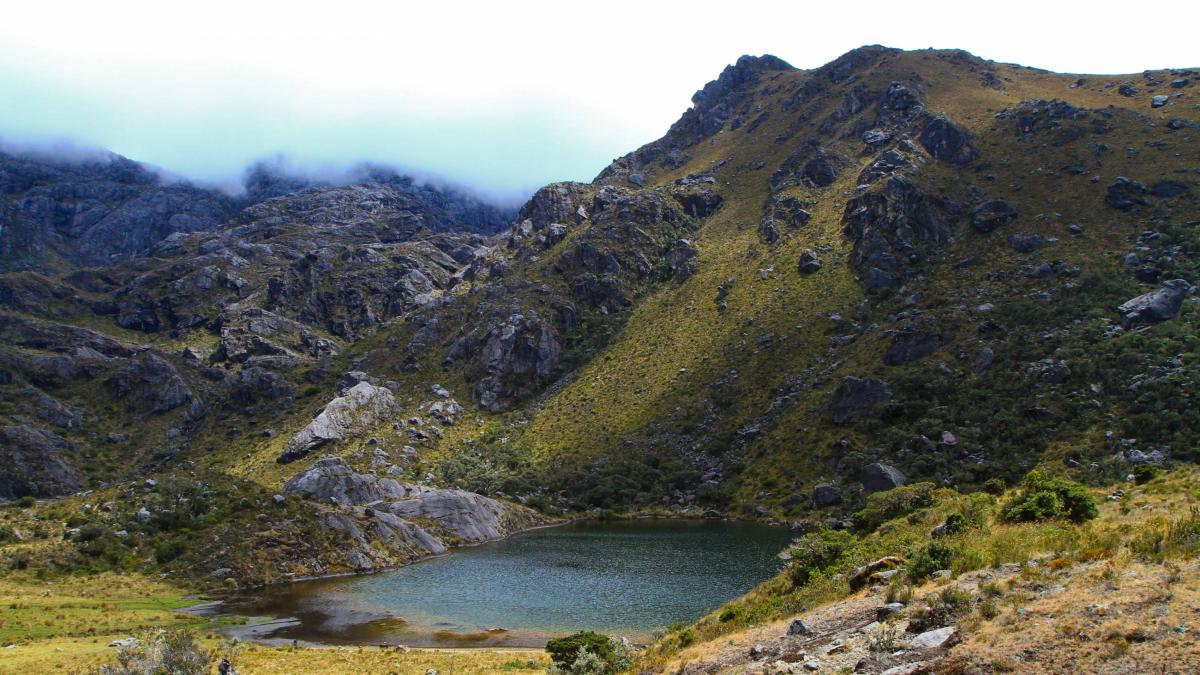
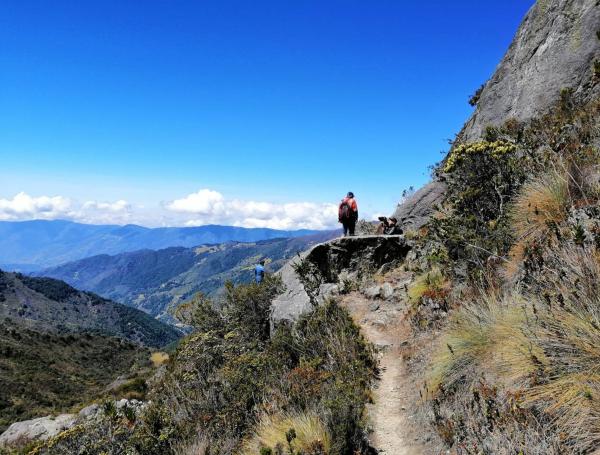
The Tension Between Water Security and Local Livelihoods: Santurbán is a hydrologic powerhouse, feeding crucial river basins that sustain agriculture, industry, and human consumption across Santander and Norte de Santander. At the same time, municipalities like Vetas and California have lived by mining for centuries. Finding a regulatory equilibrium that guarantees absolute protection for high-altitude fragile ecosystems while respecting the rights of traditional mining populations remains one of the greatest challenges for Colombian public policy.
National Precedents: Because the Petro administration utilized temporary natural resource reserves across various sensitive ecosystems nationwide—such as the massive Almorzadero reserve—how the current administration handles the legal fallout in Santurbán could establish a precedent for how other contested ecological zones are managed throughout the country.
For now, with the pre-2026 legal framework temporarily restored and a March 2027 expiration deadline looming for the underlying reserve, the ball is back in the court of the Ministry of Environment. Whether the state can successfully broker a definitive, participatory delimitation that satisfies both water defenders and local mining communities remains to be seen—but the ticking clock and the threats of mobilization suggest that the peace in Santurbán will be fragile indeed.
WASHINGTON — In what celestial mechanics experts are describing as an astronomical event of rare and profound magnitude, the National Aeronautics and Space Administration (NASA) has announced the discovery of a massive, newly formed crater…
By Edwin Caicedo Environment and Health Journalist September 9, 2026 Main Facts The department of Huila, nestled in the southern region of Colombia, has officially solidified its status as a premier sanctuary for avian biodiversity.…
In the tapestry of human history, language is perhaps our most complex and defining creation. Today, the world vibrates with approximately 7,500 distinct languages, spanning a dizzying array of vocabularies, grammatical structures, and phonetic landscapes.…