By Gabriel Ávila | Journalism Correspondent
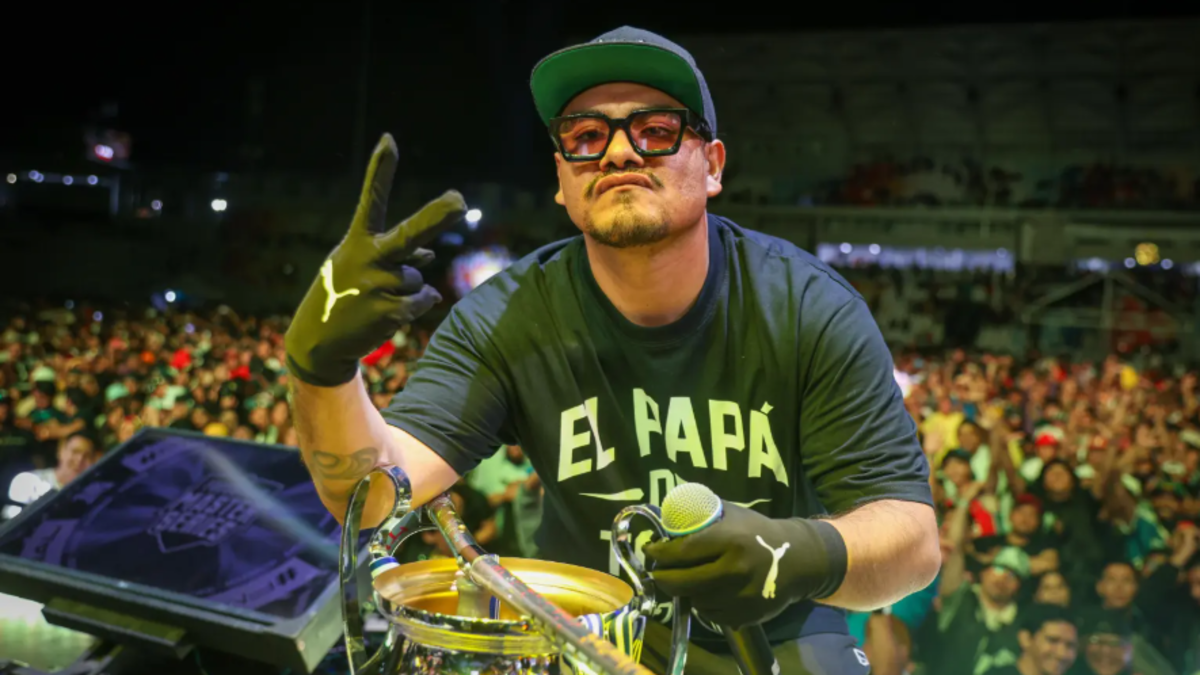
The landscape of professional freestyle rap is bracing for a seismic shift. As the curtains prepare to rise on the fifth season of Freestyle Master Series (FMS) Colombia, scheduled for Sunday, October 11, at the iconic Teatro Jorge Eliécer Gaitán in Bogotá, the international community has turned its gaze toward a single, towering figure: Mauricio Hernández, universally known as "Aczino."
The Mexican legend, a man whose trophy cabinet is perhaps the most decorated in the history of the discipline—boasting three Red Bull Batalla world titles and multiple FMS championships—has confirmed his participation in the Colombian circuit. This is not merely a guest appearance; it is a full-scale competitive entry. Aczino will lock horns with the elite of the Colombian scene, including local titans like Valles-T, Éxodo Lirical, and Reverse, in a bid to conquer yet another national throne.
The Significance of a homecoming
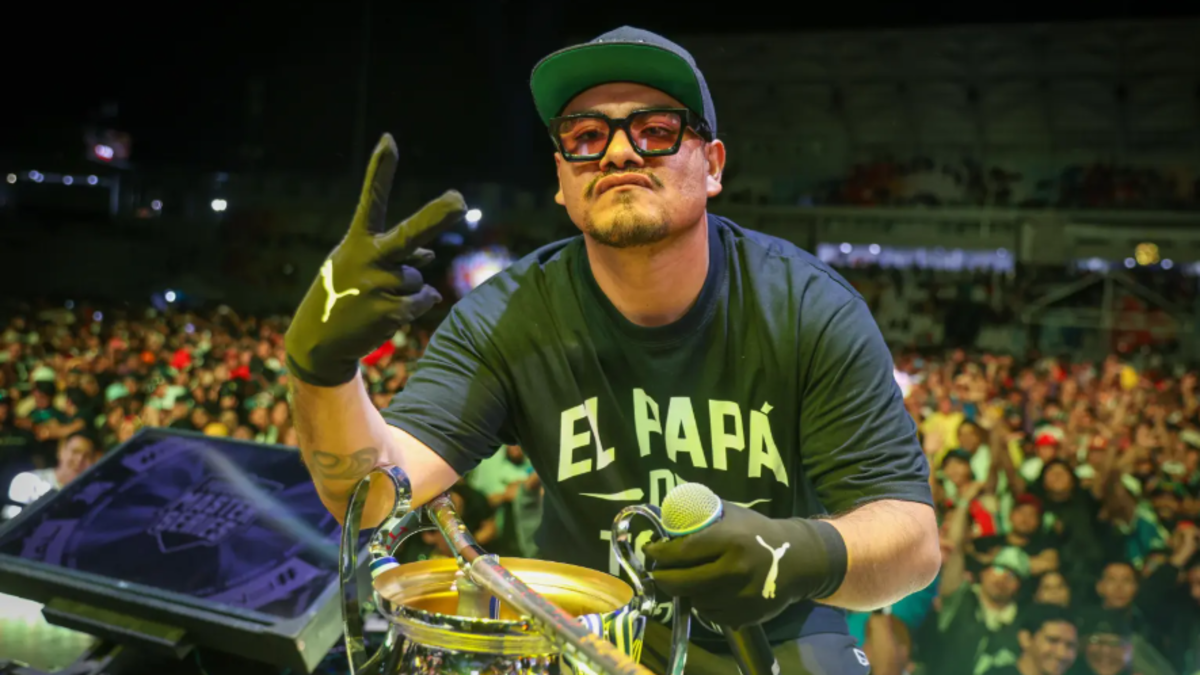
For the uninitiated, the arrival of Aczino in Colombia is not just a professional development; it is a sentimental pilgrimage. Fourteen years ago, in 2012, a young Mauricio Hernández shocked the international scene by winning the Red Bull Batalla National Final in Colombia. To this day, he remains the only foreigner to have ever captured that specific trophy on Colombian soil.
In an exclusive interview with EL TIEMPO, Aczino reflected on the weight of his return. "The sentimental aspect carries much more weight than any marketing strategy or the desire to be in a viral league," he confessed. "Returning to where it all began is deeply symbolic." This move signals a bridge between his foundational years and the apex of his current career, framing the FMS Colombia season not just as a sporting event, but as a narrative circle closing for one of the greatest poets of the improvisational arts.
Chronology of a Legend: From Underground to Global Icon
To understand the magnitude of Aczino’s decision, one must look at the trajectory of his career. Born in Nezahualcóyotl, Mexico, he emerged from the brutal, unpolished environment of the Mexican underground scene.

- 2012: The Colombian Breakthrough. His victory in Bogotá in 2012 served as the catalyst for his global recognition, marking the beginning of a decade of dominance.
- 2017-2020: The Era of Hegemony. Aczino solidified his status by dominating the FMS Mexico circuit, creating a standard of "barras" (bars/lyrical density) that forced the entire international scene to elevate its game.
- 2021-2023: Global Conquest. With his three Red Bull Batalla world titles, he effectively neutralized the "best in history" debate, becoming the benchmark against which all future generations will be measured.
- 2024-2026: The New Phase. Following a four-year hiatus from national league participation—during which he focused on World Series and international showcases—Aczino has opted to return to the grind of a weekly national league.
The Technical Motivation: Why Return to the Arena?
The most common question posed to the Mexican icon is: "Why return to a national league after reaching the pinnacle of global freestyle?" His answer reveals a calculated approach to the evolution of the sport.
"I didn’t have the intention of being in a national league during these times," Aczino admits. "My idea was to participate only in World Series or international competitions. However, the current level of demand in freestyle no longer allows you to appear sporadically. The sport requires you to be competing continuously."
For Aczino, the Colombian league acts as a laboratory. It is a place to "test the terrain" and sharpen his blade against a new generation of hungry, lethal MCs. It is a tactical decision—a way to maintain the mental and rhythmic reflexes necessary to remain at the top of the pyramid for the upcoming World Championship.

Analyzing the Field: Facing the Unknown
In the fifth season of FMS Colombia, the field is anything but predictable. When asked about his initial rivals, Filósofo and Dima, Aczino displays the respect of a veteran who knows that complacency is the precursor to defeat.
"Everyone has something," he notes. "People want to see the battles against international references like Valles-T and Éxodo Lirical. But starting against Filósofo and Dima is dangerous. These are profiles that don’t have as many ‘angles’ as the more well-known names, and that makes them unpredictable. You don’t know exactly what you are facing."
His assessment of Dima, in particular, highlights the shift in modern freestyle. "I saw a clip where he did a remix with a song inside the round, and it was magnificent," he says, acknowledging that the "remix" style—a format popularized by Colombian underground scenes like Asimétrico Freestyle—has forced even a master like himself to study new variables.

The "League of Flavor" and the Evolution of Style
When asked to define the personality of the FMS Colombia league compared to his home turf in Mexico—the undisputed "League of the Bars"—Aczino offers a poetic contrast.
"Beyond the freestyle, Colombia always has ‘sabor’ (flavor)," he says. "It has that seasoning and that passion. I would call it the League of Flavor." This cultural distinction is crucial. While the Mexican style is often characterized by surgical precision and heavy, complex wordplay, the Colombian style thrives on musicality, flow, and raw energy. By inserting himself into this environment, Aczino is looking to expand his own stylistic repertoire.
Historical Rivalries: Chuty, Wos, and the Legacy
Aczino’s career has been defined by his legendary rivalries. From his intense clashes with Wos during the high-stakes Red Bull finals to his tactical chess matches against the Spanish giant Chuty, these rivalries have essentially written the history of the sport over the last decade.

When asked to choose the most representative, he does not hesitate: "The most viral was the one with Wos, but the most impactful in the world of freestyle has always been the one with Chuty. We represent two totally different things, even physically. The level of Chuty is astronomical. It has been the most impactful rivalry in the history of the sport."
Implications: The Business of Freestyle
Aczino is not just a competitor; he is an entrepreneur. A significant portion of his current mindset is dedicated to the long-term viability of the sport. He is actively involved in Batalla de Campeones and collaborations with Liga Bazooka, signaling a shift from being merely a "star" to being an architect of the industry.
"As a battler, my objective is to win," he asserts. "But as a person, the best thing you can do is start building your own project. It’s important to have financial intelligence. You won’t always be charging as the main star—well, unless you’re me, as I’ve been a headliner since I started."

Future Outlook: A New Generation
Regarding the possibility of a "Grand Slam" of FMS titles—a feat that Gazir brought to the forefront by winning in different countries—Aczino is pragmatic. He views this as a marathon for the younger generation. "It will be very difficult for those of us who are older to endure five seasons in five different countries. That achievement will belong to the younger ones, like El Menor and Gazir."
As October 11 approaches, the atmosphere in Bogotá is electric. The arrival of Aczino is a reminder that in the world of freestyle, greatness is not a destination but a constant state of evolution. Whether he wins the FMS Colombia title or not, his presence guarantees that the fifth season will be remembered as the moment the "King" came back to the place where his journey first ignited, proving that even at the summit, there is always more to learn, more to fight for, and more to build.