By Laura Juliana Castellanos Guevara
Political Desk, EL TIEMPO
November 3, 2026
Main Facts
The legislative future of President Abelardo De La Espriella’s administration rests on a razor-thin margin of time and procedural survival. On Tuesday, November 3, 2026, the Senate overwhelmingly approved the controversial Submission to Justice Bill (Ley de Sometimiento), a centerpiece of the executive branch’s security and criminal policy. The legislation establishes a strict legal framework allowing members of illegal armed groups and organized criminal syndicates to surrender to the state in exchange for reduced penal benefits, provided they hand over their weapons, surrender financial assets, dismantle illicit networks, and actively contribute to truth-telling and victim reparations.
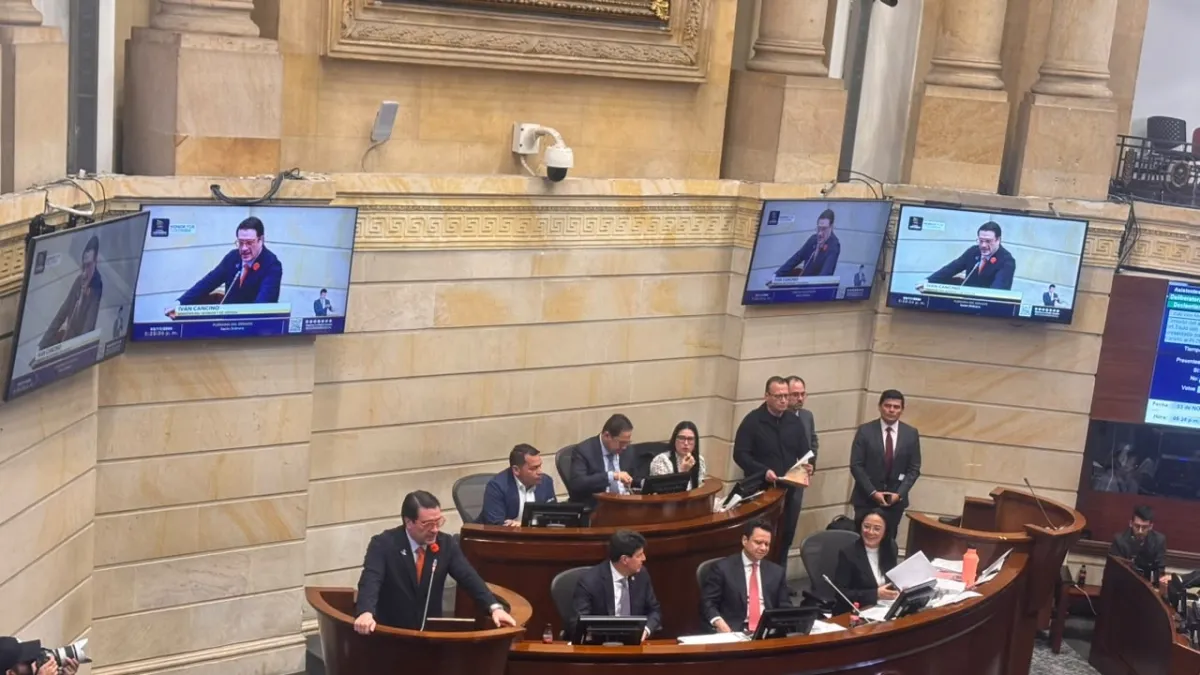
With the Senate’s green light secured, total focus shifted to the Chamber of Representatives. As of late Tuesday evening, the lower house faced two potential paths: adopt the Senate’s approved text verbatim—thereby clearing the bill for immediate presidential sanction—or introduce amendments that would force the formation of a bicameral conciliation committee to harmonize the disparate versions.
The stakes could hardly be higher. The administration is working under a unforgiving deadline: the initiative must complete its legislative passage and receive final approval before midnight on November 4, 2026, when the foundational 1997 Public Order Law (commonly known as Ley 418) expires. Because the submission bill serves as the legislative vehicle to extend and modify vital state security tools—including the Prosecutor General’s witness protection program and the Ministry of the Interior’s National Fund for Security and Citizen Coincidence (Fonsecon)—failure to pass the measure would leave gaping holes in the state’s security apparatus.

The haunting memory of the 2027 National General Budget debacle, where a procedural misstep ultimately forced the Executive to issue the budget by decree, has put congressional leadership on high alert to avoid a similar legislative train wreck.
Chronology of a High-Stakes Debate
The path to Tuesday’s decisive vote has been fraught with procedural battles, accusations of irregularities, and intense political polarization.

The First Hurdles
Presented under an expedited "message of urgency" (mensaje de urgencia) by President De La Espriella’s administration, the bill successfully cleared its initial test in the Joint First Committees (Comisiones Primeras Conjuntas). However, as the debate moved to the plenary sessions, time began to run dangerously short.
- October 30, 2026 (Senatorial Kickoff): Discussion began in the Senate. The chamber decisively defeated an archiving motion (ponencia de archivo) put forward by the opposition Pacto Histórico bloc and approved the positive report. While the session managed to advance through four preliminary articles, the bulk of the complex text remained unvoted, rolling over the timeline into the following week.
- November 2, 2026 (The Chamber’s Procedural Storm): The lower house opened its debate amid immediate chaos. Initially, the plenary rejected an archiving motion and approved the positive report with 90 votes in favor and 44 against. Controversy erupted immediately when opposition lawmakers pointed out that the rapporteur, Representative Daniel Briceño of the Centro Democrático party, had failed to formally defend the text, and that the chamber had voted without allowing proper floor deliberation.
- The Reopening: Confronted with clear indicators of a potential procedural flaw that could later sink the law in the Constitutional Court, Representative Catherine Juvinao demanded a reopening of the vote. The Board of Directors (Mesa Directiva) agreed. Following proper defense and robust floor interventions, the positive report was voted on again, passing with an expanded margin of 99 in favor and 39 against. The day concluded with the approval of only Articles 5 and 14, leaving the vast majority of the bill pending.
- November 3, 2026 (Simultaneous Plenary Sprints): Both legislative chambers were summoned for simultaneous sessions to rapidly process the remaining articles. While the Senate moved swiftly through its agenda, finalizing its version with key modifications, the House of Representatives bogged down for over eight hours amid a flurry of last-minute recusations (recusaciones) targeting lawmakers across various political parties, including Pacto Histórico, Centro Democrático, the Liberal Party, and the Party of the U.
Supporting Data and Legislative Modifications
As the texts took shape across both legislative floors, notable adjustments were introduced to accommodate a wide array of political concerns without diluting the core objectives of the executive’s security strategy.
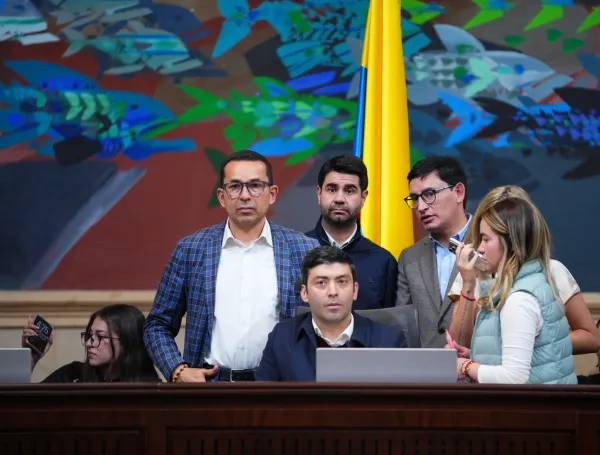
Senate Adjustments
The Senate advanced more rapidly, and its finalized text emerged as the most viable blueprint for promulgation into law. Crucial alterations included:
- Removal of Controversial Funding Mechanisms: The Senate struck down Article 25, which would have expanded the discretionary use of reserved funds within Fonsecon.
- Zero Tolerance for Minor Recruitment: Lawmakers successfully locked in a strict exclusion clause determining that individuals convicted of recruiting minors or directly responsible for the systematic exploitation of children under 18 years of age are categorically barred from accessing the differentiated penal treatments offered by the law.
- Ten-Year Floor: As underscored by Senator Hernán Cadavid, the framework explicitly guarantees that "in no case will there be a sentence of less than ten years" for beneficiaries, ensuring that leniency is strictly tied to profound concessions from criminal networks.
The Recusation Quagmire in the House
In the Chamber of Representatives, the debate threatened to derail as opposition and independent lawmakers filed a wave of recusations designed to sideline targeted politicians. However, House President Nicolás Barguil took a firm stand against procedural stalling. Responding to criticisms from representatives like María Fernanda Carrascal around midday, Barguil asserted:
"This Board of Directors is not going to fall into the little game of recusations. Whatever arrives will be forwarded directly to the Ethics Commission. We will not suspend the session."
Under Colombian congressional rules, the mere filing of a recusation does not automatically strip a lawmaker of their vote or halt proceedings. The challenge must be evaluated by the Ethics Commission; only if accepted is the legislator forced to recuse themselves from specific votes. This robust institutional stance allowed the House to push past the procedural gridlock and keep the legislative vehicle moving forward.
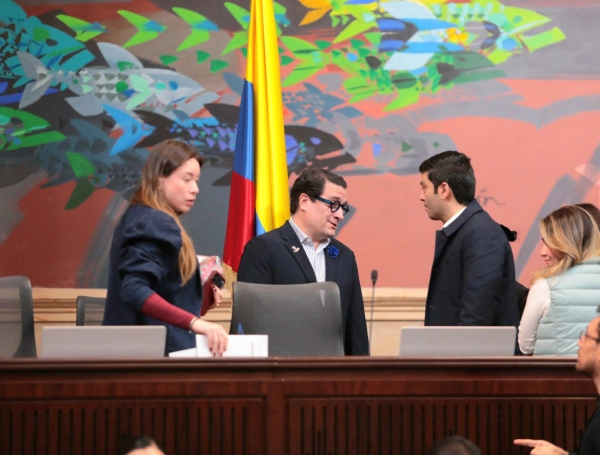
Official Responses and Political Reactions
The legislative battle drew sharp commentary from the highest ranks of government and congressional leadership, reflecting the delicate balance between penal pragmatism and the preservation of the rule of law.
Minister of Justice Iván Cancino defended the structural integrity of the bill to reporters shortly after the Senate’s approval, emphasizing that the text aligns seamlessly with the broader security doctrine of the current administration.

"An approved text that is solid and accommodates the criminal policy of President Abelardo De La Espriella has been passed," Cancino stated. He stressed that the final product was forged through rigorous debate and deep political friction, noting that the resulting framework will remain in effect for an initial duration of four years.
Echoing the administration’s defensive stance against claims that the bill amounts to a "disguised peace process," Senator Hernán Cadavid (Centro Democrático), who served as a primary rapporteur for the initiative, took to social media to clarify the boundaries of the law:
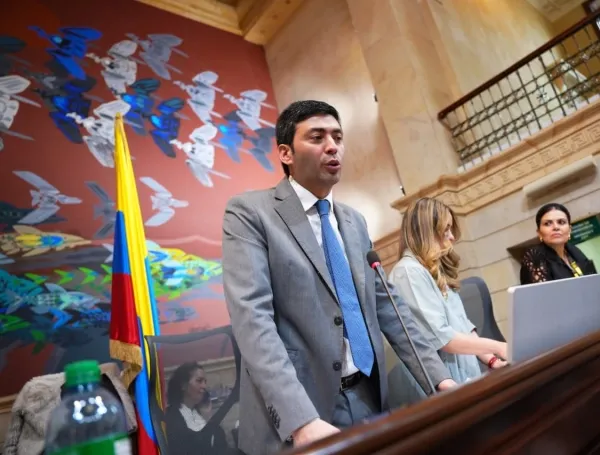
"It is not a peace agreement. It is not a political negotiation. It does not suspend arrest warrants. It does not interrupt extradition processes. It sets conditions for submission without the rule of law dividing or losing its reason for being."
Implications for National Security and the Rule of Law
The impending passage of the Submission to Justice Bill carries profound structural implications for Colombia’s internal security landscape and judicial architecture.

- Continuity of Vital State Programs: First and foremost, because the bill is legally tethered to the renewal of the broader public order framework, its failure would instantly paralyze essential state functions. Tools such as the Attorney General’s witness protection program and regional security financing through Fonsecon would lose their legal backing overnight, crippling ongoing operations against multi-billion-dollar transnational criminal networks, drug cartels, and residual armed groups.
- Redefining State Interaction with Criminality: Unlike traditional peace talks—which historically involved ideological guerrilla groups—this framework establishes a purely legal, non-political pathway for structured criminal organizations whose primary motivations are financial. By demanding total dismantling of economic architectures and mandatory forfeiture of illicit assets, the law attempts to break the cyclical nature of organized crime without granting political status to drug traffickers and mafia syndicates.
- Institutional Resilience Tested: The frantic legislative sprint has once again tested the institutional resilience of the Colombian Congress. Coming on the heels of the 2027 budget crisis—where the Executive was forced to legislate by decree—the successful passage of this bill via traditional congressional mechanisms is vital for restoring public faith in the legislative branch’s ability to handle urgent national crises without bypassing democratic checks and balances.
As the clock ticks down toward the midnight deadline on November 4, the eyes of the nation remain fixed on the Chamber of Representatives. Whether the lower house adopts the Senate’s text outright or sends it to a tense conciliation committee, Colombia stands on the brink of a new era in criminal justice policy—one where the state attempts to subdue organized violence through a rigid, unyielding legal bargain.