Main Facts: The Phenomenon of the White Ant
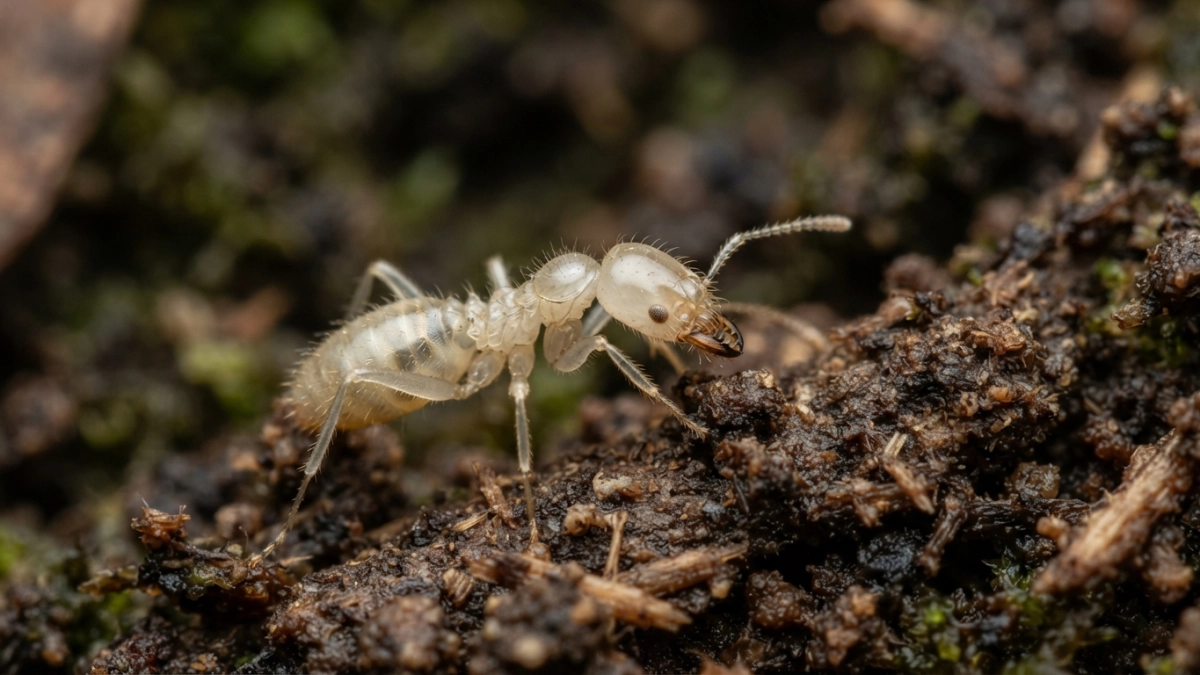
In the fascinating and highly organized world of entomology, few discoveries manage to spark as much curiosity among casual observers as stumbling upon a pure white ant. While standard outdoor exploration usually reveals insects clad in familiar shades of jet black, deep brown, or earthy reddish tones, encountering a pale, translucent specimen often leads to immediate misconceptions. The most common myth is that these ghostly creatures represent a rare, undiscovered, or highly exotic species of ant. However, science paints a completely different picture.
The striking whitish or nearly transparent coloration found in these insects is not a permanent genetic trait of a distinct species, but rather a temporary, highly specialized biological phase tied directly to the insect’s growth and maturation cycle. Far from being mutants or rare biological anomalies, these white ants are ordinary workers undergoing a normal, albeit fleeting, stage of early adult development.
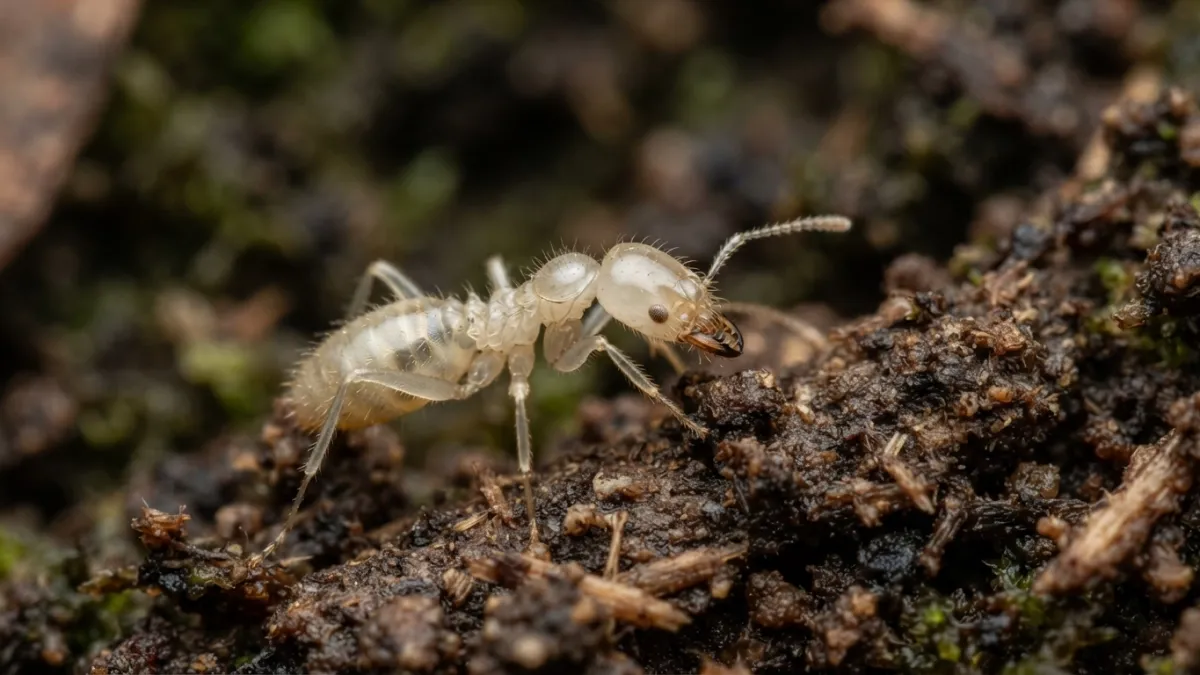
Understanding this phenomenon requires a journey into the microscopic and physiological mechanics of insect life. When an ant appears white, it is typically because it has very recently emerged from its pupal stage—the transitional cocoon phase in which the insect completely reorganizes its larval body into its adult form. During this delicate period, the exoskeleton of the newly minted adult has not yet hardened or acquired its definitive pigmentation.
While these pale workers spend the vast majority of their time safely shielded within the dark, humid confines of the underground nest where they are protected from predators and harsh environmental conditions, observant gardeners or homeowners occasionally spot them on the surface. These rare surface sightings capture a fragile moment in the insect’s life cycle—a brief window before its body reacts to the surrounding air and light, rapidly transforming its appearance into the standard dark or reddish hues recognized worldwide.

Chronology: From Pupa to Pigmented Adult
To fully grasp why these white ants exist, it is essential to look at the chronological timeline of their early development. The metamorphosis of an ant is a complex, four-stage process consisting of egg, larva, pupa, and adult (imago). The mystery of the white coloration occurs precisely at the climax of the third stage and the very beginning of the fourth.
Stage 1: The Emergence (Hour 0)
When the pupal skin finally splits, the newly formed adult ant—known scientifically as a teneral adult—emerges into the colony. At this precise moment, the insect’s cuticle (its outer exoskeleton) is entirely soft, flexible, and virtually devoid of melanin, the pigment responsible for dark coloration in insects. Because the internal organs, hemolymph (insect blood), and soft tissues are visible through the unpigmented, semi-transparent outer shell, the ant appears stark white, yellowish, or translucent.
Stage 2: The Process of Sclerotization (Hours 1 to 24)
Immediately following emergence, a crucial biochemical process called sclerotization begins. Sclerotization is the biological hardening of the insect cuticle. Proteins and chitin within the exoskeleton cross-link, transforming the soft, vulnerable skin into a rigid, protective armor. Simultaneously, enzymatic oxidation processes start depositing melanin into the outer layers of the cuticle. This causes the ant’s body to progressively darken, shifting from stark white to pale yellow, then light brown, and eventually to its mature, species-specific color.
Stage 3: Stabilization and Final Coloration (Hours 24 to 72)
According to comprehensive data provided by the Animal Diversity Web of the University of Michigan, the entire transformation—from a ghostly, pale newborn to a fully pigmented, hard-shelled adult ant ready for active colony labor—typically takes between 48 and 72 hours. During this timeframe, the ant remains largely confined to the inner chambers of the nest, tended to by older worker ants who feed and groom it until its exoskeleton is robust enough to withstand the rigors of external foraging and defense.

Supporting Data: Entomological Insights and Colony Dynamics
The biological mechanics governing insect coloration and development have been extensively studied by academic institutions and entomologists worldwide. The timeline of 48 to 72 hours for complete sclerotization is a well-documented baseline across multiple subfamilies of ants (Formicidae), though minor variations can occur depending on ambient temperature, humidity, and species size.
To understand the broader context of these insects, it helps to examine key data points regarding ant colonies and their developmental environments:

- Colony Demographics: In a mature ant colony, the vast majority of individuals visible on the surface are sterile female worker ants. Teneral (white) adults make up only a tiny fraction of surface traffic, usually appearing outside only when colony expansion forces rapid nest relocation or structural repairs.
- Environmental Catalysts: The sclerotization process is heavily dependent on atmospheric exposure. Oxygen plays a vital role in the chemical reactions that harden and darken the cuticle. Therefore, an ant trapped or exposed to open air prematurely will accelerate its color transition, though this can sometimes compromise the optimal hardening of its exoskeleton.
- The Termite Confusion: A common error made by the public is confusing "white ants" with subterranean termites. While termites are also pale, soft-bodied, and live in large colonies, they belong to an entirely different taxonomic order (Blattodea, related to cockroaches), whereas ants belong to Hymenoptera (related to bees and wasps). Termites remain pale throughout their entire lives because they avoid exposure to light, whereas true white ants are merely temporary newborns.
Official Responses and Scientific Perspectives
Entomologists and pest control experts frequently encounter questions from homeowners who panic upon discovering "white ants" invading their wooden structures or gardens. The scientific community consistently emphasizes education to prevent unnecessary chemical treatments or misplaced fears.
Dr. Elena Vance, a prominent entomologist specializing in social insect behavior, explains the phenomenon:

"When people call us reporting an infestation of white ants, 99 percent of the time they are either looking at termites—which require immediate professional attention—or they are simply observing freshly hatched carpenter ants or garden ants that have momentarily been exposed during a nest excavation. The white color is nothing to fear; it is simply nature’s way of showing us a newborn insect whose armor is still drying."
Agricultural extension services and university research departments echo this sentiment. They stress that true ants do not feed on dry structural wood the way termites do, and the presence of a few teneral, pale workers indicates a healthy, actively reproducing colony nearby rather than a structural emergency. Pest management professionals are trained to look past the color of the insect and examine structural morphology—such as the pinched waist, elbowed antennae, and body segmentation unique to ants—to provide accurate identifications.

Implications: Ecological Significance and Homeowner Awareness
The discovery of white ants carries several important implications, ranging from basic ecological appreciation to practical household management.
1. Ecological Resilience and Colony Health
The existence of teneral white ants highlights the complex, highly efficient division of labor within a colony. It demonstrates that the colony is actively producing new generations, maintaining a continuous workforce to replace aging or dying foragers. The fact that older worker ants protect these fragile, pale newborns underscores the sophisticated social cooperation that has allowed ants to conquer nearly every terrestrial ecosystem on Earth.

2. Distinguishing Pests: Ants vs. Termites
For homeowners, correctly identifying the nature of pale insects is critical. While a white, soft-bodied insect found deep inside structural timber is almost certainly a destructive subterranean termite requiring immediate extermination, a pale insect running across a garden stone with a distinct, segmented ant body is a harmless native ant experiencing its normal developmental phase. Misidentifying these insects can lead to unnecessary financial expenditures on heavy pesticides or, conversely, ignoring a severe termite infestation that could compromise a building’s foundation.
3. Broadening Public Scientific Literacy
Ultimately, the myth of the "white ant species" serves as a reminder of how much of the natural world operates just beneath our threshold of daily observation. By understanding processes like sclerotization and insect metamorphosis, the public gains a deeper appreciation for the intricate biology governing even the smallest creatures in our backyards. Science education turns a moment of creepy-crawly apprehension into an engaging lesson in natural history, fostering a greater respect for biodiversity and ecological balance.