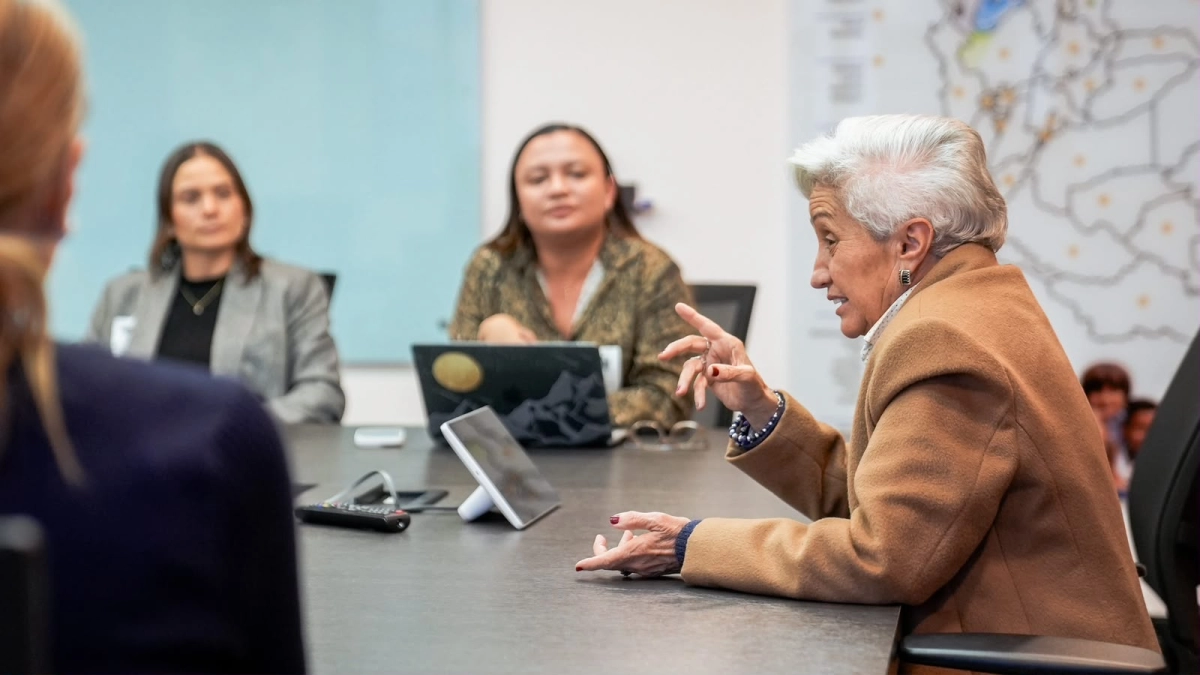
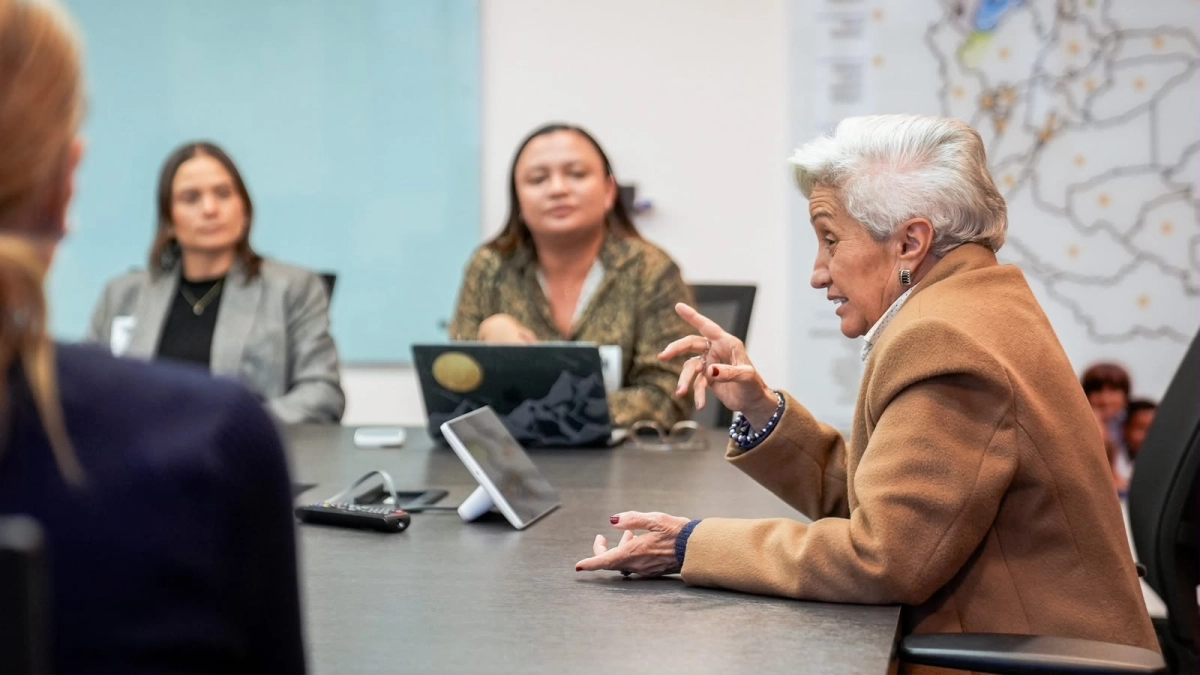
BOGOTÁ — In a sweeping intervention that exposes severe systemic vulnerabilities within Colombia’s premier educational evaluation agency, Minister of Education Ilva Myriam Hoyos Castañeda has leveled harsh criticisms against the Instituto Colombiano para la Evaluación de la Educación (ICFES). During a high-stakes board of directors meeting, Hoyos detailed a troubling landscape defined by potential exam security breaches, mounting legal battles, infrastructural underutilization, and a sharp ideological drift from national educational priorities.
The ministerial audit signals a turning point for the agency responsible for administering state examinations, including the critical Saber 11 tests. According to the Ministry, ICFES has devolved from a trusted national partner in educational quality into an isolated entity plagued by administrative disarray and political interference.
Main Facts: A Catalog of Crises at ICFES
The diagnostic presented by Minister Hoyos—who attended the board session alongside Vice Minister of Preschool, Basic, and Secondary Education Álvaro José Cifuentes Ramírez and newly appointed acting general director Maribel Castro Flórez—unveiled a multifaceted crisis. Among the most alarming findings are structural failures threatening the integrity of state evaluations and the institution’s legal standing:
Security and Chain of Custody Risks: Investigators and ministry officials highlighted potential vulnerabilities in the chain of custody governing high-stakes exams. These risks compromise the confidentiality and fairness of testing processes relied upon by millions of students.
Technological Bottlenecks: The institution maintains a heavy reliance on the Prisma platform for data management and test administration. However, the system currently lacks a single, accountable supervisor, creating operational blind spots.
Contractual Vulnerabilities: Critical logistics operations underpinning the delivery and execution of the Saber 11 examinations face severe contractual risks, threatening delays or administrative failure.
Legal Backlog: ICFES faces an extraordinary wave of litigation, having accumulated 1,276 legal injunctions (acciones de tutela) during the course of 2026 alone. Compounding this is the fact that the agency’s Legal Office is currently operating without a permanent head.
Inaccessibility for Vulnerable Populations: The review revealed a systemic absence of adequate support mechanisms and structural guarantees for test-takers with disabilities, raising civil rights concerns.
Physical Overcapacity and Waste: An inspection of the three floors currently leased by ICFES revealed that the sprawling office space is vastly underutilized, housing a fraction of the personnel required to justify the overhead.
Chronology of Events Leading to the Intervention
The friction between the Ministry of Education and ICFES did not materialize overnight. The institutional trajectory leading to the current intervention reflects years of policy shifts and operational drift:
2017: A critical turning point occurred when the government suspended censal evaluations for grades 3, 5, 7, and 9. This suspension stripped the educational sector of systematic, population-wide diagnostic data necessary to track foundational learning trends.
Early 2026: Accumulating complaints regarding technical platform instability, administrative delays, and rising legal challenges prompt the Ministry of Education to initiate a comprehensive review of ICFES’s internal operations.
November 11, 2026: Minister Ilva Myriam Hoyos Castañeda makes an official, unannounced inspection of the ICFES headquarters, personally touring the three subutilized floors and convening an extraordinary board of directors meeting.
November 11, 2026 (Midday): Maribel Castro Flórez is formally presented and poses as the newly designated acting general director, tasked with immediate stabilization efforts.
November 11, 2026 (Afternoon): The Ministry issues a public directive ordering strict adherence to national austerity guidelines, a renegotiation of physical office leases, the resumption of censal evaluations, and the immediate referral of any potentially corrupt or irregular contracting practices to relevant control bodies.
Supporting Data and Institutional Metrics
To understand the scale of the challenges facing ICFES, a review of the operational and legal metrics cited during the board meeting highlights the depth of the institutional strain:
1,276: The total number of acciones de tutela (constitutional legal protections) filed against ICFES in 2026 alone, demonstrating widespread dissatisfaction, administrative errors, or systemic barriers affecting citizens.
3: The number of office floors currently leased by ICFES in its headquarters. Minister Hoyos noted that the current physical plant could easily operate with less than a third of its spatial capacity, directly violating national austerity directives.
2017: The benchmark year marking the indefinite suspension of censal evaluations for primary and middle school grades (3, 5, 7, and 9), a policy the current administration has vowed to reverse.
1 Unified responsible party lacking for the Prisma technological platform, exposing a dangerous void in digital accountability.
Official Responses and Ministerial Directives
The response from the executive branch has been uncompromising. Minister Hoyos did not mince words when addressing the board, emphasizing that immediate structural reforms are non-negotiable.
"I must state that we are deeply concerned about the situation at ICFES. We are worried that ICFES has lost its mission, and we have to recover it. This was once one of the allied institutions of the Ministry of National Education on the issue of educational quality, and it has become an adversary," Minister Hoyos declared during the session.
Addressing the acting director, Maribel Castro Flórez, Hoyos issued direct orders regarding fiscal responsibility and operational footprint:
"The visit we have made to the three floors shows that not even a third of the workstations currently available in these ICFES facilities are required. One of the requests, Madam Director, will be to review the lease agreement and find a location consistent with the mission of ICFES within the framework of austerity that this Government has requested."
Furthermore, the Minister stressed that institutional integrity must be legally protected, instructing leadership to flag any irregularities for external oversight:
"Any event that warrants the intervention of control bodies must be reported to the competent authorities."
On the pedagogical front, Vice Minister Álvaro José Cifuentes Ramírez and the acting director were charged with spearheading structural changes to the evaluation models. These include the design of a new baseline for the Saber 11 tests incorporating international standards, the integration of socioemotional evaluation modules, and an aggressive expansion of electronic testing coverage.
Broader Implications for Colombian Education
The crisis at ICFES carries profound implications for the future of educational public policy in Colombia. For decades, the institute enjoyed a stellar international reputation as a pioneer in psychometric testing and educational measurement. However, critics and ministry officials argue that years of administrative drift, perceived political interference, and technical bottlenecks have eroded public trust.
1. Rebuilding Credibility and "Authority of Knowledge"
Minister Hoyos summarized the ultimate objective of the intervention as a battle for credibility. By stating that the agency has "lost the confidence" of the public and has become "politically compromised," the Ministry has staked its political capital on returning ICFES to its foundational ethos. Restoring the "authority of knowledge" requires absolute transparency in test administration, shielding exams from potential leaks, and ensuring that evaluation metrics accurately reflect student competencies.
2. The Return of Censal Evaluations
The decision to reinstate censal tests for grades 3 through 9 addresses a massive blind spot in national educational data. Without population-wide censal data since 2017, policymakers have relied on sample-based assessments, which struggle to capture localized learning deficits—particularly in rural and vulnerable communities. Reintroducing these evaluations will provide local secretariats of education and school administrators with the granular data needed to combat post-pandemic learning loss.
3. Modernization and Inclusivity
The shift toward international standards, socioemotional modules, and electronic testing reflects an effort to modernize Colombian education in alignment with global trends. However, this technical leap forward cannot succeed without addressing foundational equity issues. The revelation that the agency currently lacks robust support frameworks for disabled test-takers underscores an urgent moral and legal imperative that the new administration must resolve.
4. Fiscal Discipline and Good Governance
By forcing a downsizing of the physical headquarters, the Ministry is aligning ICFES with broader national austerity mandates. Beyond the immediate financial savings, streamlining the agency’s administrative apparatus is seen as a necessary precursor to rooting out inefficiencies, rationalizing the payroll, and rebuilding a cohesive institutional culture centered entirely on educational excellence rather than bureaucratic expansion.
Next Steps
The interim management team, led by Maribel Castro Flórez under the direct supervision of Vice Minister Álvaro José Cifuentes Ramírez, faces a compressed timeline. They must stabilize test security, clear the legal backlog, appoint a permanent head to the legal department, and lay the groundwork for the 2026–2027 testing cycles. The ultimate test of this intervention will be whether ICFES can successfully shed its recent controversies and reclaim its historical standing as a cornerstone of Colombian educational development.
By Edwin Caicedo | Environmental and Health Journalist Published: November 1, 2026 Main Facts: The Crisis at a Glance The Colombian educational landscape has entered a period of heightened uncertainty following a sweeping administrative decision…
By: Editor Vida Published: September 24, 2026 As the global climate crisis continues to accelerate, putting intense pressure on governments, industries, and civil society, institutions of higher education are increasingly being called upon to lead…
BOGOTÁ, COLOMBIA — As the 82nd General Assembly of the Inter American Press Association (IAPA / SIP) drew to its conclusion in Bogotá, media executives, investigative reporters, and industry leaders grappled with a rapidly transforming…