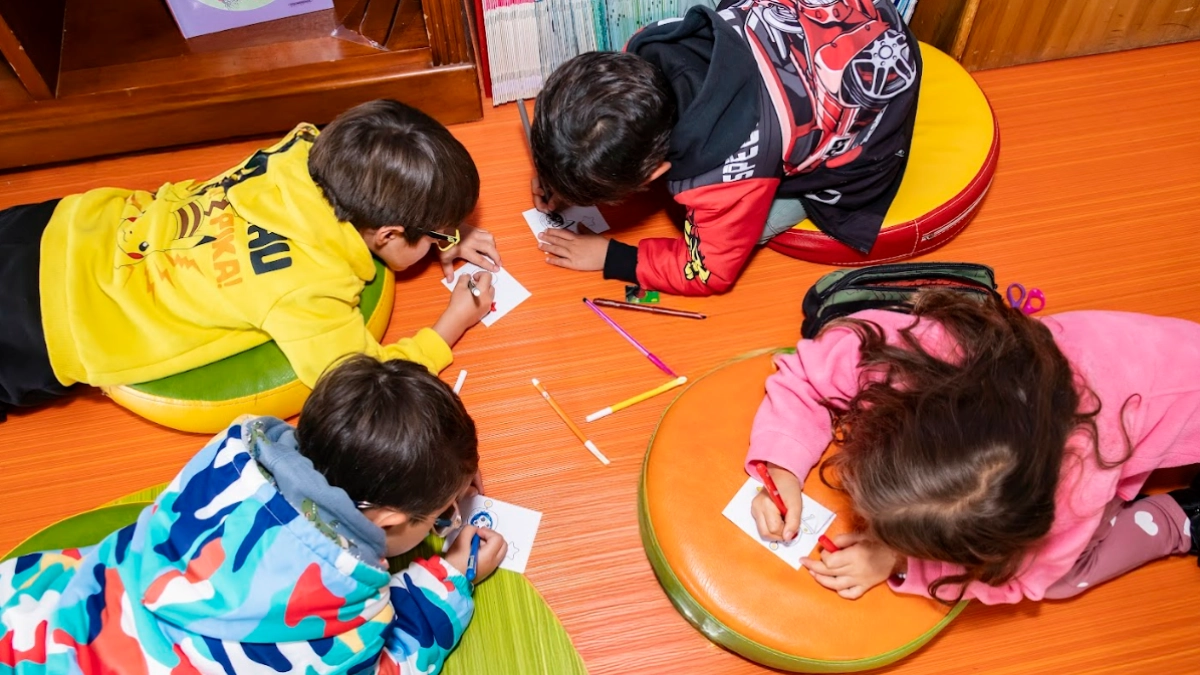
CIUDAD DE MÉXICO — As the international community faces the looming 2030 deadline for the United Nations Sustainable Development Goals (SDGs), high-level representatives from across Latin America have converged in Mexico City for a landmark event. Running through November 12, the 1st Latin American Early Childhood Investment Summit brings together government officials, multilateral organizations, private sector stakeholders, and civil society leaders to forge a unified regional strategy. The core objective is unmistakable: to position early childhood development (ECD) as the non-negotiable bedrock of regional progress, tackling deep-seated structural vulnerabilities before time runs out.
Promoted jointly by UNICEF, Theirworld—driving forces behind the global Act for Early Years campaign—alongside the Latin American Coalition for Early Childhood Networks (Somos Crianza), Mexico’s Ministries of Governance and Foreign Relations, the Early Childhood Pact of Mexico, the Inter-American Development Bank (IDB), the World Bank, and the Development Bank of Latin America and the Caribbean (CAF), the summit addresses a harsh reality. Despite rhetorical commitments from various administrations across the region, financing mechanisms remain fragile, leaving millions of children without access to quality early learning, health, and care services.
Main Facts: A Regional Crisis at a Critical Crossroads
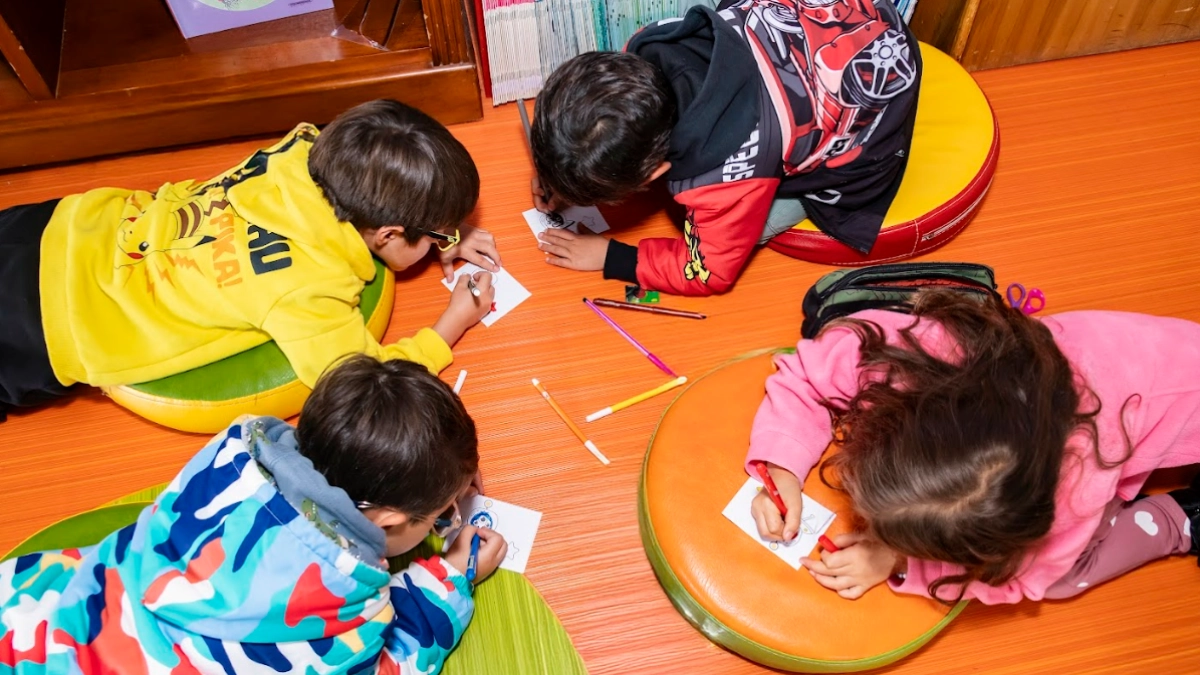
The urgency of the Mexico City summit is underscored by alarming statistics regarding poverty and developmental exclusion. While regional expansions in early education have successfully integrated roughly two out of every three children aged 3 to 5 into formal systems, the vast majority of children under the age of 3 remain entirely excluded from integrated, high-quality care frameworks.
Compounding this exclusion is a staggering economic disparity: more than 40 percent of all children in Latin America live in poverty, a rate significantly higher than that of the adult population.

“Something very concerning is happening when you consider that we are reaching the end of the deadline to meet the established SDG targets,” warns Ángela Constanza Jerez, national coordinator of NiñezYA, a Colombian network affiliated with Somos Crianza. She points directly to SDG Target 4.2, which mandates ensuring that all girls and boys have access to quality early childhood development, care, and pre-primary education services. With 2030 fast approaching, current regional trajectories suggest a profound failure to meet these commitments unless immediate, aggressive financial restructuring occurs.
Chronology and Context: Ten Years of Colombia’s State Policy and Regional Milestones
To understand the weight of the discussions in Mexico City, one must examine the institutional evolution of early childhood policy in the region, particularly in path-breaking nations like Colombia.

- August 2016: Colombia marks a major historical milestone by promulgating Law 1804, transforming the successful De Cero a Siempre (From Zero to Forever) strategy into a binding State Policy. This legislative milestone shields early childhood from the shifting political whims of changing presidential administrations, cementing the legal principle that children from gestation to age five are active citizens and rights-holders, rather than passive recipients of charity.
- 2016–2026: Over its first decade, Law 1804 survives three National Development Plans, a global pandemic, and an unprecedented migration shock in South America. Sustained technical, regulatory, and budgetary efforts drive up coverage—growing from 566,000 comprehensively attended children in 2010 to 2,066,422 by the close of 2025.
- October 2025: Civil society organizations aeioTU (active in Colombia, Panama, and Mexico) and Semillas de Apego are recognized by Somos Crianza as Significant Early Childhood Experiences in Latin America for their pioneering work in transforming violent and crisis-ridden contexts through education and mental health support.
- November 11–12, 2026: The 1st Latin American Early Childhood Investment Summit convenes in Mexico City, aiming to convert a decade of national learnings into a binding, continental fiscal pact.
Supporting Data: The Gaps Between Policy and Reality
Despite a decade of structural reinforcement, sharp disparities persist between official policy frameworks and on-the-ground realities.
The Colombian Case Study
According to the National Department of Planning (DNP) report covering poverty trends from 2023 to 2025, overall monetary poverty among early childhood populations (ages 0 to 5) stood at 12.7 percent. However, this national average masks a glaring geographic divide: urban child poverty sat at 6.6 percent, while rural child poverty soared to 26.4 percent. Furthermore, UNICEF’s broader metrics place monetary poverty for the same age cohort at an alarming 44.8 percent, warning that such economic deprivation permanently compromises cognitive development, learning capacity, and lifelong health.

Furthermore, data from the Comprehensive Development Monitoring System (SSDI) reveals that in 2023, only 34 percent of young children had fulfilled six or more of the ten prioritized services mandated by Law 1804. These essential provisions include:
- Valid identification documents.
- Active health insurance affiliation.
- Complete immunization schemas.
- Comprehensive health assessments.
- Adequate nutritional requirements.
- Ongoing nutritional monitoring.
- Early education within an integrated framework.
- Family-strengthening processes.
- Access to pedagogically, culturally, and literary enriched environments.
- Access to supervised recreation programs.
While early education acts as the vital gateway to these services—boasting an aggregate national coverage rate of 76.53% according to the Sinergia system—extreme regional inequalities persist. In remote departments such as Vichada, Guainía, and Vaupés, early education coverage remains critically below 25 percent.

The Macroeconomic Shortfall
Public spending on early childhood in Colombia has grown steadily since 2012, currently surpassing 7 trillion pesos in compliance with Article 25 of Law 1804, which mandates escalating resources consistent with the Medium-Term Fiscal Framework.
Nevertheless, experts argue this funding remains insufficient. Estimates from the Laboratory of Educational Economics at Pontificia Universidad Javeriana and Red PaPaz indicate that Latin American nations must allocate an additional 0.3 percent of GDP—on top of the current 0.83 percent regional baseline—to match Organisation for Economic Co-operation and Development (OECD) standards. Such investments are vital to adapt official school infrastructure (child-sized bathrooms, desks, and didactic materials), eliminate rural nutritional deficits, and fund full-day schooling with integrated feeding programs akin to those run by the Colombian Institute of Family Welfare (ICBF).

Official Responses and Stakeholder Perspectives
As leaders take the podium in Mexico City, structural challenges, protracted conflicts, and climate emergencies take center stage.
- Institutional Shielding: Diana Ureña, an early childhood consultant, notes that Law 1804 succeeded in establishing an irrefutable moral and legal standard: "The law established that girls and boys from gestation to 5 years old are not passive recipients of charity or objects of guardianship, but full subjects of rights, active citizens, and the structuring axis of the country’s development." She stresses that despite administrative transitions and external shocks, the institutional scaffolding has largely held, supported by platforms like the SSDI which cross-reference data from multiple ministries and the ICBF.
- The Fiscal Imperative: Carlos del Castillo, coordinator of the First Childhood in Crisis Coalition, emphasizes that while public expenditure has climbed, crisis contexts demand dynamic responses. "We also require strengthening comprehensive care for early childhood children and caregivers in contexts of prolonged crises, and especially in situations of emergencies derived from conflict, disasters, climate crises, and migration," Castillo asserts.
- Civil Society Innovation: Representing Colombia alongside diplomatic channels, the NiñezYA coalition highlights ground-level resilience models. Organizations like aeioTU—with 18 years of experience transforming violence and inequality through quality education—and Semillas de Apego—which has spent a decade stabilizing the mental health of parents and caregivers caught in Colombia’s conflict and displacement zones—demonstrate that social recovery is inextricably linked to early childhood support.
Implications for the Future of Latin America
The outcomes of the 1st Latin American Early Childhood Investment Summit will reverberate far beyond the conference halls of Mexico City. If regional governments fail to translate high-level rhetoric into concrete fiscal commitments by the 2030 deadline, millions of children will remain trapped in cycles of structural poverty, malnutrition, and educational exclusion.

Conversely, a successful regional pact could secure the necessary capital to universalize pre-primary education, upgrade rural health infrastructure, and institutionalize mental health support for caregivers. For Latin America, the message echoing from the summit is clear: investing adequately in the first five years of life is not merely a social welfare expense, but the single most potent economic and security strategy available to the region’s future.