By Edwin Caicedo Environment and Health Journalist
Main Facts
The intersection of renewable energy generation and agricultural production is shifting from a theoretical concept into a tangible, highly efficient reality. Recent scientific findings—bolstered by localized implementations—demonstrate that solar panel arrays can do much more than simply harvest clean electricity; they can curate a specialized microclimate capable of sustaining robust agricultural yields.
A landmark study spearheaded by the University of Massachusetts Amherst, with funding from the United States Department of Energy, has revealed that cultivating crops beneath photovoltaic (PV) structures is entirely feasible. Under specific conditions, these shaded microclimates yield crops whose production volumes and quality metrics are comparable to—and in some environmental stressors, competitive with—those grown in traditional plots directly exposed to intense sunlight.
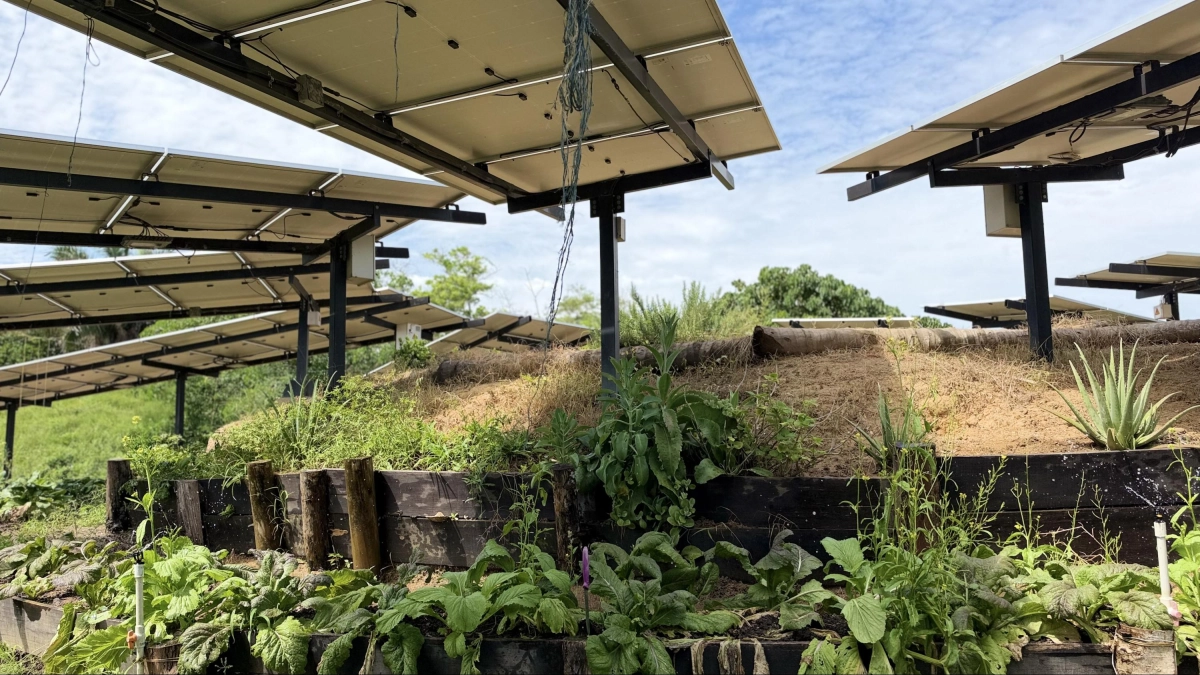
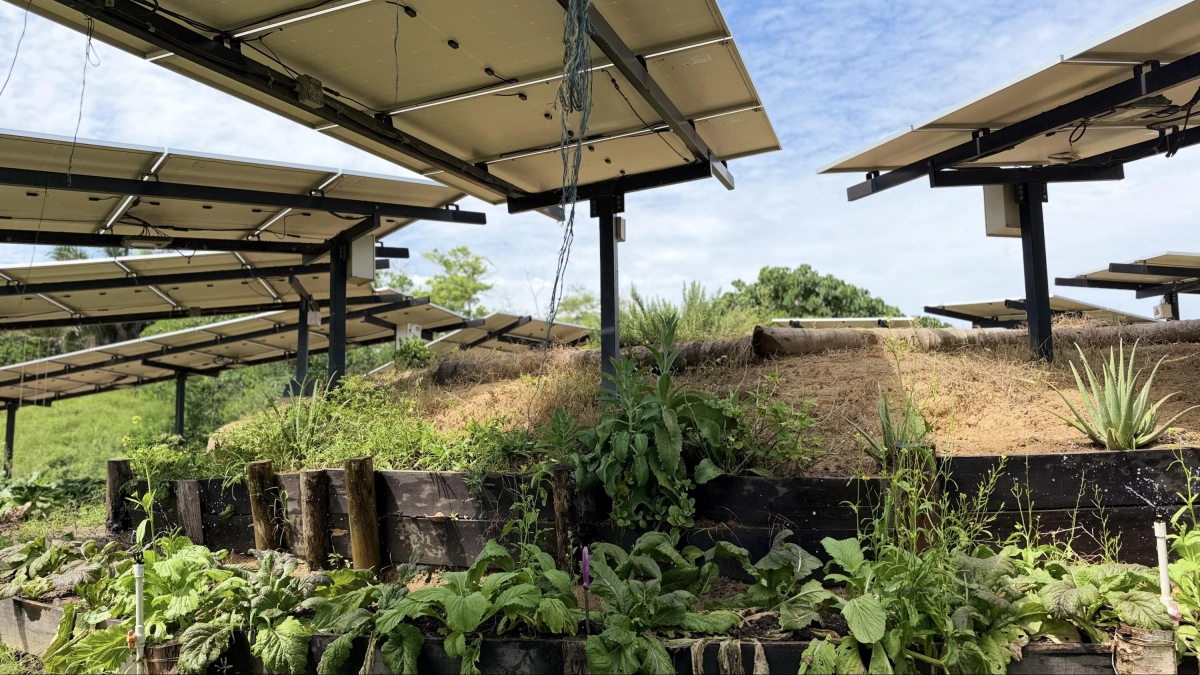
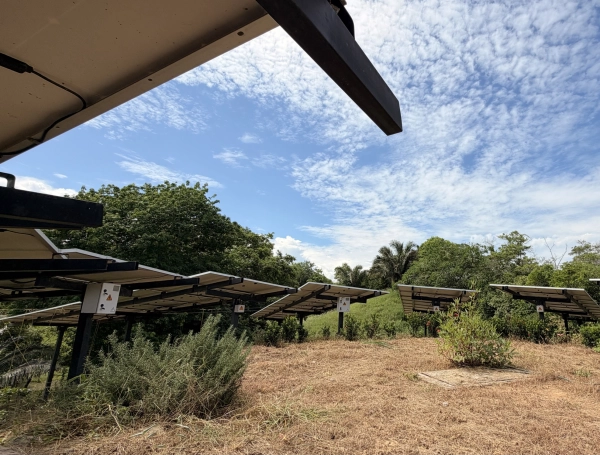
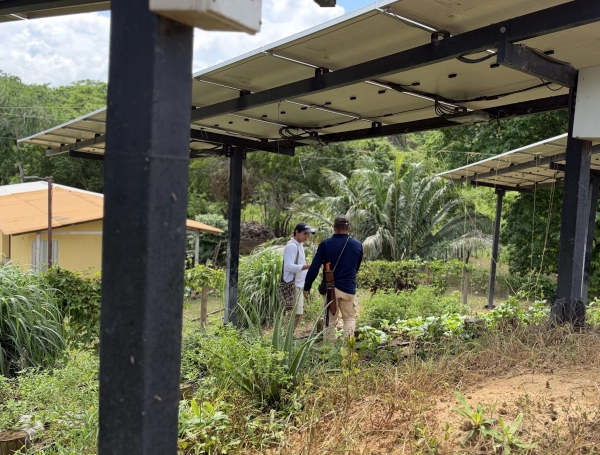
While international research lays down the scientific groundwork, practical applications of this model—commonly known as agrivoltaics—are already proving successful in diverse regions, including the tropical backdrop of Palomino, La Guajira, in northern Colombia. At the Eco Resort Aité, a pioneering hospitality and sustainability initiative, solar infrastructure serves a dual purpose. Not only does it supply clean energy to power the eco-resort, but the space directly beneath and surrounding the solar arrays hosts an expansive organic garden.
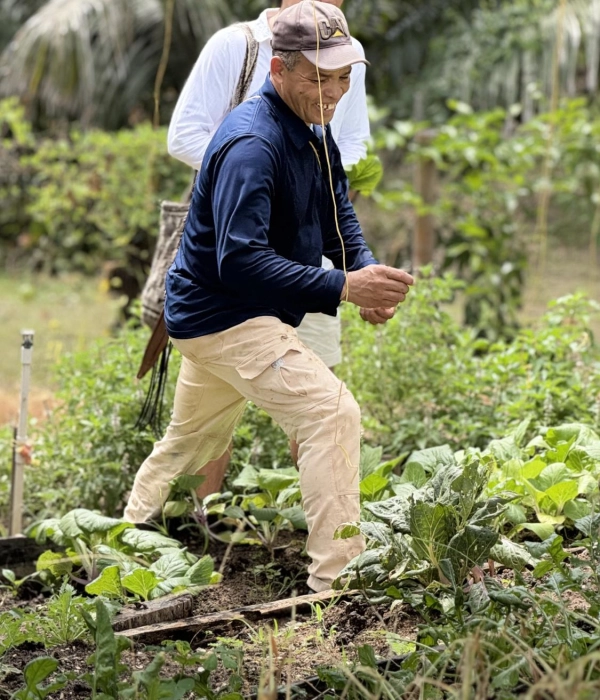
Here, items such as arugula, basil, Swiss chard, turmeric, and various culinary herbs thrive under the moderated temperatures created by the PV panels. Furthermore, the very same solar framework powers an advanced, automated irrigation system that keeps the crops hydrated. This synthesis of green energy and food production reduces external supply chain dependencies, optimizes land use, and redefines what sustainable development looks like in vulnerable or resource-constrained ecosystems.
Chronology
To understand how agrivoltaics evolved from an experimental academic pursuit into real-world applications across different hemispheres, it is essential to trace its timeline:
The Pioneers of Palomino (1970s): Long before solar panels or modern agrivoltaics were part of the vernacular, founders Carlos Samper and Martha Herrera arrived in Palomino, La Guajira, at a time when the region lacked even basic roadways. They constructed two simple beachfront cabins, laying the foundational ethos of coexistence with nature that would eventually evolve into the Eco Resort Aité.
The Modern Expansion of Aité: Over the decades, the humble two-cabin outpost expanded responsibly into a 21-room-and-cabin eco-resort spanning 200 meters of pristine Caribbean coastline. Sustainability became the guiding philosophy, prompting the integration of renewable solar energy systems to meet the property’s electricity demands.
The UMass Amherst Research Initiative: Funded by the U.S. Department of Energy, researchers at the University of Massachusetts Amherst launched comprehensive studies to analyze how photovoltaic installations alter ambient temperatures, soil moisture evaporation, and plant physiological responses. Their findings confirmed that shade-tolerant and select sun-loving crops could maintain high yields under optimal panel heights and spacing.
Integration of Agrarian Tech in Colombia (Present Day): Driven by agricultural technician Edward Enríquez, Eco Resort Aité took the leap from purely generating solar power to utilizing the shaded footprint beneath the panels for organic farming. What started as small trial patches evolved into a systematic, closed-loop garden supplying the resort’s restaurants—Wazalé and Siki Bar—with fresh greens, herbs, and roots. Simultaneously, global research continued to validate that carefully engineered solar farms could successfully double as arable land.
Supporting Data
The viability of agrivoltaics relies heavily on environmental data, crop selection, and engineering specifications. The UMass Amherst study, alongside observations from applied projects like the one in Palomino, provides concrete metrics on how these systems operate:
Microclimatic Alteration: Photovoltaic panels intercept a significant percentage of direct solar radiation. This creates a shaded zone beneath the arrays that lowers ambient temperatures during peak heat hours and reduces soil moisture evaporation rates—a vital asset in arid or semi-arid regions like La Guajira.
Crop Diversification and Yield: Under the panels at Eco Resort Aité, a meticulously managed polyculture thrives. The harvest includes:
Leafy Greens & Herbs: Arugula, Chinese mustard, Swiss chard, peppermint, rosemary, and multiple basil varieties (including Genovese and purple-stemmed).
Roots & Vegetables: Turmeric, scallions, chives, rue, and cherry tomatoes.
Fruits & Perennials: Passion fruit (maracuyá), plantains, and Jamaica flower (flor de Jamaica).
Seed Autonomy and Circular Economy: Eschewing the continuous purchase of commercial seeds, the agricultural team at Aité practices selective breeding. Certain mature plants are allowed to flower and complete their biological cycles, after which viable seeds are harvested, stored, and replanted for subsequent agricultural cycles.
Energy-Water Nexus: The energy generated by the rooftop and ground-mounted solar arrays directly powers the irrigation pumps, creating a closed-loop system where electricity sustains the water supply, and the water, in turn, nourishes the plants that feed guests.
Official Responses
Experts, researchers, and on-the-ground practitioners emphasize that while agrivoltaics holds immense promise, it requires careful planning rather than a one-size-fits-all approach.
Edward Enríquez, Agricultural Technician at Eco Resort Aité:
"Since we already have the solar panels in place to capture energy, we decided to leverage that exact infrastructure to develop a 100 percent organic garden. The core idea is that everything we grow here goes straight from the earth into our kitchens to be enjoyed by our guests. Furthermore, we harness the clean energy produced by these panels to run our entire irrigation system. We don’t maintain an excessive surplus; instead, our process is precise: we plant what we consume. Once a harvest concludes, we renew the plots and replant, keeping production perfectly aligned with kitchen demands."
Enríquez also highlights their commitment to seed sovereignty:
"We only purchased commercial seeds once at the very beginning. Now, our goal is to recover them directly from our own crops. We let specific plants flower and reach full maturity. Once the seeds are ready, we collect them for the next sowing cycle. This ensures we can sustain our agricultural production indefinitely without needing to buy new seeds every single time."
Academic and Scientific Consensus:
Lead researchers behind the U.S. Department of Energy-backed studies caution that while results are overwhelmingly positive, the success of agrivoltaics depends on several localized variables. Plant species sensitivity, the elevation and tilt angle of the solar arrays, seasonal weather variations, and local soil composition dictate which crops will thrive. Consequently, agricultural experts emphasize that agrivoltaics is not a universal panacea for all farms, but rather a highly adaptable tool that requires regional tailoring.
Implications
The integration of agriculture and photovoltaic energy generation carries profound economic, environmental, and spatial implications for the future of global land use:
1. Land-Use Optimization and Conflict Resolution
For decades, a false dichotomy has existed between renewable energy expansion and agricultural preservation. Large-scale solar farms often require vast tracts of land, occasionally triggering conflicts over whether acreage should be dedicated to food security or clean energy. Agrivoltaics completely neutralizes this conflict by utilizing the exact same footprint for both pursuits. Land dual-use maximizes economic returns per square meter, making it an attractive proposition for landowners and corporate developers alike.
2. Climate Resilience and Adaptation
As global temperatures rise and weather patterns become increasingly erratic due to climate change, farming faces unprecedented stress from extreme heat and drought. The microclimate generated by solar panels—characterized by reduced thermal stress and conserved soil moisture—acts as a natural buffer. This protective canopy can shield vulnerable crops from scorching sun angles and heavy downpours, offering a viable adaptation strategy for farmers operating in vulnerable or rapidly warming latitudes.
3. Decentralized Sustainability and Tourism
Projects like the Eco Resort Aité demonstrate how micro-scale agrivoltaics can transform the hospitality and tourism sectors. By sourcing ingredients steps away from where they are served, establishments drastically reduce their carbon footprint, minimize supply chain vulnerabilities, and educate the public. When guests actively tour the gardens and witness the integration of solar tech and organic farming, it fosters a deeper cultural appreciation for sustainable living and resource conservation.
4. Future Outlook for Public Policy and Investment
As empirical data accumulates from research institutions in North America and applied models in South America, governments and financial institutions are beginning to take notice. Future policy frameworks may incorporate incentives or subsidies for agricultural enterprises that adopt dual-use solar technologies. Ultimately, agrivoltaics points toward a harmonious future where the energy transition and food production no longer compete for space, but instead reinforce one another beneath the life-giving warmth of the sun.
By Editorial Staff Updated: July 4, 2026 The month of June 2026 will be etched into history as one of the most punishing meteorological chapters for the European continent. As record-shattering temperatures swept across the…
By Edwin Caicedo | Environmental and Health Correspondent In the arid landscapes of La Guajira, a department often defined by its stark climatic challenges and historical socioeconomic disparities, a quiet revolution is taking root. From…
By Edwin Caicedo | Environment and Health Journalist Published: October 22, 2026 Main Facts In an unprecedented display of civic mobilization and technical rigor, more than 160 young leaders representing 130 organizations and spanning 25…