By: Economic Desk | November 8, 2026
In a decisive move to fortify national energy security and mitigate the risks of supply shortages, the Colombian Government has officially designated the rehabilitation of the binational "Antonio Ricaurte" gas pipeline as a Project of National and Strategic Interest (PINES). This classification acts as a legislative "fast track," allowing for the streamlining of bureaucratic hurdles and the synchronization of public entities under the direct oversight of the Vice Presidency of the Republic.

The objective is clear: to restore the functionality of the 225-kilometer pipeline that connects the department of La Guajira in Colombia with the Lake Maracaibo region in Venezuela. With the project now officially fast-tracked, the government anticipates the pipeline will be fully operational within eight months, targeting a reopening date between June and July 2027.
Main Facts: The Scope of the Operation
The rehabilitation of the Antonio Ricaurte pipeline is not merely a technical repair; it is a geopolitical and economic maneuver designed to diversify Colombia’s energy matrix. Once operational, Ecopetrol, the state-run oil and gas giant, is set to import an initial volume of 50 million standard cubic feet per day (mpcd).

While this initial intake is projected to cover approximately 5% of the total national demand, the infrastructure holds a significantly higher strategic value. The pipeline boasts a maximum transport capacity of 450 mpcd—nearly half of the country’s current daily consumption. By unlocking this capacity, the government aims to create a reliable cushion against the volatility of local production and the increasing challenges posed by climatic phenomena.
The project has moved at an unprecedented pace. According to Germán León, Director of Hydrocarbons at the Ministry of Mines and Energy, the classification as a "Strategic Project" was achieved in a record time of just one week, thanks to a high-level collaborative effort between the public sector and private industry stakeholders.
Chronology of the Initiative
The road to the current revitalization began as a necessity driven by fluctuating domestic production and the need for affordable energy imports.
- October 2026: Preparatory security assessments and engineering feasibility studies were finalized under the direction of the Ministry of Defense. General (r) Mauricio Moreno confirmed that field operations have been underway for the past month, focusing on the integrity of the infrastructure.
- November 2026: The government officially declares the pipeline a PINES project, clearing the path for the mobilization of resources and inter-institutional coordination.
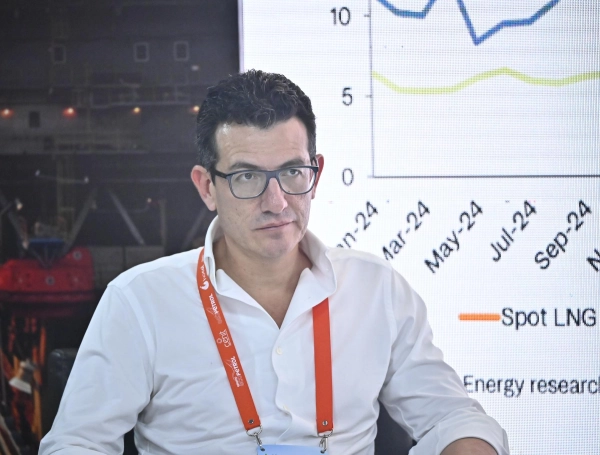
- November 5, 2026: During the IX Oil, Gas, and Energy Summit, the Transportadora de Gas Internacional (TGI) formally presented its technical proposal and availability to lead the restoration of the pipeline.
- Target (Q2/Q3 2027): Completion of repairs and the arrival of the first 50 mpcd of natural gas from Venezuela.
Technical Challenges and Engineering Requirements
The restoration of the Antonio Ricaurte pipeline is a complex undertaking. The infrastructure consists of 26-inch helical pipes that have remained largely dormant for years. Jorge Henao, General Manager of TGI, emphasized that this is not a "simple repair" but a high-stakes engineering feat.

"Those of us who have had the privilege of working in Venezuela understand the challenges of that specific terrain and the technical nuances of the pipeline’s design," Henao stated during the industry summit. TGI has pledged its full technical arsenal, including its 75 compression units and a combined power capacity of 200,000 horsepower, to the project.
To successfully integrate the Venezuelan gas into the Colombian grid, the gas must be pressurized to 1,200 PSI. TGI’s infrastructure is currently being audited to ensure it can manage this pressure threshold seamlessly upon the reactivation of the conduit.

Economic Implications: Cost-Efficiency and Energy Pricing
One of the primary drivers behind the government’s decision is the significant cost differential between importing gas via pipeline versus importing liquefied natural gas (LNG).
Nelson Castañeda, President of the Colombian Association of Petroleum (Campetrol), highlighted the economic logic: "Bringing gas via pipeline avoids the expensive and energy-intensive cycle of cooling, liquefying, shipping, and re-gasifying. It is the most practical and cost-effective path for the country."

Currently, Colombia faces international market prices ranging from $25 to $30 per million BTU for imported LNG. By contrast, the supply secured from Venezuela is expected to arrive at a fraction of that cost. This price gap is critical for domestic industry competitiveness and the maintenance of affordable utility rates for Colombian households.
While the 50 mpcd import is a welcome relief, industry experts like Henao suggest that the country must not stop there. He advocates for a multi-pronged approach that includes large-scale regasification terminals, such as the one TGI is developing in La Guajira. That project, if sanctioned, could provide 300 to 400 mpcd of capacity, potentially bringing imported gas to market at a competitive price of roughly $11 per million BTU by 2028.

Official Responses and Strategic Security
The project enjoys the full backing of the Presidential office. President Abelardo De La Espriella has prioritized this initiative as a cornerstone of his energy security policy.
General (r) Mauricio Moreno, who oversees National Security for the Ministry of Defense, emphasized that the logistical security of the pipeline is a primary focus. "Bringing gas from Venezuela to Colombia is a matter of strategic importance. We are working around the clock to ensure that the physical infrastructure and the surrounding territories are secure, allowing for the rehabilitation to proceed without interruption," Moreno noted.

The government’s strategy is not to rely solely on the Antonio Ricaurte pipeline, but to build a robust safety net. By integrating the Venezuelan pipeline with existing and future regasification plants in the Caribbean and the Pacific, the administration aims to create an "energy buffer" that can withstand both climate-related disruptions—such as the El Niño phenomenon—and potential declines in domestic well production.
Conclusion: A New Era of Energy Diplomacy
The reactivation of the Antonio Ricaurte pipeline marks a pragmatic shift in Colombian energy policy. By prioritizing speed and infrastructure rehabilitation over the construction of entirely new, long-lead-time projects, the government is signaling a commitment to immediate energy stability.

While the technical hurdles remain significant, the synergy between TGI’s engineering expertise and the government’s administrative fast-tracking suggests that the project is on solid footing. As the countdown to mid-2027 begins, the eyes of the energy sector remain fixed on the border, where the flow of gas could soon signify a new chapter in regional energy cooperation and internal price stability for Colombia.
The success of this project will likely set a precedent for how the state manages future energy infrastructure, balancing technical requirements with the urgent need for competitive and reliable energy sources in an increasingly volatile global market. For now, the administration remains confident that by June or July 2027, the "Antonio Ricaurte" will once again serve as a vital artery for the nation’s growth.