By Economic Reporting Desk
Updated: November 7, 2026
In a high-stakes effort to stabilize Colombia’s infrastructure sector, the National Infrastructure Agency (ANI) has launched an aggressive "de-escalation" strategy aimed at resolving a backlog of complex contractual disputes. Ricardo Ayerbe, who took the helm of the agency just three months ago, revealed that his administration inherited a legal landscape dominated by 44 active arbitration tribunals, with total claims against the state reaching a staggering 16.27 trillion Colombian pesos (COP).
This legal quagmire, which threatened to drain public coffers and stall critical development projects, has become the primary focus of the agency’s new leadership. By shifting from a confrontational litigation posture to a model of direct negotiation and technical mediation, the ANI seeks to safeguard the national interest while ensuring the continuity of the country’s 4G and 5G road networks and airport expansions.
The Scale of the Crisis: 16.27 Trillion Pesos at Risk
Upon assuming his position, Ayerbe conducted a comprehensive audit of the agency’s legal portfolio. The findings were sobering: the 44 active arbitration tribunals represented not only a significant financial liability but also a massive bureaucratic burden that diverted resources from the actual execution of road, port, and airport projects.

Of these 44 cases, the ANI identified 24 as "critical," representing the lion’s share of the financial exposure—approximately 12.06 trillion pesos. These disputes often stem from disagreements over contract equilibrium, unforeseen geological conditions in mountain passes, and delays caused by social or environmental permitting hurdles.
"Our goal is not to abandon the state’s legal defense, but to recognize that protracted arbitration is often the most expensive path for all parties involved," Ayerbe stated during his briefing. "By fostering direct dialogue, we are finding common ground that keeps projects moving and protects the public budget."

Chronology of the Strategy: A Three-Month Sprint
The strategy implemented by the current administration has been characterized by rapid intervention and personal involvement from the agency’s top leadership.
- Months 1-2 (Audit and Classification): The ANI team mapped the 44 pending tribunals, categorizing them by complexity, financial impact, and technical viability for settlement.
- Month 2 (Direct Intervention): President Ayerbe assumed personal oversight of the five most contentious and high-profile projects, including the Chirajara–Fundadores (Coviandina) and Bogota–Villavicencio (Coviandes) corridors.
- Month 3 (Active Negotiation): The agency initiated formal mediation in 12 of the tribunals. This phase has already resulted in the suspension of five active arbitration processes, signaling a successful pivot toward settlement-based conflict resolution.
This rapid turnaround has already yielded tangible results: the ANI reports that it has successfully "alleviated" or mitigated claims totaling 7.54 trillion pesos. This reduction represents a massive win for the national treasury, preventing what could have been long-term capital outflows.

High-Profile Cases: The Frontlines of Negotiation
The complexity of Colombian geography and the legal intricacies of Public-Private Partnerships (PPPs) have placed several marquee projects at the center of the dispute.
The Chirajara and Villavicencio Corridor
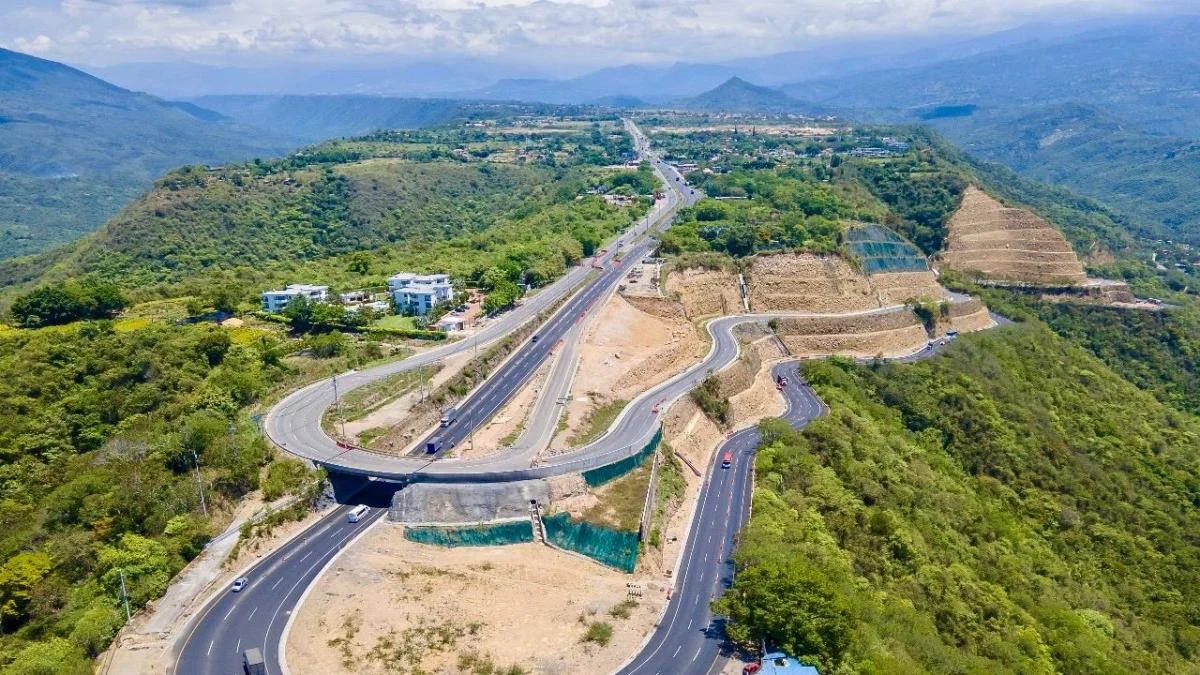
The Chirajara–Fundadores and Bogota–Villavicencio routes are the lifeline of the country’s central region. Disputes here have historically been defined by extreme technical challenges and cost overruns. By taking direct control of these files, the ANI is aiming to reach a definitive agreement that ensures the structural integrity of the roads while settling historical debt balances.
Perimetral Oriental de Bogota
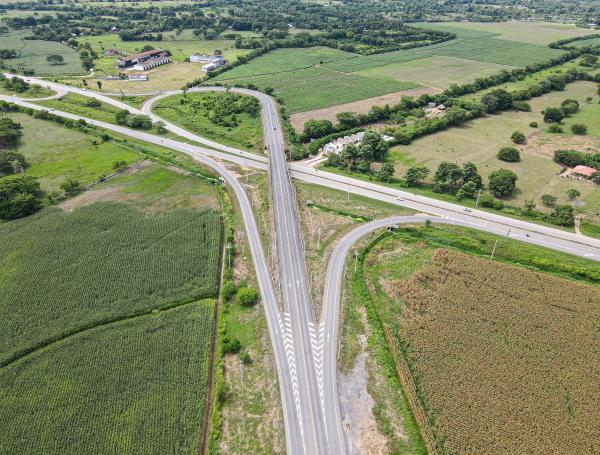
One of the most complex cases currently under review is the Perimetral Oriental of Bogota. With claims exceeding 2.1 trillion pesos, this project has been a source of legal friction for years. The ANI is currently in advanced negotiations to liquidate the contract in a manner that avoids a total loss for the state, aiming to salvage as much infrastructure value as possible while closing the litigation chapter.
Success in Muelle 13
A notable achievement has been the resolution of the Muelle 13 dispute. Through a signed memorandum of understanding, the agency secured an estimated saving of 30 million USD for the Nation. This success story serves as the template for the agency’s broader policy: creating "points of encounter" where the state and private concessionaires can reach a mutually beneficial financial adjustment rather than waiting for a judge’s ruling.

Supporting Data: Infrastructure Investment Outlook
While the legal cleanup continues, the ANI is simultaneously looking forward. The administration has unveiled a robust infrastructure portfolio in the design and structuring phase, totaling 39.4 trillion pesos in projected investment.
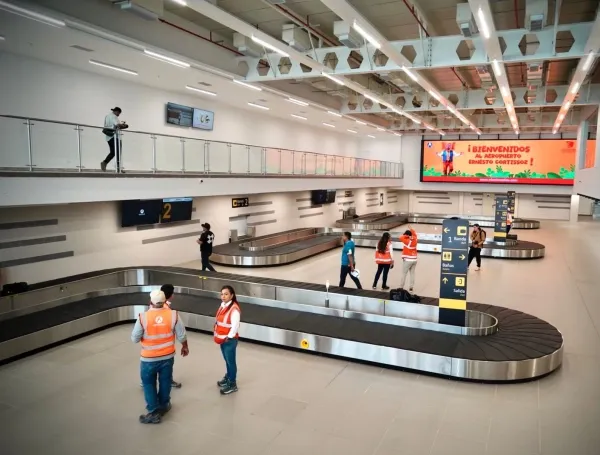
This capital is earmarked for the modernization of four strategic national airports, aimed at positioning Colombia as a competitive hub in the Latin American logistics and tourism sectors. The logic is clear: the faster the agency resolves the "legal debt" of the past, the faster it can unlock the "infrastructure credit" of the future.

Summary Table: Financial Mitigation Efforts
| Category | Value (COP) |
|---|---|
| Total Initial Claims (44 Tribunals) | 16.27 Trillion |
| Critical Litigation Focus (24 Tribunals) | 12.06 Trillion |
| Mitigation/Savings Realized (to date) | 7.54 Trillion |
| Future Investment Portfolio (Struct.) | 39.40 Trillion |
Official Responses and Stakeholder Perspectives
Industry observers have largely welcomed the shift in tone. For years, concessionaires had complained that the ANI’s rigid stance on legal interpretation made settlement impossible, forcing both parties into expensive and lengthy arbitration processes that often lasted years.
"The willingness of the current administration to sit down and negotiate technical adjustments rather than relying solely on legal counsel is a welcome change," said a representative from a major construction consortium. "It provides the legal certainty that investors need to continue pumping capital into Colombian infrastructure."
However, the opposition and some oversight bodies remain cautious. The concern, as always, is whether these settlements truly represent the best interest of the public or if they constitute a concession to private interests. President Ayerbe has countered these concerns by emphasizing that every agreement is backed by rigorous technical and financial audits, ensuring that the state does not pay for delays or inefficiencies that were not clearly the responsibility of the public entity.
Implications: A New Era for Colombian Infrastructure
The implications of the ANI’s current strategy extend far beyond the 16.27 trillion pesos in litigation. If successful, this model could redefine how the Colombian state handles public-private conflicts.
- Fiscal Stability: By reducing the volatility of legal threats against the state, the government can better forecast its fiscal obligations, providing a more stable environment for public debt management.
- Market Confidence: For international investors, the move toward mediation is a signal of maturity in the Colombian legal system. It demonstrates that the country is capable of resolving disputes without resorting to the "all or nothing" outcomes of international arbitration.
- Project Acceleration: The primary goal remains the completion of works. By clearing the "legal noise," the agency can redirect its technical teams toward project supervision, site safety, and the timely completion of the 4G and 5G networks.
As the ANI continues its work, the focus will shift to the finalization of the 24 high-impact tribunals. With the "de-escalation" policy now firmly in place, the agency is betting that a handshake in a meeting room is significantly more valuable to the Colombian people than a victory in an arbitration court five years down the road.
The next six months will be critical. If the momentum holds, the ANI may well prove that it is possible to clean up the legacy of the past while simultaneously building the foundation for a more connected and competitive Colombia.