By Edwin Caicedo
Environment and Health Journalist
Updated: September 27, 2026
Main Facts: The Paradox of Utility in the Modern Age
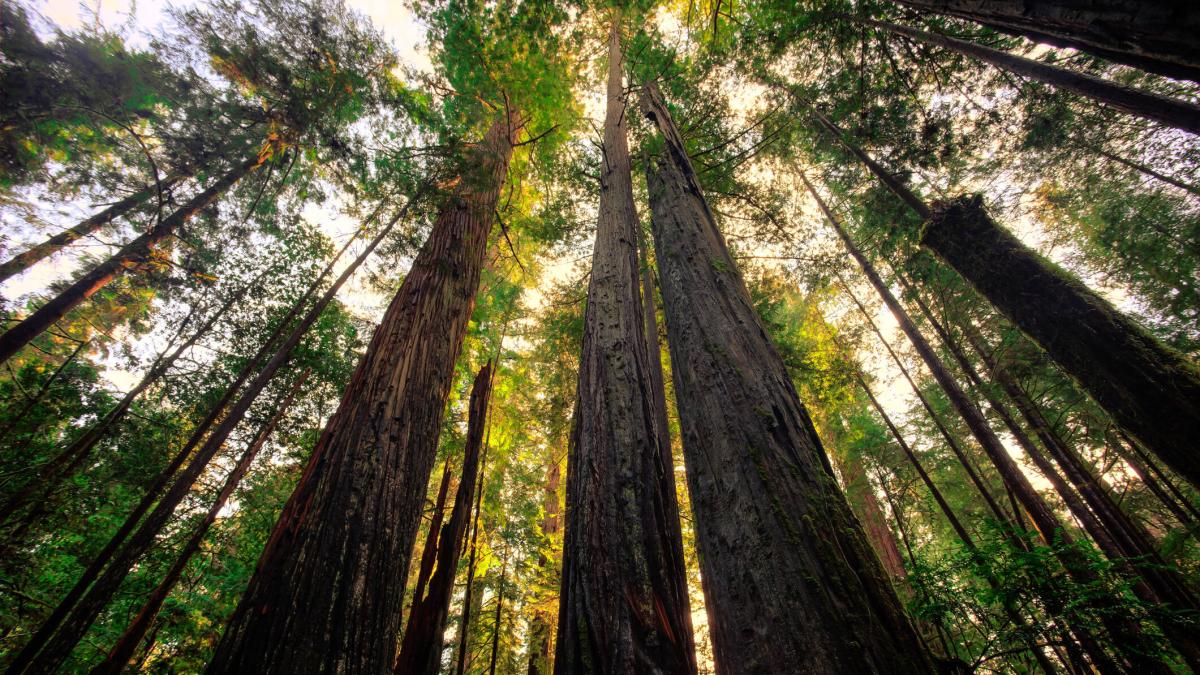
More than two millennia ago, amidst the violent political fracturing of China’s Warring States period, a foundational Daoist philosopher penned an image that continues to echo across contemporary psychology columns, self-help manuals, and digital feeds. It is the parable of the crooked tree: while the straight, structurally sound tree is swiftly chopped down to serve as lumber, beams, or firewood, the gnarled, twisted tree remains standing, untouched and thriving precisely because humans can find no practical utility in it.
This metaphor, attributed to the ancient philosopher Zhuangzi (also known as Chuang Tzu), has reemerged as a vital touchstone for a society increasingly fatigued by relentless productivity metrics, corporate optimization, and burnout culture. Rather than promoting idleness, the tale challenges a fundamental axiom of modern life: the assumption that a human being’s intrinsic worth is directly proportional to their economic output, efficiency, and utility to others.
In an era dominated by hustle culture, algorithmic tracking of human performance, and hyper-specialization, the ancient text offers a radical alternative. It invites individuals to consider whether stepping off the assembly line of constant achievement might be the ultimate act of self-preservation.

Chronology: The Origins and Evolution of a Daoist Masterpiece
To understand the enduring resonance of the crooked tree, one must examine the historical and philosophical landscape from which it emerged.
- 369–286 B.C. (The Life of Zhuang Zhou): Born during a period of extreme social turmoil, regional warfare, and shifting political loyalties in ancient China, Zhuang Zhou—subsequently honored as "Master Zhuang" or Zhuangzi—lived as a thinker, poet, and reclusive sage. Unlike Confucius and his followers, who sought to reform society through strict ritual, social duty, and administrative governance, Zhuangzi advocated for a return to spontaneity, alignment with nature, and skepticism toward human-made hierarchies.
- Late Warring States Period (476–221 B.C.): The text bearing his name, the Zhuangzi, was compiled toward the end of this era. Alongside Laozi’s Tao Te Ching, it forms the twin pillars of philosophical Daoism. The Zhuangzi is celebrated not for dry philosophical treatises, but for its whimsical parables, biting satire, and profound allegories designed to dismantle rigid human certainties.
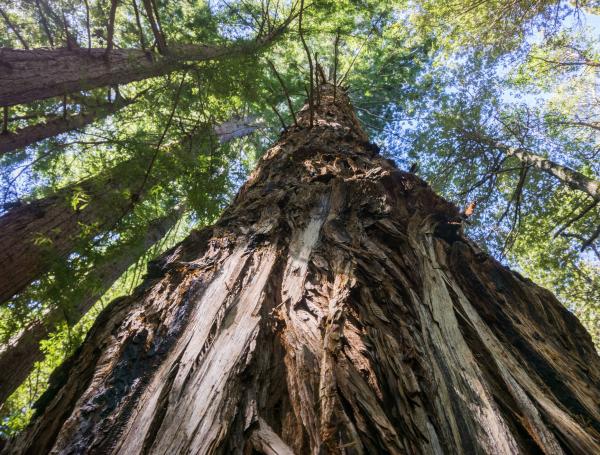
- Chapter One (“Free and Easy Wandering”): It is within this opening chapter that the famous dialogue regarding the useless tree takes place. In the narrative, a carpenter and his apprentice wander through a mountain forest and encounter an immense, ancient tree with branches so twisted and a trunk so gnarled that timber merchants ignore it completely. When the apprentice asks why such a massive tree is left unharvested, the master replies: "It is of no use. That is why it has lasted this long."
- The 21st Century Revival: Millennia later, environmental psychologists, philosophers of technology, and cultural critics have revitalized Zhuangzi’s parables. As digital connectivity blurs the boundary between work and personal life, the "useless tree" has transformed into a powerful meme and psychological metaphor for resisting corporate burnout and reclaiming psychological autonomy.
Supporting Data and Philosophical Frameworks: Wu Wei and Ziran
Far from being a manifesto for apathy, the philosophy embedded in the Zhuangzi requires a nuanced understanding of core Daoist concepts. Modern psychological research into chronic stress and workplace burnout increasingly intersects with these ancient ideas.
1. Wu Wei: The Art of Effortless Action
Often mistranslated in the West as passive inaction or laziness, wu wei translates literally to "non-action" or "effortless action." In practical terms, it does not mean doing nothing; rather, it means eliminating forced, unnatural struggle. It is the art of moving with the current of a situation rather than swimming exhaustively against the rapids.
In a workplace context, wu wei critiques the modern compulsion to over-engineer solutions, micromanage processes, and extract maximum labor from human capital until exhaustion sets in.
2. Ziran: Radical Spontaneity
Closely tied to wu wei is ziran, which denotes "self-so-ness" or naturalness. It describes a state of being where a creature or person fulfills its inherent nature without trying to imitate external molds or societal expectations. The crooked tree grows the way it does not because it follows a blueprint designed by a carpenter, but because it follows its own internal geometry.
Modern Psychological Parallels
Recent studies in environmental psychology and occupational health indicate a direct correlation between hyper-productivity demands and psychological distress. According to data from workplace wellness monitors, individuals who tie their self-worth exclusively to professional output exhibit significantly higher rates of anxiety, sleep disorders, and emotional depletion. The philosophical framework of Zhuangzi anticipates this modern malaise: when human beings allow themselves to be "straightened" and shaped entirely by external utility, they become vulnerable to exploitation and early burnout.

Official Responses and Expert Perspectives: Reinterpreting Success
Scholars of Eastern philosophy and contemporary mental health advocates argue that society’s obsession with utility has created a crisis of meaning.
Dr. Helena Vance, a comparative literature and Eastern philosophy researcher, notes that modern educational and economic systems are entirely built around the concept of straight timber:
"From early childhood, we are graded, measured, and trimmed to fit specific industrial slots. We are taught to ask, ‘What is this good for? How can I monetize this skill?’ Zhuangzi’s parable upsets this framework by showing that true longevity, peace, and creativity often reside in the spaces, qualities, and passions that have zero market value."
Psychologists specializing in mindfulness-based stress reduction also point out that the digital age has exacerbated the problem. Smart devices ensure that individuals are never truly "off the clock," effectively turning human beings into industrial resources that are harvested continuously.

"When we look at the burnout epidemic, we see millions of people who feel like the straight tree," explains clinical psychologist Dr. Marcus Thorne. "They have made themselves useful to everyone else at the expense of their own psychological roots. Adopting a bit of the ‘useless tree’ philosophy—protecting personal boundaries, cultivating hobbies that yield no profit, and learning to simply be—is no longer just a poetic luxury; it is a clinical necessity."
Implications: Reclaiming Space in a Hyper-Productive World
The implications of Zhuangzi’s parable extend far beyond individual meditation practices; they challenge systemic structures in education, labor, and ecological philosophy.

Economic and Labor Reform
As artificial intelligence and automated systems redefine labor markets, the pressure on human workers to constantly prove their "utility" has intensified. Employees face anxiety over obsolescence, driving them to over-work. The wisdom of the crooked tree suggests a counter-intuitive paradigm shift: instead of desperately trying to out-compute machines or match inhuman standards of productivity, humans should lean into qualities that resist quantification—empathy, unstructured creativity, play, and contemplation.
Ecological Resonance
On a literal level, the story speaks volumes about human interactions with the natural world. Modern forestry often prioritizes straight, fast-growing monoculture plantations optimized for timber yield, while destroying complex, gnarled, ancient ecosystems. Yet, ecologists increasingly recognize that "useless" old-growth forests, deadwood, and tangled underbrush are precisely what maintain biodiversity, carbon sequestration, and soil health. Just as the crooked tree sustains the forest, ecological diversity relies on letting nature be "inefficient" by human standards.

Personal Liberation
Ultimately, the story of the crooked tree serves as an invitation to self-permission. It asks readers to drop the heavy armor of constant achievement. By recognizing that one’s value does not depend on being transformed into someone else’s furniture, individuals can find the freedom to grow according to their own shape, no matter how crooked, eccentric, or unconventional that path may seem.
In a world that demands continuous optimization, choosing to cultivate a little uselessness may be the most radical—and life-sustaining—choice of all.