By Juan Sebastián Lombo Delgado
Political Desk Analysis & Reporting
Published: November 9, 2026
Main Facts
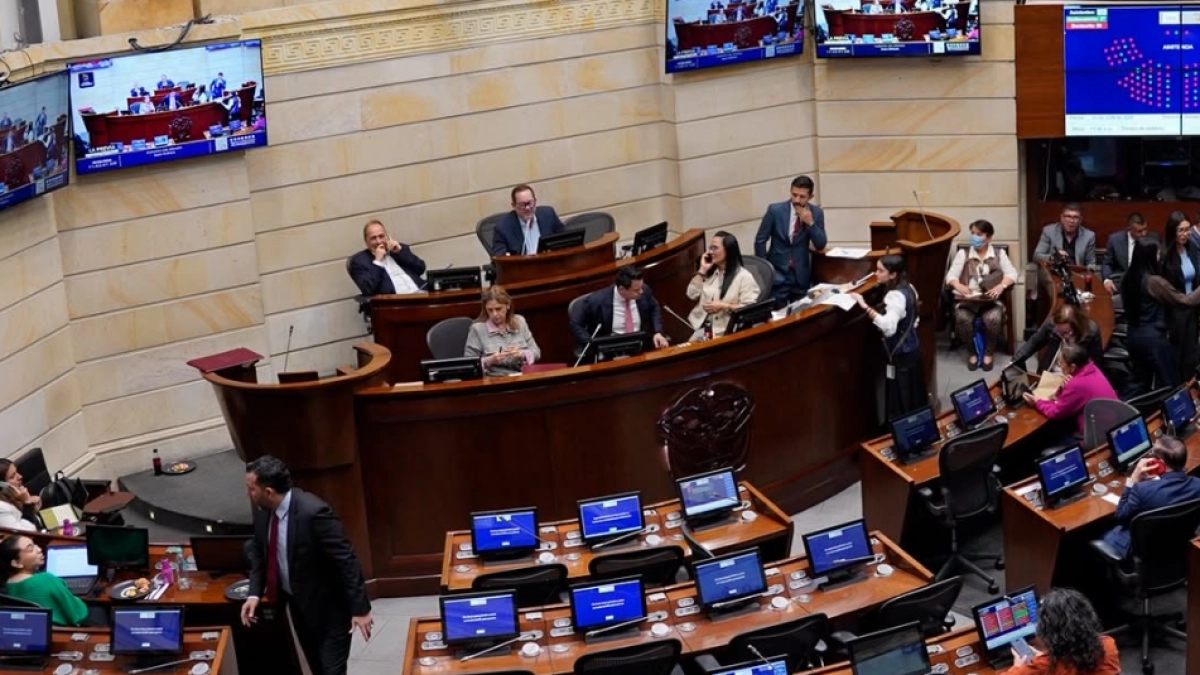
The political landscape in Colombia is bracing for a high-stakes parliamentary showdown as the Plenary of the Senate prepares to vote on a controversial motion to revoke the international travel authorization granted to former President Gustavo Petro.
Under Article 196 of the Colombian Constitution, former presidents face a mandatory one-year restriction on leaving the country following the conclusion of their mandates, unless granted explicit authorization by the Senate. On August 12, 2026, the Senate overwhelmingly voted to grant Petro a blanket travel waiver, permitting him to exit the country during his restriction period provided he submitted advance notice regarding his itinerary, destination, and the duration of his stay.
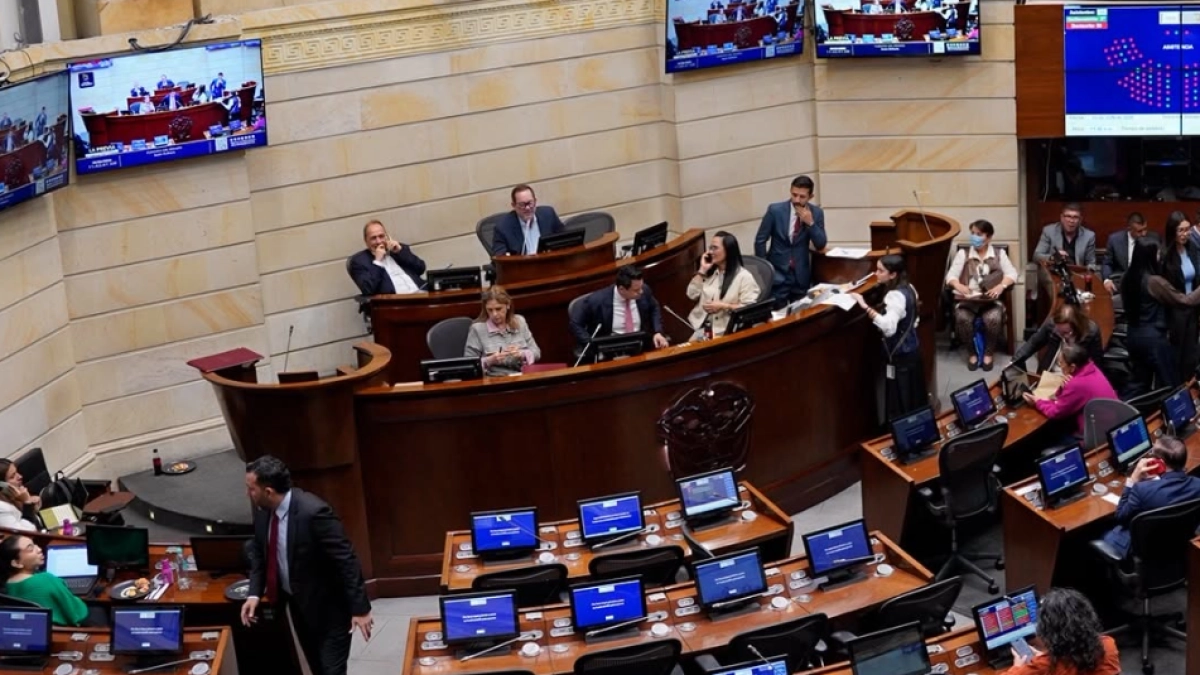
However, the political winds in Bogotá have shifted dramatically. Senator Germán Rodríguez of the Salvación Nacional party has formally petitioned the Senate Secretariat to place a motion on the agenda for Tuesday, November 10, 2026. Rodríguez’s initiative aims to reexamine and ultimately revoke the general travel authorization previously afforded to the former head of state.
This legislative push comes at a critical juncture for Petro, who is currently navigating the most precarious phase of his post-presidential political career. He faces severe, mounting allegations involving an alleged sexual exploitation ring tied to government contracts, alongside sweeping inquiries into purported irregularities within the National Directorate of Intelligence (DNI).
While Rodríguez’s motion has energized conservative and anti-Petrista factions within Congress—with prominent lawmakers like Alfredo Deluque signaling their intent to vote in favor—other political blocs remain deeply divided. The looming vote will test not only the shifting alliances within the Colombian legislature but also the broader implications of utilizing parliamentary oversight to police the movements of a polarizing former leader.

Chronology of Events
To understand how the debate over Gustavo Petro’s travel permissions reached this critical impasse, it is essential to trace the sequence of events that have defined his post-presidential status and the corresponding legislative responses:
- August 7, 2026: Gustavo Petro officially concludes his presidential term, handing over power to the administration of President Abelardo de la Espriella, marking the constitutional onset of his one-year travel restriction period under Article 196 of the Political Constitution.
- August 12, 2026: Following formal requests, the Plenary of the Senate votes overwhelmingly to approve a flexible travel waiver. This arrangement allows Petro to leave Colombia during his restriction year, subject to the condition that he notifies the legislative body of his travel dates and destinations.
- Late August – October 2026: Investigative reports and legal filings bring fresh controversies to light. Public accusations emerge regarding a purported network of sexual exploitation connected to state procurement, alongside fresh scandals involving the National Directorate of Intelligence (DNI).
- Early November 2026: Political pressure mounts as opposition parties argue that the compounding legal scandals fundamentally alter the conditions under which Petro was granted his travel privileges.
- November 9, 2026: Senator Germán Rodríguez (Salvación Nacional) officially submits a formal letter to the Senate Secretariat, announcing his intention to introduce a definitive motion during the upcoming plenary session to review and revoke the blanket travel authorization.
- November 10, 2026: The scheduled Senate Plenary session where Rodríguez’s proposition is set to be debated, putting congressional alliances to the test and determining whether Petro’s international mobility will be legally constrained.
Supporting Data and Legislative Dynamics
The upcoming Senate vote is far from a straightforward procedural exercise; it serves as a barometer for congressional alignment under the administration of President Abelardo de la Espriella. The arithmetic of the Senate floor reveals deep fractures and calculated political maneuvering across all major parties.
The Pro-Revocation Bloc
Senator Germán Rodríguez’s motion has found a receptive audience among right-of-center and independent lawmakers who argue that the judiciary and legislative branches must respond robustly to the gravity of the new allegations. Senator Alfredo Deluque confirmed to EL TIEMPO that he would break from his previous stance and back the Salvación Nacional proposal, citing the severity of the DNI and exploitation scandals as sufficient grounds to reconsider the former president’s privileges.

The Status-Quo and Cautious Blocs
Conversely, other influential figures in the legislature are urging caution, warning against setting a dangerous legal and political precedent. Senator Héctor Olimpo Espinosa, a prominent Liberal Party voice and frequent critic of the former administration, argued that legal accusations alone should not strip an individual of constitutional movement privileges.
"The criterion is that someone cannot be denied a permit based on unproven denuncias (allegations). If it were based on denuncias, no former president of Colombia could ever leave the country, because all of them face them. Therefore, such a precedent cannot be set," Espinosa asserted.
Similarly, Senator Juan Carlos García indicated that his vote would likely remain aligned with the August 12 consensus unless formally instructed otherwise by his party’s leadership. Internal sources within the Conservative Party (el partido azul) suggest that a mandatory party-line vote (voto de bancada) to revoke the permit is highly unlikely. While conservative leaders recognize the gravity of the accusations against Petro, they are acutely aware that moving to block his travel could backfire, handing the former president and the Pacto Histórico coalition a powerful narrative of political persecution to exploit for future electoral gains.
Meanwhile, the Centro Democrático party has maintained a steady stance regarding the travel permits, though their broader legislative posture is complicated by ongoing tit-for-tat dynamics with the left. Notably, the left-wing coalition recently pulled back its support for a contentious legislative push that would have transferred ongoing judicial proceedings against former President Álvaro Uribe—specifically those relating to the massacres at El Aro and La Granja—from the ordinary jurisdiction of the Prosecutor’s Office (Fiscalía) to the Congressional Accusations Commission (Comisión de Acusaciones). This legislative retaliation leaves the Pacto Histórico vulnerable as they prepare to defend their supreme leader on the Senate floor.
Official Responses and Statements
The debate over Petro’s freedom of movement has elicited sharp reactions from key political actors across the spectrum, reflecting the polarized nature of contemporary Colombian politics.
-
Senator Germán Rodríguez (Salvación Nacional), Author of the Motion:
In his formal communication submitted to the Senate Secretariat, Rodríguez emphasized the constitutional grounds for his proposal: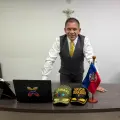
"For the plenary session convened for Tuesday, November 10, 2026, I will present a proposition aimed at requesting the review and revocation of said general authorization, with the purpose that the Plenary examines its continuity and scope, in accordance with Article 196 of the Political Constitution."
-
Senator Héctor Olimpo Espinosa (Liberal Party):
Defending the preservation of institutional norms over reactionary politics, Espinosa warned against weaponizing travel restrictions:"If we restrict mobility based on pending investigations, we paralyze the post-presidential office and turn routine oversight into an arbitrary political tool. Precedents matter for the institution, not just for the individual."
-
Pacto Histórico Congressional Bloc:
Representatives of the leftist coalition have dismissed the initiative as a coordinated vendetta by the current administration’s allies. In private briefings, coalition leaders have argued that the sudden push to revoke travel rights is an attempt to distract public opinion from the ongoing difficulties faced by President Abelardo de la Espriella in passing his contentious tax reform and fiscal adjustment packages through the economic committees of Congress.
Implications for Colombian Politics
The outcome of Tuesday’s Senate vote carries profound consequences that extend far beyond the immediate question of whether Gustavo Petro can board an international flight.
1. The Precedent of Post-Presidential Oversight
If the Senate successfully revokes Petro’s travel permit, it will establish a potent precedent where executive immunity and post-term courtesies are directly tied to the shifting tides of public scandal and legislative majority moods. This could permanently alter the post-presidential landscape in Colombia, making international travel for former heads of state an ongoing battleground of legislative approval rather than a standardized constitutional formality.

2. Collateral Damage in Legislative Bargaining
The motion arrives while President Abelardo de la Espriella’s administration is locked in tense negotiations with congressional economic committees over fiscal reforms and tax adjustments. The horse-trading required to secure votes on fiscal matters inevitably intertwines with moral and political votes like the Petro travel ban. Parties holding swing votes—such as the Conservatives and Liberals—must calculate whether appeasing the hardline opposition on Petro will jeopardize their broader legislative leverage with the executive branch.
3. Amplifying Political Polarization
For Petro and the Pacto Histórico, any attempt to ground the former president will be immediately framed as an authoritarian overreach and judicial harassment. While the move satisfies the base of parties like Salvación Nacional and energizes anti-Petrista sentiment, it risks hardening ideological battle lines at a time when the country is already deeply divided over economic reforms, security strategies—such as the recent immigration enforcement spikes overseen by the Espriella administration—and institutional trust.
As the Senate chamber opens debate on November 10, all eyes will be on the legislative tally boards. Whether the motion achieves the votes required to ground the former president or collapses under the weight of political pragmatism, the debate underscores the relentless friction defining Colombia’s contemporary democratic experiment.