By Edwin Caicedo | Environmental and Health Journalist
Updated: November 13, 2026
Main Facts: The Stagnation of Global Climate Ambition
The international community is hurtling dangerously close to an irreversible breach of the pivotal 1.5 °C global warming threshold established under the landmark Paris Agreement. A severe lack of substantial, progressive policy implementations by world governments over the past five years has locked the planet onto a precarious trajectory. According to the latest assessments, Earth is currently on course to experience a catastrophic temperature increase of up to 2.7 °C by the end of the century.
This stark warning forms the bedrock of the November 2026 update from the Climate Action Tracker (CAT), an independent scientific consortium that meticulously evaluates government policies, national pledges, and real-world climate actions. The core diagnosis delivered by the report is unequivocal: global climate action has fundamentally stalled. The mitigation measures enacted by states thus far are woefully inadequate to alter the grim mathematical projections of a heating planet.
Even under the most optimistic theoretical models—presuming that governments fully achieve every single climate objective they have ever formally announced, including legally binding net-zero emissions targets—global warming is still projected to peak at 1.9 °C by 2100. This sobering reality confirms that even the best-case scenarios currently on the table fail to keep the planet within the safe boundaries envisioned by the Paris accord.

When evaluated against near-term realities, the outlook darkens further. In scenarios constrained strictly by current national pledges for 2030 and 2035, the projected temperature rise spikes to 2.6 °C. Conversely, factoring in long-term stated ambitions yields an estimated increase of 2.1 °C. The chasm between political rhetoric and concrete, verifiable intervention remains the single greatest impediment to planetary survival.
By 2035, under current policies, global greenhouse gas emissions are projected to hover between 53,000 and 59,000 million metric tons of $textCO_2$ equivalent. By stark contrast, a science-based emissions pathway aligned with the 1.5 °C target mandates slashing those figures down to approximately 29,000 million metric tons.

The urgency of this mismatch is underscored by current baseline conditions: global temperatures already reached approximately 1.37 °C above pre-industrial levels in 2025. Furthermore, global emissions that same year exceeded Paris-compatible trajectories by a staggering 25 percent.
Chronology of a Slow-Moving Emergency: A Five-Year Policy Plateau
To understand how the international community reached this critical juncture, it is vital to trace the timeline of climate commitments and missed opportunities leading up to the present day:
- 2020–2021 (The Post-Pandemic Rebound): Following initial drops in industrial activity during the COVID-19 pandemic, global emissions rebounded aggressively. Despite rhetorical commitments to "build back better," nations largely returned to business-as-usual economic stimuli, heavily favoring fossil-fuel-reliant industries. Atmospheric methane levels experienced a sudden and unmanaged surge, rising 3.5 percent between 2020 and 2023, directly contradicting reduction targets.
- 2022–2023 (Energy Security Crises): Geopolitical conflicts, particularly the war in Ukraine and subsequent shocks to European energy markets, triggered a frantic scramble for fossil gas and coal reserves. While investments in renewable energy began to scale, short-term panic sidelined long-term decarbonization goals, cementing a five-year period of systemic policy stagnation identified by the CAT.
- 2024–2025 (The Breaching of Baselines): Global average temperatures touched 1.37 °C above pre-industrial averages. Despite record-breaking expansions of solar and wind capacity—particularly in economic powerhouses like China and India—soaring global energy demand and continuing fossil fuel infrastructure investments cancelled out these net gains.
- Late 2026 (The COP31 Reality Check): Released ahead of the pivotal international climate summits, the November 2026 CAT update serves as an unvarnished wake-up call. It establishes that the world has effectively lost half a decade of meaningful momentum, turning what was once a manageable transition into a race against geological tipping points.
Supporting Data and
Metrics: The Mathematics of Overheating
The empirical data compiled by environmental scientists and economists illustrates a profound misalignment between current economic practices and biophysical boundaries.

- 1.37 °C: The observed global temperature anomaly reached in 2025, bringing the planet within a hair’s breadth of the 1.5 °C ceiling.
- 25 Percent: The margin by which actual global emissions in 2025 exceeded the strict carbon budgets required to maintain the 1.5 °C trajectory without overshooting.
- 2.7 °C vs. 1.9 °C: The stark contrast between where current policies will lead humanity (2.7 °C) versus a hypothetical world where every stated net-zero promise is miraculously and perfectly fulfilled (1.9 °C).
- 53,000 to 59,000 Megatons: Projected global $textCO_2$ equivalent emissions by 2035 under current policies, compared to the required ceiling of 29,000 megatons.
- Decarbonization Rhythms: To avoid permanent catastrophe, emissions reductions must scale aggressively over time:
- Now to 2030: Approximately 4 percent reduction annually.
- 2030 to 2035: Accelerating to 7 percent annually.
- 2035 to 2050: Escalating to 9 percent annually.
Despite these daunting figures, the data also highlights areas of unprecedented industrial progress. In 2025, newly installed global clean electricity generation capacity matched the entire net increase in global electricity demand. Electric vehicle (EV) adoption rates achieved historic highs worldwide, proving that the technological tools for transformation already exist. However, the sheer velocity of energy demand growth has continually outpaced clean energy deployment.
Official Responses and Strategic Roadmaps: Five Priorities to Turn the Tide
While the Climate Action Tracker concedes that a temporary overshoot of the 1.5 °C threshold is now practically inevitable, it insists that humanity is far from powerless. The ultimate goal must be to limit the magnitude and duration of this overshoot—driving global temperatures to a peak near 1.7 °C in the 2040s before actively drawing them down to settle safely below 1.5 °C (ideally reaching 1.2 °C to 1.3 °C) by 2100.
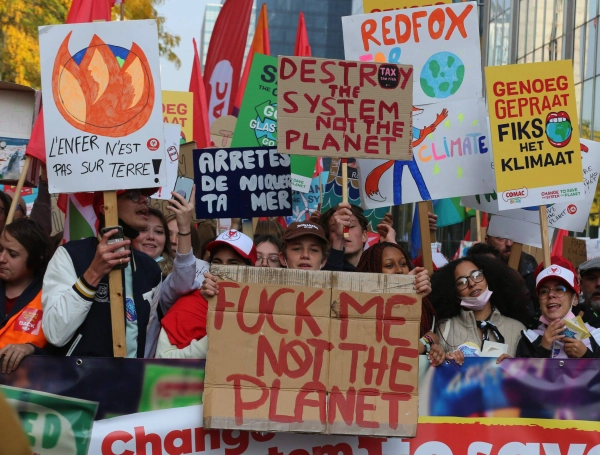
To achieve this ambitious course correction, the CAT has outlined five mandatory strategic priorities for global leaders:
1. Accelerated Phase-Out of Fossil Fuels
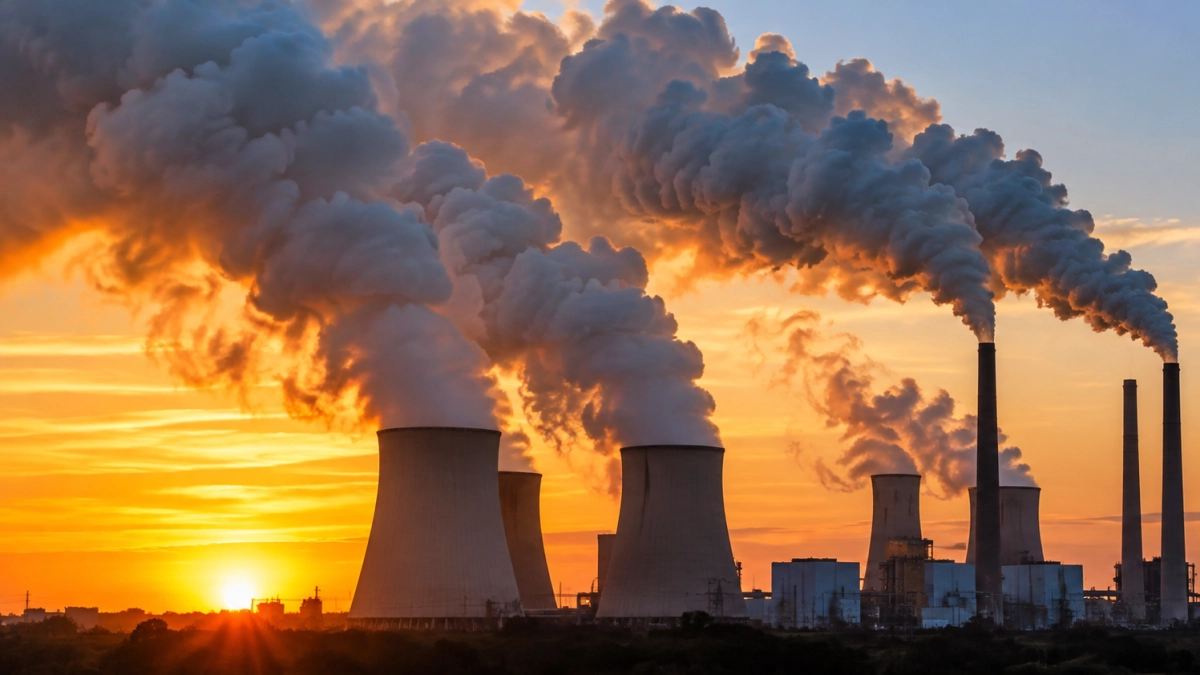
Fossil fuels—coal, oil, and gas—remain responsible for over 70 percent of all global greenhouse gas emissions. The science is absolute: there is no credible pathway to halving emissions that does not involve the aggressive, managed wind-down of fossil fuel extraction and consumption.

2. Aggressive Methane Mitigation
Methane is a potent short-lived climate pollutant with a warming potential vastly higher than carbon dioxide over a 20-year timeline. Climate-compatible models require cutting methane emissions by 17 to 33 percent relative to 2020 levels by 2030. Reversing the 3.5 percent increase recorded between 2020 and 2023 is non-negotiable.
3. Rapid Electrification and Renewable Expansion
Clean energy infrastructure must scale exponentially, driving the share of electricity in final energy consumption up to 35 percent by 2035. Simultaneously, robust, verified frameworks for carbon dioxide removal (CDR) must be developed, strictly as a complement to—never a substitute for—deep emissions cuts at the source.

4. Halting Deforestation and Protecting the Amazon
Deforestation must be brought to an absolute halt globally. The report issues a specialized warning regarding the Amazon rainforest, noting that the lethal synergy between a 1.5 °C warmer climate and unmitigated forest loss pushes these crucial ecosystems dangerously close to catastrophic tipping points and irreversible dieback.
5. Translating Pledges into Binding Domestic Law
Governments attending upcoming international climate summits must immediately transform vague long-term pledges into aggressive, enforceable domestic policies. Vague promises of net-zero emissions by 2050 are meaningless without short-term enforcement mechanisms for the current decade.

Implications: The High Cost of Inaction
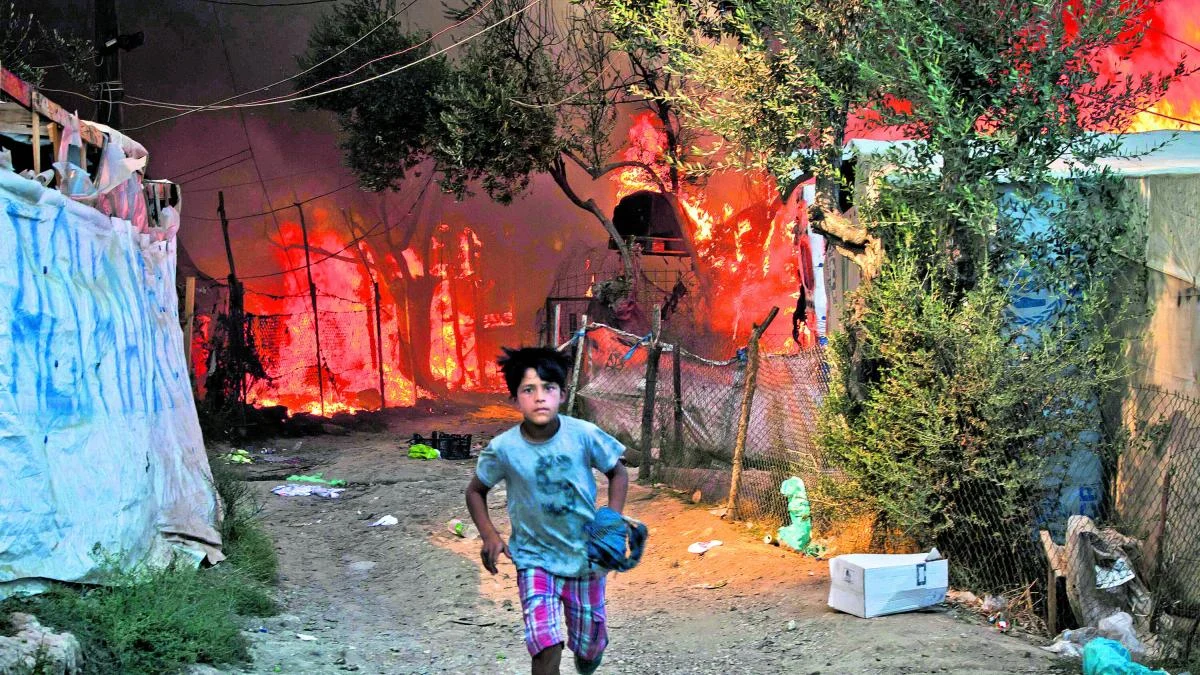
The societal and ecological ramifications of failing to heed these warnings extend far beyond abstract temperature graphs. Continued adherence to current trajectories promises severe cascading crises across multiple dimensions of human and natural systems:
- Public Health and Extreme Weather: Populations worldwide will face unprecedented heat stress, expanded geographic ranges for vector-borne diseases (such as malaria and dengue), and catastrophic mortality rates linked to extreme weather events.
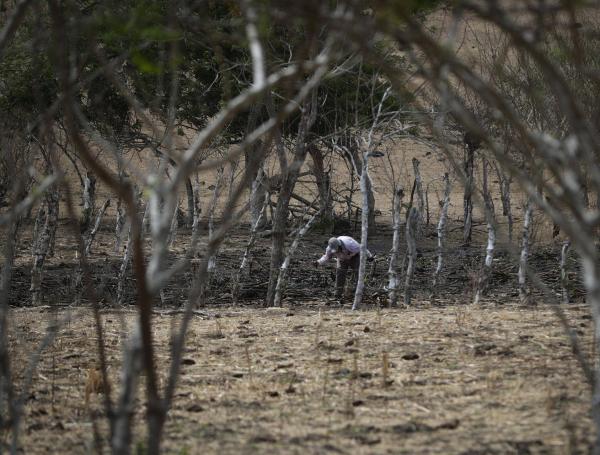
- Food and Water Security: Agricultural yields face systemic disruption due to prolonged droughts, erratic precipitation patterns, and the depletion of vital freshwater aquifers. Critical infrastructure in coastal and riverine zones faces repeated devastation from rising sea levels and intensified storms.
- Ecosystem Collapse: Warm-water coral reefs have already breached critical biological thresholds, experiencing widespread mortality events. Meanwhile, foundational Earth systems—including polar ice sheets, permafrost stability, and global oceanic circulation patterns—stand on the brink of permanent, irreversible destabilization.
A Message of Resilience, Not Resignation
The overarching takeaway from the Climate Action Tracker’s analysis is clear: surpassing the 1.5 °C limit must never become an excuse for climate fatalism or the abandonment of mitigation efforts.

Every decimal fraction of a degree avoided matters immensely. Mitigating the peak and shortening the duration of the impending temperature overshoot will dictate whether future generations inherit a stable, habitable planet or a fractured world defined by cascading ecological collapse. The technological solutions are mature, the economic blueprints are drawn, and the scientific warnings are unambiguous. What remains missing is the political will to act before the window of opportunity snaps shut permanently.