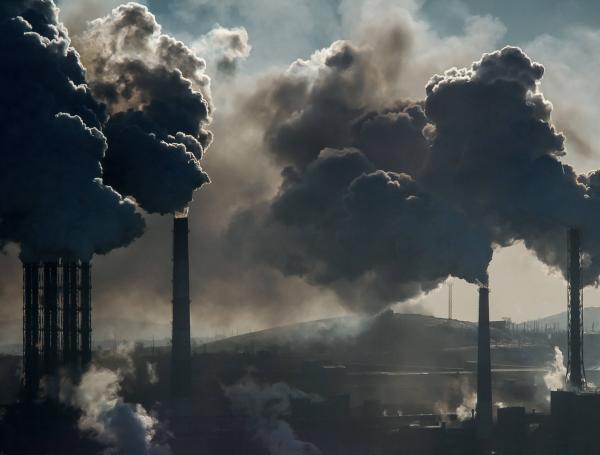
Main Facts: A Planet Heating Beyond Historical Thresholds
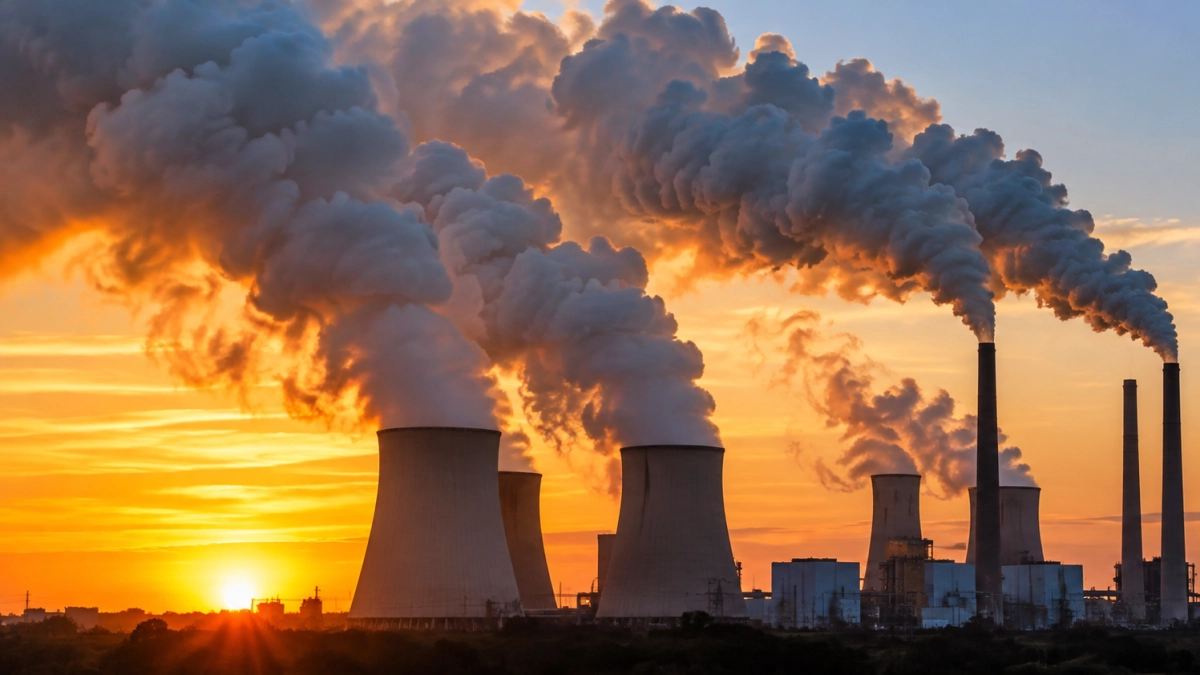
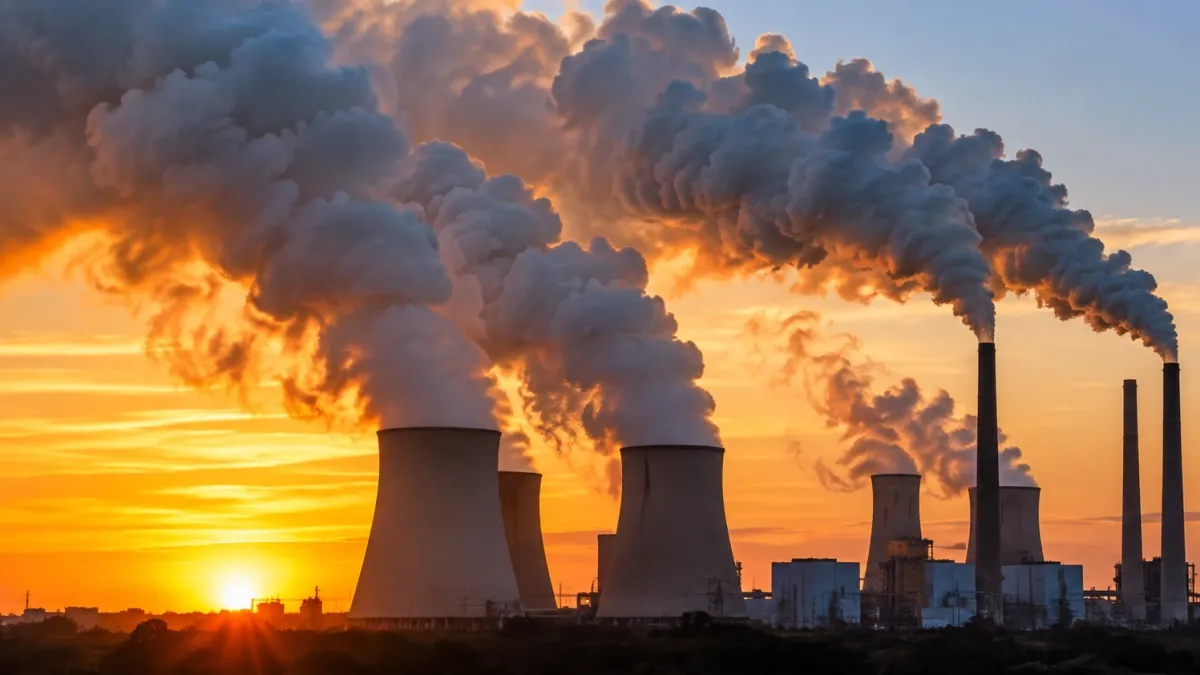
In a stark and sobering wake-up call for global climate policy, the World Meteorological Organization (WMO)—a specialized agency of the United Nations—released its annual greenhouse gas bulletin, revealing that concentrations of the primary heat-trapping gases in Earth’s atmosphere reached unprecedented highs during 2025.
The report, unveiled ahead of the upcoming United Nations Climate Change Conference (COP31) in Antalya, Turkey, details how relentless human activities continue to push the planet into uncharted climatic territory. According to the data, carbon dioxide ($CO_2$), methane ($CH_4$), and nitrous oxide ($N_2O$) all shattered previous records, significantly intensifying global warming and compounding the frequency and severity of extreme weather events worldwide.
Beyond the baseline trio of major greenhouse gases, the WMO bulletin spotlighted growing threats from lesser-discussed pollutants, such as sulfur hexafluoride ($SF_6$). Most alarmingly, the scientific community expressed profound concern over empirical evidence indicating that the world’s oceans—long considered reliable planetary "carbon sinks"—are beginning to lose their capacity to absorb atmospheric carbon dioxide. This dual crisis of rising emissions and declining natural absorption capacity threatens to permanently unbalance Earth’s climatic stability.
Chronology: The Escalating Trajectory of Atmospheric Accumulation
To understand the gravity of the 2025 milestones, scientists look back at the baseline conditions of the pre-industrial era, specifically the year 1750, before widespread industrialization began altering the chemical composition of the atmosphere.
The Pre-Industrial Baseline (1750): For millennia prior to the Industrial Revolution, global greenhouse gas concentrations remained relatively stable, allowing Earth to maintain a stable climate capable of supporting complex human civilizations.
The Launch of Annual Tracking (2004): Recognizing the accelerated pace of atmospheric changes, the WMO began publishing its systematic annual bulletins to monitor shifts in greenhouse gas concentrations. Over the subsequent two decades, every single report has documented upward trends, with 2025 marking a staggering 13% jump in $CO_2$ concentrations alone compared to the inaugural year of tracking in 2004.
The 2025 Record Peak: Throughout 2025, atmospheric monitoring stations across the globe recorded exponential surges in greenhouse gases, confirming that despite numerous international climate pledges, global emissions have yet to peak in a meaningful way.
Projections for 2027 and Beyond: Looking forward, climate meteorologists have issued preliminary warnings regarding a potential, highly intense episode of El Niño projected for 2027. Models suggest that surface sea temperatures could spike by up to 3.8 degrees Celsius, setting the stage for catastrophic compounding disasters.
Supporting Data: The Numbers Behind the Climate Crisis
The WMO’s analytical breakdown of atmospheric measurements for 2025 paints a quantitative picture of a planet under severe stress. The metrics underscore a systemic failure to curb the combustion of fossil fuels, industrial expansion, and intensive agricultural practices.
1. Carbon Dioxide ($CO_2$)
Global Average Concentration: Reached 426.8 parts per million (ppm) in 2025.
Pre-Industrial Comparison: This figure represents 153% of the pre-industrial baseline registered in 1750.
Scope of Data: The $CO_2$ findings were rigorously calculated from atmospheric measurements gathered across 179 distinct monitoring stations worldwide.
Atmospheric Persistence: Carbon dioxide remains in the atmosphere for centuries. Consequently, emissions released today will continue to trap heat and dictate global temperatures for hundreds of years, making historical emissions an enduring burden for future generations.
2. Methane ($CH_4$)
Global Average Concentration: Hit 1,948 parts per billion (ppb).
Pre-Industrial Comparison: Equivalent to 267% of pre-industrial levels. As the second most prominent greenhouse gas driving contemporary global warming, methane possesses a short-term warming potency significantly higher than carbon dioxide, making its rapid accumulation a critical near-term threat.
3. Nitrous Oxide ($N_2O$)
Global Average Concentration: Rose to 339.1 parts per billion (ppb).
Pre-Industrial Comparison: Stands at 126% of 1750 benchmark levels, driven largely by agricultural fertilizers and industrial processes.
4. The Emerging Threat: Sulfur Hexafluoride ($SF_6$)
While carbon dioxide, methane, and nitrous oxide dominate climate headlines, the WMO drew specific attention to sulfur hexafluoride ($SF_6$), a synthetic gas primarily used in heavy electrical production and distribution infrastructure.
Though its overall atmospheric volume is lower than $CO_2$, its concentration has grown steadily over the past three decades due to global electrification.
$SF_6$ can persist in the atmosphere for over 1,000 years.
Its global warming potential over a 100-year timescale is approximately 24,300 times greater than that of carbon dioxide.
Official Responses: Warnings from United Nations Leadership
Top scientific and administrative figures within the United Nations did not mince words during the global rollout of the 2025 bulletin.
Ko Barrett, Deputy Secretary-General of the WMO, emphasized that the continuous accumulation of these gases is fundamentally rewriting the planet’s operating rules.
"The greenhouse gases are trapping an unprecedented amount of heat in the atmosphere, fueling more extreme weather events and increasing risks for our economies and societies," Barrett stated during the press briefing.
Highlighting the long-term human cost, Barrett noted that the past 11 consecutive years have ranked as the warmest in recorded human history. She reiterated that because gases like carbon dioxide linger for centuries, society is locked into a warming trajectory that will demand massive adaptation frameworks.
Oksana Tarasova, a senior scientist at the WMO, addressed the alarming behavior of natural carbon sinks. She pointed out that historically, Earth’s ecosystems have split the burden of human emissions roughly in half: about 50% of emitted carbon dioxide remains in the atmosphere, while the other half is absorbed by terrestrial vegetation and the oceans. However, Tarasova warned that ongoing climate degradation is actively compromising this natural buffering system.
Implications: Ocean Feedback Loops and the Specter of Extreme Weather
The implications of the WMO’s 2025 findings stretch far beyond abstract scientific metrics, touching on the physical survival of marine ecosystems, global food security, and infrastructural resilience.
The Breakdown of Ocean Sinks
Perhaps the most alarming revelation in the report is the structural fatigue observed in the world’s oceans. For centuries, marine environments have acted as a planetary shock absorber, drawing down massive quantities of industrial carbon dioxide. As global waters warm and chemical compositions shift due to acidification, the efficiency of this absorption is declining. If oceans lose their capacity to scrub $CO_2$ from the air, a larger fraction of emissions will remain trapped in the atmosphere, accelerating the rate of global heating in a compounding feedback loop.
Compounding Weather Extremes and the 2027 El Niño Warning
The direct consequence of trapped heat is the intensification of the hydrological cycle. The WMO report explicitly links record greenhouse gas concentrations to a surge in catastrophic weather phenomena, ranging from unprecedented multi-year droughts and mega-wildfires to devastating flash floods.
Furthermore, climate models point toward a deeply troubling horizon: the potential onset of an exceptionally intense El Niño event by 2027. Projections suggest that surface sea temperatures could skyrocket by up to 3.8 degrees Celsius in affected regions. Should this materialize, vulnerable populations across the globe will face extreme heatwaves, agricultural collapses, and systemic infrastructure failures on a scale rarely witnessed before.
The Road to COP31 in Antalya
As delegates, scientists, and world leaders prepare to convene in Antalya, Turkey, for the COP31 climate summit, the WMO bulletin provides an undeniable mandate for action. The data proves that current voluntary commitments and incremental policy adjustments are failing to bend the emissions curve downward.
Without immediate, aggressive, and legally binding structural decarbonization across every sector of the global economy—coupled with emergency funding for climate adaptation—the milestones recorded in 2025 will quickly become the best-case scenarios of a rapidly warming past.
By Edwin Caicedo Environment and Health Journalist Special reporting from ColombiaPlast 2026, Bogotá Main Facts: The Industrial Readiness and the Logistical Wall Colombia possesses the industrial muscle, technological capability, and stringent quality standards required to…
By Edwin Caicedo, Environmental and Health Correspondent Introduction: A Tense Transition in the Andes As the administration of President Gustavo Petro enters its final three weeks, a storm of controversy has erupted in the province…
By Edwin Caicedo | Environment and Health Journalist Published: September 17, 2026 Main Facts: A Groundbreaking Discovery in the Yungas In a milestone for modern mammalogy, an international team of scientists has officially described a…