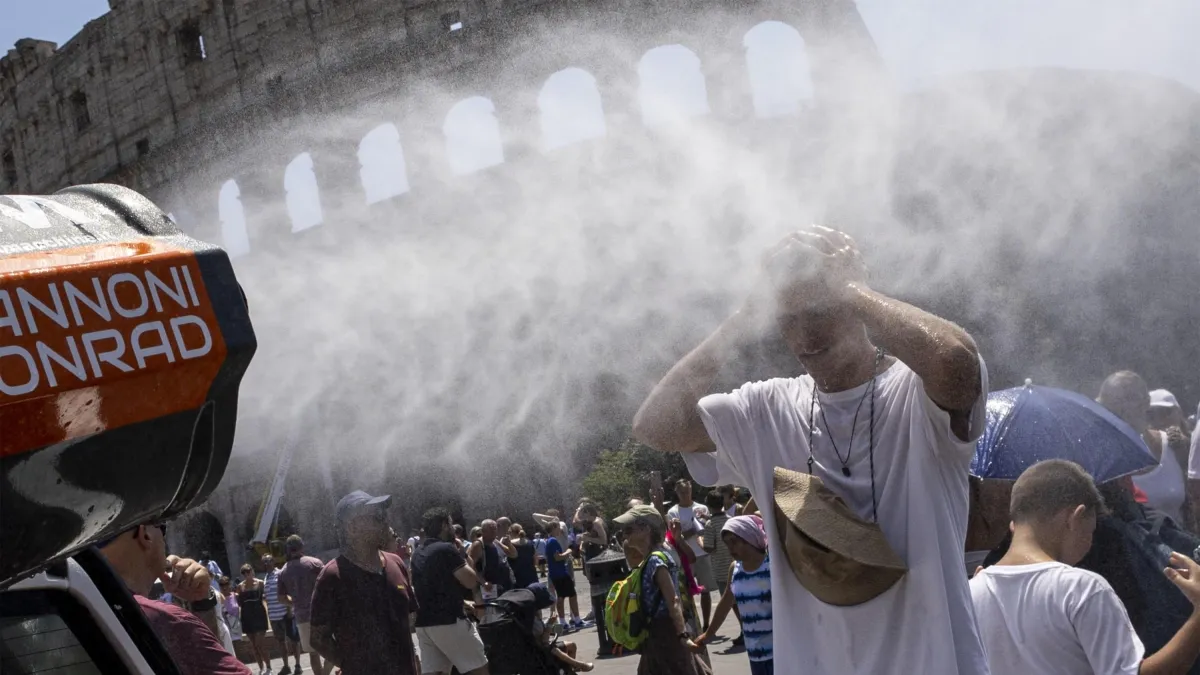

PARIS – France is currently navigating one of its most challenging summers in recorded history. As a series of relentless heatwaves grip the nation, authorities have raised alarms over the compounding effects of extreme temperatures, a surge in devastating wildfires, and an alarming depletion of the country’s water reserves. The situation has pushed emergency services to their limits and forced the government to deploy advanced military technology to combat an escalating environmental crisis.
A Summer of Historic Intensity
According to data released on Thursday, July 23, by the national meteorological service, Météo-France, the country recently endured its third-longest heatwave since records began in 1947. Spanning 16 consecutive days—from July 4 to July 19—this episode matches the duration of the historic heatwaves of 2003, 2018, and 2025.
While 1983 remains the record-holder with a 23-day event, and 2006 follows with 21 days, the current climate trajectory suggests that these "extreme" events are becoming both more frequent and more volatile. Météo-France defines a heatwave based on a strict thermal indicator: a national average of at least 25.3°C for a single day, sustained by temperatures exceeding 23.4°C for at least three consecutive days. The persistence of these conditions this year has created a state of "thermal exhaustion" across the French landscape.

Chronology of a Scorching Season
The 2026 summer has been marked by a relentless series of climate anomalies that have left experts concerned about the long-term viability of current agricultural and urban planning strategies:
- The Early Warning (Late May): The season began with a historic event in late May. It was the earliest recorded heatwave in French history, signaling an accelerated shift in the seasonal climate pattern.
- The June-July Surge: The second wave, occurring between June 17 and July 2, proved to be the most intense. It shattered previous records for both daytime maximums and nighttime minimums, surpassing even the devastating 2003 heatwave in terms of thermal peak intensity.
- The Mid-July Prolonged Wave: The most recent event, concluding on July 19, cemented the summer’s status as one of the most taxing in modern memory, keeping emergency responders on high alert for over two weeks.
The Human Toll and Public Health Concerns
The intensity of the early summer heatwave has already left a measurable impact on public health. During the mid-summer surge between June 17 and July 2, French health authorities recorded 5,764 more deaths than the statistical average for that period.
While this figure remains lower than the tragic loss of over 13,000 lives associated with the catastrophic August 2003 heatwave, medical professionals are increasingly worried about the cumulative effect of repeated heat stress on vulnerable populations, including the elderly and those with pre-existing respiratory or cardiovascular conditions. Hospitals across the country have reported a significant spike in heat-related admissions, prompting the government to reinforce "Plan Canicule" (Heatwave Plan) protocols nationwide.

Wildfires: A Growing National Emergency
Beyond the immediate heat, the most visible and destructive consequence of this summer has been the explosion of wildfires. As of late July, France has seen more than 44,000 hectares of land scorched by flames. This figure is significantly higher than the tally for the same period in 2025, a year that was already considered an outlier in terms of fire activity.
Official statistics indicate that there have been more than 12,500 individual fire incidents across the country so far this year. The situation has become so critical that law enforcement agencies have intensified their investigations into the origins of these fires. To date, 128 individuals have been arrested on suspicion of sparking various blazes, ranging from acts of criminal negligence to suspected arson.
Government Response: The "Héphaïstos" Initiative
In a bid to curb the devastation, the French government has ramped up its response through the interministerial "Héphaïstos" task force, which coordinates the national effort to combat forest fires every summer.

One of the most significant developments in this year’s strategy is the experimental deployment of an Airbus A400M military transport aircraft. Modified to serve as an aerial tanker, the A400M is capable of releasing up to 20 tons of fire retardant in a single pass. Unlike traditional water-bombing aircraft, this military giant is designed to create massive, long-lasting firebreaks. By dropping heavy retardant along the perimeter of active fires, authorities hope to "choke" the flames and prevent them from spreading into inhabited areas or protected forests.
This deployment represents a shift toward a more proactive, militarized approach to civil protection in the face of the climate crisis. "The scale of the threat requires us to leverage all available state resources," a government spokesperson noted, confirming the A400M would be operational before the end of July.
The Invisible Crisis: Drought and Hydrological Stress
While fires burn on the surface, a quieter but equally dangerous crisis is unfolding underground. The Bureau of Geological and Mining Research (BRGM) has reported that as of July 1, approximately 54 percent of the nation’s aquifers and groundwater reserves are below normal levels for this time of year.

The combination of low winter rainfall and record-breaking heat has prevented these critical water sources from replenishing. This hydric deficit poses a double threat: it exacerbates the flammability of vegetation, making forests more susceptible to even the smallest spark, and it threatens the agricultural sector, which relies on these reserves to survive the peak of the growing season. Many departments have already imposed strict water usage restrictions, limiting irrigation and public water consumption to ensure basic supplies for residents.
Long-Term Implications: A New Normal?
The events of 2026 have sparked a national debate regarding the resilience of French infrastructure and the necessity of adapting to a warming world. Experts argue that what was once considered "extreme" is quickly becoming the new baseline.
The meteorological data suggests that the atmospheric patterns driving these heatwaves are becoming more stable, trapped by high-pressure systems that refuse to dissipate. This "blocking" effect is a signature of a changing climate, and it forces a reckoning for sectors ranging from energy production (where water is needed for cooling nuclear reactors) to urban planning (where the "heat island" effect in cities like Paris is becoming lethal).

As the country looks toward the remainder of August, the focus remains on vigilance. With fire risk indices at record highs and water resources thin, the French authorities are urging citizens to remain cautious, avoid activities that could cause sparks in dry areas, and adhere strictly to regional water bans.
For a nation that has long prided itself on its temperate climate, the summer of 2026 serves as a stark reminder of the global nature of the climate crisis. The government’s investment in advanced technology like the A400M is a testament to the fact that, in the fight against the elements, the margin for error has all but vanished. The coming weeks will determine whether these mitigation efforts are sufficient to prevent further loss of life, land, and livelihood.
With reporting by EFE.