By Editorial Staff | July 16, 2026
The recent suspension of the transition process between the outgoing administration and the incoming government has sent shockwaves through Colombia’s political establishment. Occurring just a month before the presidential inauguration, this unprecedented halt in the "empalme" (the formal hand-over of state affairs) has been framed by pundits as a clash of ideologies. However, beneath the political maneuvering lies a stark, empirical reality: while leaders argue, the citizens’ daily struggle for safety, health, and economic stability continues unabated.
The suspension of the transition is not merely a bureaucratic hiccup; it is a signal of a deepening disconnect between the political elite and the governed. As the country teeters on the edge of a new administration, the "real" transition—the one that matters to millions of Colombians—risks being left in a state of paralysis.
The Chronology of a Political Standoff
The current crisis began in mid-July 2026, when communications between the transition teams of the outgoing and incoming administrations reached an impasse. What was intended to be a seamless transfer of institutional memory, financial records, and strategic policy roadmaps ground to a halt.
- Early July 2026: Initial meetings between transition teams showed signs of friction, with reports of limited access to proprietary data and strategic documentation.
- July 14, 2026: Tensions boiled over, leading to the public announcement that the formal transition process would be suspended indefinitely.
- July 16, 2026: Public discourse reached a fever pitch. Civil society organizations and policy experts began warning that the impasse is effectively a "pause button" on critical state functions, including security operations and budgetary planning for the next fiscal year.
This timeline is not just a sequence of political events; it is a countdown to a governance vacuum that the country can ill afford.
A Radiography of the Colombian Reality
The urgency of this situation is not a matter of opinion but a matter of data. The 2025 Comparative Citizen Perception Survey, conducted by the "Red de Ciudades Cómo Vamos," provides the most comprehensive diagnostic of the state of the nation. Spanning 20,445 face-to-face interviews across 32 major cities—representing over 16 million people—the data offers a sobering look at the challenges awaiting the new government.
The Security and Justice Gap
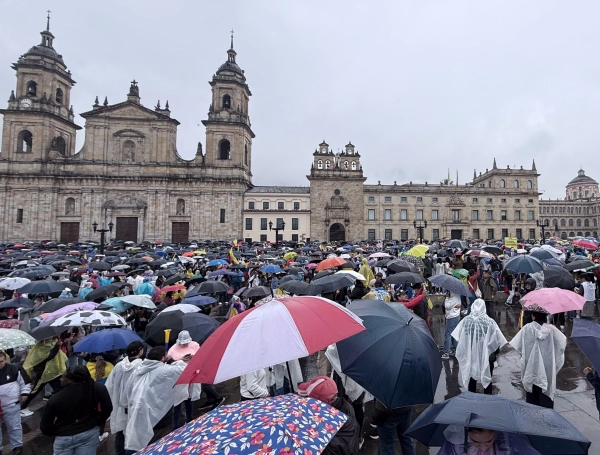
The survey reveals that one out of every two Colombians feels unsafe in their own city. Perhaps more damning is the lack of institutional trust: only four out of ten victims of a crime bother to report it. This points to a fundamental breakdown in the social contract between the state and the citizen, where the expectation of justice has been replaced by the expectation of impunity.
The Social and Economic Crisis
The data on well-being is equally troubling:
- Health: Only 50% of those who utilized health services in the last year expressed satisfaction with the care provided.
- Employment: 40% of the population perceives the labor market as "difficult," with women and the youth bearing the brunt of structural unemployment.
- Food Security: A staggering 15% of households reported that at least one member could not access three meals a day during the previous month.
These figures are not "political" in nature; they are the objective reality of the Colombian experience. When politicians argue over the transition, they are arguing over the stewardship of a country where millions are struggling for the most basic human needs.

Supporting Data: A Call for Evidence-Based Reform
The Plataforma Abierta de Seguridad, Paz y Justicia has stepped into this vacuum with a concrete "Agenda 2026–2030." This agenda, backed by a coalition of think tanks and universities, suggests that the solution to the current impasse is not more politics, but more evidence-based policy.
Four Pillars for Structural Change
- Sustainable Security Funding: Moving away from the volatile nature of public works budgets to establish stable, permanent funding for citizen security.
- Modernizing Intelligence: Updating the legal framework governing intelligence agencies to better combat increasingly sophisticated transnational organized crime.
- Prison Reform: Addressing the systemic overcrowding in the penitentiary system, which currently sits at a 29% excess capacity, a state of affairs deemed unconstitutional by the courts since 1998.
- Judicial Empowerment: Strengthening the judiciary to restore public faith in the rule of law.
This agenda was formally submitted to the Congress that is set to be inaugurated on July 20. The question remains: will the incoming legislature prioritize these structural reforms, or will they be sidelined by the ongoing political bickering?
Official Responses and Institutional Responsibility
The political fallout has elicited varying responses. While the government and the opposition remain locked in a blame game, the call for responsibility has come from the periphery—from experts, academics, and regional leaders.

Felipe Mariño, Director of Bogotá Cómo Vamos, has been a vocal critic of the suspension. "Retaking the transition is not a political favor; it is a duty to the citizens," Mariño stated. "Public information belongs to the country, not to the outgoing or incoming administrations."
The consensus among analysts is that the new Congress must legislate based on this data, rather than fighting the battles of the past. Meanwhile, mayors and governors—who are the primary interface between the state and the citizen—are being urged to lead by example, utilizing local evidence to coordinate efforts regardless of the chaos in the capital.
Implications: The Paradox of the Next Generation
Perhaps the most haunting finding of the 2025 survey is the generational paradox. Young Colombians are simultaneously the most optimistic about the future of the nation and the least satisfied with the current state of their cities.

This disconnect is dangerous. It represents a "conditional vote of confidence." If the state responds to this hope with transparency, data, and tangible results, it can foster an era of active citizenship. If the state continues to respond with political pugilism, that hope will inevitably calcify into deep-seated frustration and apathy.
The Cost of Stagnation
The implications of the current standoff are clear:
- Erosion of Institutional Trust: The public’s perception of state legitimacy is plummeting.
- Policy Paralysis: Critical decisions regarding the budget, security, and social health programs are being deferred.
- Delayed Recovery: Every day spent in political conflict is a day of inaction on poverty and security, which only exacerbates the challenges the next government will face on its first day in office.
Conclusion: An Appeal to Reason
Colombia does not require its leaders to be in total ideological alignment. It does, however, require them to agree on the fundamental premise of governance: that evidence must prevail over ideology.

The transition of power is a solemn act of state, not a field of battle. While the political class reconciles its differences, the fundamental needs of the population—security, health, employment, and education—remain in a perilous state of limbo.
The political "empalme" may be suspended by the stroke of a pen, but the "empalme" with the citizens—the duty to serve, protect, and provide—can never be paused. The clock is ticking, and the reality of the Colombian street is not waiting for the politicians to finish their debate. If the goal of any government is the welfare of its people, then the time for partisan squabbling has long passed. The time for governance has begun.