Introduction: A War of Words Amidst Military Tragedy
The escalating threat posed by weaponized drones in Colombian conflict zones has ignited a fierce political dispute between the current administration and the former president, Gustavo Petro. Following a devastating terrorist attack in the southern region of Bolívar, which resulted in the deaths of three soldiers, a public confrontation erupted regarding the state of military readiness.
At the center of the storm is the question of whether the previous administration secured the necessary financial resources for an anti-drone defense system—a critical capability for protecting troops against the evolving tactics of illegal armed groups. While former President Petro maintains that he left the required funding in place, current Minister of Defense, Jorge Mora, has categorically rejected these claims, citing a lack of documentary evidence and characterizing the previous efforts as mere "commercial explorations."
The Trigger: The Tragedy in Bolívar
The urgency of this debate stems from a stark reality on the ground. Recent months have seen a tactical shift by criminal structures, who are increasingly utilizing low-cost, commercially available drones modified to carry and drop high-explosive devices. These "loitering munitions" have become a preferred weapon for irregular groups, making static military bases and patrol units highly vulnerable.
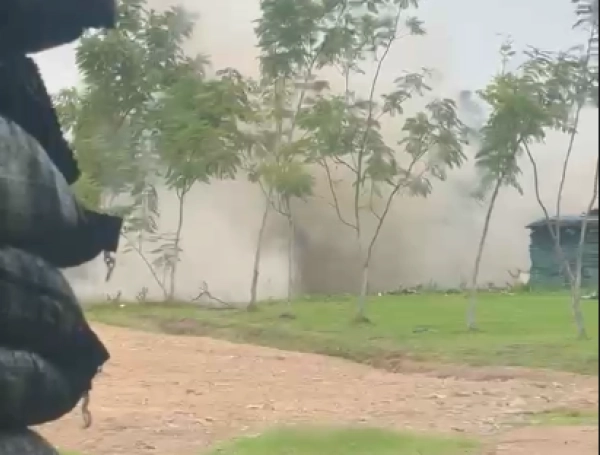
The recent attack in the Bolívar department served as a grim reminder of this vulnerability. The precision and lethality of the strike, which claimed the lives of three soldiers, prompted immediate national scrutiny of the military’s defensive posture. In the aftermath, the question of why the Armed Forces lacked adequate countermeasures became a matter of national debate, leading to the exchange between Petro and the current Ministry of Defense.
The Allegations: Petro’s Defense of His Legacy
Shortly after the news of the Bolívar attack broke, former President Gustavo Petro took to his social media channels to address the criticism. In a series of statements, he alleged that his administration had performed the necessary planning and budgetary allocations to procure sophisticated anti-drone technology for the current year.
"Despite leaving the money for the purchase of anti-drones for this year, no procurement operation was carried out," Petro wrote on X (formerly Twitter). "Thus, the troops remain exposed to death without the possibility of defense."

Petro’s assertions imply a failure of administrative continuity—a narrative suggesting that the current government inherited the means to protect soldiers but failed to execute the final steps of the acquisition process. For the former president, the responsibility for the current lack of equipment lies squarely with the administration of President Abelardo De La Espriella and his cabinet.
The Official Rebuttal: Minister Jorge Mora’s Evidence-Based Response
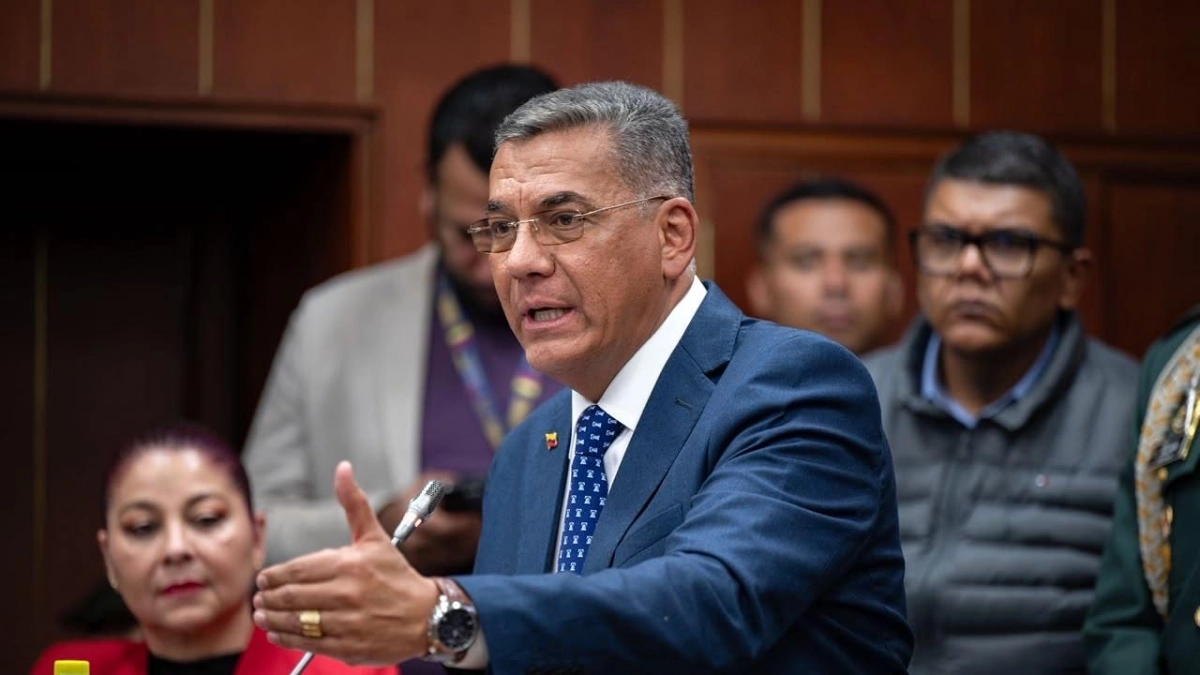
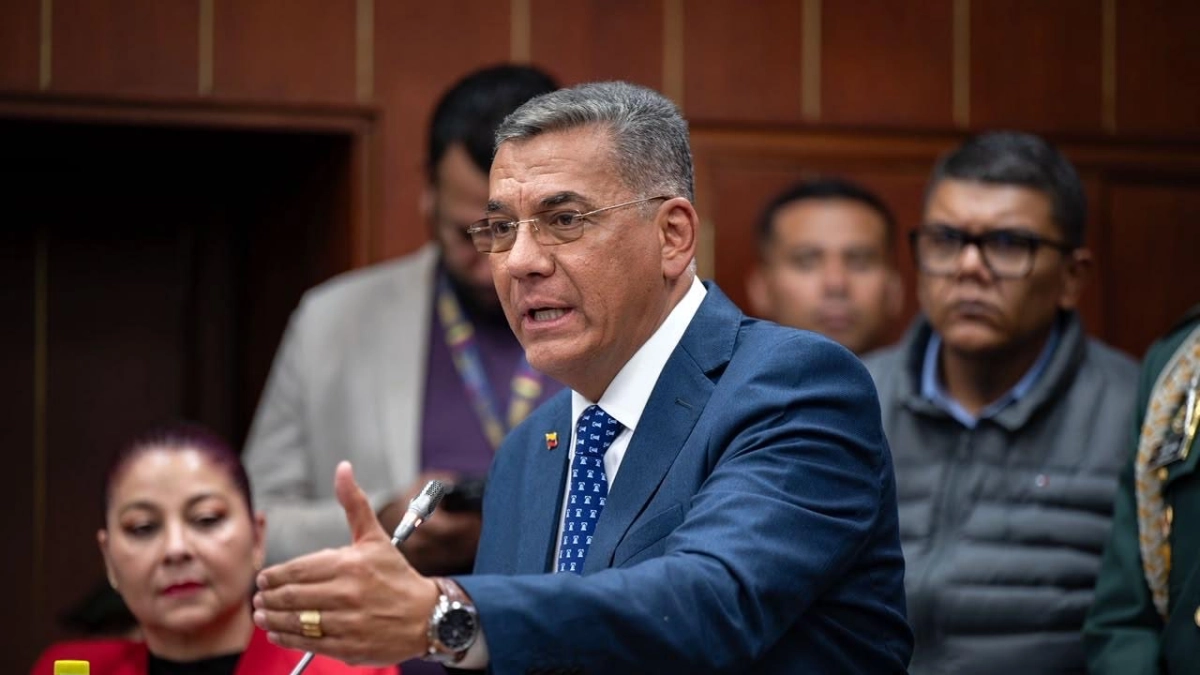
Minister of Defense Jorge Mora issued a formal response this Sunday, characterizing Petro’s claims as a distortion of administrative reality. Speaking from the Ministry, Mora emphasized that the defense of the nation cannot be based on "expectations" or "anecdotal planning," but must be rooted in verified budgetary appropriations and signed contracts.
Challenging the "Documentary Truth"
"His statement contradicts the documentary truth," Mora declared. "The official records of the Ministry of Defense disprove the existence of any budget appropriated for the purchase of anti-drone systems for this year, nor was there any contract canceled or abandoned."
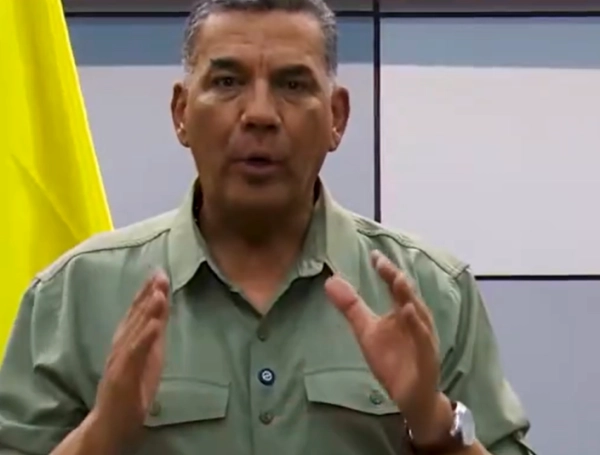
Mora’s rebuttal focuses on the distinction between exploratory interest and fiscal reality. He clarified that while the previous government may have conducted international tours to assess potential technologies, these visits did not translate into a financial commitment.
The Breakdown of the Proposed 800 Billion Pesos
Minister Mora addressed the specific figure of 800 billion pesos (COP) that had been mentioned in various policy discussions under the previous administration. According to Mora, this amount was never officially integrated into the Ministry’s budget for 2026.
"The 800 billion pesos for the first phase were never appropriated or received for 2026," the Minister asserted. "Confusing public announcements or international commercial inquiries with real budget availability does not turn a hope into a financial reality."
Mora highlighted that the former Minister of Defense and the former Vice Minister of Strategy and Planning had conducted visits to countries including India, the Czech Republic, Turkey, Qatar, and the United Kingdom. While these trips were documented, they remained in the realm of market research, failing to reach the stage of a legally binding procurement contract.
Chronology of the Anti-Drone Procurement Saga
To understand the friction, one must look at the timeline of the proposed acquisition:
- Late 2025 – Early 2026: The previous administration begins identifying the "drone threat" as a top-tier security priority. High-level delegations are sent to international defense fairs and manufacturers.
- Mid-2026: Internal reports indicate that the Ministry of Defense explores multiple technological solutions, ranging from electronic jamming devices to kinetic interception systems.
- August 2026: The new administration takes office. Minister Jorge Mora begins an audit of the defense budget, finding no signed contracts for anti-drone equipment.
- November 2026: The terrorist attack in Bolívar occurs, prompting public outcry.
- November 8, 2026: Former President Petro claims funds were left for the project; Minister Mora issues a public denial.
Implications for National Security
The standoff has significant implications for the future of Colombian defense strategy. The debate is not merely about past accounting; it is about how the state will address an evolving asymmetric threat.

The Technological Gap
The military’s inability to reliably intercept drones leaves them in a reactive position. As illegal armed groups acquire more sophisticated drone technology, the cost of inaction is measured in lives. The controversy has forced the current administration to accelerate its own procurement processes, though they now face the challenge of doing so under intense public and political pressure.
Political Polarization
This dispute is emblematic of the broader political polarization in Colombia. Every issue of national security is now filtered through the lens of the current administration vs. the opposition. By framing the tragedy in Bolívar as a failure of the current government, the former president seeks to maintain his influence on military policy. Conversely, the Ministry of Defense’s focus on "documentary truth" is a calculated effort to insulate the current government from accusations of negligence.
Supporting Data: The Rising Threat of Drones
Data from the National Police and military intelligence corroborates the severity of the threat. The use of drones has increased exponentially over the last 24 months.

- Geographic Concentration: Departments such as Bolívar, Cauca, and Antioquia have seen the highest frequency of drone-related incidents.
- Tactical Shift: Initially used for surveillance and reconnaissance, these drones have been modified for "drop-bomb" capabilities, effectively serving as improvised air support for guerrilla groups.
- Operational Cost: Because the technology is inexpensive and readily available, illegal groups can deploy them with high frequency, forcing the military to invest in expensive electronic warfare suites that must be deployed across hundreds of remote bases.
Conclusion: Looking Ahead
The debate between Gustavo Petro and Minister Jorge Mora highlights the complexities of modern defense procurement. It underscores the dangers of decoupling strategic goals from fiscal reality. Whether the funds were "left on the table" or were merely an unfunded aspiration remains a point of contention that will likely be debated in Congress and the courts.
For the soldiers on the ground, however, the political argument provides little comfort. The immediate challenge for the Ministry of Defense is to bridge the gap between policy and protection. The failure to secure these systems, regardless of who is at fault, serves as a sobering lesson in the importance of administrative precision in national security matters. As the government pivots to address the drone threat, it must do so with a clear, transparent, and legally sound roadmap to ensure that the tragic events in Bolívar are not repeated.
The public now waits to see if the current administration can translate its rhetoric into concrete protective measures, or if the "drone war" will continue to claim victims while the political debate persists in the capital.