By Silvia Nieto
The Mercury (Chile) / Special Editorial Adaptation
Main Facts
Jordania is often marketed with clever tourism slogans, but the reality far exceeds any promotional pitch. This Hashemite Kingdom is a land where foundational Judeo-Christian narratives intersect with breathtaking geological wonders. While global travelers may initially arrive drawn by a single, magnetic name—Petra—they quickly discover that the nation is an intricate tapestry of desert wilderness, Roman ruins, biblical heritage, and deeply rooted traditions.
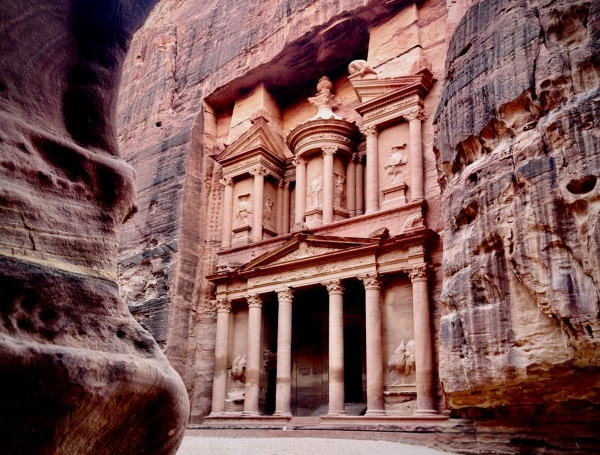
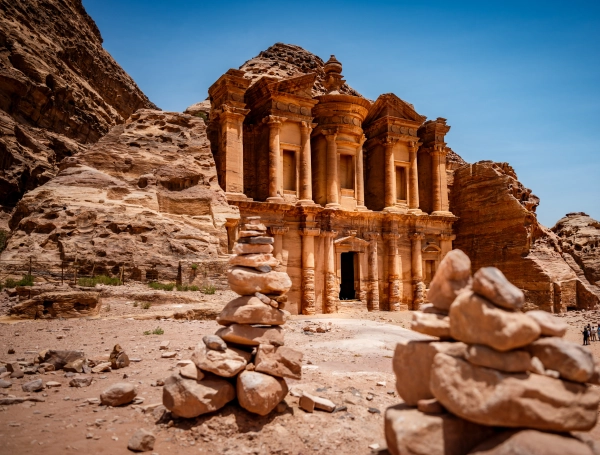
Petra, the legendary Nabatean city carved directly into rose-red cliffs between the 4th century BCE and the 2nd century CE, achieved modern cinematic immortality through its iconic treasury, Al-Khazneh, famously featured in Indiana Jones and the Last Crusade. Yet, Petra is merely the crown jewel of an archaeological expanse spanning six square kilometers. Beyond its most famous facade lie intricate tombs, an amphitheater, royal palaces, and sprawling monuments embedded in a dramatic landscape that shifts seamlessly from arid desert to narrow canyons like the Siq.
Beyond Petra, Jordan serves as an open-air museum. From the arid banks of the River Jordan—where tradition dictates Jesus of Galilee commenced his public ministry—to the hyper-saline waters of the Dead Sea, the nation offers an immersive journey through millennia of human history, deeply influenced by the scarcity and stewardship of water.
Chronology: A Tapestry Spanning Millennia
To truly understand Jordan, one must trace its epochs through the architectural and spiritual layers that define its modern geography:
- Circa 4th Century BCE – 2nd Century CE (The Nabatean Era): The nomadic Nabateans carve the magnificent city of Petra out of sheer sandstone, transforming a desert trade hub into an architectural marvel of water management and monumental stonemasonry.
- Biblical Antiquity: Amman, historically referenced in the biblical books of Samuel as Rabbah or the "City of Waters," becomes the backdrop for ancient royal dramas, including the historical accounts surrounding King David. Concurrently, tradition places the baptism of Jesus by John the Baptist along the eastern banks of the Jordan River.
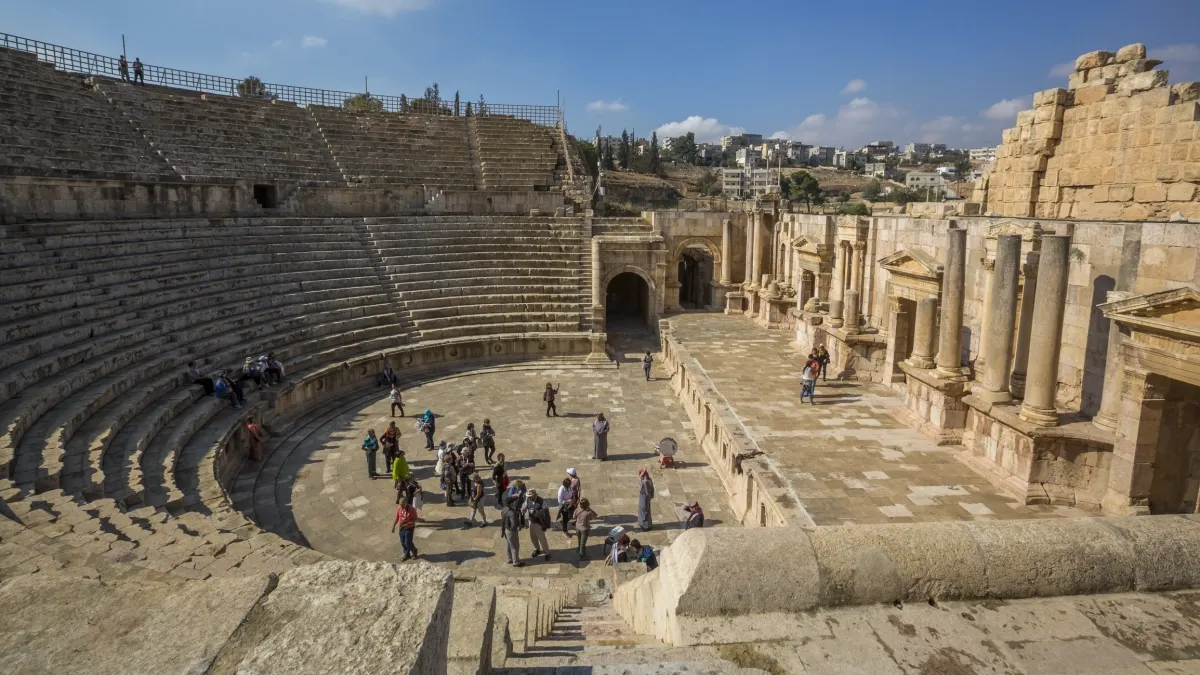
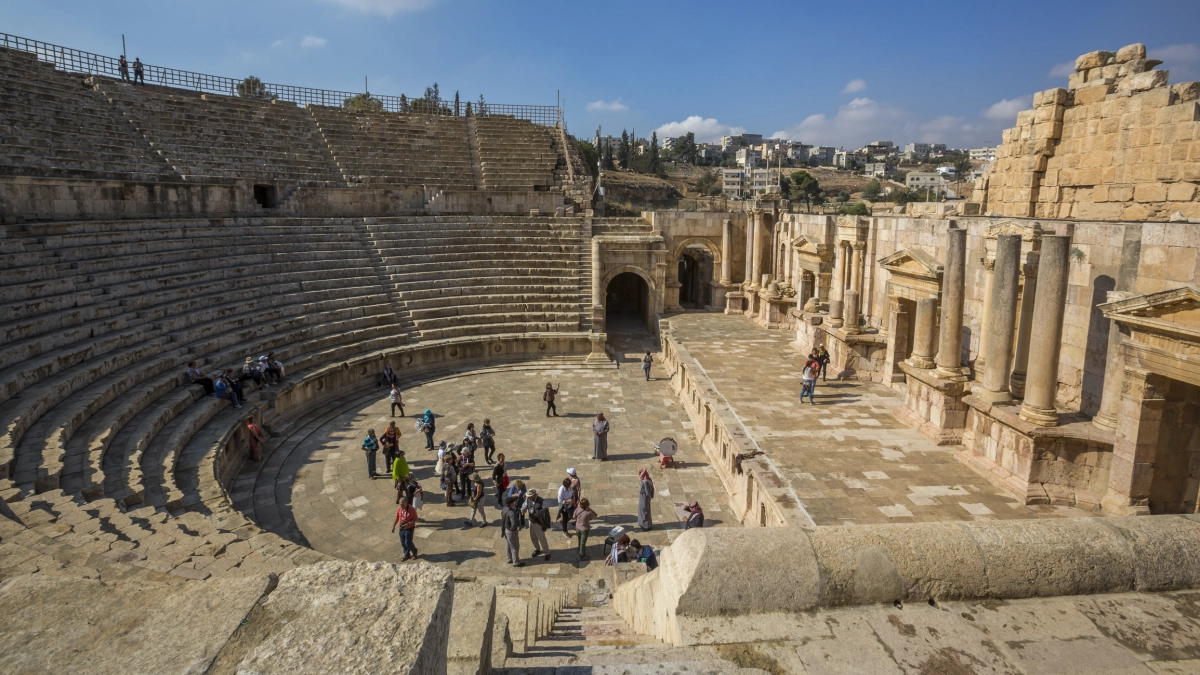
- The Roman and Byzantine Periods (1st Century BCE – 7th Century CE): The Roman Empire absorbs the region, establishing the Decapolis cities. Gerasa (modern-day Jerash) rises as one of the best-preserved provincial Roman urban centers in the Near East. Centuries later, Christian Byzantine influence flourishes, leaving behind extraordinary cartographic masterpieces like the 6th-century Madaba Mosaic Map.
- The Islamic Caliphates (7th Century CE – Present): Islam takes root across the region. Today, roughly 97 percent of Jordan’s population is Sunni Muslim, yet the nation maintains a profound constitutional and cultural respect for its Christian heritage and sacred archaeological sites.
- Modern Era (20th Century – Present): Jordan establishes itself as a sovereign constitutional monarchy, navigating regional complexities while preserving its status as one of the Middle East’s safest and most culturally rich tourism destinations.
Supporting Data: Geography, Demographics, and Tourism
Water scarcity and resource management form the invisible infrastructure governing Jordan’s history, agriculture, and daily life.

- Precipitation Deficit: The southern and eastern expanses of Jordan receive an average of a mere 50 millimeters of rainfall per year.
- Water Imports: Due to chronic river and groundwater shortages, Jordan is compelled to import 50 million cubic meters of water annually from neighboring Israel to sustain its population.
- Demographics: The nation is overwhelmingly Sunni Muslim (97%), yet it actively protects and promotes interfaith landmarks recognized globally by UNESCO.
- Urban Architecture: In the capital city of Amman, urban expansion is strictly regulated. Article 52 of the city’s Building and Urban Planning Regulations mandates that at least 80 percent of exterior building facades must maintain the natural color of local stone or remain white, preserving the city’s distinctive carbon-sketch aesthetic across its historic hills.
- Protected Natural Reserves: The Wadi Rum protected area encompasses 742 square kilometers of crimson desert, dotted with roughly 200 eco-tourism camps designed to balance cultural immersion with strict environmental conservation.
- Jerash (Gerasa): Located just 50 kilometers north of Amman, the ancient site boasts an 800-meter-long colonnaded street, two theaters, an imposing oval plaza, and the triumphal Arch of Hadrian.
Official Responses and Cultural Stewardship
The Jordanian government, alongside international bodies like UNESCO, treats the nation’s archaeological and natural treasures not merely as tourist commodities, but as fragile historical archives requiring rigorous preservation.
Cultural authorities enforce strict conservation protocols at high-impact sites. In Petra, visitor caps and regulated night-tourism tours—where thousands of candles illuminate the Siq and the Treasury—are carefully managed to prevent structural degradation of the soft sandstone.

Similarly, at Al-Maghtas (the Baptism Site on the Jordan River), religious authorities and state officials maintain a delicate balance between welcoming global pilgrims—including heads of state and various Christian patriarchates representing the 11 recognized churches on the site—and protecting the delicate riparian ecosystem of the riverbanks.
Furthermore, urban preservation laws, such as those governing Amman’s white-stone aesthetic and Madaba’s Byzantine mosaic conservation initiatives, reflect a coordinated national strategy to honor historical continuity while accommodating modern infrastructure.

Implications: Tourism, Sustainability, and the Future
As global travel trends shift away from mass, depersonalized tourism toward heritage-focused and community-driven exploration, Jordan occupies a uniquely advantageous yet challenging position.
Economic Lifeline and Environmental Pressures
Tourism remains a foundational pillar of the Jordanian economy. However, the delicate balance between welcoming millions of visitors and preserving hyper-arid ecosystems requires constant adaptation. The proliferation of eco-camps in Wadi Rum and sustainable adventure tourism—such as canyoning through the waterfalls of Wadi Mujib—demonstrates a growing industry commitment to low-impact travel.
Geopolitical and Ecological Resilience
Water scarcity remains Jordan’s most critical existential challenge. The nation’s reliance on cross-border water agreements highlights how environmental realities directly dictate regional stability. For travelers, witnessing firsthand the stark contrast between the arid desert and the life-giving trickles of the Jordan River or the unexpected wild fig trees in Wadi Rum fosters a profound appreciation for ecological fragility.
A Beacon of Cultural Synthesis
Ultimately, a journey through Jordan—from the vibrant, spice-scented patios of Madaba serving fresh local fare and lemon mint granitas, to the majestic Roman columns of Jerash and the silent majesty of the Dead Sea—offers deep cultural implications. It proves that ancient history and modern hospitality can coexist harmoniously, offering the global community a masterclass in preserving the shared heritage of human civilization.