INTERNATIONAL DESK
October 24, 2026
Main Facts
The occupied West Bank has plunged into a severe crisis following a deadly assault that left two Israeli soldiers dead. In response, the Israel Defense Forces (IDF) launched sweeping military operations across the territory, culminating in the forced displacement of approximately 2,200 Palestinian residents from the historic city of Hebron.
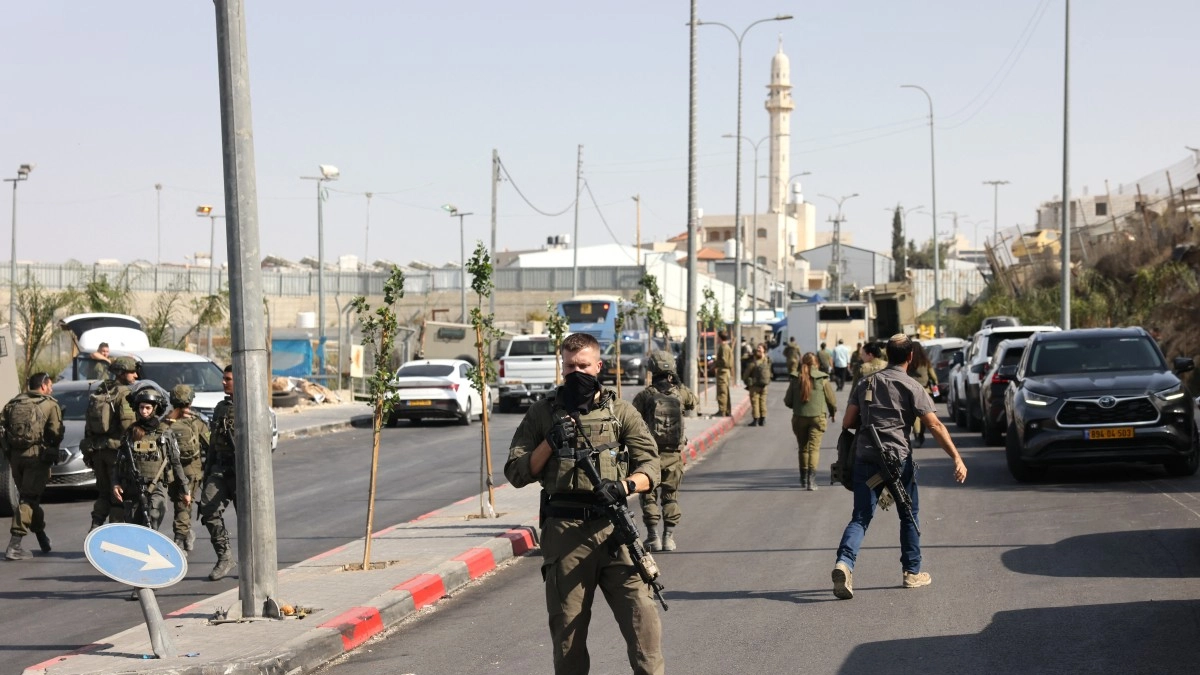
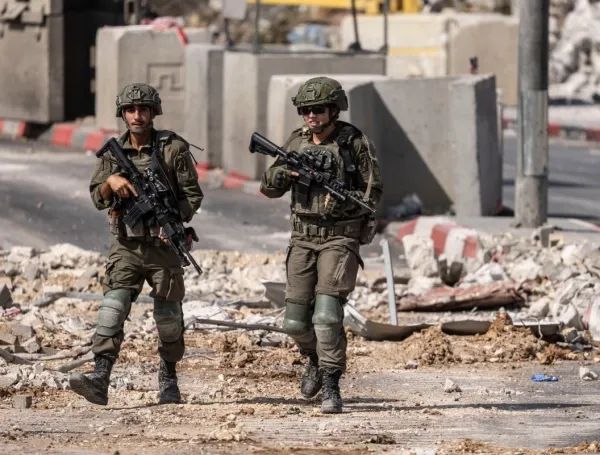
Operating under directives issued in the wake of the checkpoint attack, Israeli forces mobilized across dozens of sectors in the West Bank, detaining roughly 40 individuals suspected of affiliations with Hamas, Palestinian Islamic Jihad, and other resistance or militant factions. The operation in Hebron—the largest and most densely populated city in the Palestinian territories under Israeli occupation since 1967—has affected an estimated third of the urban area. Families were awakened in the dead of night by soldiers using loudspeakers, given a stringent window of merely two hours to gather essential documents and meager belongings, and forced onto the streets as their homes were marked with spray-painted crosses and repurposed by the military.
The Palestinian Authority (PA) has urgently appealed to the international community, demanding immediate diplomatic and protective pressure on Israel to shield civilians from what local officials have characterized as a sweeping "collective punishment." Meanwhile, Israeli leadership, facing high-stakes parliamentary elections, has doubled down on its security measures, signaling that the operations in Hebron and broader targeted regions could extend indefinitely.

Chronology of Events
The sudden escalation unfolded rapidly over a 48-hour window, transforming an isolated security breach into a widespread humanitarian and political flashpoint:
- Friday, October 23, 2026 (Morning/Afternoon): Two Palestinian gunmen carry out a lethal assault at a heavily guarded military checkpoint near Hebron, killing two Israeli soldiers and wounding three others before being shot dead by security forces.
- Friday, October 23, 2026 (Evening): Prime Minister Benjamin Netanyahu publicly threatens an unprecedented military offensive in the West Bank, framing the response as a decisive blow against insurgent networks. Concurrently, ultranationalist National Security Minister Itamar Ben Gvir seizes the moment to call for the complete dismantling of the Palestinian Authority, despite acknowledging a lack of direct evidence linking the governing body to the checkpoint attack.
- Friday, October 23, into Saturday, October 24, 2026 (01:00 AM): IDF units systematically enter the Ein Dir Baha’ neighborhood in Hebron—the suspected origin area of the slain attackers. Utilizing loudspeakers, soldiers order residents out of their homes under a strict two-hour evacuation ultimatum. Dwellings are marked with large "X" symbols, and Israeli flags are hoisted on balconies as troops take tactical control of the properties.
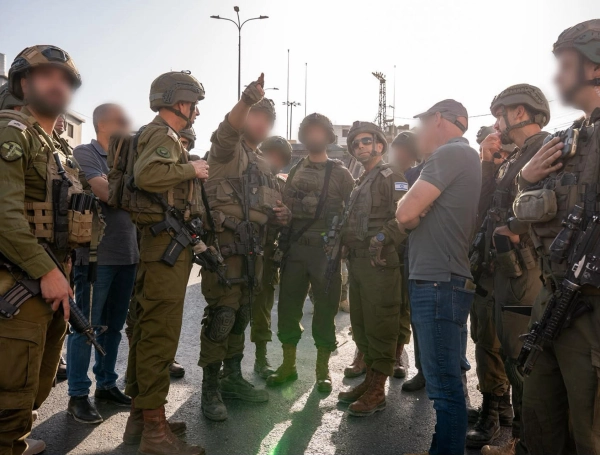
- Saturday, October 24, 2026 (Morning): The IDF expands its operations to roughly 40 distinct zones across the West Bank. Israeli Defense Minister Israel Katz confirms to public broadcaster Kan that approximately 2,200 residents have been displaced from Hebron, explicitly stating they will not be permitted to return until military objectives against Hamas elements in the city are fully accomplished.
- Saturday, October 24, 2026 (Afternoon): Local authorities, including Hebron Governor Khaled Dudin and Mayor Yusef al Jababari, scramble to secure emergency housing for displaced families, estimating the total number of affected households to be between 150 and 250. International organizations and news agencies document deserted streets dominated exclusively by military patrols and armored vehicles.
Supporting Data and On-the-Ground Metrics
The kinetic operations in Hebron and the wider West Bank reflect an environment of deeply entrenched hostility and escalating friction. According to verified figures from military statements, municipal leaders, and human rights monitors:
- Displacement Metrics: Defense Minister Israel Katz confirmed that roughly 2,200 individuals have been driven from their homes in Hebron. Local municipal tallies, provided by Mayor Yusef al Jababari and activist Isa Amro, place the displaced households at between 150 and 250 families.
- Geographic Scope: The operations in Hebron currently encompass roughly one-third of the city, a uniquely volatile urban center where hundreds of Israeli settlers reside in heavily fortified enclaves directly adjacent to Palestinian neighborhoods.
- Detentions and Raids: The IDF reported executing targeted sweeps across 40 distinct zones in the West Bank between Friday and Saturday, netting approximately 40 suspects accused of terrorism, incitement, public disorder, and rock-throwing.
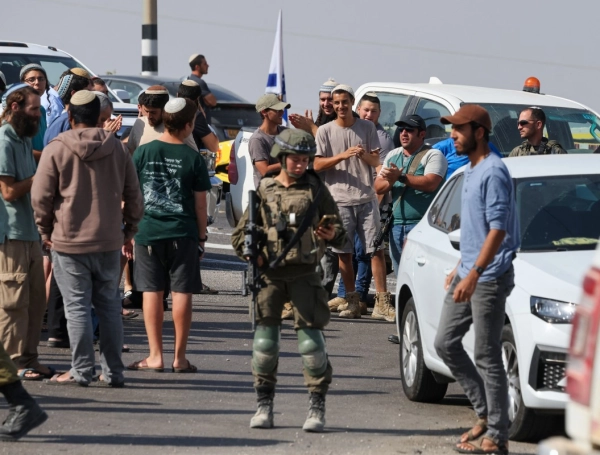
- Colonial and Settler Violence: The human rights organization Yesh Din documented a staggering 672 violent incidents perpetrated by radical Israeli settlers against Palestinian communities over the preceding 26 days. Approximately half of these clashes occurred during the vital Palestinian olive harvest season—a recurring annual window characterized by systematic harassment, property destruction, and agrarian violence.
Official Responses and Diplomatic Stance
The developments have triggered sharp polarized reactions from regional actors and international observers:
The Israeli Government and Military
Prime Minister Benjamin Netanyahu has defended the military’s aggressive posture, describing the ongoing measures as a necessary prelude to an even larger security initiative. In media appearances, Netanyahu compared the planned scope of future operations to historical milestones, claiming it would mirror actions "not seen since the Six-Day War of 1967." Defense Minister Israel Katz reinforced this hardline stance, asserting that displaced residents of Hebron will remain locked out of their neighborhoods until the military completely sanitizes the area of Hamas infrastructure.

National Security Minister Itamar Ben Gvir went a step further, leveraging the security crisis to renew his long-standing campaign against the Palestinian Authority. Appearing on international and local broadcasts, Ben Gvir demanded the absolute dissolution of the PA, while Prime Minister Netanyahu ominously hinted at an impending "great surprise" targeting the governance structure in Ramallah, vowing to neutralize perceived threats by undisclosed means.
The Palestinian Authority and Local Leadership
In stark contrast, the Palestinian Authority has formally appealed to global capitals, demanding that international stakeholders exert immediate pressure on the Israeli government to halt forced evictions and safeguard civilian populations.
Local leaders in Hebron have fiercely denounced the actions. Governor Khaled Dudin labeled the mass displacement an act of flagrant "collective punishment" directed indiscriminately at innocent civilians. Highlighting the personal toll, 70-year-old Hebron merchant Higazi Shawer al Tamimi voiced the defiance echoing through the community after being forced from his home at 1:00 AM: "This is happening because Benjamin Netanyahu wants to win the elections with the blood of the Palestinians, but we will not go anywhere."
Implications: Political Survival and Regional Stability
The timing and intensity of the Hebron operations cannot be divorced from the fragile domestic political landscape inside Israel. Prime Minister Netanyahu is currently fighting for his political survival ahead of high-stakes parliamentary elections slated for the coming Tuesday. Recent opinion polls indicate a razor-thin, dead-heat race between Netanyahu and his primary centrist challenger, Gadi Eisenkot—a former military chief of staff who, while equally opposed to Palestinian statehood, has pledged to crack down on unauthorized settler violence. Analysts suggest that Netanyahu’s resort to maximalist military posturing is designed to consolidate the nationalist and ultra-orthodox voting blocks by projecting an uncompromising security posture.
Simultaneously, the collapse of civic order in Hebron threatens to ignite a broader conflagration across the West Bank. With Hamas celebrating the initial checkpoint attack and encouraging sympathetic cells to escalate operations, and with radical settler militias intensifying agricultural intimidation during the olive harvest, the baseline for stability in the occupied territories has reached a critical nadir.
As the international community weighs its response to the Palestinian Authority’s urgent calls for protection, the specter of a broader military campaign looms over the West Bank, threatening deep humanitarian consequences for thousands of civilians caught in the crossfire of geopolitical conflict and domestic electoral maneuvers.