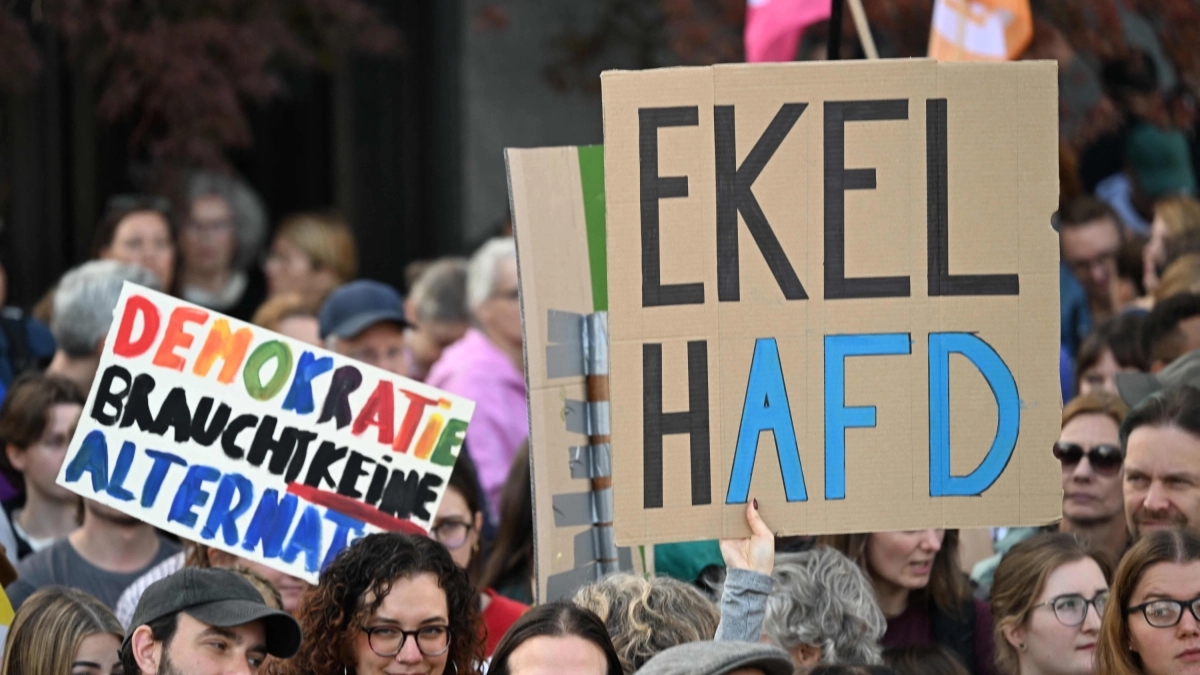
BERLIN — In a powerful demonstration of civic mobilization, tens of thousands of citizens took to the streets across major German cities on Saturday, uniting in vehement opposition to the surging popularity of the right-wing populist and nationalist party, Alternative für Deutschland (AfD). The coordinated wave of protests comes on the heels of the AfD’s historic electoral breakthrough in the regional parliament of Saxony-Anhalt, a milestone that places the party within striking distance of governing a German Land (state) for the first time in post-war history.
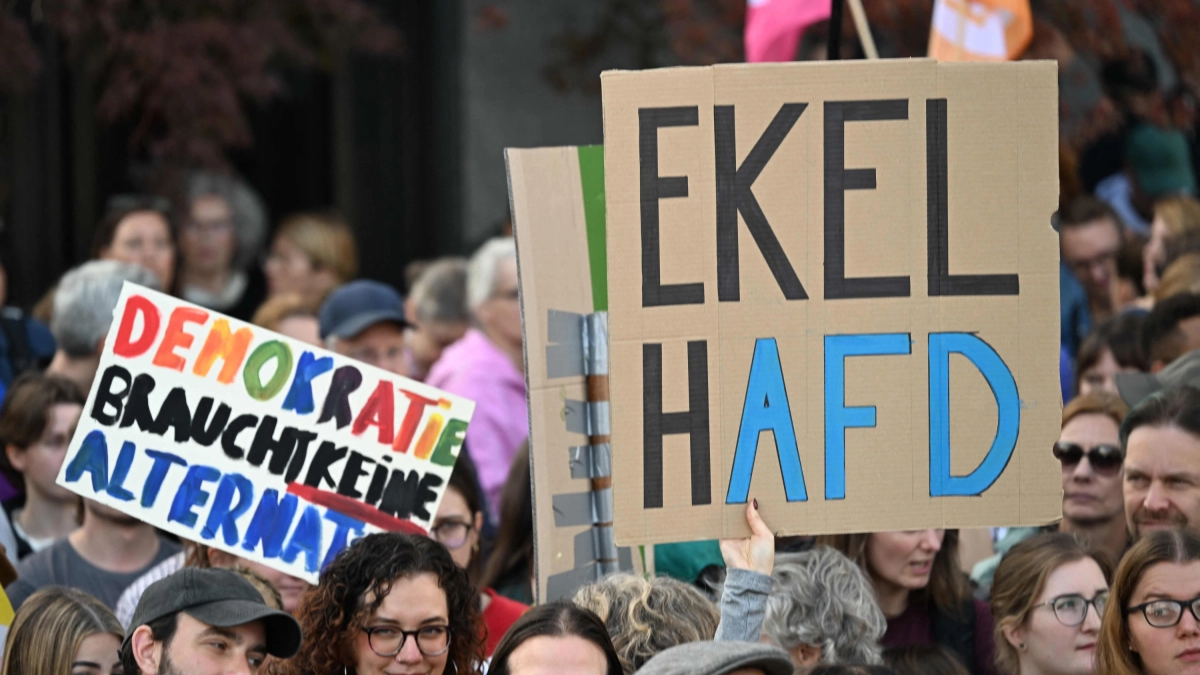
Organized by a broad-based coalition of nearly 100 civil society organizations, grassroots initiatives, and labor unions, the demonstrations underscored deep societal anxieties regarding the normalization of extremist rhetoric in mainstream German politics. Slogans such as "Democracy doesn’t need an alternative" and "All against fascism" echoed through urban centers from Berlin to Düsseldorf, serving as a stark reminder of the enduring commitment among vast segments of the population to Germany’s post-war democratic order.
Main Facts
The weekend mobilizations represent one of the most significant coordinated pushbacks against right-wing extremism in Germany in recent years. The immediate catalyst for the protests was the AfD’s victory in Saxony-Anhalt, which sent shockwaves through Germany’s political establishment and shattered a long-standing taboo regarding the electoral viability of hard-right nationalist parties at the regional governmental level.
Key elements defining the current political and social crisis include:
- Widespread Mobilization: Tens of thousands of demonstrators converged on major urban areas, including Berlin, Düsseldorf, Hamburg, Leipzig, and Munich, demanding a resolute defense of democratic norms.
- The "Firewall" (Cordon Sanitaire): Protesters strongly reiterated demands that all mainstream democratic parties maintain an unconditional absolute blockade against cooperating with or forming coalitions with the AfD.
- Legal Scrutiny: In Munich, demonstrators specifically called upon the Federal Constitutional Court to examine the legal avenues for banning political parties classified as confirmed or suspected right-wing extremist organizations—a designation that currently applies to portions of the AfD apparatus.
- Upcoming Electoral Battlegrounds: The protests serve as a prelude to a tense electoral calendar, highlighted by upcoming regional elections in Berlin and a fiercely contested race in Mecklenburg-Western Pomerania, where polls suggest the AfD is locked in a tight battle for first place.
Chronology of Events
The momentum leading up to Saturday’s mass demonstrations has built steadily over months, punctuated by dramatic political developments in eastern Germany.
The Saxony-Anhalt Earthquake
One week prior to the protests, the regional elections in Saxony-Anhalt delivered a watershed moment for German politics. The AfD secured a decisive victory, upending traditional party alignments. While mainstream parties have historically adhered to a strict cordon sanitaire—refusing to enter into coalitions or formal cooperation agreements with the far-right—the political landscape has grown increasingly fractured. Notably, negotiations involving the populist-left alliance BSW (Bündnis Sahra Wagenknecht) have explored the possibility of a parliamentary abstention that could theoretically clear the path for an AfD-tolerated government or legislative maneuvers, fueling profound public alarm.

Saturday’s Nationwide Mobilizations
As dawn broke on Saturday, security forces across Germany braced for massive turnouts.
- Berlin: Beginning at 13:00 local time, roughly 13,000 to 14,000 participants converged via seven distinct marches toward a central rally point in front of the historic city hall (Rotes Rathaus). The Berlin Police department mounted a massive security operation, deploying 1,800 officers to maintain public order and manage traffic disruptions.
- Düsseldorf: In the bustling western economic powerhouse of North Rhine-Westphalia, approximately 20,000 people took to the streets, transforming the city center into a sea of colorful placards denouncing xenophobia and authoritarianism.
- Hamburg and Leipzig: In the northern port city of Hamburg, organizers reported a turnout of 25,000, though police assessments were pending as demonstrations stretched into the evening. Meanwhile, in the eastern city of Leipzig, some 5,000 protesters marched through historic neighborhoods chanting anti-fascist slogans.
- Munich: Southern Germany’s largest city saw thousands gather in a demonstration focused less on traditional street politics and more on institutional mechanisms, specifically petitioning the Federal Constitutional Court to evaluate the legality of extremist political formations.
The Road Ahead: Sunday and Beyond
Demonstrations are scheduled to persist through Sunday, coinciding directly with the AfD’s planned campaign closing rally in Berlin ahead of the city-state’s upcoming legislative elections. While the AfD is currently projected to place third in Berlin—trailing behind Die Linke (The Left) and the Christian Democratic Union (CDU)—the broader regional political map remains volatile.
Supporting Data and Demographics
The scope of Saturday’s protests highlights a deeply polarized electorate. Quantitative metrics from law enforcement and civil society organizers illustrate the massive logistical footprint of the anti-AfD movement:
| City / Region | Estimated Turnout (Police/Organizers) | Primary Focus of Demonstration |
|---|---|---|
| Berlin | 13,000 – 14,000 | Central rally, enforcement of the democratic "firewall" against the AfD. |
| Düsseldorf | ~20,000 | Broad defense of democratic values in western Germany’s most populous state. |
| Hamburg | Up to 25,000 (Organizers) | Solidarity march against the mainstreaming of nationalist politics. |
| Leipzig | ~5,000 | Direct anti-fascist mobilization in eastern Germany. |
| Munich | Several thousand | Legal petitions urging the Federal Constitutional Court to consider party bans. |
Security mobilization was equally striking. In Berlin alone, the deployment of 1,800 police officers reflected authorities’ awareness of potential friction points, particularly given the proximity of scheduled AfD campaign events.
Looking ahead to the electoral horizon, polling data underscores the gravity of the political shift. In the upcoming September 20 regional elections in Mecklenburg-Western Pomerania in northeastern Germany, pollsters project the AfD could secure roughly 36% of the vote. This places the far-right party in a neck-and-neck race for the premier position against the incumbent Social Democratic Party (SPD), transforming a regional ballot into a national existential test for Germany’s political establishment.
Official Responses and Political Reactions
The mainstream political establishment has found itself caught between the demands of an alarmed civil society and the hard reality of shifting electoral arithmetic.

Spokespersons for the coalition of nearly 100 organizations that spearheaded the Saturday protests issued a joint manifesto emphasizing that the "firewall" (Brandmauer) protecting German democracy must remain absolute. "The elections in Saxony-Anhalt have to be a turning point if we want to stop the AfD," the manifesto declared. "The sanitary cordon must be maintained unconditionally. No cooperation with the AfD, anywhere."
This sentiment directly challenges maneuvers emerging in eastern state parliaments. While national leaders of the traditional center-right CDU and the center-left SPD have repeatedly vowed never to govern alongside the AfD, regional dynamics have introduced dangerous ambiguities. The willingness of newer political actors, such as the BSW, to contemplate tactical parliamentary maneuvers—such as strategic abstentions that could indirectly benefit AfD legislative goals—has infuriated civil rights groups and mainstream voters alike.
Conversely, representatives of the AfD have dismissed the nationwide protests as coordinated partisan attacks engineered by the political establishment to suppress legitimate democratic dissent. AfD leadership argues that their electoral gains reflect the genuine grievances of citizens disenfranchised by traditional economic policies, high immigration rates, and perceived institutional stagnation. They maintain that attempts to isolate the party through boycotts and legal challenges violate the democratic rights of the millions of Germans who cast their ballots for the movement.

Implications for German and European Democracy
The events unfolding in Germany carry profound implications that extend far beyond domestic political borders, resonating deeply within the European Union and the broader Western political sphere.
The Erosion of the Post-War Taboo
For decades, Germany’s political culture was defined by a strict consensus: the absolute containment of far-right, nationalist, and neo-fascist political movements. The normalisation of the AfD—culminating in its potential governance role in Saxony-Anhalt and its commanding polling numbers in Mecklenburg-Western Pomerania—signals that this post-war consensus is fracturing. As eastern Germany increasingly charts a political course distinct from the western consensus, the country faces a widening cultural and political rift.
The Dilemma of Constitutional Defense
The demands voiced in Munich—asking the Federal Constitutional Court to weigh the legality of extremist parties—highlight a fundamental paradox of liberal democracy: How far can a democracy go to protect itself from enemies who use democratic mechanisms to dismantle it? Under Germany’s Wehrhafte Demokratie (defensive democracy) framework, the constitution permits the banning of political parties that seek to undermine the free democratic basic order. However, initiating such a ban is an extremely high legal bar laden with immense political risks, as a failed attempt could inadvertently legitimize the targeted movement even further.

European Stability
As the economic and political anchor of the European Union, Germany’s internal stability is a vital pillar of continental governance. The rise of a powerful Eurosceptic, nationalist force within Berlin’s legislative ecosystem and regional governments threatens to complicate EU policymaking, particularly regarding immigration, integration, and fiscal solidarity.
As Germany braces for the remainder of its packed regional election cycle, the fundamental question remains whether mass civic engagement and strict institutional cordons can successfully halt the populist tide, or if the political landscape of Europe’s largest economy has entered a permanently altered era.