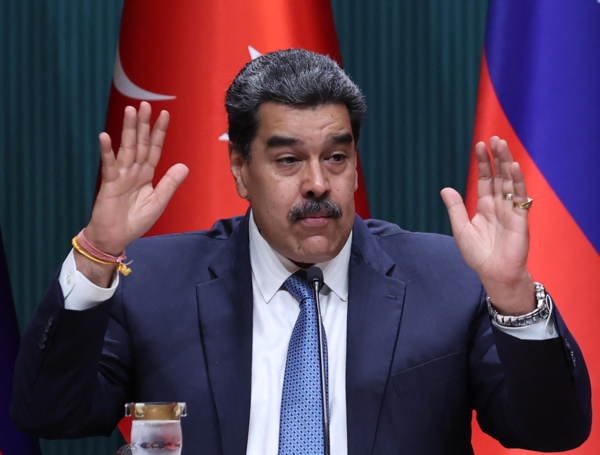
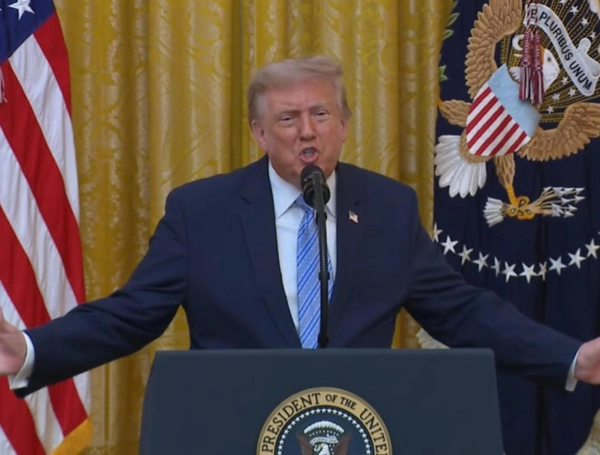
WASHINGTON D.C. – July 17, 2026 – In a move that sent immediate ripples through both international diplomacy and domestic politics, former President Donald Trump asserted on Thursday, July 16, that declassified documents from the Central Intelligence Agency (CIA) reveal a conspiracy by the Venezuelan government under Nicolás Maduro to electronically manipulate the 2017 legislative election results. Speaking from the White House, Trump claimed these documents would expose a "specific plot to greatly favor the corrupt regime of Venezuela" through technological means.
However, a closer examination of the very documents cited by the White House on the same evening presents a more nuanced and, in crucial aspects, contradictory picture to the former President’s bold claims. While the CIA analysis, compiled last month from nearly two decades of intelligence, acknowledges Venezuela’s "some capacity" to manipulate domestic electronic voting systems, it explicitly concludes there is "no definitive evidence of fraud at a large scale." Furthermore, the report asserts that neither the Venezuelan government nor the electoral technology firm Smartmatic possessed the capability to alter election outcomes outside of Venezuela.
Trump’s dramatic announcement comes just months before critical midterm elections in the United States, a period during which he has consistently amplified his long-standing grievances regarding the integrity of the American electoral process. His speech not only targeted Venezuela but also renewed accusations against China for alleged interference in the 2020 U.S. presidential election, claiming the theft of millions of voter data. These assertions quickly drew sharp rebukes from political opponents, including former Vice President Kamala Harris, who dismissed them as a continuation of "lies and conspiracy theories."
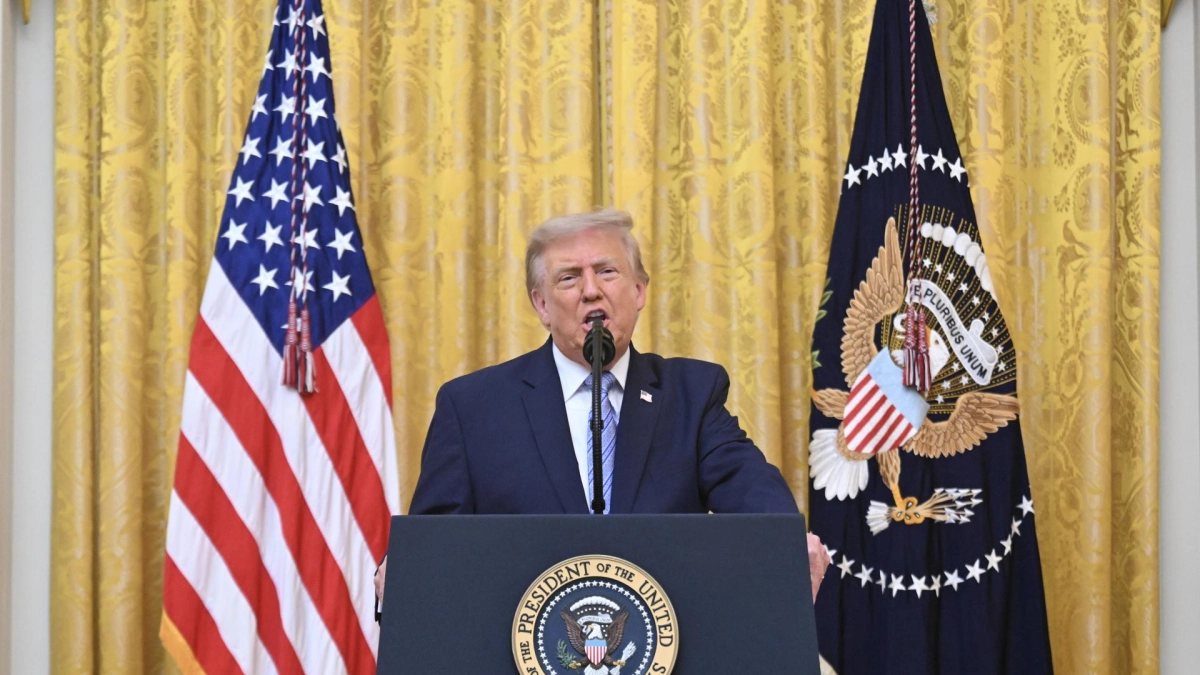
The timing and content of Trump’s address underscore a persistent strategy of casting doubt on democratic institutions, both abroad and at home, as he continues to wield significant influence within the Republican Party and shape public discourse ahead of future electoral contests.
Unpacking the Claims: Main Facts and Discrepancies
Former President Donald Trump’s address on July 16, 2026, delivered from the White House, centered on two primary and interconnected narratives: alleged foreign interference in elections and the purported vulnerability of electoral systems. The most striking claim involved the declassification of CIA documents, which Trump stated would prove the Venezuelan government’s electronic manipulation of its 2017 legislative elections. He characterized this as a "specific plot to greatly favor the corrupt regime of Venezuela," suggesting a sophisticated, technologically driven conspiracy.
However, the very White House-published documents that Trump referenced immediately introduced a critical distinction. The CIA analysis, a culmination of intelligence gathered over nearly two decades, acknowledged that Venezuela indeed possessed "some capacity" to manipulate electronic voting systems within its own borders. This specific phrasing, "some capacity," suggests a potential for localized or limited interference, rather than a widespread, systemic overhaul of results.

Crucially, the report went further to state that there was "no definitive evidence of fraud at a large scale." This direct counterpoint to Trump’s assertion of a grand "plot" highlights a significant divergence between his public interpretation and the intelligence community’s findings. Even more significantly for the broader implications of his speech, the CIA analysis explicitly concluded that neither the Venezuelan government nor the controversial electoral technology company Smartmatic could alter election outcomes outside of Venezuela. This latter point directly undermines any potential extrapolation of Venezuelan interference to other nations or to the U.S. electoral system, a connection Trump has frequently attempted to draw in the past.
The context of Smartmatic is particularly relevant. While often a target of accusations regarding election manipulation, a detailed analysis by The New York Times, referenced in the released documents, indicates that Smartmatic has a history of combating electoral fraud. Notably, the company ceased its operations in Venezuela in 2018, publicly accusing the Maduro government of "inflating electoral participation by more than a million votes" during the very 2017 legislative elections that Trump now claims were manipulated by the government through technology. This historical action by Smartmatic positions them not as an accomplice to fraud, but as a whistleblower against it, further complicating and contradicting the narrative presented by the former President.
Beyond Venezuela, Trump used his platform to reiterate his unsubstantiated claims about the 2020 U.S. presidential election, accusing China of stealing millions of voter data and casting general doubt on the integrity of the American electoral system. His dismissive remark, "No third-world country has elections like we do," was a thinly veiled attack on the U.S. democratic process, echoing sentiments he has expressed since his defeat to Joe Biden. These combined assertions, delivered at a pivotal moment in the U.S. political calendar, ignited a fierce debate about the role of a former president in shaping public perception of electoral legitimacy.

A Timeline of Accusations and Political Maneuvering
The narrative surrounding Donald Trump’s latest electoral claims is deeply rooted in a history of challenging election outcomes and democratic processes, both domestically and internationally.
Pre-2016 to Present: A Pattern of Electoral Doubt
Donald Trump’s questioning of electoral integrity is not new. Even before his successful 2016 presidential campaign, he suggested the election could be "rigged" if he lost. This rhetoric intensified significantly after his 2020 defeat, becoming a central tenet of his political platform. His consistent attacks on mail-in voting, often without substantial evidence, have contributed to a climate of distrust among a segment of the electorate.
July 30, 2017: Venezuela’s Controversial Constituent Assembly Election
The 2017 Venezuelan legislative elections, specifically for the National Constituent Assembly, are central to Trump’s recent claims. These elections were highly controversial, boycotted by the opposition, and widely condemned internationally as illegitimate. The Maduro government sought to rewrite the constitution, a move seen by many as a power grab. This context is crucial, as it sets the stage for Smartmatic’s subsequent actions.

August 2, 2017: Smartmatic Breaks Silence on Venezuelan Fraud
Just days after the 2017 Venezuelan election, Smartmatic, the company providing the electronic voting technology, publicly denounced the Maduro government. Antonio Mugica, CEO of Smartmatic, stated that the turnout figures had been "manipulated" and "inflated by at least one million votes." This public accusation, which led to Smartmatic ceasing its operations in Venezuela in 2018, stands in stark contrast to Trump’s implication that the technology or the company was complicit in a government conspiracy. Instead, Smartmatic acted as a direct antagonist to the alleged fraud.
Mid-2026: The Declassification Process
While the exact catalyst for the declassification of the CIA documents regarding Venezuela remains somewhat opaque, it is highly probable that the process was initiated or expedited by the Trump administration itself, seeking to bolster its arguments against electoral fraud. The release of such documents, particularly when selectively interpreted, can serve as a powerful rhetorical tool. The CIA analysis itself was finalized "last month," indicating a relatively recent compilation of intelligence gathered over "nearly two decades."
July 16, 2026: The White House Address
The former President’s speech from the White House was a carefully orchestrated event, timed to maximize impact ahead of the midterms. His dual focus—linking alleged foreign electoral manipulation (Venezuela, China) to domestic concerns about the U.S. system—was designed to resonate with his base and reinforce his long-standing narrative. The use of the White House as a backdrop lent an air of official gravitas to his assertions, despite their contentious nature. His push for a federal electoral law, emphasizing voter ID and restricting mail-in ballots, served as a clear legislative objective tied to his broader claims of electoral insecurity.
Immediate Aftermath: Rebuttals and Media Scrutiny
The immediate reaction to Trump’s speech was swift and polarized. Former Vice President Kamala Harris wasted no time in issuing a scathing rebuttal, preempting and then directly challenging his "lies and conspiracy theories" about the 2020 election. Simultaneously, several major U.S. media outlets made the editorial decision to either cut away from or not broadcast portions of Trump’s speech live, citing a responsibility to avoid amplifying unverified claims and misinformation. This decision reignited debates within the journalistic community about the balance between providing unfiltered access to a public figure and preventing the spread of potentially harmful falsehoods. The events of July 16, 2026, thus became another flashpoint in the ongoing struggle for control over electoral narratives and public trust.
Supporting Data, Intelligence Analysis, and Contradictions
The core of Donald Trump’s recent claims rests on the purported revelations within declassified CIA documents concerning Venezuela’s 2017 elections. However, a deeper dive into the actual content of these documents, as summarized by the White House itself, reveals a significant disconnect between the former President’s dramatic pronouncements and the nuanced intelligence findings.
The CIA Analysis: Nuance vs. Narrative
The CIA analysis, described as being "elaborated last month with information of intelligence compiled during almost two decades," paints a picture of Venezuelan electoral capabilities that is far more circumscribed than Trump suggested. The report explicitly states that Venezuela had "some capacity" to manipulate domestic electronic voting systems. This phrase is critical. "Some capacity" implies a limited, perhaps experimental or localized ability, rather than a fully operational, large-scale electoral fraud mechanism. More importantly, the report offers "no definitive evidence of fraud at a large scale." This direct refutation of widespread manipulation undermines Trump’s assertion of a "specific plot" to "greatly favor" the Maduro regime through technology across the entire electoral process.
Perhaps the most significant finding from the CIA document, particularly in the context of Trump’s broader agenda, is its unequivocal conclusion that "neither the Venezuelan government nor the system of automation of electoral results Smartmatic could alter elections outside of Venezuela." This statement directly closes the door on any attempt to link Venezuela’s purported domestic electoral issues to the integrity of elections in other countries, most notably the United States. It acts as a bulwark against the kind of transnational conspiracy theories that have frequently been floated in discussions of electoral integrity.
Smartmatic: A Complicated History Misinterpreted
Smartmatic, the electoral technology provider, has frequently found itself at the center of controversies surrounding election integrity globally. However, the CIA analysis, corroborated by a New York Times review, highlights a crucial aspect of Smartmatic’s history often overlooked or misrepresented: its role in combating fraud. The original article notes that Smartmatic "has been frequently accused of manipulating elections, in reality has a history of fighting against electoral fraud."
The most pertinent example of this is Smartmatic’s actions following the very 2017 Venezuelan legislative elections now under scrutiny. The company publicly accused the Maduro government of "inflating electoral participation in more than a million votes." This accusation was not a quiet internal memo; it was a public denouncement that led Smartmatic to cease its operations in Venezuela in 2018. Far from being an enabler of the "corrupt regime," Smartmatic positioned itself as an antagonist to the alleged electoral misconduct. This historical fact directly contradicts the implied narrative from Trump’s speech that Smartmatic, or the technology it provided, was a tool for the Venezuelan government’s manipulation. Instead, it suggests that Smartmatic acted as an independent check that exposed, rather than facilitated, the alleged fraud.
The 2020 U.S. Election: Debunked Claims
Trump’s renewed accusations against China for interfering in the 2020 U.S. elections by "stealing millions of voter data" and his broader dismissal of the American electoral system as akin to a "third-world country" also warrant scrutiny. Following the 2020 election, extensive audits, recounts, and court cases were conducted across multiple states. These efforts, spearheaded by both Republican and Democratic officials, consistently found no evidence of widespread voter fraud or irregularities that would have altered the outcome of the election. Over 60 lawsuits challenging the results were rejected by state and federal courts, including the Supreme Court. Independent cybersecurity experts and government agencies, including the Department of Homeland Security’s Cybersecurity and Infrastructure Security Agency (CISA), affirmed the security and integrity of the 2020 election, calling it "the most secure in American history."
Regarding the specific claim of China stealing voter data, while foreign adversaries, including China, consistently attempt cyber intrusions against various U.S. targets, including political campaigns and election infrastructure, no credible evidence has ever been presented to support the assertion that China’s actions resulted in the theft of millions of voter data that materially impacted the 2020 election results. The intelligence community’s assessments focused on influence operations, not large-scale data theft that altered votes.
The Push for Electoral Reform: Voter ID and Mail-in Voting
Trump’s speech was also a clear call to action for his allies in Congress to pass a new electoral law. This proposed legislation aims to mandate voter identification requirements and significantly restrict mail-in voting. Proponents argue that such measures are necessary to prevent fraud and enhance election security. However, opponents, predominantly Democrats and civil rights groups, contend that these restrictions disproportionately disenfranchise minority voters, the elderly, low-income individuals, and those with limited access to ID, effectively acting as a form of voter suppression.

The bill’s current stagnation in the Senate is a testament to the deep partisan divide on electoral reform. Without sufficient bipartisan support, the Democratic opposition has successfully utilized the filibuster, preventing the bill from advancing. The procedural hurdle requires 60 votes to overcome, a threshold Republicans have been unable to meet, highlighting the political deadlock on an issue that remains central to Trump’s post-presidency activism. The former President’s continued public pressure, even from the White House, underscores the high stakes he places on reshaping electoral laws ahead of future contests.
Official Responses and Media Reactions
The former President’s address, with its incendiary claims and renewed attacks on electoral integrity, predictably elicited swift and strong reactions from various political and media stakeholders, underscoring the deep divisions within the American political landscape.
Kamala Harris’s Unequivocal Rebuttal
Among the most forceful and immediate responses came from former Vice President Kamala Harris. Recognizing the predictable nature of Trump’s speech, Harris issued a pre-emptive and then post-speech rebuttal that left no room for ambiguity. "Before the president goes on television tonight to sell lies and conspiracy theories, here’s what you need to know: The 2020 election was not stolen. We won and he lost," Harris declared. Her statement was a direct challenge to the former President’s narrative, asserting the legitimacy of the 2020 election results and dismissing his persistent claims as baseless. This swift and firm response highlights the Democratic Party’s strategy to directly counter what they perceive as misinformation and to protect the integrity of the electoral process. The decision to confront Trump’s claims head-on, rather than ignoring them, reflects a calculated effort to prevent his narratives from gaining further traction among the public.

Media Outlets’ Editorial Decisions
Perhaps one of the most notable reactions was the editorial decision by several prominent American news organizations not to transmit Donald Trump’s speech live or to cut away from it. These outlets, which included major cable news networks and national broadcasters, justified their decisions by stating they would not provide an unfiltered platform for what they considered to be unverified claims and conspiracy theories regarding election fraud. Their reasoning centered on journalistic ethics, arguing that broadcasting such assertions without immediate fact-checking or context risked spreading misinformation to a wide audience.
This decision, however, sparked a renewed debate within the media industry and among the public. Critics argued that by not showing the speech in its entirety, these outlets were failing in their journalistic duty to inform the public and to provide transparency regarding the statements of a significant political figure. Proponents, on the other hand, maintained that responsible journalism requires gatekeeping against known falsehoods, particularly when those falsehoods could undermine democratic institutions. This ongoing tension reflects the broader challenge faced by the media in an era of polarized information and the proliferation of unverified content.
Venezuelan Government’s Likely Response
While not explicitly detailed in the original article, it is highly probable that the Venezuelan government would issue a strong denial and condemnation of Trump’s claims. President Nicolás Maduro and his administration have consistently rejected allegations of electoral fraud, often portraying such accusations as part of a broader U.S.-led campaign to destabilize his government and effect regime change. A typical response would involve dismissing the declassified CIA documents as a fabrication or a politically motivated attempt to justify continued U.S. sanctions and pressure against Venezuela. Maduro’s government would likely frame Trump’s statements as interference in Venezuela’s internal affairs and an attempt to deflect attention from internal U.S. political issues. They might also highlight the historical context of U.S. interventions in Latin America to bolster their narrative of external aggression.

International Perceptions
Internationally, Trump’s claims regarding both Venezuelan and U.S. elections likely contribute to a broader perception of political instability and democratic fragility in the United States. Allies might view such statements with concern, worrying about the precedent they set for undermining electoral outcomes. Adversaries, conversely, could leverage these claims to fuel their own anti-democratic narratives and to criticize the perceived hypocrisy of the U.S. promoting democracy abroad while its own former leaders cast doubt on its electoral processes at home. The global ramifications of a former U.S. president consistently questioning the legitimacy of elections are significant, potentially eroding international trust in American leadership and democratic norms.
Implications and Future Outlook
The reverberations of Donald Trump’s July 16, 2026, address are profound, extending far beyond the immediate news cycle. His claims, particularly those regarding Venezuelan election manipulation and the integrity of the U.S. electoral system, carry significant implications for domestic politics, international relations, and the future of democratic discourse.
Impact on U.S. Midterm Elections
The most immediate and tangible implication relates to the upcoming midterm elections. By consistently questioning the integrity of elections and promoting specific legislative remedies like mandatory voter ID and restrictions on mail-in voting, Trump aims to energize his base and influence the electoral agenda. His rhetoric risks further eroding public confidence in the democratic process, potentially leading to lower voter turnout among those who feel their vote won’t count, or conversely, galvanizing supporters who believe the system needs "fixing." For Republican candidates, aligning with Trump’s stance on election integrity may be a prerequisite for primary success, but could prove challenging in general elections with broader electorates. For Democrats, the former President’s claims serve as a potent rallying cry, framing the midterms as a battle for the soul of American democracy.

Undermining Democratic Institutions
Perhaps the most concerning long-term implication is the continued erosion of trust in democratic institutions. When a prominent political figure, particularly a former president, repeatedly asserts that elections are "rigged" or vulnerable to widespread fraud without providing credible evidence, it chips away at the foundational pillars of democratic governance. This constant questioning of legitimacy can foster cynicism, increase political polarization, and make it more difficult for the public to accept legitimate election outcomes, regardless of the facts. The debate over the CIA documents, where a nuanced intelligence assessment is presented by Trump as unequivocal proof of a "plot," exemplifies how information can be selectively used to fuel a predetermined narrative, further confusing the public.
International Relations and Soft Power
On the international stage, Trump’s assertions about Venezuela and China, coupled with his disparaging remarks about the U.S. electoral system, diminish America’s soft power and moral authority. For decades, the U.S. has championed democratic values and free and fair elections globally. When its own leaders cast doubt on the fairness of its processes, it weakens its ability to criticize authoritarian regimes or promote democracy abroad. Allies may view such rhetoric as a sign of internal weakness, while adversaries can exploit it to justify their own authoritarian practices and delegitimize democratic movements. The detailed refutation by Smartmatic of Maduro’s 2017 election figures, ironically, aligns more with the democratic principles the U.S. traditionally espouses, yet Trump’s interpretation seemingly seeks to co-opt this narrative for a different purpose.
The Future of Political Discourse
The media’s decision to selectively cover or refrain from broadcasting Trump’s speech also highlights a critical juncture in political journalism. The challenge of reporting on influential figures who disseminate unverified claims forces news organizations to weigh the duty to inform against the responsibility to prevent the spread of misinformation. This ongoing tension will undoubtedly shape how political discourse is presented and consumed, potentially leading to more fragmented information environments where audiences primarily seek out sources that affirm their existing beliefs.

In conclusion, Donald Trump’s July 16, 2026, address is more than just a news item; it is a significant event in an ongoing saga of electoral contestation. Its implications will likely resonate through the upcoming midterms, shape the landscape of political debate, and continue to test the resilience of democratic norms and institutions both within the United States and across the globe. The careful disentanglement of fact from assertion, and the diligent upholding of journalistic standards, remain paramount in navigating this complex and fraught political terrain.